

Download the given below cost-benefit analysis templates free from here. A cost-benefit analysis is a systematic process that helps to calculate and analyze the cost and features of a project or task. The main purpose of cost-benefit analysis is to point out the features and drawbacks of carrying out a specific project.
You can also browse our full collection of free word templates for more ready-to-use designs.
Most government and other business organizations use the cost-benefit analysis method to calculate the potential risks and gains of a task. Cost-benefit analysis is a very helpful tool to take many business and personal decisions. It should be prepared carefully and with full of attention. If you have no idea how to create a cost-benefit analysis, you should browse on the internet where you can find a bunch of effective tips and tools. A cost-benefit analysis template is also available to utilize after downloading. You can create an effective cost-benefit analysis for your company or organization by using such templates.
Cost-benefit analysis means comparing the cost with the revenue obtained from selling the goods to the consumer by the producer. The situation in which the cost and the revenue are equal is known as the break-even point. The cost-benefit analysis has two main purposes:
1– to determine if it is a sound investment
2-to provide a basis for comparing projects.
It involves comparing the total expected cost of each option against the total expected benefits, to see whether the benefits outweigh the costs, and by how much. It estimates the totals up to the equivalent money value of the benefits and costs to the cost of the community of projects to establish whether they are worthwhile or not. Projects such as dams and highways can be considered for cost-benefit analysis.
The benefit and cost should reflect preference revealed by the choice which has been made. For example improvement in transportation frequently involves saving time. On this page, you can find easily editable cost-benefit analysis templates that are available in Microsoft Word and Excel formats.
What Is a Cost-Benefit Analysis and Why Does It Matter?
A cost-benefit analysis (CBA) is a structured way of weighing everything a decision will cost against everything it is expected to return, expressed in comparable terms so the two sides can be judged side by side. Rather than relying on gut feeling, a CBA forces a decision-maker to list every cost item and every benefit item, put a realistic value on each one, and then compare the totals before committing money, time, or staff to a project. Organizations lean on this method because it turns an abstract question — “should we do this?” — into a concrete one: “does the expected return justify what we would have to give up?” That shift matters most when resources are limited and a wrong call is expensive to undo, which is exactly the situation most capital projects, policy proposals, and major purchases put decision-makers in.
Beyond a simple yes-or-no verdict, a well-built cost-benefit analysis also creates a paper trail that explains why a choice was made, which is valuable when a decision later needs to be defended to a board, a funding body, or auditors. It also makes it far easier to compare two or more competing options on equal footing, since every alternative is reduced to the same cost and benefit categories rather than being judged on different criteria.
Who Relies on Cost-Benefit Analysis?
Cost-benefit analysis is used far beyond the finance department. Project managers run one before greenlighting a new initiative, to confirm the expected outcome is worth the budget and timeline it will consume. Business owners and executives use it when evaluating a new product line, a piece of equipment, or an expansion into a new market. Government agencies rely on cost-benefit analysis to justify public spending on infrastructure, regulation, and community programs, since taxpayer money carries a higher bar of accountability. Financial analysts and consultants build cost-benefit models to support investment recommendations, mergers, and vendor comparisons. Even at a smaller scale, nonprofit leaders, IT teams choosing between software platforms, and HR departments weighing a new benefits package all use the same underlying logic: list the costs, list the benefits, and see which side wins.
Key Elements of a Solid Cost-Benefit Analysis
A cost-benefit analysis is only as good as the elements that go into it. Skipping any one of these tends to produce a report that looks convincing but leads to a poor decision.
- Identifying costs — every direct cost (materials, labor, licensing, equipment) as well as indirect costs (training, maintenance, downtime, opportunity cost of staff time) that the project will require.
- Identifying benefits — both the tangible gains (revenue, cost savings, efficiency) and the intangible ones (customer satisfaction, employee morale, brand reputation, risk reduction).
- Assigning monetary values — converting every cost and benefit, including the intangible ones, into a comparable dollar figure so the two columns can actually be added and compared.
- Timeframe and discount rate — deciding over what period the costs and benefits will be measured, and, for longer projects, discounting future dollars to reflect that money today is worth more than money received years from now.
- Net benefit calculation — subtracting total costs from total benefits (or dividing benefits by costs for a benefit-cost ratio) to arrive at a single, clear figure that supports the final decision.
Get Cost-Benefit Analysis Templates Here:
Sample Cost-Benefit Analysis Template
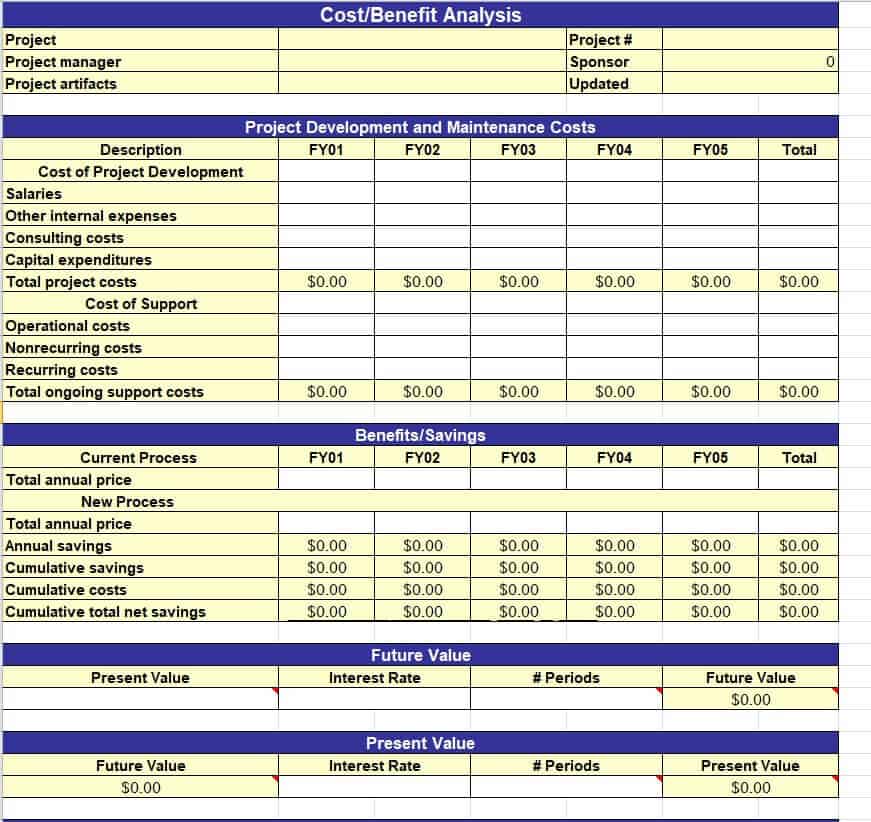
Simple Cost-Benefit Analysis Template
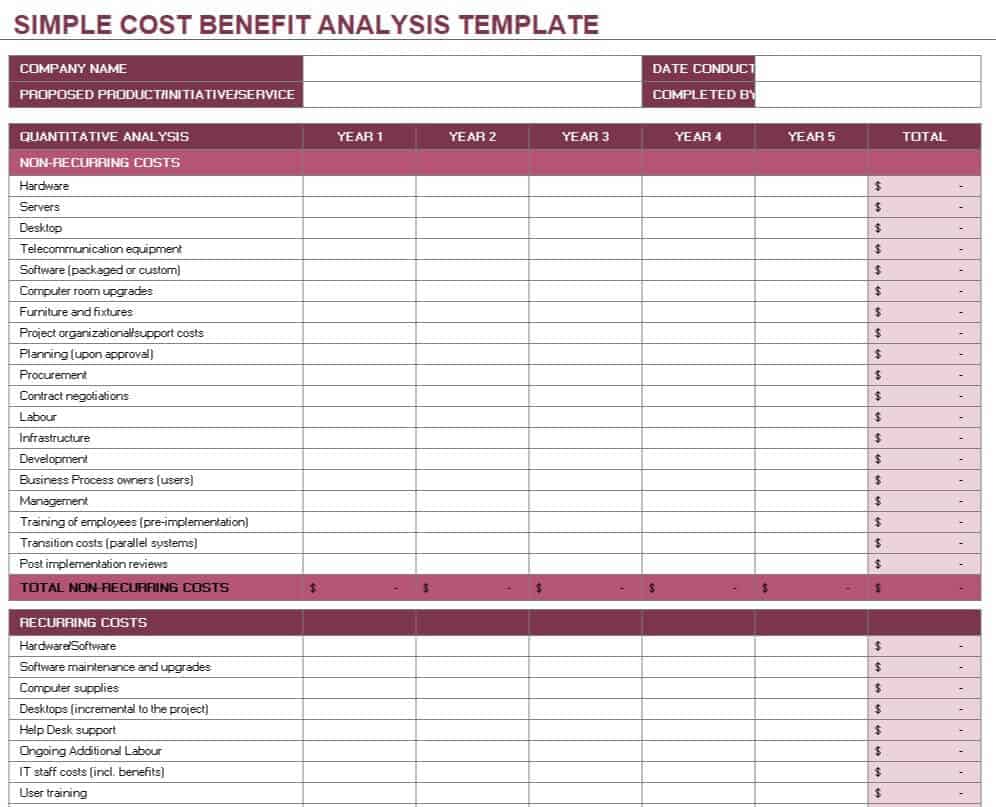
Example Cost-Benefit Analysis Template
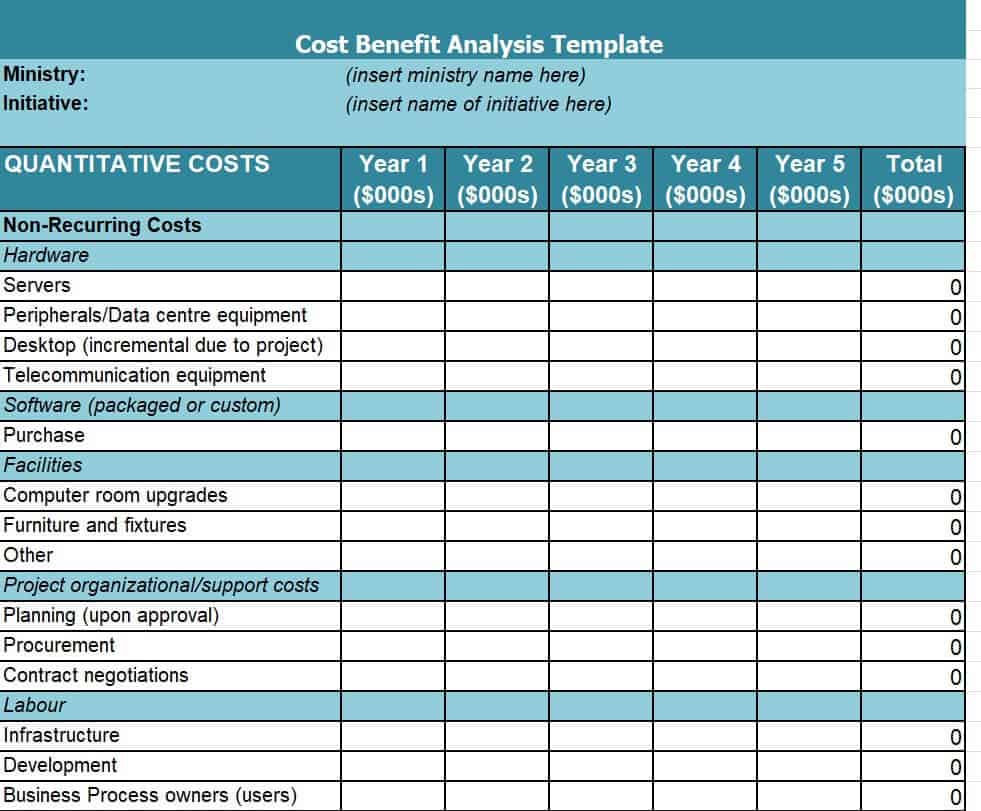
Cost-Benefit Analysis Worksheet Template
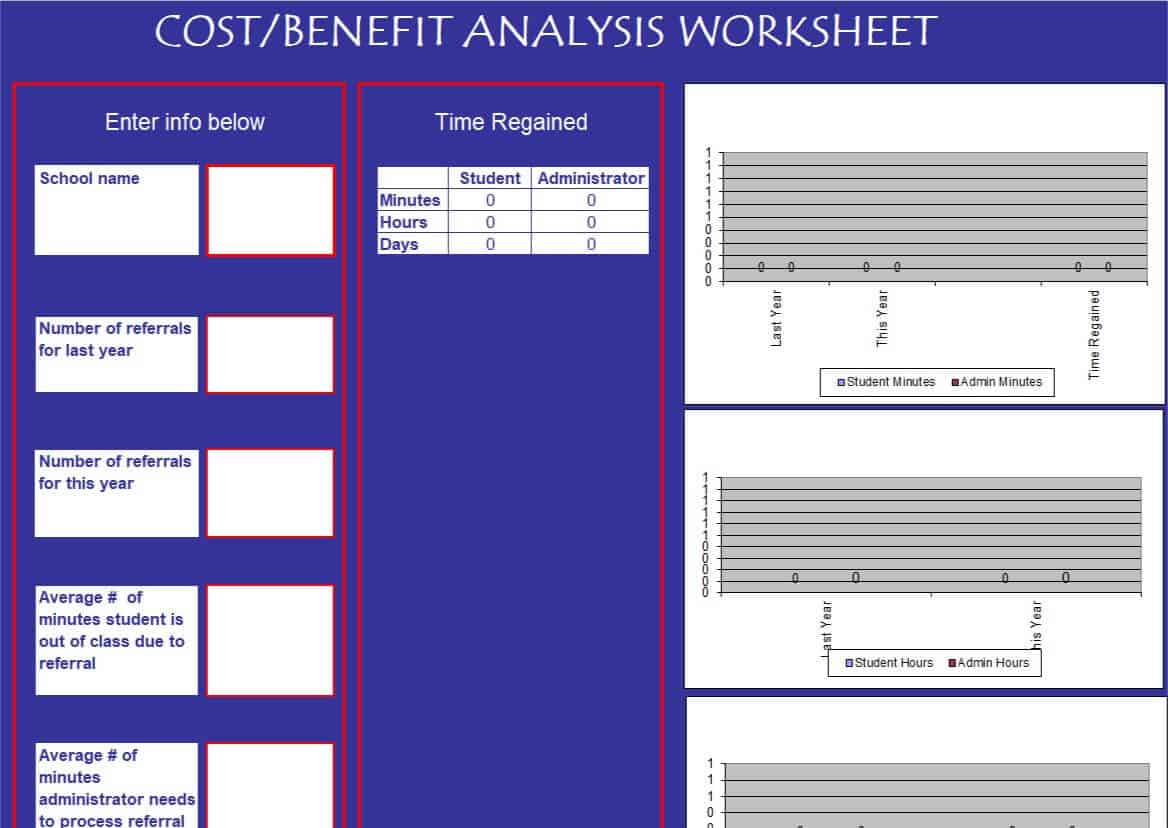
Cost-Benefit Analysis Word Template
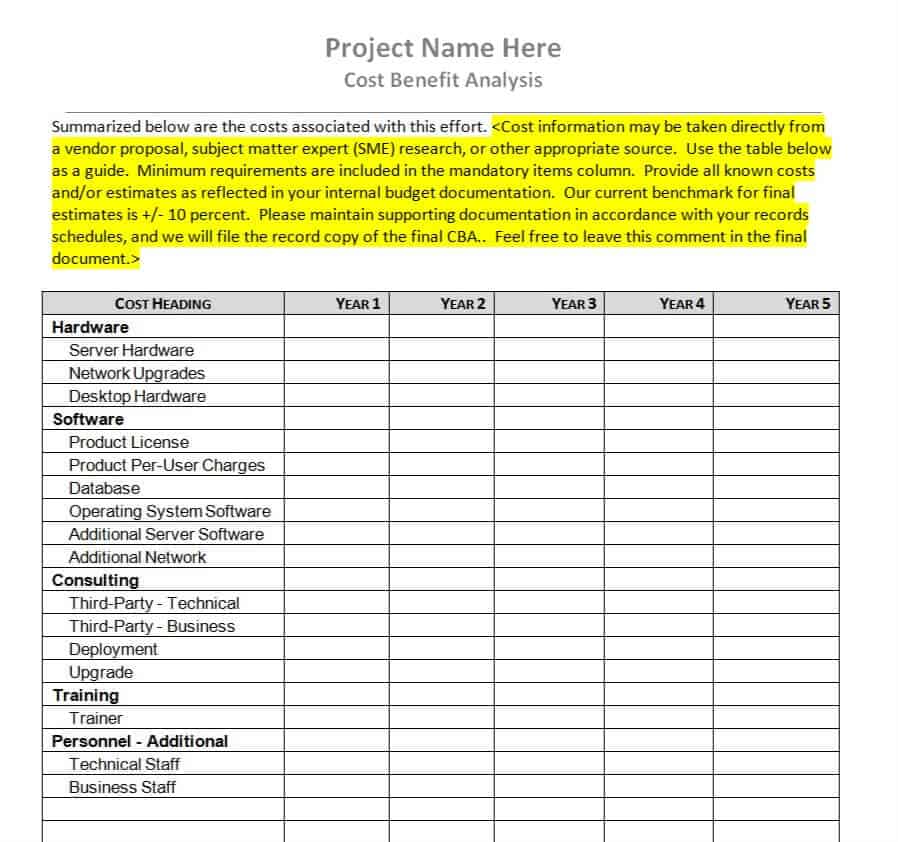
Simplistic Cost-Benefit Analysis Template
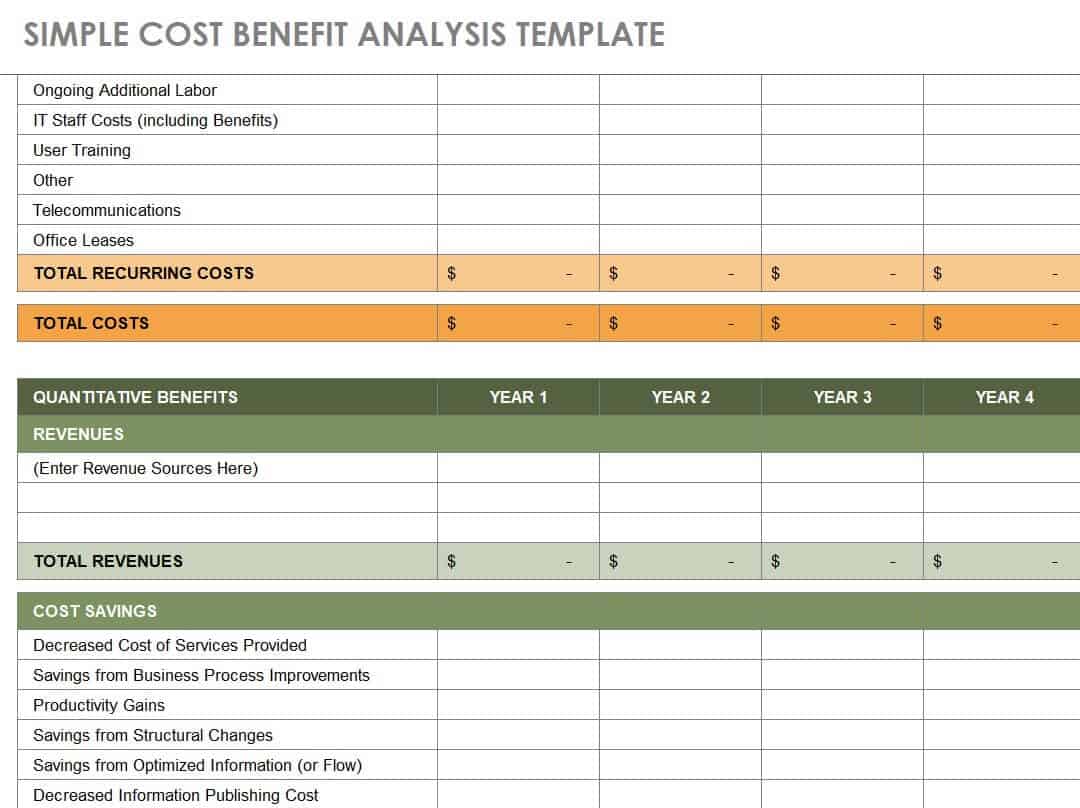
Cost-Benefit Analysis Outline Template Word
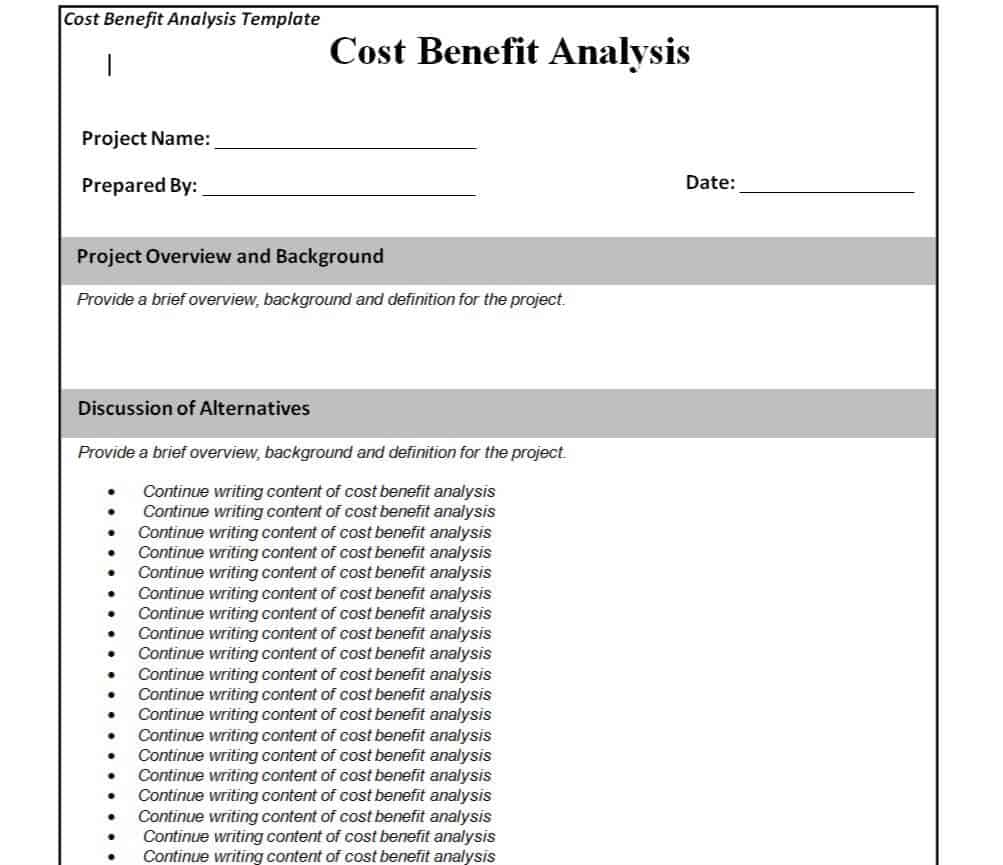
New Cost-Benefit Analysis Template
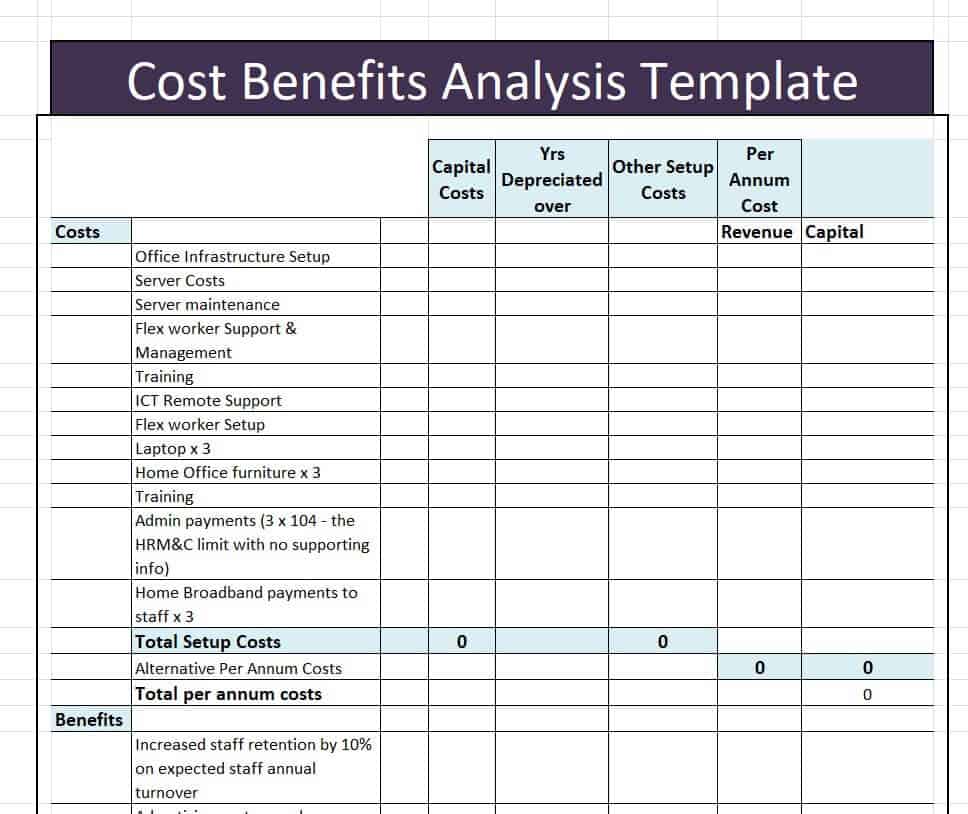
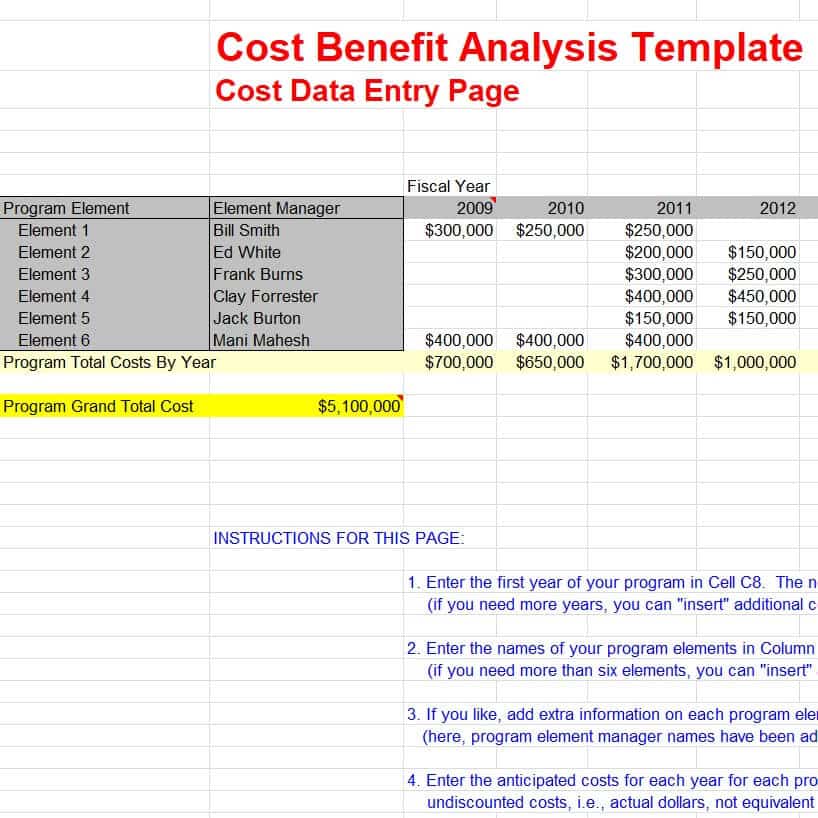
Cost-Benefit Analysis Excel Template
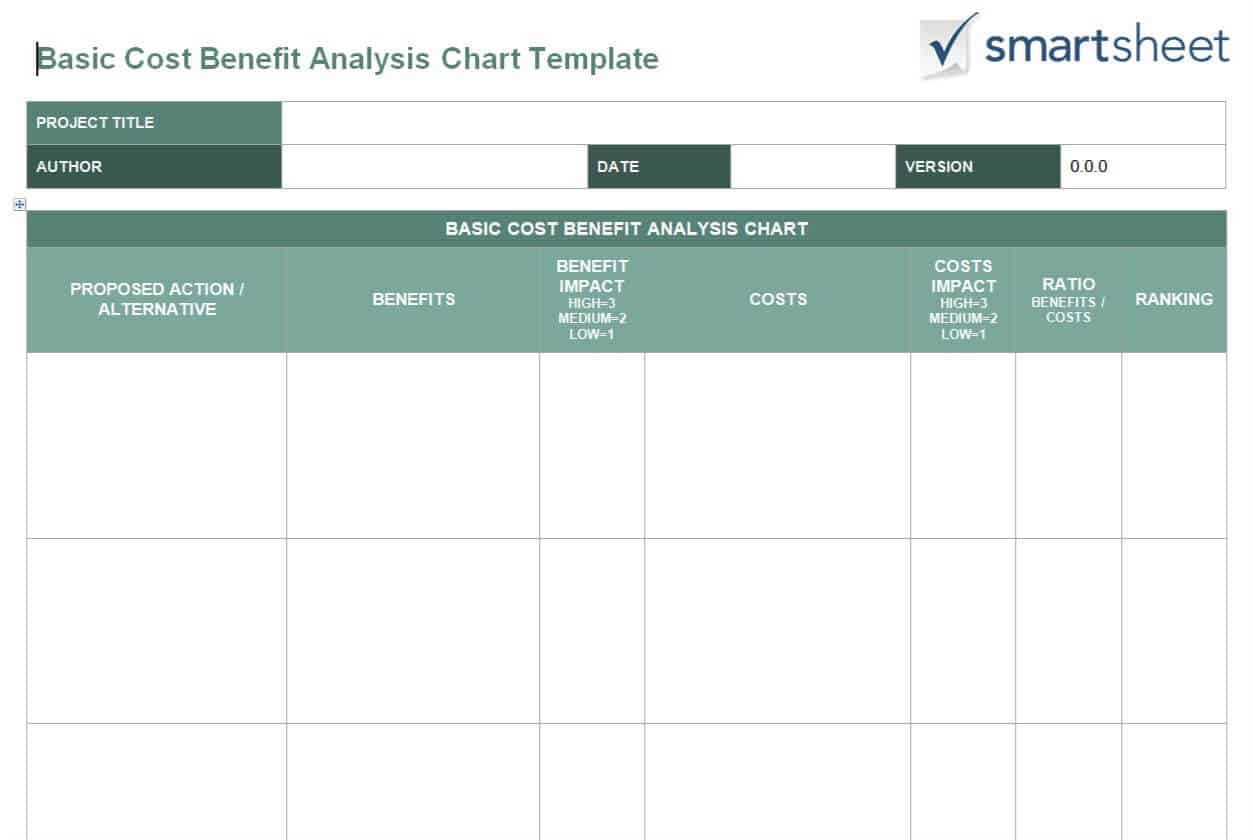
Basic Cost-Benefit Analysis Chart Template
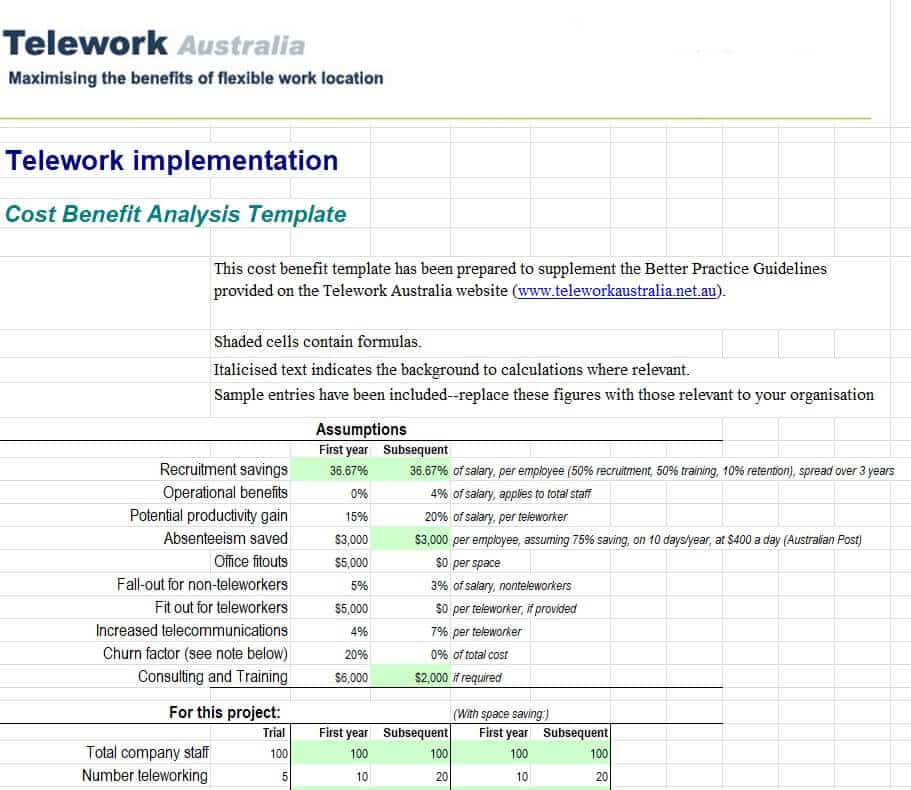
Company’s Cost-Benefit Analysis Template
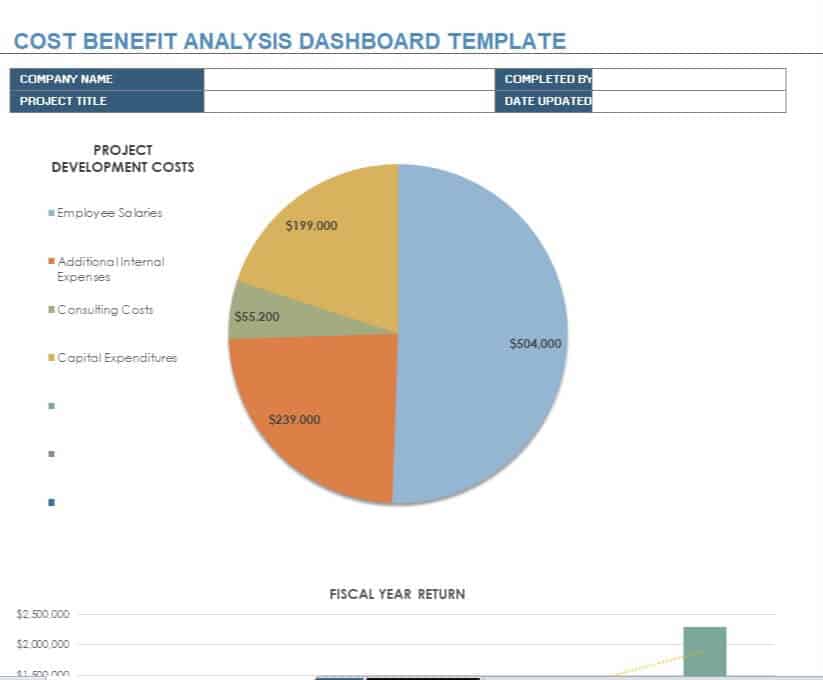
Cost-Benefit Analysis Dashboard Template
Free Cost-Benefit Analysis Template DOC
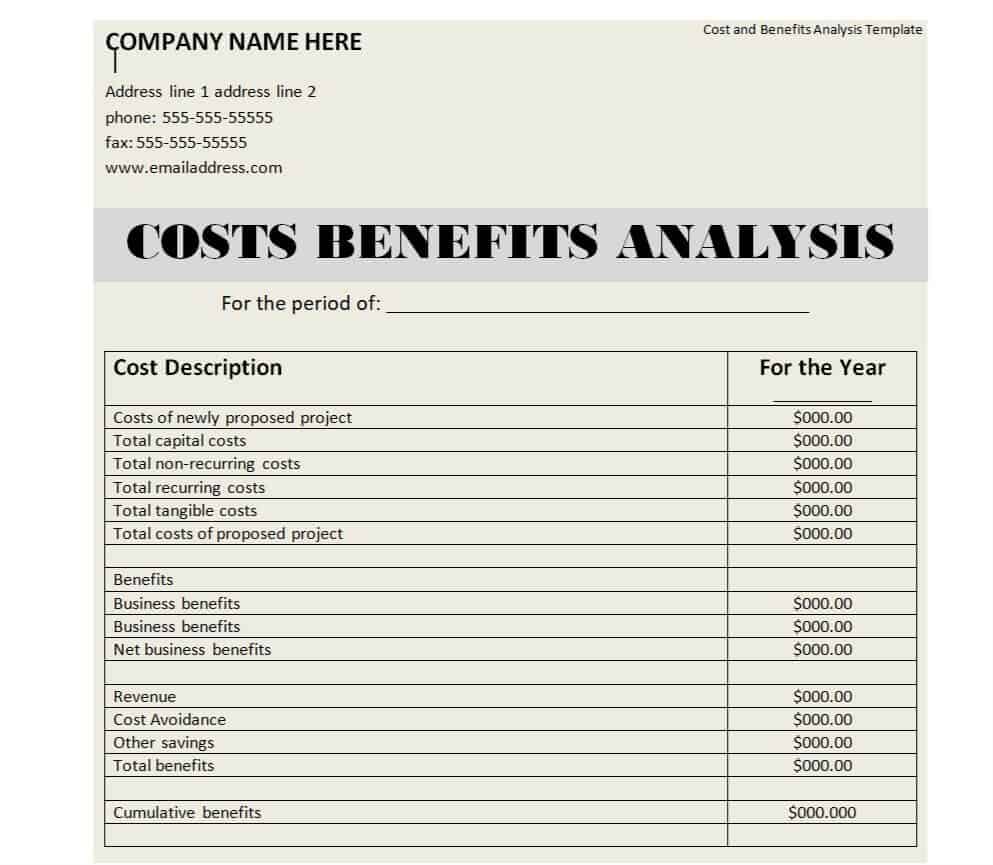
IT Project Cost-Benefit Analysis Template
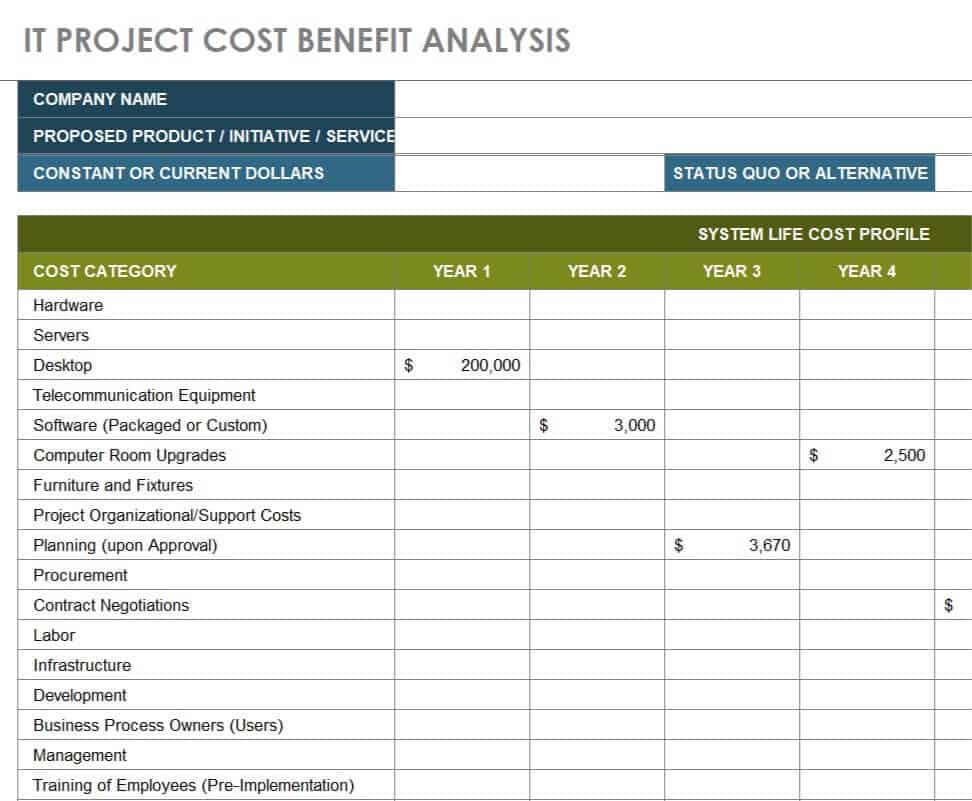
Online Cost-Benefit Analysis Maker Template
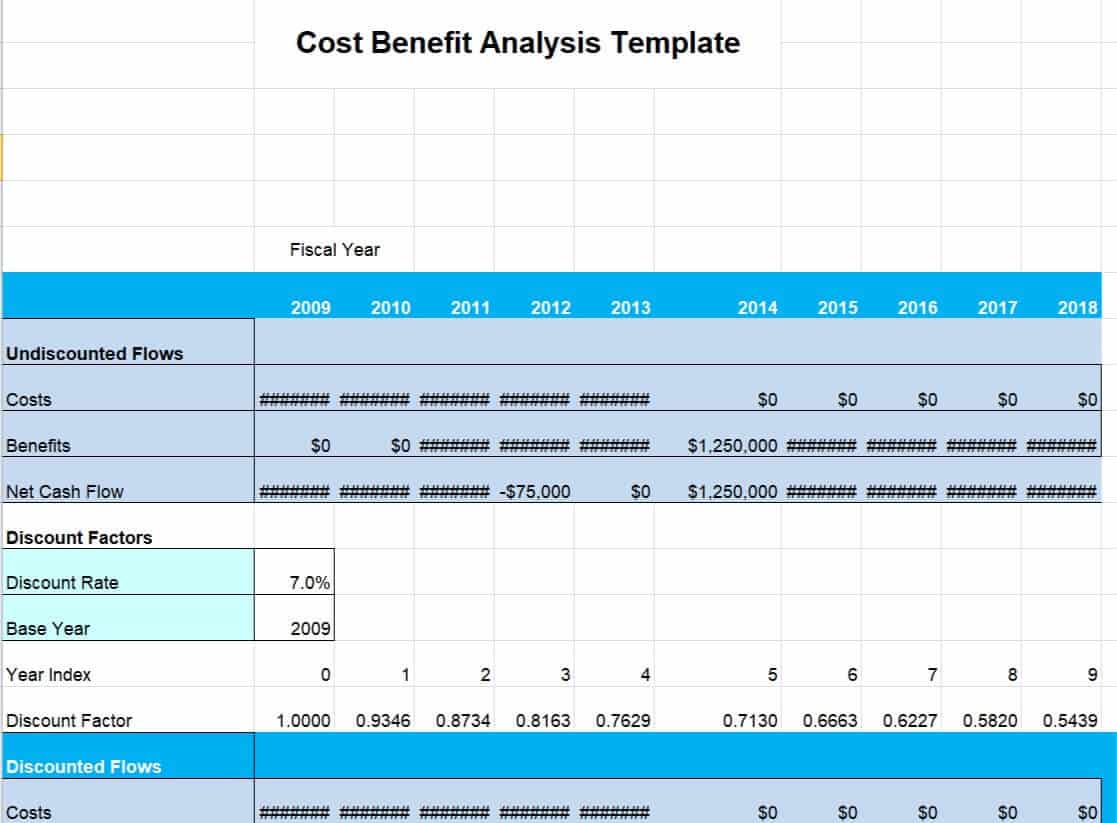
Elemental Cost-Benefit Analysis Template
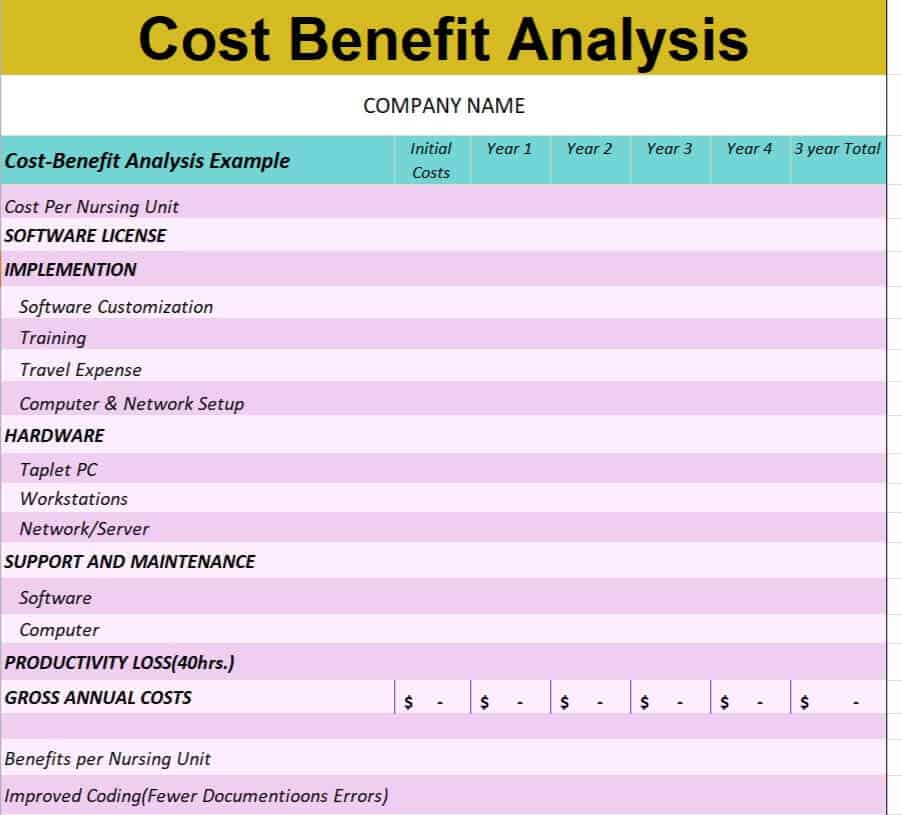
Small Business Cost-Benefit Analysis Template
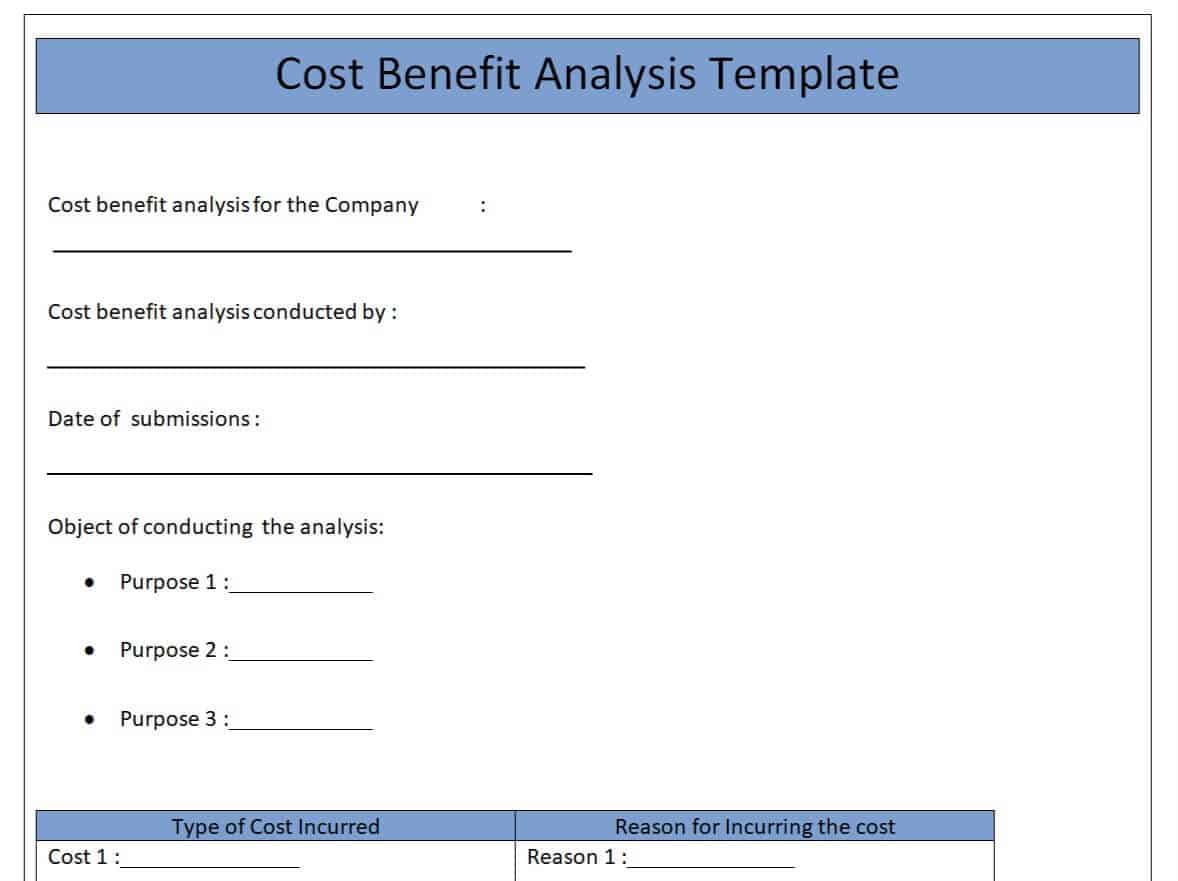
Organization’s Cost-Benefit Analysis Template
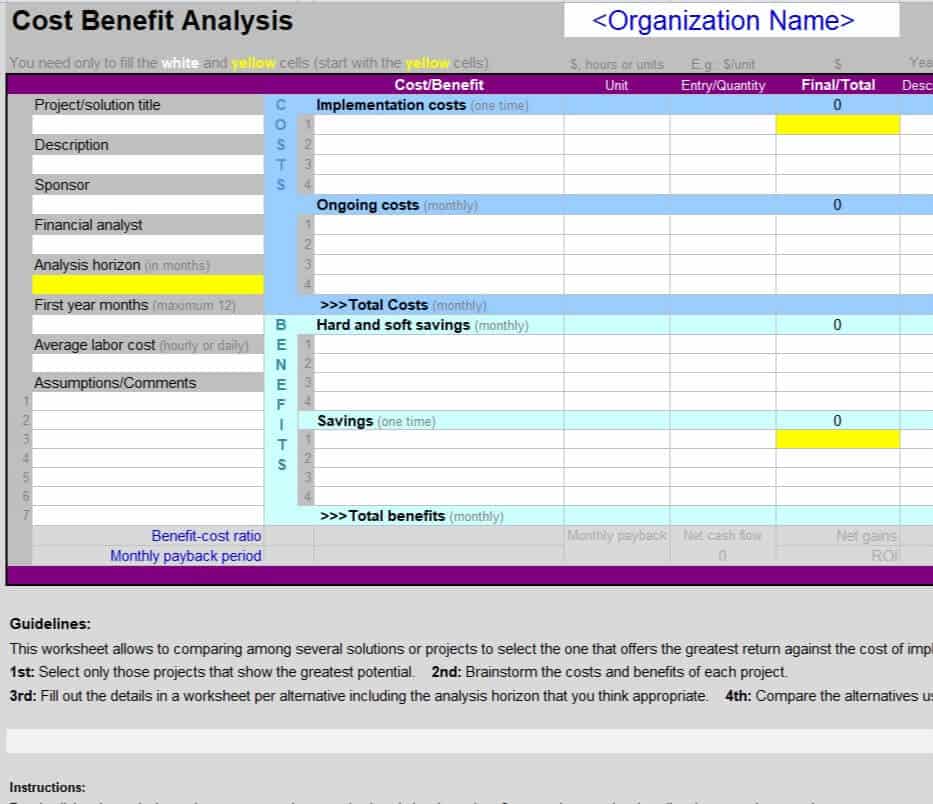
How to Conduct a Cost-Benefit Analysis Using These Templates
- Define the project or decision. Write a one-sentence statement of exactly what is being evaluated, so every cost and benefit you list can be checked against it.
- List every cost. Open one of the templates above and fill in direct costs first (materials, labor, software, equipment), then go back and add indirect costs (training, maintenance, downtime) that are easy to forget on a first pass.
- List every benefit. Include the obvious financial gains as well as the intangible ones, and note which benefits are certain and which are projected.
- Assign a dollar value to each line. Use quotes, past invoices, or industry benchmarks for costs, and conservative estimates for benefits that are harder to measure.
- Set your timeframe. Decide whether you are measuring the first year, a five-year horizon, or the full life of the asset, and apply a discount rate if benefits or costs stretch several years into the future.
- Total both columns and calculate the net benefit. Subtract total costs from total benefits, and calculate the benefit-cost ratio if you need a single comparable number for multiple projects.
- Review the result against your goals. A positive net benefit supports moving forward, but weigh it alongside risk, budget constraints, and strategic priorities before making the final call.
Common Mistakes to Avoid
- Ignoring indirect or intangible costs. Training time, maintenance, and the opportunity cost of staff hours rarely show up on an invoice, but they still belong in the analysis.
- Overly optimistic benefit estimates. Projected revenue and efficiency gains are easy to inflate; using conservative, well-documented figures keeps the analysis credible.
- Choosing the wrong timeframe. Measuring only the first year of a multi-year project (or vice versa) can make a good decision look bad, or a bad one look good.
- Skipping a sensitivity check. Testing how the result changes if a key cost rises or a benefit falls short shows how much confidence to place in the final number.
Tips for Turning Results Into Better Decisions
A finished cost-benefit analysis is most useful when it is treated as one input among several rather than an automatic verdict. Share the completed template with the people who will be affected by the decision, so assumptions can be challenged before they get baked into a final choice. Revisit the analysis if a major cost or benefit assumption changes partway through a project, since a CBA done at the proposal stage can go stale by the time work actually begins. Where the net benefit is close to zero, put more weight on qualitative factors such as risk, strategic fit, and reversibility, since a marginal financial case is often decided by considerations a spreadsheet cannot fully capture. Finally, keep the completed analysis on file: it becomes a useful reference point for judging whether similar projects delivered on their projected benefits.
Frequently Asked Questions
What’s the difference between cost-benefit analysis and ROI?
Return on investment (ROI) measures the financial gain from an investment relative to its cost, usually as a single percentage. Cost-benefit analysis is broader: it accounts for non-financial benefits and costs as well, and it is often used to decide whether to proceed with a project in the first place, not just to measure the return after the fact.
How do you account for intangible benefits?
Intangible benefits such as improved morale, reputation, or customer satisfaction are estimated by assigning them a reasonable monetary proxy, for example the cost of the turnover or lost business they help prevent. Where a dollar value truly cannot be assigned, they are noted alongside the numerical analysis so decision-makers can weigh them qualitatively.
Is cost-benefit analysis only for large projects?
No. While it is standard practice for large capital projects and government programs, the same method scales down easily to smaller decisions, such as choosing new software, hiring an additional employee, or investing in a piece of equipment.
What is a benefit-cost ratio?
A benefit-cost ratio is the total value of benefits divided by the total value of costs. A ratio above 1 indicates the benefits outweigh the costs, and a higher ratio generally signals a more favorable project when comparing multiple options side by side.
Related templates you may find useful: free swot analysis templates, free non-disclosure agreement templates and free expense report templates.