

You can easily get free sponsorship agreement templates here. The Sponsorship Agreement Templates can be downloaded from the below download button.
A sponsorship agreement is a formal agreement signed by two parties that govern the legal relationship of two groups or companies, sponsor and other entitled to enforce the sponsorship activities. A sponsor is generally an individual or company who finance an activity or event produced by another group for business purpose. Sponsorship often assists in advertising an event which helps to support all goals of the business or organization.
A sponsorship agreement helps to protect both parties, the sponsor and others who receiving sponsorship. It is a very important document and must be prepared in a professional format. Various templates and samples are available on the internet for free in order to prepare a perfect sponsorship agreement. Those samples and templates are easily editable; you can add information in them that you want. You can also get guidelines and instructions on the internet to make your sponsorship agreement more effective.
So many times in this world, there is a situation where one person has an innovative idea but does not have adequate funds to execute his idea. On the other hand, one has an adequate amount of funds with him but is unable to invest them in a prospective project. Therefore, there is a big gap being faced in such a case between demand and supply of funds and creativity.
In any such situation, a sponsorship agreement comes in handy where one party provides the funds to the needed party. Sponsorship means providing the funds on behalf of the other party either for a social cause or for an investment purpose. It may be regarded as a type of financing activity. It is generally done on a charitable basis, however, to derive the indirect benefits.
Download Sponsorship Agreement Templates:
Event Sponsorship Agreement Template

Media Sponsorship Agreement Template

Sample Sponsorship Agreement Template

Sponsorship Contract Template WORD
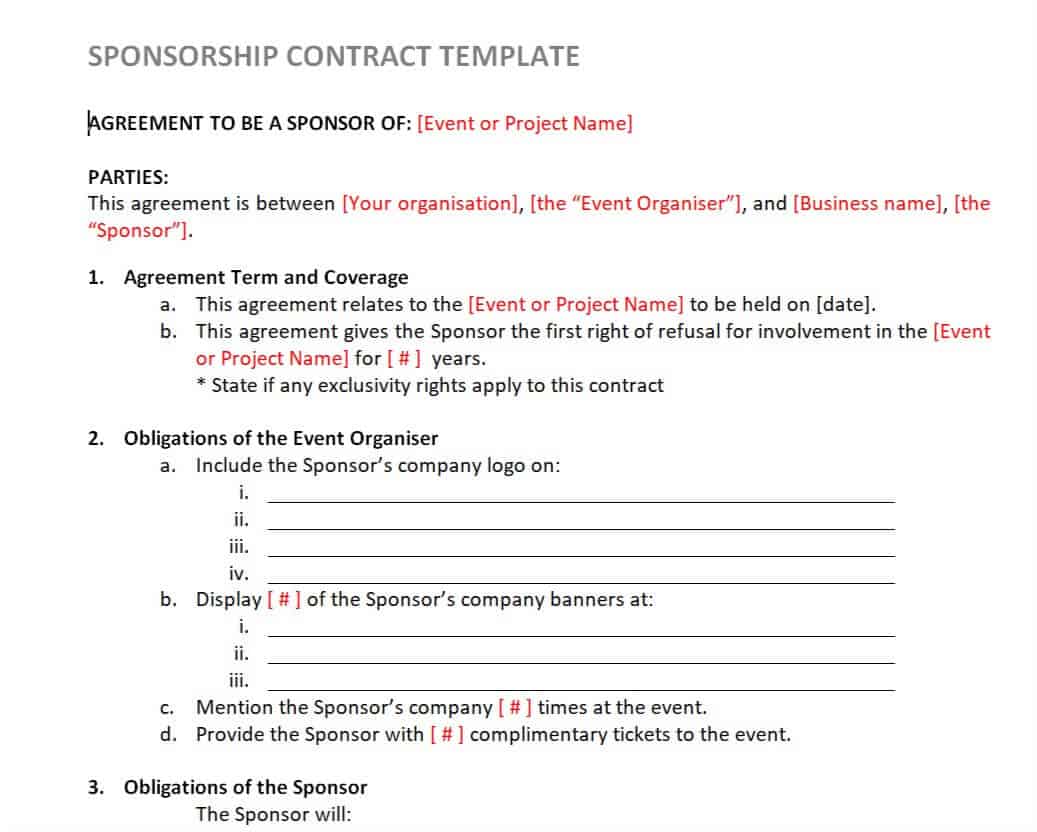
Sponsorship Agreement Terms & Conditions Sample

Sponsorship Agreement Format Template

Sponsorship Agreement Template PDF

Simple Sponsorship Agreement Template WORD

Printable Club Sponsorship Agreement Template

Online Sample Sponsorship Agreement Template

Editable Sponsorship Agreement Word Template

Model Corporate Sponsorship Agreement Template

Sponsorship Agreement Template DOC Format

Who Uses a Sponsorship Agreement Template?
Sponsorship agreements show up wherever one party is willing to fund an activity in exchange for visibility, goodwill, or a commercial return. Event organizers use them to lock in funding from corporate sponsors before venues and vendors are booked. Sports clubs and youth leagues use them to formalize jersey, banner, or naming-rights deals with local businesses. Nonprofits and charities rely on them to document in-kind and cash sponsorships tied to fundraisers and awareness campaigns. Media outlets, podcasts, and content creators use them to spell out what a sponsor gets in return for backing a broadcast, episode, or publication. Even schools, conferences, and community festivals use a sponsorship agreement to keep every funding relationship on a clear, written footing instead of a verbal understanding that can be misremembered later.
Key Elements a Sponsorship Agreement Should Include
A well-drafted sponsorship agreement is more than a handshake in writing. To hold up in practice, it should cover:
- Parties and roles – full legal names and contact details of the sponsor and the sponsored party.
- Scope of sponsorship – the exact event, activity, publication, or period the agreement covers.
- Sponsorship value and payment terms – cash amount, in-kind contribution, or a mix, plus the payment schedule.
- Deliverables and benefits – what the sponsor receives: logo placement, mentions, booth space, signage, or media credits.
- Term and termination – the start and end dates, and the conditions under which either party can exit early.
- Intellectual property and brand use – rules for using each other’s name, logo, and trademarks, and for how long.
- Exclusivity clauses – whether the sponsor is the only company in its category or industry at the event.
- Liability and indemnification – who is responsible if something goes wrong during the sponsored activity.
- Confidentiality – protection for any sensitive business information shared between the parties.
- Governing law and dispute resolution – which jurisdiction’s laws apply and how disagreements will be settled.
How to Create a Sponsorship Agreement: Step-by-Step
- Download a template. Pick the sample above that matches your situation – event, media, club, or corporate sponsorship – and open it in Word or your preferred editor.
- Identify both parties clearly. Add the full legal name, address, and authorized signatory for the sponsor and the sponsored organization.
- Define the sponsorship package. Spell out exactly what is being funded and what level of sponsorship is being agreed to (title sponsor, gold, silver, media partner, etc.).
- List the deliverables on both sides. State what the sponsor pays or provides, and what the sponsored party will deliver in return.
- Set the timeline. Add the agreement’s effective date, the event or campaign dates, and the expiration date.
- Add legal and financial clauses. Include payment terms, cancellation conditions, liability, and confidentiality language.
- Review with both sides. Circulate the draft so each party can confirm the terms match what was discussed.
- Sign and date the agreement. Have an authorized representative from each party sign, and keep a copy on file for both organizations.
Common Mistakes to Avoid
- Leaving deliverables vague, such as “logo exposure,” instead of specifying size, placement, and duration.
- Skipping a termination clause, which leaves both sides stuck if the event is cancelled or postponed.
- Forgetting to define exclusivity, which can lead to a competitor sponsoring the same event.
- Not addressing what happens to unpaid or partially paid sponsorship funds if the agreement ends early.
- Using a generic template without adjusting it to the specific event, industry, or local regulations.
- Failing to get the agreement signed before the sponsor’s funds or the sponsored party’s benefits are delivered.
Practical Tips for a Stronger Agreement
- Keep the language plain and specific – numbers, dates, and measurable deliverables prevent disputes later.
- Attach a schedule or exhibit listing exact branding assets, banner sizes, or media specs instead of cramming them into the main clauses.
- Build in a review point mid-way through longer sponsorships to confirm both sides are meeting their commitments.
- Keep a signed copy – digital and physical – accessible to both the sponsor and the sponsored organization.
- Revisit and update the template each year so it reflects current contact details, rates, and branding guidelines.
Frequently Asked Questions
Is a sponsorship agreement legally binding?
Yes. Once both parties sign it, a sponsorship agreement is a legally binding contract, which is why the terms – payment, deliverables, and termination conditions – need to be accurate and complete before signing.
Can a sponsorship agreement template be used for any type of event?
Most templates are flexible enough for sports, corporate, media, or community events, but you should still adjust the deliverables, exclusivity, and liability sections to match the specific event or activity.
What is the difference between a sponsorship agreement and a donation?
A donation is typically given without expecting anything measurable in return, while a sponsorship agreement ties the funds or in-kind support to specific benefits, such as brand visibility, mentions, or promotional rights.
Do I need a lawyer to draft a sponsorship agreement?
A template can cover most standard situations, but for high-value, multi-year, or complex sponsorships, having a legal professional review the agreement helps catch risks that a generic template may not address.
Disclaimer: These sponsorship agreement templates are provided for general informational and reference purposes only and do not constitute legal advice. Sponsorship terms, disclosure requirements, and contract laws vary by jurisdiction and industry, so it is recommended that you consult a qualified legal professional to review or customize any agreement before it is signed and put into use.

