
You can download couple of free distributor agreement templates at this page. When a business works as a daily routine, it deals with a lot of distributors or suppliers. With whom it purchases or sells a lot of goods produced or supplies in bulk quantity. Therefore, an agreement is signed between the principal and agent known as a consignment agreement in which the principal dispatches the goods to agents for further sale and agents further sells those goods to the ultimate consumer at the price fixed by the manufacturer and charge some fees as a commission for providing this service. The cosigner acts as a middleman between the manufacturer and the ultimate consumer. Similarly, there are distributors, which do not share the relationship of principal agent, but works on an agreement basis known as Distributor Agreement. These are also known as agreement for distribution. They provide clauses, terms, and condition for sale in the area assigned to them. We hope you like these free distributor agreement templates.
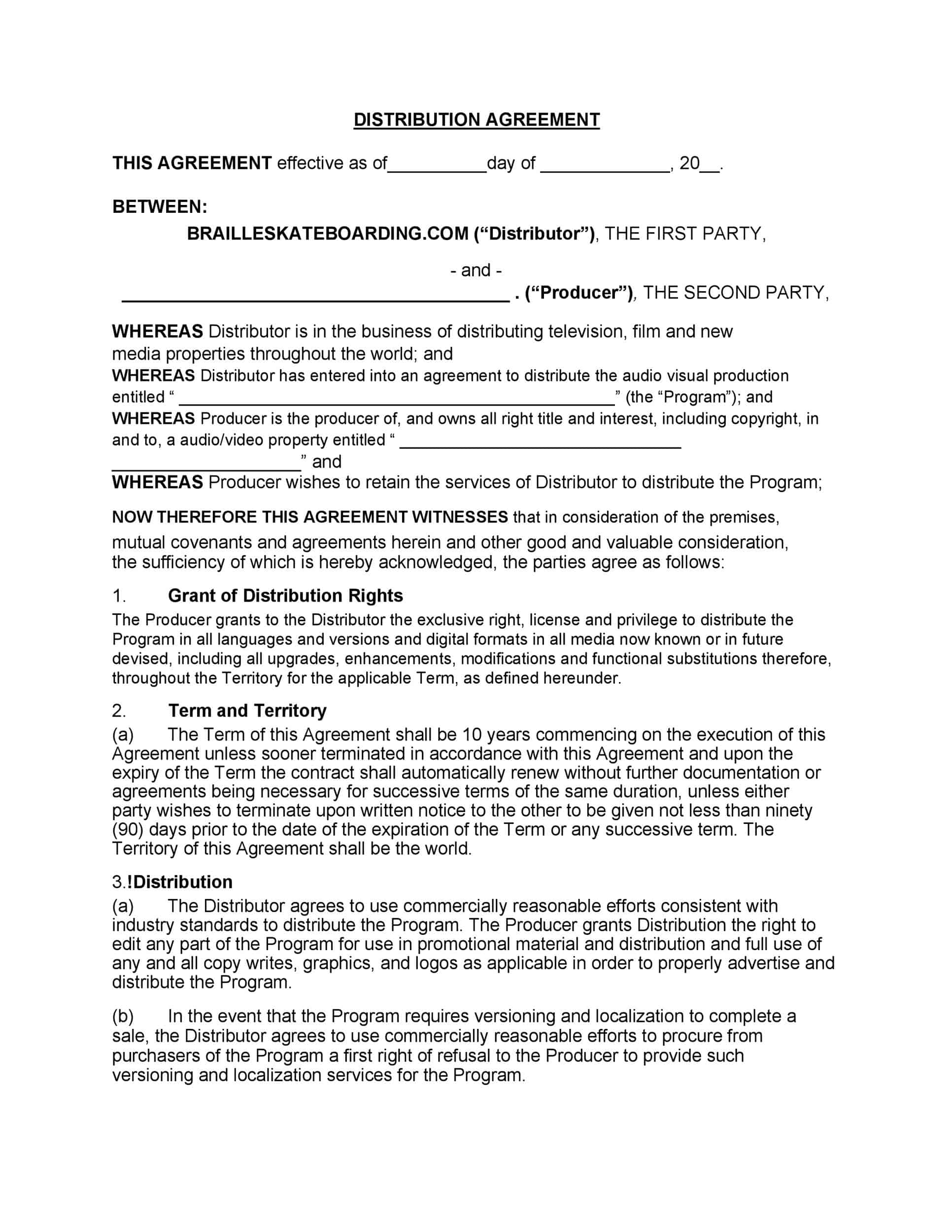
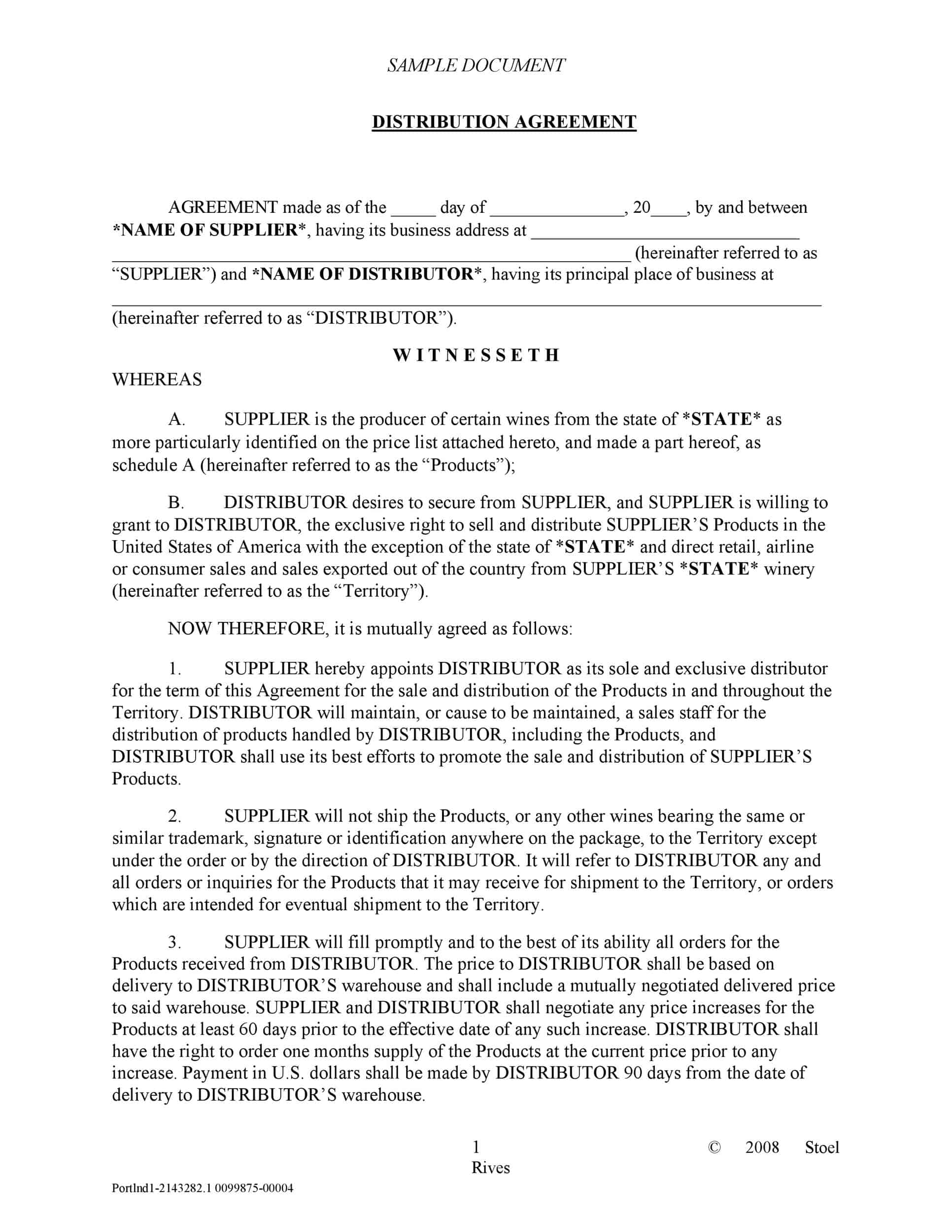
Distributor agreement is a kind of agreement which usually signed by vendor (manufacturer of goods) and a distributor in order to distribute or sell manufactured items or goods. Distributor agreement stipulates the terms and conditions and other liabilities for both parties. A Distributor agreement can help to let both involved parties exactly know about their rights and obligation. It may identify all terms and conditions and other important information related to distribution such as, kind of product, minimum sale target, time of payment and mode of payment etc. A distribution agreement should be in written form and must sign by both parties. Distribution agreement templates are available on internet for free of cost. We can utilize such templates in order to prepare a distributor agreement for our business or company. It is best way and can help to minimize the mistakes and problems. Check our free collection of distributor agreement templates.
What Is a Distributor Agreement?
A distributor agreement is a legally binding contract between a manufacturer or supplier (the principal) and a distributor who agrees to market, sell, and deliver that company’s products to retailers, wholesalers, or end customers within a defined territory. Unlike a simple purchase order, it sets out an ongoing commercial relationship: how products move from the manufacturer’s warehouse to the market, who controls pricing, how long the arrangement lasts, and what happens if either side wants to end it. Because the distributor is buying inventory and reselling it at its own risk, rather than acting purely as a sales agent on commission, the agreement also needs to address ownership of goods, payment timing, and liability for defective products.
Who Needs a Distributor Agreement?
Manufacturers use these agreements to expand into new regions or industries without building their own sales force. Wholesalers and distributors use them to lock in supply at agreed pricing and to secure exclusive or protected territories that justify their marketing investment. Retail chains that buy in bulk directly from a producer, and even individual entrepreneurs who want to become the authorized reseller of a brand in their country, all rely on a written distributor agreement to make the relationship enforceable. Without one, either party can walk away at any time, change terms unilaterally, or dispute what was actually promised verbally.
Key Elements Every Distributor Agreement Should Include
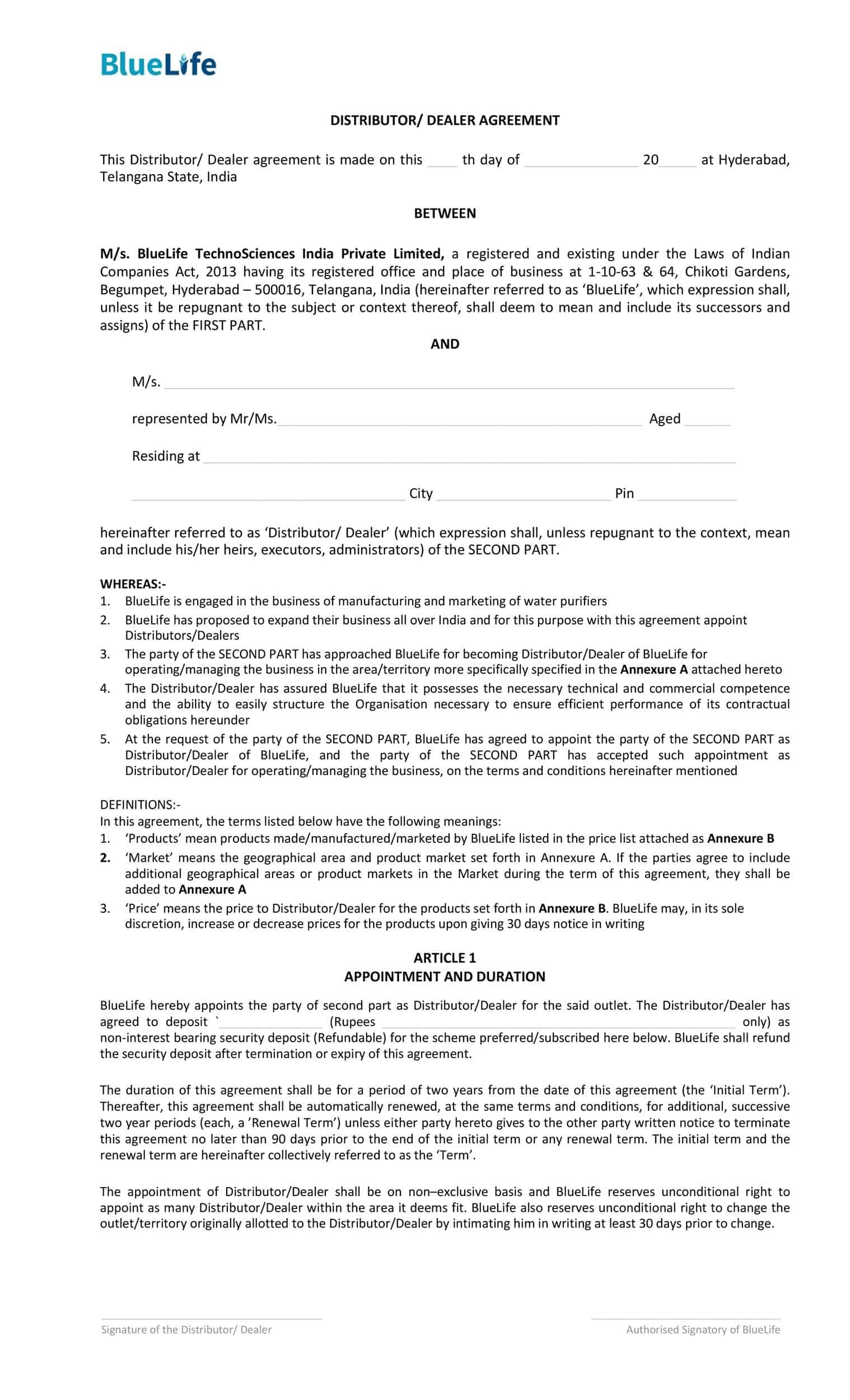
A well-drafted distributor agreement, whether you start from one of the templates below or a lawyer-drafted original, should cover the following:
- Territory: the geographic area, market segment, or customer base the distributor is authorized to sell into, and whether that territory is exclusive or shared with other distributors.
- Pricing and payment terms: the wholesale price the distributor pays, invoicing schedule, accepted payment methods, and consequences of late payment.
- Minimum purchase requirements: the sales volume or order value the distributor must meet to keep exclusive rights or avoid termination.
- Exclusivity clauses: whether the manufacturer can appoint other distributors in the same territory, and whether the distributor can sell competing brands.
- Term and termination: the initial contract length, renewal conditions, and the notice period and grounds required to end the agreement early.
- Liability and warranties: who is responsible for defective goods, product recalls, shipping damage, and any limits on each party’s financial liability.
- Intellectual property use: how the distributor may use the manufacturer’s trademarks, logos, and marketing materials.

Click on the download button and make this distributor agreement template your own.

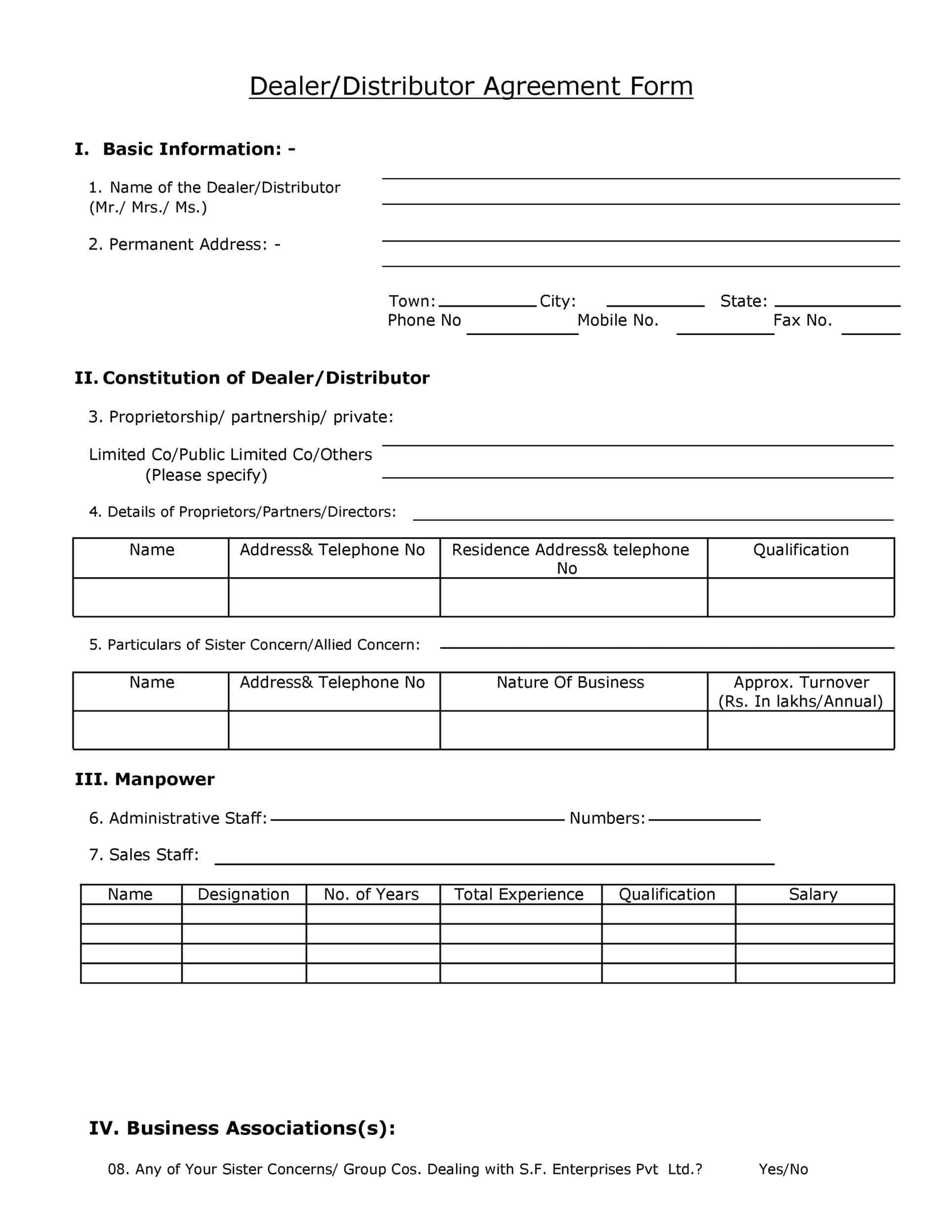
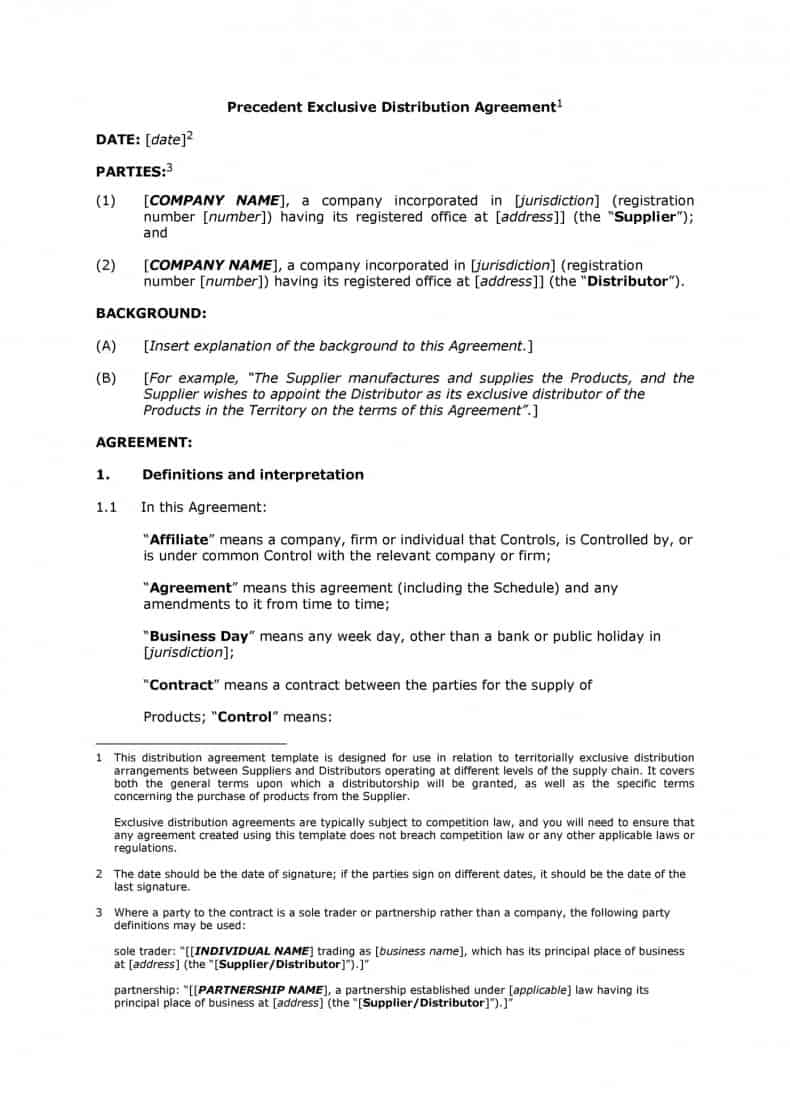
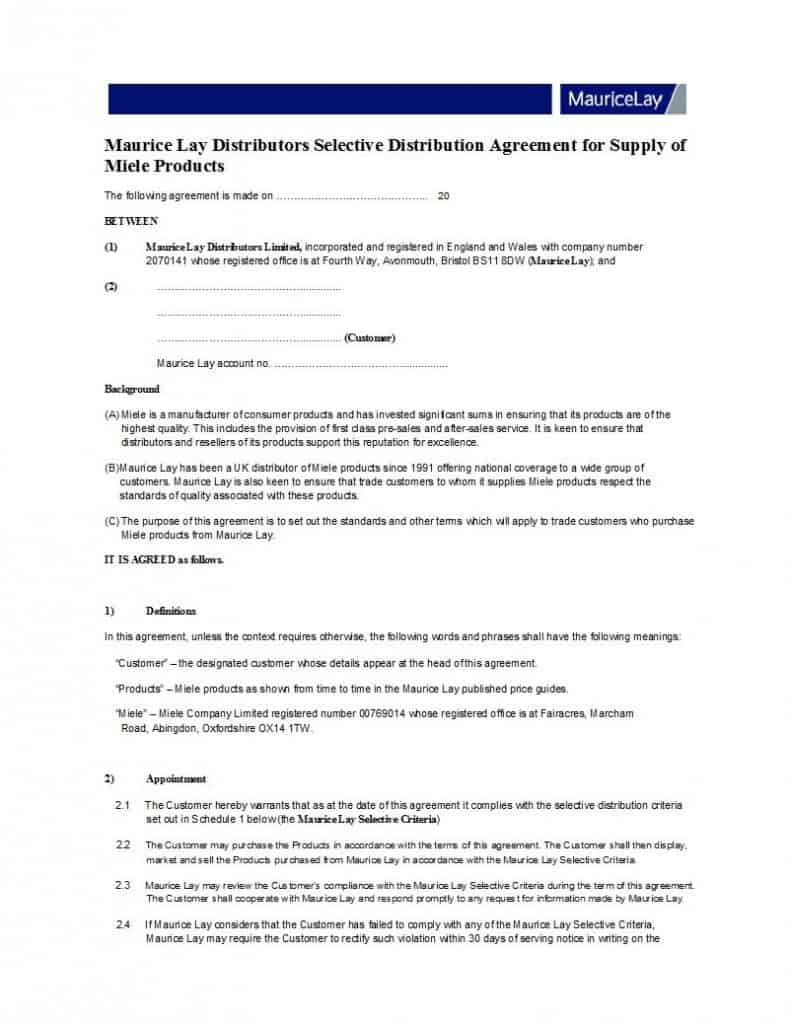
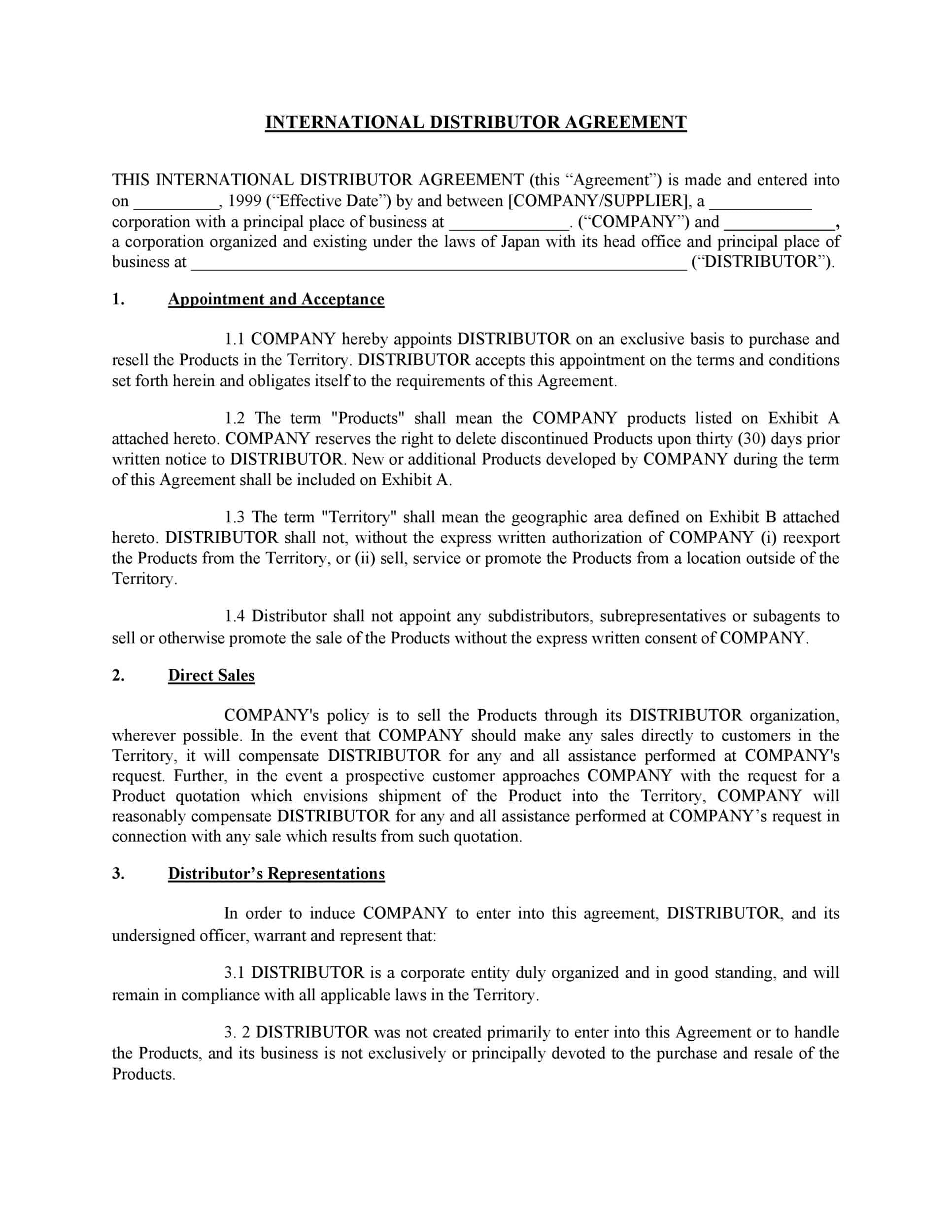
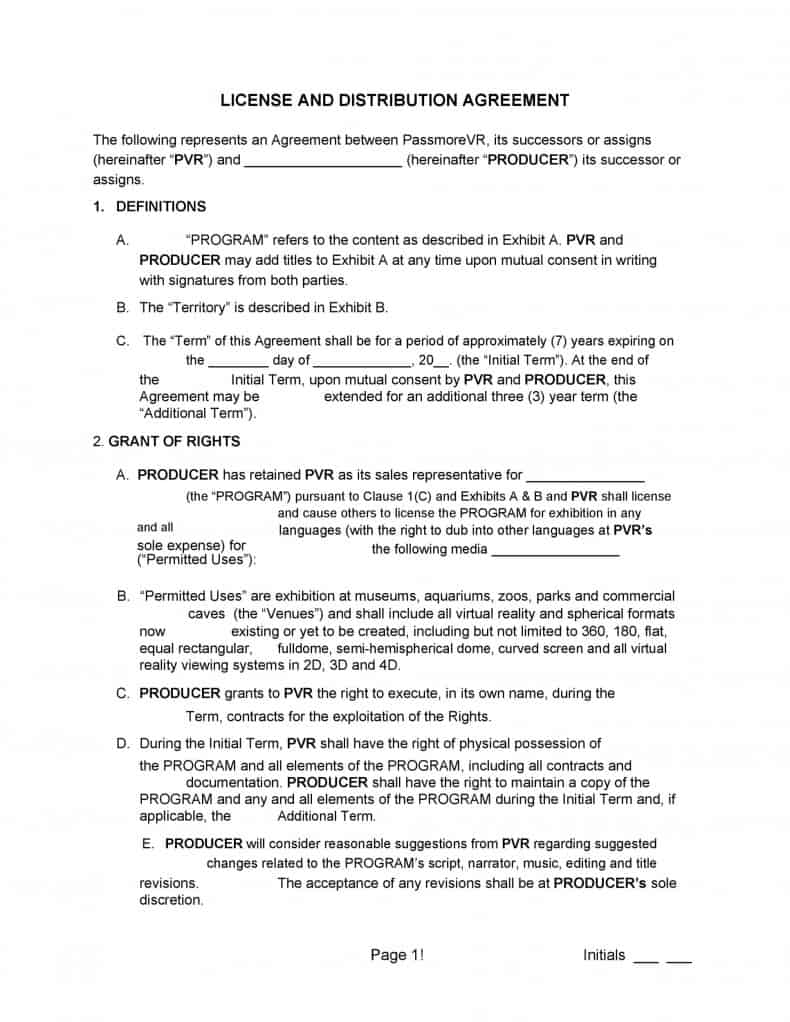
More Distributor Agreement Templates:



How to Review and Use One of These Templates
Start by downloading the template format that matches your workflow (Word, PDF, or the editable ZIP package above) and read it in full before filling in a single field. Confirm that the governing law and jurisdiction clause matches the country or state where your business operates, since a template written for one legal system may reference concepts that do not apply elsewhere. Fill in the identifying details first (party names, addresses, effective date, and territory), then move to the commercial terms (pricing, minimum purchase volumes, and payment schedule) so both sides can confirm the numbers before signing. Finally, review the termination and liability clauses closely, since these are the sections most often disputed later, and adjust them to reflect what you and the other party actually agreed to.
Common Mistakes to Avoid
The most frequent error is leaving the territory definition vague, for example writing “the northeast region” without naming the specific states, provinces, or postal codes covered, which leads to disputes when a second distributor is appointed nearby. Another common mistake is skipping minimum purchase requirements entirely, which removes any performance standard the manufacturer can hold the distributor to. Businesses also often copy a termination clause from an unrelated contract without checking the required notice period, leaving them locked into an underperforming relationship for longer than intended. Finally, many agreements fail to specify who absorbs the cost of returned or defective inventory, which becomes an expensive argument after the first damaged shipment arrives.
Practical Tips for Drafting a Distributor Agreement
Keep the language specific rather than aspirational: replace phrases like “reasonable efforts to promote the product” with a measurable commitment such as a minimum order quantity per quarter. Attach a product list and current price sheet as a schedule to the agreement rather than typing prices into the body text, so future price changes do not require rewriting the whole contract. If the relationship is exclusive, add a performance review date, six or twelve months in, where both sides can renegotiate territory or targets based on actual results. And always keep a signed copy, in the format both parties agree is authoritative, stored somewhere both the manufacturer and distributor can retrieve it if a dispute arises.
Frequently Asked Questions
Is a distributor agreement the same as a reseller agreement?
Not exactly. A distributor typically buys larger volumes at wholesale prices and often has territory rights and minimum purchase obligations, while a reseller agreement is usually simpler and covers smaller-scale resale without those exclusivity or volume commitments.
Can a distributor agreement be exclusive and non-exclusive at the same time?
Yes, in different senses: many agreements grant exclusivity by territory, so only one distributor per region, while allowing the manufacturer to appoint separate distributors for other product lines or channels, such as online sales.
What happens if the distributor misses the minimum purchase target?
This depends entirely on what the agreement specifies. Common outcomes include losing exclusive territory rights, moving to a non-exclusive arrangement, or, in more serious cases, termination of the agreement with the notice period stated in the termination clause.
Do I need a lawyer if I am using a free template?
A template is a useful starting point and can save drafting time, but it is not a substitute for legal review, especially for the pricing, exclusivity, and termination sections, which should reflect your specific deal and local law.
This template is provided for general informational purposes and is not a substitute for legal advice. Consult a qualified attorney before finalizing any distributor agreement.