

A daily planner or a day planner is an effective tool to keep track of all your tasks and activities that you need to accomplish in a day. A greatly useful collection of Daily planner Templates is available here. It also helps a person to organize a busy schedule for a day. A well-prepared daily planner can help you to remember daily events, jobs, appointments, and tasks. A daily planner also helps you to put in order your assignments by their due date and can be referenced at any time. It also helps you to increase your productivity and save time for extra activities. Nowadays it is very easy to prepare and manage a daily planner. You can make it on a piece of paper and also can prepare and manage it on your mobile phone or computer. There is a huge variety of applications and software that enable you to design a daily planner for your daily affairs.
You can also browse our full collection of free plan templates for more ready-to-use designs.
To plan all the activities which an individual has to perform on daily basis is known as a daily planner. The activity includes study, gardening, entertainment, and spiritual offerings. By planning one can be punctual and hardworking in concern to their targets and goals. Every professional person adopts the planner for completing their work in a convenient way. A daily planner Template will be suitable for you. A daily planner shows the behavior of a person toward every task he/she is going to perform. Mostly accountants, teachers, and students carry on planning their tasks and responsibilities on daily issues. The organization to be complete and perfect has to plan its accomplishments and suggestions daily for showing to an employer. The whole staff is appreciated by the manager then bonuses and awards are given to them. The daily planner represents the efficiency of the crew or management to the boss.
What Is a Daily Planner?
A daily planner is a single-day organizing page that pulls everything you need to manage the next 24 hours into one place: your task list, your appointments, your top goals, and space for notes or habit tracking. Instead of juggling a wall calendar, a separate notebook, and a handful of sticky notes, you work from one sheet that shows what has to happen today and roughly when. Because the focus is narrowed to one day, a planner makes it easier to decide what genuinely matters right now instead of getting lost in a long-running project list or a month-long calendar view. Most of the templates below combine a prioritized to-do section, a block for top goals, room for time-sensitive appointments, and open space for notes, so nothing important has to live in a separate app or scrap of paper.
Daily Planner vs. Daily Schedule: What’s the Difference?
The terms “daily planner” and “daily schedule” get used interchangeably, but they solve different problems. A daily schedule is essentially an hour-by-hour timetable: you write in what happens at 9 a.m., what happens at 10 a.m., and so on, and its only job is to map time slots to activities. A daily planner does more than map time. Time-blocking is usually just one section of a planner, sitting alongside a prioritized to-do list, a top-three-priorities box, a notes area for ideas and reminders that do not belong on a clock, and often a small habit tracker for things like water intake or exercise. If all you need is a printable hour-by-hour grid, a dedicated daily schedule template covers that on its own. If you want a page that also tells you what matters most today, what you have not finished yet, and what you were thinking about while you worked, a daily planner template is the better fit, since it organizes the whole day rather than just the clock.
Who Uses a Daily Planner?
Daily planners show up in a wide range of routines because the format adapts to whatever a person needs to track that day.
- Students use a daily planner to track assignments, reading, and study blocks between classes.
- Working professionals use one to separate meetings from focused work and to keep a running list of follow-ups.
- Freelancers and remote workers rely on a planner to divide time across multiple clients or projects in a single day.
- Parents and homemakers use it to coordinate errands, school pickups, meals, and household tasks.
- Small-business owners use a daily planner to keep sales calls, orders, and admin work from colliding.
- Teachers use it to plan lessons, grading, and parent communication around a fixed class schedule.
Key Elements of an Effective Daily Planner
Not every planner needs every feature, but the templates below draw on the same core building blocks:
- Date and day header so the page is easy to file or reference later.
- Top priorities — a short list, usually three to five items, of what must get done regardless of what else happens.
- Time-blocking or hourly slots for meetings and appointments that are fixed to a specific time.
- A general to-do list for tasks that matter today but are not tied to a specific hour.
- Notes space for ideas, reminders, or details that do not fit anywhere else.
- A habit or routine tracker for recurring items like water, exercise, or medication.
- Checkboxes so finished items are visibly marked off, which is what makes a planner satisfying to use.
Download the BEST Daily Planner Templates
Official Daily Planner Template
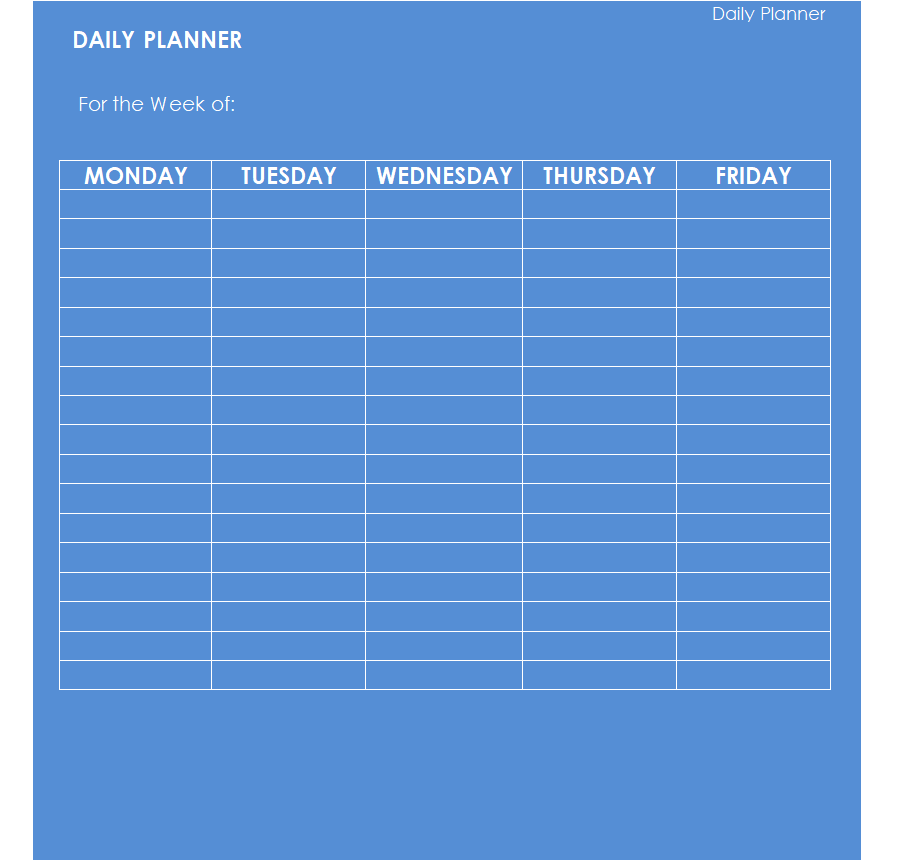

Blank Daily Planner Word Template
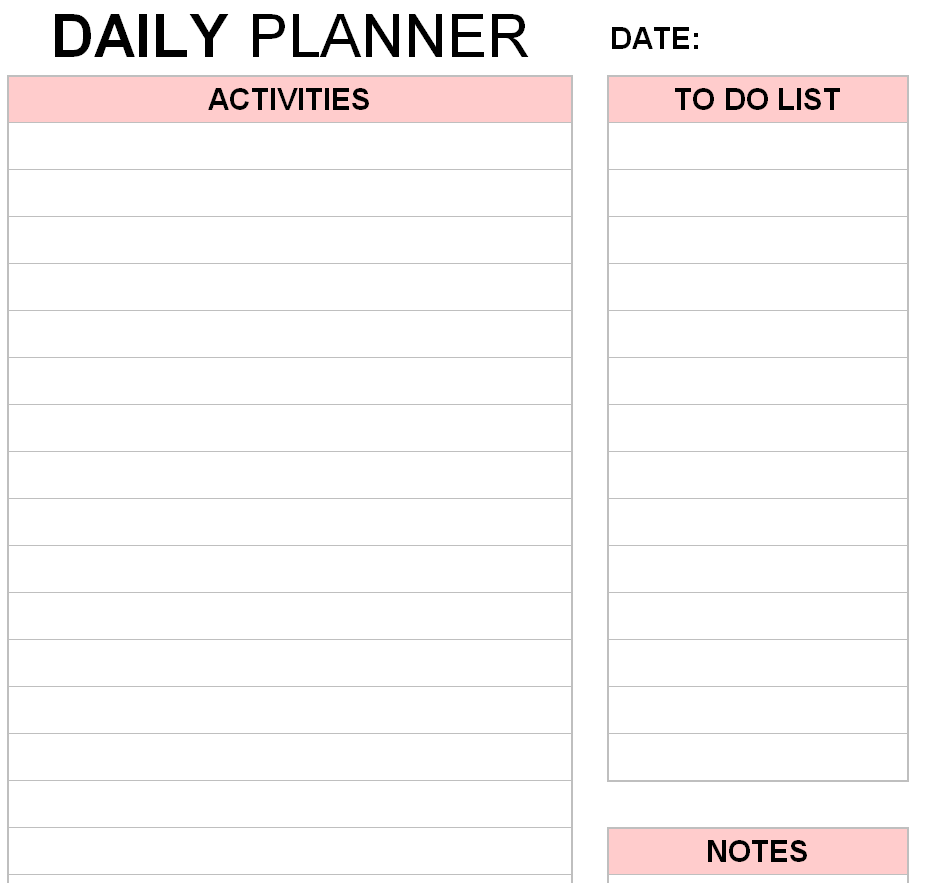
Free Printable Daily Planner Template
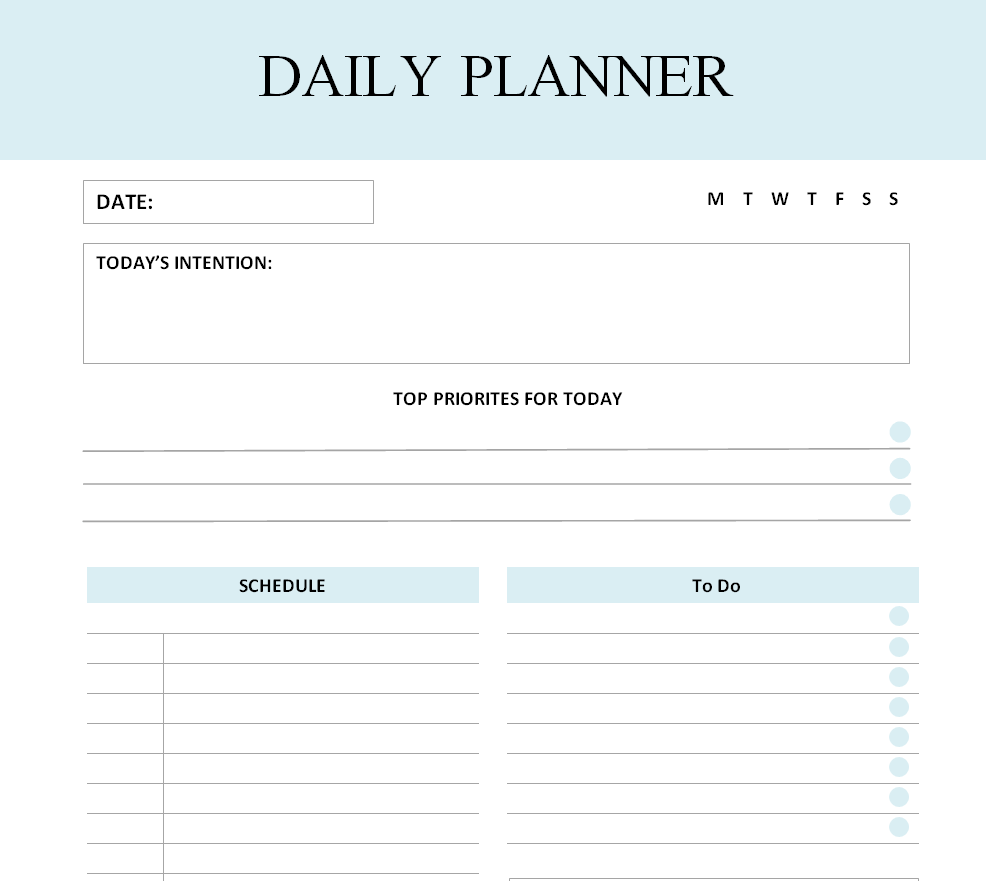
Special Daily Tasks Planner Template
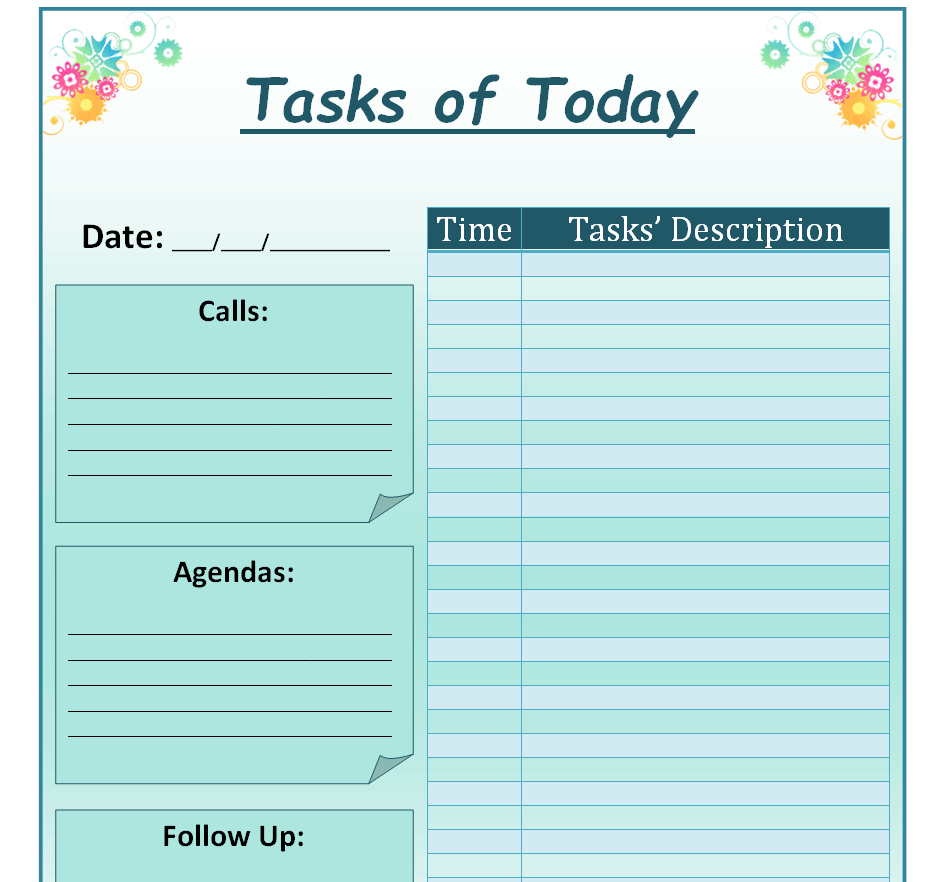
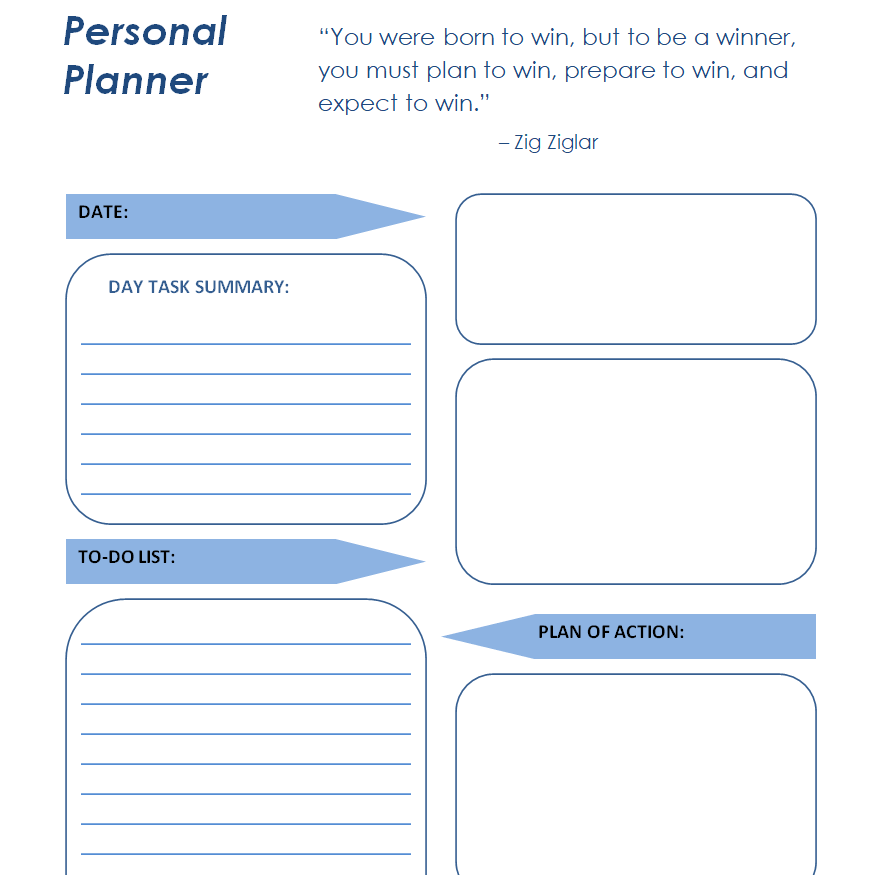
Personal Daily Planner Word Template
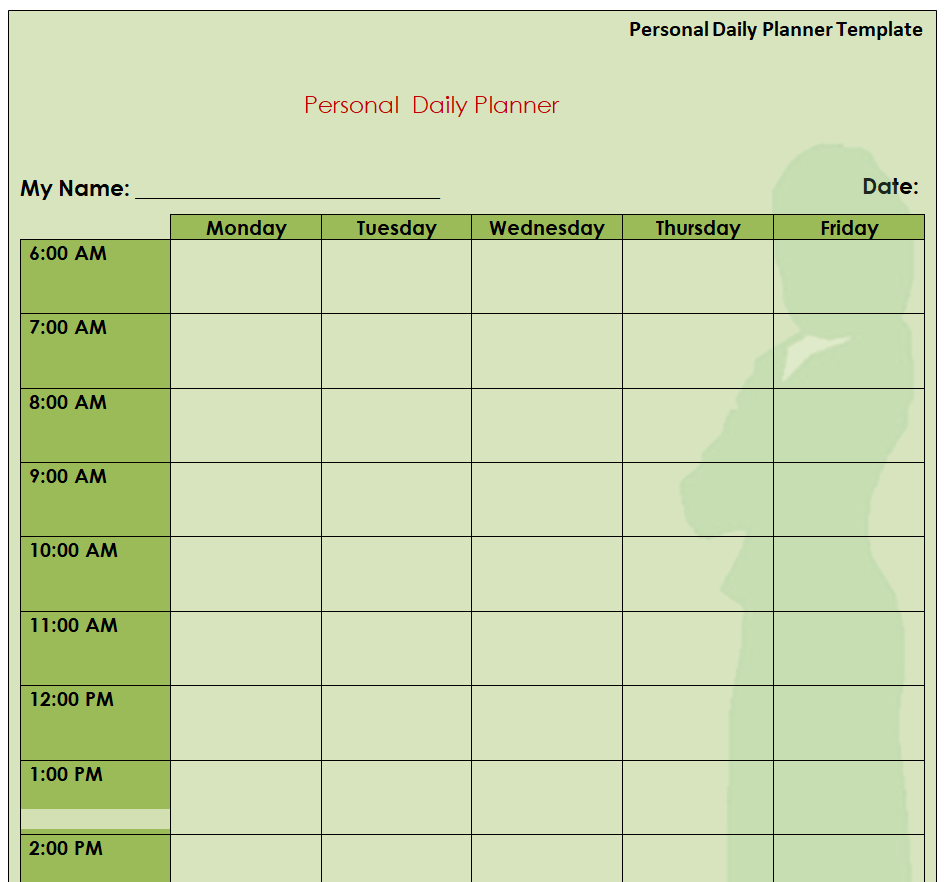
Standard Planner Template for the Day

Free Customizable Daily Planner Doc Template
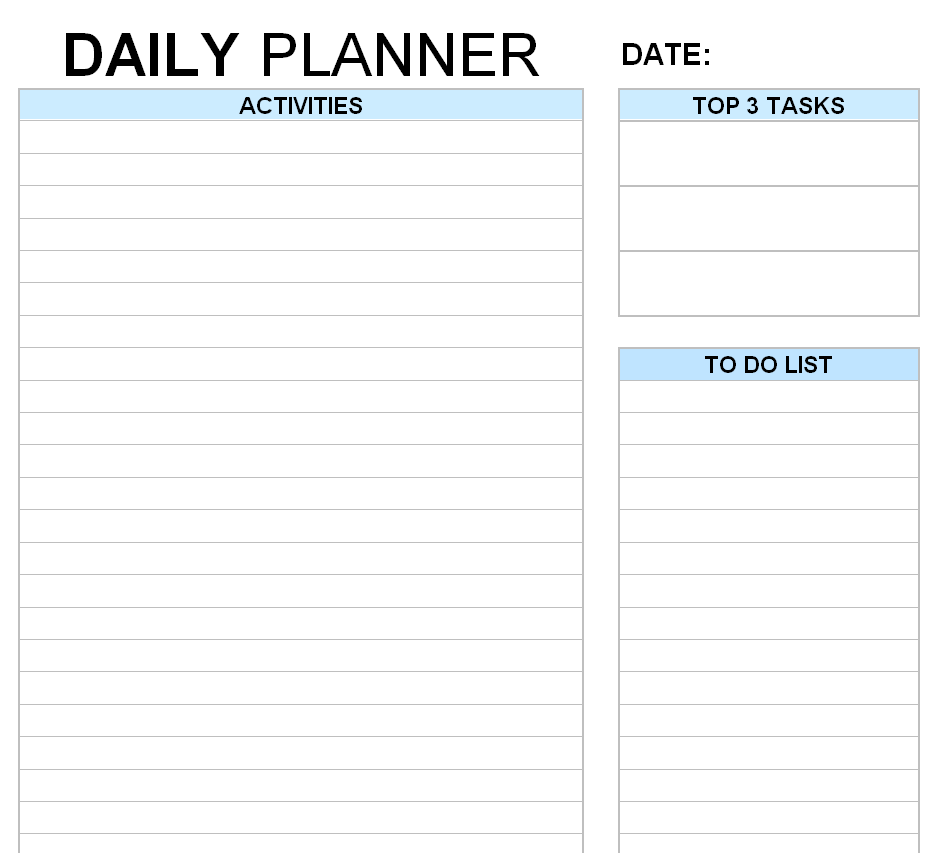
Employee’s Daily Planner Sample
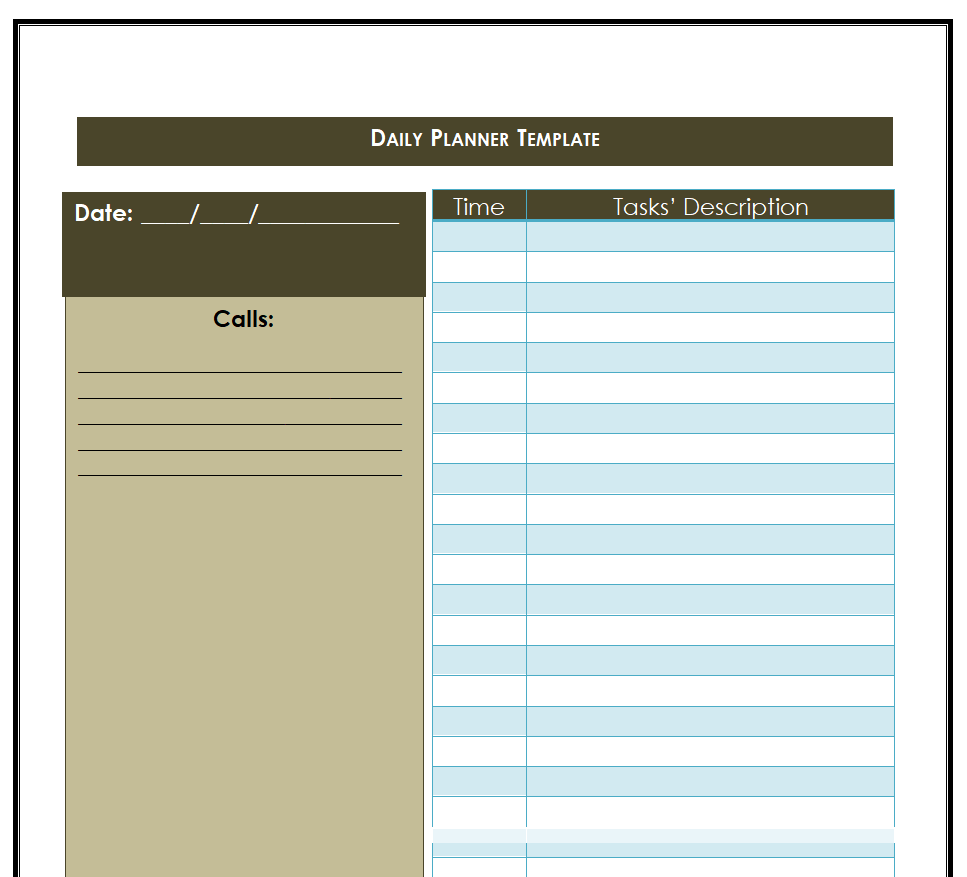
Minimalist Daily Planner Template
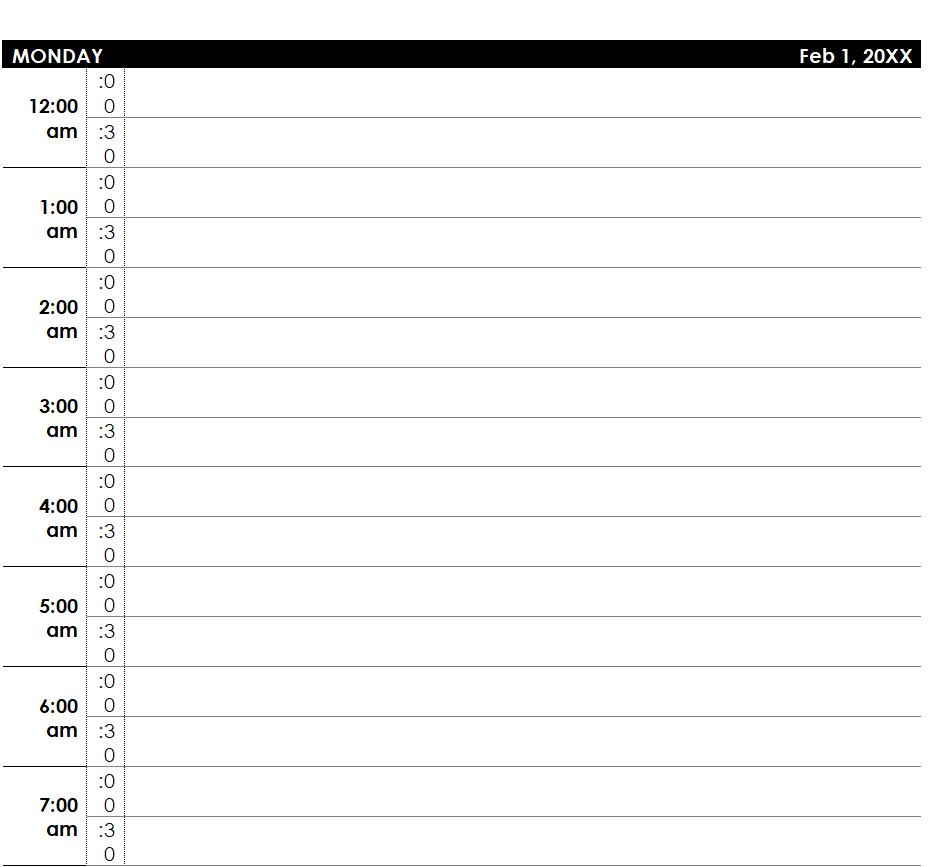
Blank Daily Planner Template MS WORD
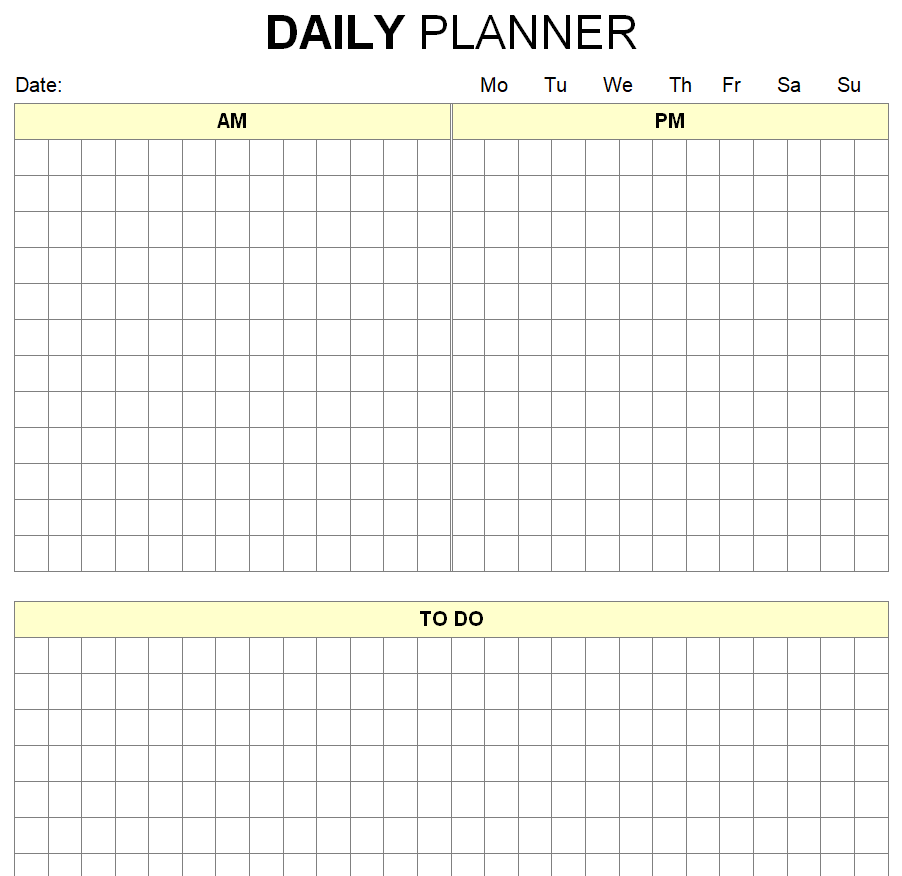
Personal Daily Planner Sample Doc
How to Use a Daily Planner Template, Step by Step
- Pick the template that fits your day. A hectic, meeting-heavy day suits a template with heavier time-blocking; a task-heavy day suits one with a longer to-do section.
- Fill in the date and any fixed commitments first. Appointments, calls, and deadlines that cannot move should go on the page before anything else, since everything else gets planned around them.
- Choose your top priorities before adding more tasks. Pick the three to five things that would make the day a success even if nothing else got done, and write them in the priorities box first.
- Time-block around the fixed commitments. Assign rough blocks of time to your priorities and larger tasks, leaving the fixed appointments untouched.
- Add the rest of your to-do list. Smaller tasks, errands, and follow-ups go in the general to-do section rather than competing for space with your top priorities.
- Use the notes section as you go. Jot down anything that comes up mid-day — a reminder, an idea, a detail from a call — so it is captured without derailing your task list.
- Review and close out at the end of the day. Check off what is done, and carry anything unfinished onto tomorrow’s page rather than letting it quietly disappear.
Common Daily Planner Mistakes to Avoid
- Overloading the task list. Writing down everything you could possibly do, rather than what actually needs to happen today, turns the planner into a source of stress instead of a useful tool.
- Skipping the priorities section. Without naming your top few tasks, it is easy to spend the day on easy, low-value items and run out of time for what matters.
- Leaving no buffer time. Back-to-back time blocks with nothing in between mean one late meeting pushes every plan after it off track.
- Filling it out at the end of the day. A planner filled in the evening for the day just finished has already missed its job; it works best filled in the night before or first thing in the morning.
- Abandoning it after a rough day. One missed or messy day does not mean the system failed — it usually means the template needs a small adjustment, not that planning should stop.
- Ignoring the notes or habit sections. These areas are often the first thing people skip, but they are what keeps small recurring commitments from being forgotten.
Practical Tips for Sticking With Your Daily Planner
- Keep the planner somewhere you will actually see it — a desk, a bag, or the home screen if you print and scan it — rather than filed away.
- Fill it out at the same time every day, ideally the night before or first thing in the morning, so planning becomes a habit rather than an afterthought.
- Start with fewer sections than the template offers if the full layout feels like too much; you can always use more of it once the habit sticks.
- Pair a printed template with a phone reminder for time-sensitive items, so the paper handles the plan and the phone handles the alert.
- Glance back at yesterday’s page before planning today’s, so unfinished tasks get carried over instead of forgotten.
Frequently Asked Questions
What is the difference between a daily planner and a simple to-do list?
A to-do list is just a list of tasks with no sense of timing or priority. A daily planner places those same tasks within the context of the day — alongside fixed appointments, top priorities, and notes — so you know not just what to do, but when it fits and how important it is relative to everything else on the page.
Can I use these daily planner templates digitally instead of printing them?
Yes. Each template downloads as an editable file, so you can type directly into it with a PDF editor, tablet stylus app, or word processor, then save or print a copy for each day. Printing is only necessary if you prefer to write by hand.
How is a daily planner different from a weekly or monthly planner?
A weekly or monthly planner is built for scanning ahead — seeing deadlines, events, and commitments across a longer stretch of time at a glance. A daily planner drops that wide view in favor of detail, giving a single day enough room for hour-by-hour blocking, a full task list, and notes, which a weekly or monthly grid simply does not have space for.
Do I need to fill in every section of the template every day?
No. Use whichever sections are useful on a given day and leave the rest blank. A light day might only need the to-do list, while a meeting-heavy day might rely mostly on the time-blocking grid — the template is a set of tools to draw from, not a form that has to be completed in full.
Related templates you may find useful: free daily schedule templates, free daily-use call sheet templates and free contingency plan templates.
