
A consignment agreement is a written agreement between a consignor and a consignee that establishes the terms under which goods are placed with another party for sale. The consignor generally remains the owner of the goods until they are sold, while the consignee agrees to display, market, store, and sell the goods according to the terms established in the agreement.
A well-written consignment agreement template can help both parties clearly document their responsibilities, payment arrangements, commission structure, inventory requirements, and procedures for unsold or damaged goods.
On this page, you can download free consignment agreement templates and use them as a starting point for preparing a document suited to your particular arrangement. The available templates can be useful for businesses, retailers, artists, wholesalers, manufacturers, distributors, antique dealers, clothing stores, and other sellers using a consignment model.
Important: A template is a starting point and is not legal advice. Consignment laws and commercial requirements vary by jurisdiction and type of goods. For an important commercial transaction, consider having the final agreement reviewed by a qualified legal professional.
What Is a Consignment Agreement?
A consignment agreement is a contract that explains the relationship between the owner of goods and the business or person responsible for selling those goods.
The party providing the goods is known as the consignor. The party receiving and selling the goods is known as the consignee.
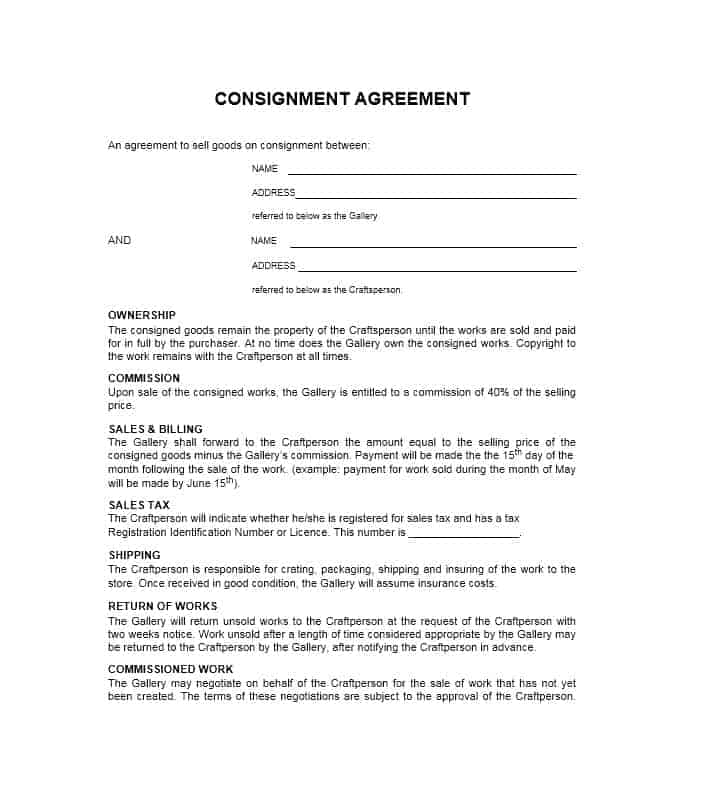
For example, an artist may give artwork to a gallery to display and sell. The artist remains the owner of the artwork until it is sold, while the gallery markets the artwork and receives an agreed commission from the sale.
Similarly, a clothing manufacturer may provide inventory to a retail store under a consignment arrangement. The retailer sells the products and pays the supplier according to the agreed terms.
Free Consignment Agreement Template
A free consignment agreement template gives businesses a convenient structure for documenting a consignment arrangement.
Rather than starting with a blank document, you can use a template to organize the major sections of the agreement and then customize the details.
A typical agreement may address:
- Consignor information
- Consignee information
- Description of goods
- Quantity of goods
- Ownership
- Retail or selling price
- Commission
- Payment schedule
- Inventory records
- Storage responsibilities
- Insurance
- Damage or loss
- Unsold merchandise
- Return procedures
- Termination
- Dispute resolution
- Signatures
Not every agreement needs identical provisions. The appropriate terms depend on the goods, business relationship, and applicable law.
Consignment Agreement Template in Word
A consignment agreement Word template is useful when you want an editable document that can be customized before signing.
Microsoft Word makes it easy to enter the names and addresses of the parties, describe the merchandise, specify commission rates, add payment terms, and modify other sections.
A Word template is particularly useful for small businesses that want to maintain a standard agreement while changing the details for different consignors or consignees.
Before signing, both parties should carefully review the completed document.
Consignment Contract
The terms consignment agreement and consignment contract are often used to describe the same type of business arrangement.
The purpose is to document the terms under which one party provides goods to another party for sale.
A written contract is especially useful because verbal arrangements can create uncertainty about important issues such as:
- Who owns the merchandise?
- How much commission does the consignee receive?
- When is the consignor paid?
- What happens to unsold products?
- Who is responsible for damaged goods?
- Who pays for shipping?
- How are sales recorded?
Putting these terms in writing can help reduce misunderstandings.
Consignor and Consignee
Understanding the difference between the two parties is essential when preparing a consignment agreement.
Consignor
The consignor is generally the owner or supplier of the goods being placed on consignment.
The consignor may be:
- Manufacturer
- Wholesaler
- Artist
- Designer
- Clothing seller
- Antique owner
- Collector
- Product distributor
Consignee
The consignee receives the goods and agrees to sell them according to the arrangement.
The consignee might be:
- Retail store
- Gallery
- Consignment shop
- Dealer
- Distributor
- Online seller
- Specialty retailer
The agreement should clearly identify both parties.
What Should a Consignment Agreement Include?
A strong agreement should clearly explain how the arrangement will work.
1. Names and Contact Information
Include the legal names, addresses, email addresses, and other appropriate contact information of the consignor and consignee.
2. Description of the Goods
Describe the products being provided for sale.
Depending on the type of inventory, this might include product names, model numbers, serial numbers, quantities, condition, or other identifying information.
3. Ownership
Clearly explain who owns the merchandise before and after a sale.
This is one of the most important provisions in a consignment arrangement.
4. Selling Price
Specify how the selling price will be established.
The parties may agree on fixed prices or establish a process for changing prices.
5. Commission
Clearly state how the proceeds will be divided.
For example, the agreement might establish that the consignee receives a percentage of the sale price and the remaining amount is paid to the consignor.
6. Payment Terms
Explain when the consignor will receive payment after merchandise is sold.
The agreement might specify weekly, monthly, or another agreed payment schedule.
7. Inventory Records
Consider maintaining an inventory list showing the items received, quantities, sales, returns, and remaining stock.
8. Unsold Goods
Explain what happens when goods do not sell within the agreed period.
The consignee may return the merchandise, request an extension, or continue offering the products under revised terms.
9. Damage or Loss
The agreement should explain responsibility for merchandise that is lost, stolen, or damaged while in the consignee’s possession.
10. Termination
Specify how either party can end the arrangement and what happens to remaining inventory after termination.
Consignment Sales Agreement
A consignment sales agreement is particularly useful when products are being supplied to a retailer or other seller for resale.
The agreement should establish how products are priced, marketed, sold, recorded, and paid for.
For example, a retailer might agree to sell products for $100 each and retain a 30% commission. The remaining $70 would be payable to the consignor according to the agreed payment schedule, subject to any other applicable terms.
The actual commission and payment structure should be negotiated between the parties.
Consignment Inventory Agreement
A consignment inventory agreement focuses on products held by one business but owned by another.
This arrangement can be useful when a supplier wants its products available at a retailer’s location without immediately transferring ownership of the inventory.
An inventory agreement can establish procedures for:
- Receiving merchandise
- Counting inventory
- Recording sales
- Returning products
- Reporting inventory
- Handling damaged products
- Reordering
- Conducting inventory checks
Clear inventory records are particularly important when a large number of products are involved.
Consignment Shop Agreement
A consignment shop agreement is commonly used when individuals provide items to a store for resale.
This model is common with:
- Used clothing
- Furniture
- Antiques
- Jewelry
- Collectibles
- Art
- Home décor
- Specialty goods
The agreement can specify how long the shop will display the item, what percentage the shop retains, when the owner is paid, and what happens if the item does not sell.
Consignment Agreement for Artwork
Artists and galleries often use consignment arrangements when artwork is displayed for sale.
An agreement may identify:
- Artwork title
- Artist
- Dimensions
- Condition
- Selling price
- Gallery commission
- Insurance
- Exhibition period
- Payment terms
- Return arrangements
A detailed inventory or artwork schedule can be attached to the agreement when multiple pieces are involved.
Consignment Agreement for Clothing
Clothing businesses may use consignment agreements to place merchandise with retailers or consignment shops.
The agreement can cover:
- Brand
- Product description
- Size
- Quantity
- Retail price
- Commission
- Markdown rules
- Return period
- Inventory reporting
- Payment schedule
Clear product records can make it easier for both parties to reconcile sales.
How to Create a Consignment Agreement
Using a template can simplify the document preparation process.
Step 1: Identify the Parties
Enter the correct names and contact information of the consignor and consignee.
Step 2: List the Merchandise
Create a detailed description or inventory schedule for the goods being provided.
Step 3: Define Ownership
Clearly establish ownership of the goods while they are held by the consignee.
Step 4: Establish Pricing
Specify the selling price or explain how prices will be determined.
Step 5: Set the Commission
State the commission percentage or other compensation payable to the consignee.
Step 6: Establish Payment Terms
Specify when and how the consignor will be paid after sales occur.
Step 7: Address Unsold Products
Explain when and how unsold goods will be returned.
Step 8: Address Loss or Damage
Determine responsibility for goods that are damaged, lost, or stolen.
Step 9: Add Termination Terms
Explain how either party can end the agreement and what happens to remaining inventory.
Step 10: Review and Sign
Both parties should review the final agreement and sign it before beginning the arrangement.
Benefits of Using a Consignment Agreement
A written consignment agreement can provide several practical benefits.
Clarifies Responsibilities
Both parties know what they are expected to do.
Protects Inventory Interests
The agreement can clearly document ownership and responsibility for merchandise.
Defines Payment Terms
Commission and payment arrangements are documented in writing.
Reduces Disputes
Written terms can reduce disagreements about pricing, inventory, returns, and payments.
Improves Record Keeping
Inventory schedules and sales reports can be incorporated into the arrangement.
Creates a Professional Business Relationship
A formal agreement demonstrates that both parties have clearly considered the terms of the transaction.
Consignment vs. Wholesale
Consignment and wholesale arrangements are not the same.
In a typical wholesale transaction, the buyer purchases the products from the supplier and generally takes ownership according to the terms of the sale.
In a consignment arrangement, the supplier generally retains ownership of the goods until they are sold, while the consignee holds and sells the merchandise under agreed terms.
The distinction can affect payment, inventory risk, returns, accounting, and responsibilities.
Consignment Agreement vs. Purchase Agreement
A purchase agreement documents a sale in which one party purchases goods from another.
A consignment agreement instead establishes the terms under which goods are provided for sale while ownership may remain with the consignor until the goods are sold.
Because these arrangements have different commercial consequences, the correct type of agreement should be used.
What Happens to Unsold Goods?
One of the most important issues in a consignment arrangement is what happens to merchandise that does not sell.
The agreement should establish:
- How long the consignee will hold the merchandise
- Whether the selling period can be extended
- Who pays return shipping
- When goods must be collected
- Whether prices can be reduced
- What happens to damaged goods
- How remaining inventory is documented
Clear return procedures can prevent disputes when the relationship ends.
Download Free Consignment Agreement Templates
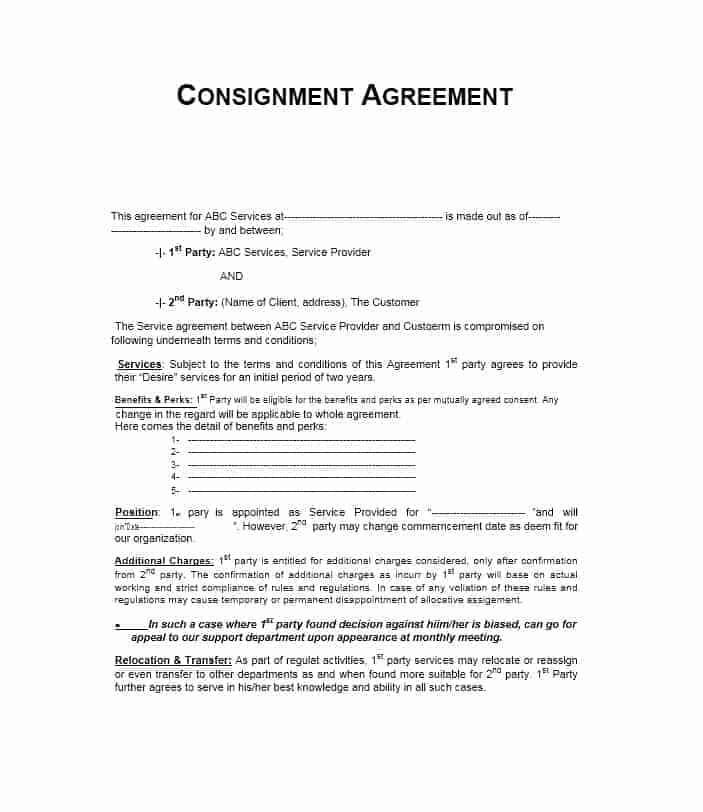
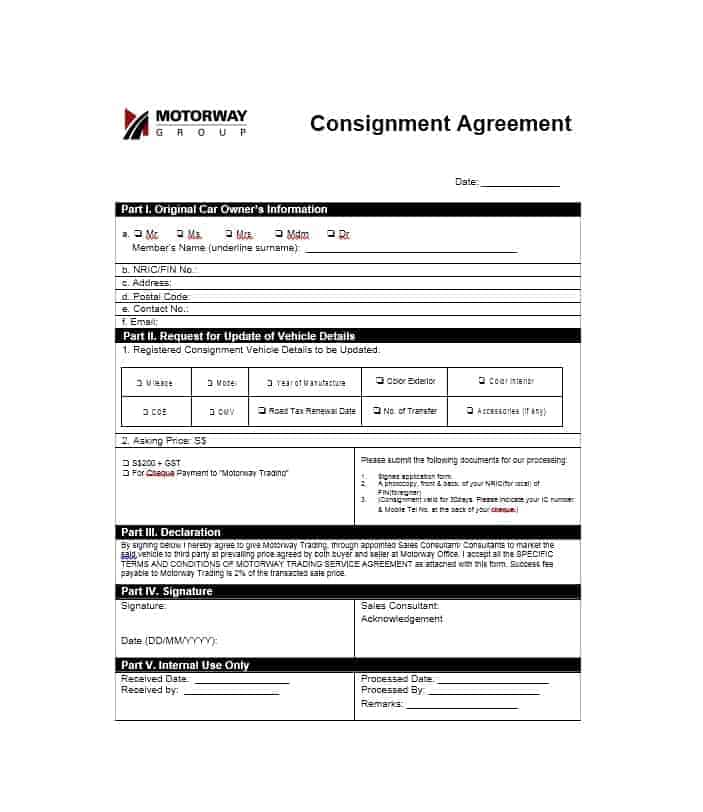
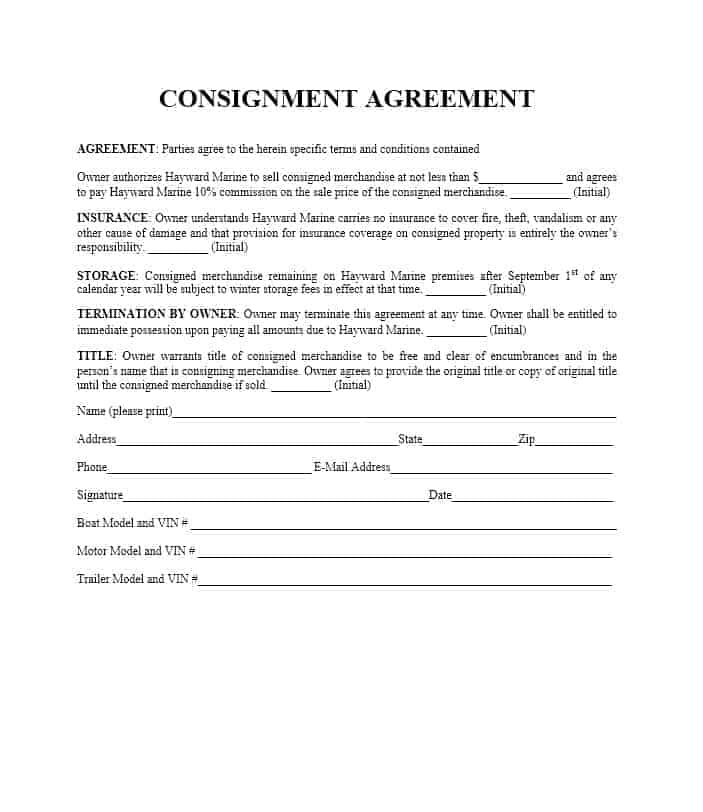
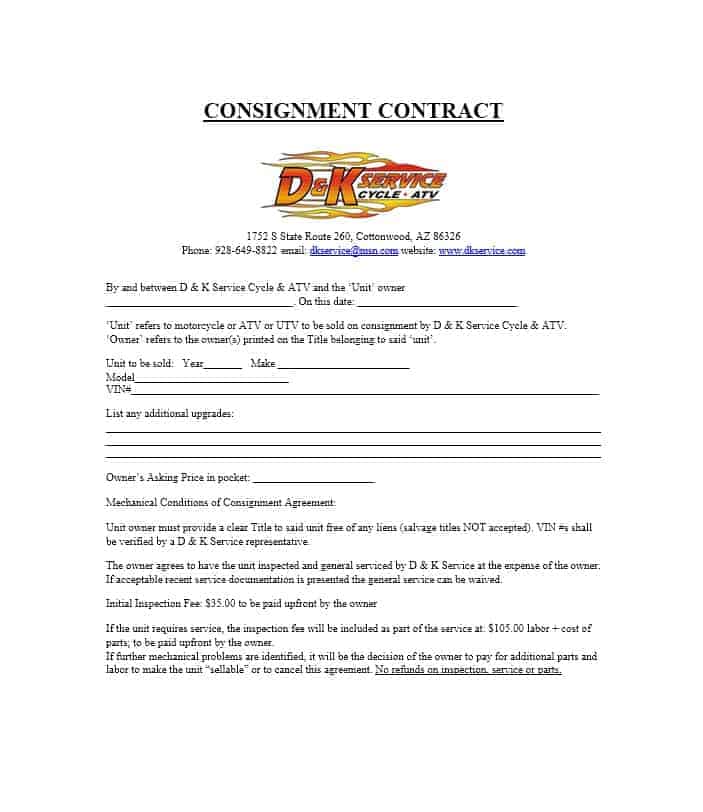
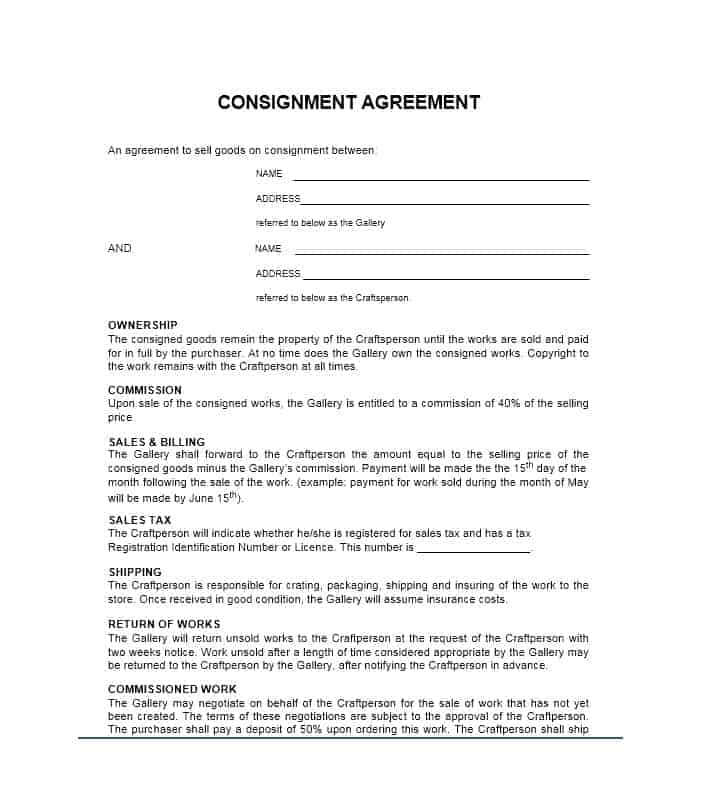
Whether you need a consignment agreement template, consignment contract, consignment sales agreement, consignment inventory agreement, consignment shop agreement, or consignment agreement Word template, the templates on this page provide a useful starting point.
Download a suitable template and customize it with the names of the parties, merchandise details, pricing, commission, payment schedule, inventory requirements, return procedures, and other terms relevant to your arrangement.
A template can save time, but it should be reviewed carefully before it is used for an actual commercial transaction. If the agreement involves significant inventory, substantial financial obligations, regulated products, or complex commercial terms, professional legal advice may be appropriate.
Free Consignment Agreement Templates:
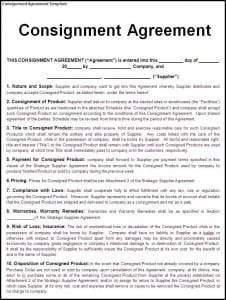
Download consignment agreement template:

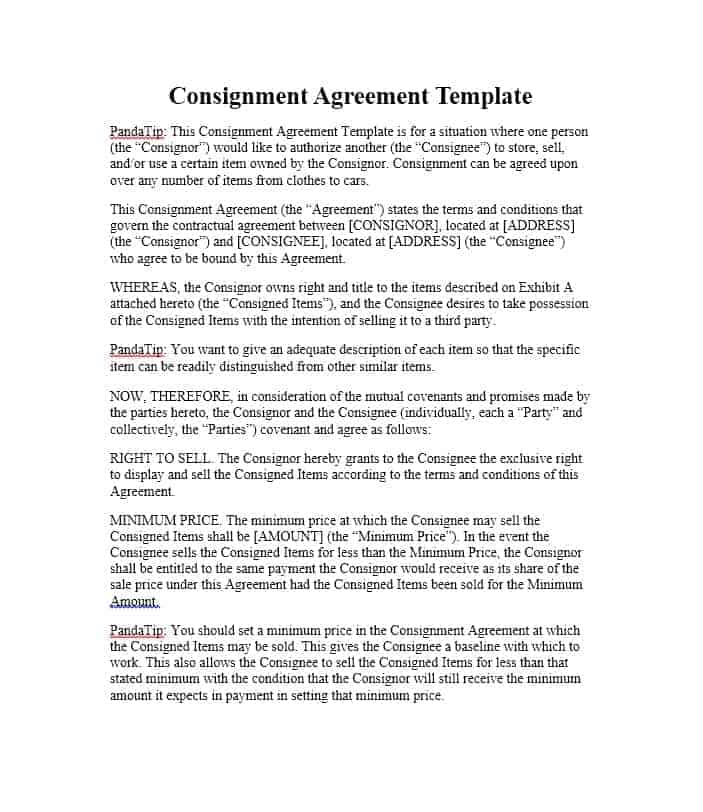
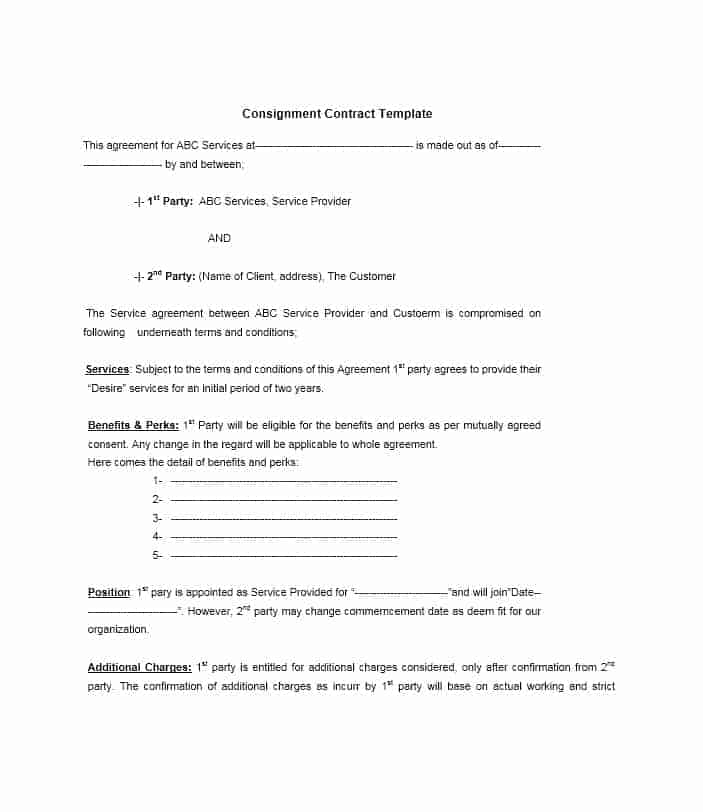
More Consignment Agreement Templates:
Frequently Asked Questions
What is a consignment agreement?
A consignment agreement is a contract between a consignor and consignee that establishes the terms for placing goods with another party for sale.
Who is the consignor?
The consignor is generally the owner or supplier of the goods being provided for sale under the consignment arrangement.
Who is the consignee?
The consignee is the person or business that receives the goods and agrees to sell them according to the terms of the consignment agreement.
Who owns goods on consignment?
In a typical consignment arrangement, the consignor retains ownership of the goods until they are sold, although the exact legal arrangement depends on the contract and applicable law.
What percentage does a consignee usually receive?
There is no universal commission percentage. The consignor and consignee negotiate the commission or other compensation based on the products, market, services provided, and commercial arrangement.
What happens to unsold consignment goods?
The agreement should specify what happens to unsold goods. They may be returned to the consignor, kept for an extended period, discounted, or handled according to another agreed procedure.
Can I use a Word template for a consignment agreement?
Yes. A Word template can provide an editable starting point for preparing a consignment agreement. The completed document should be customized to the specific transaction.
Should a consignment agreement be signed?
Yes. Having both parties sign the completed agreement helps document their acceptance of the terms. For significant transactions, legal review may also be appropriate.