

In this article, we have provided you with 12+ Satisfaction Survey Templates that are used for different purposes. The responsibility of the company does not end with the delivery or sale of the good to the customer. These days customer satisfaction and after-sale services are considered vital these days. The market is developing nowadays customers are being aware of their needs and co. supplies.
In order to gain more customers, the company must keep an eye on customers’ needs they shall on timely intervals conduct a satisfaction survey which shall comprise of a questionnaire stating the level of satisfaction achieved from the service or product provided by the company to its customers.
It shall consist of options like – Yes/No/N.A to be ticked over by customer accordingly. With the help of these forms, the companies can layout their future assignments in a better manner. When they are aware of what customers like and dislike, they can easily formulate the policies of their coming products.
More About a Satisfaction Survey Template
A satisfaction survey is a kind of survey used to measure the customer’s happiness and satisfaction with the company and services provided by the company. A satisfaction survey is a very important tool that can really help a business or company to improve their services. A satisfaction survey normally includes questions regarding products and services provided by the company. The final results of the survey can play a vital role in order to minimize complaints and improve services by the company.
A satisfaction survey also enables the company to understand customer needs, wants, and requirements. The satisfaction survey is good for both the customer and the company. By conducting a satisfaction survey customers will be able to make a complaint related to the company and the products and services provided by the company, and the company can resolve the issue and improve their services for their customers. It also helps to build the best relationship with customers which is more important to get brand success.
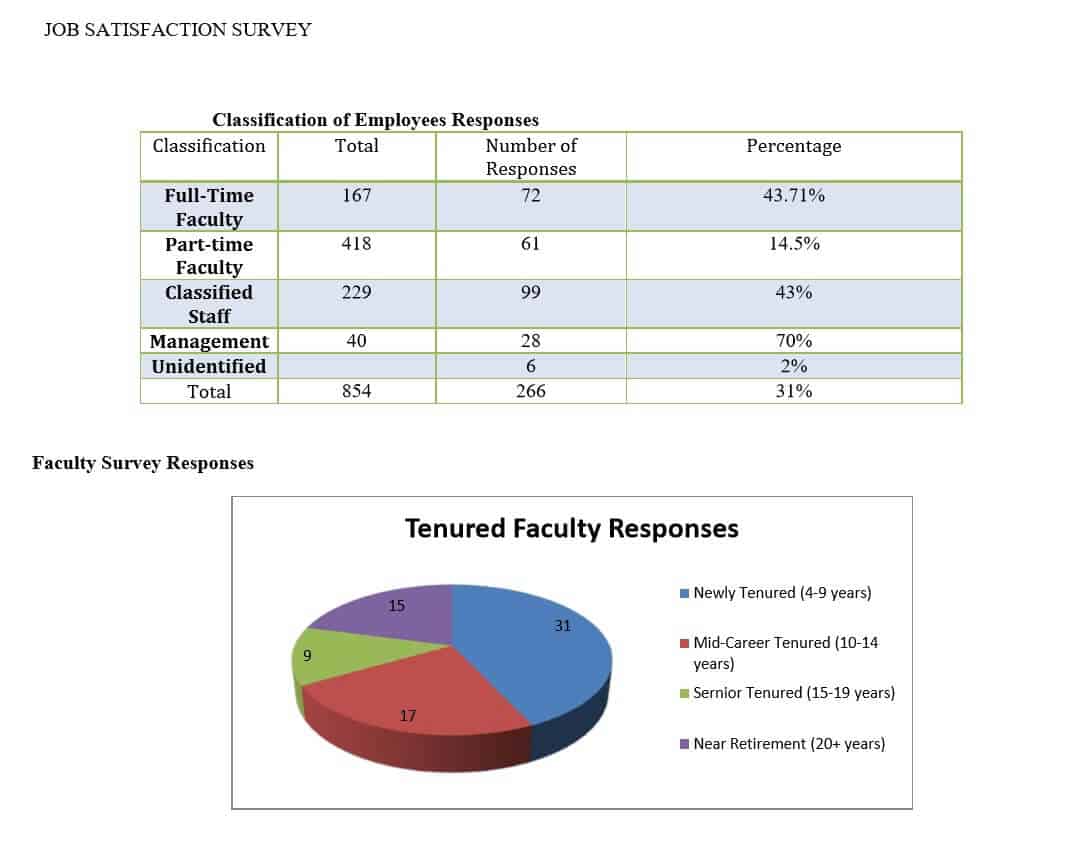
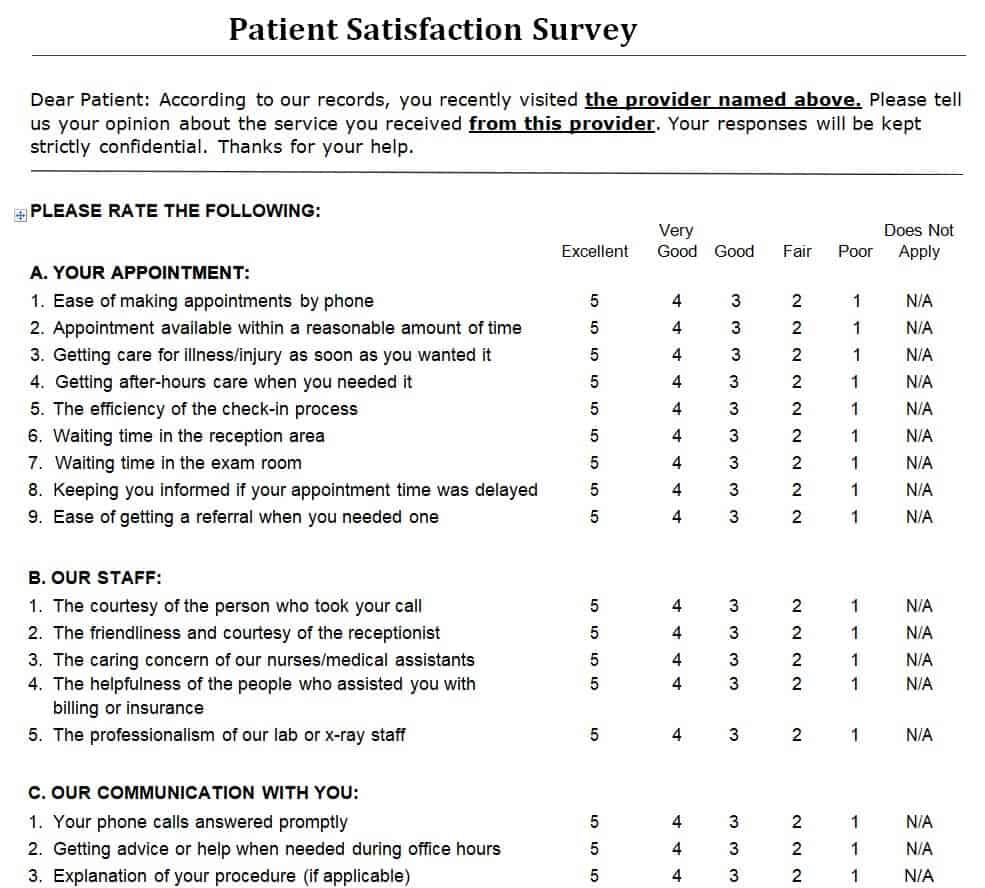
Some other common types of satisfaction surveys are employee satisfaction surveys, job satisfaction surveys, patient satisfaction surveys, etc. All these types of satisfaction survey templates are provided here on this page.
Who Uses a Satisfaction Survey Template?
Satisfaction survey templates are used across almost every industry that deals directly with people, whether those people are paying customers, employees, patients, or event attendees. Small businesses and large corporations alike use customer satisfaction survey templates after a purchase, support call, or service visit to find out whether the experience met expectations. HR departments use employee satisfaction survey templates to check morale, measure engagement, and spot problems with management or workplace culture before they turn into turnover. Hospitals, clinics, and private practices rely on patient satisfaction survey templates to track how patients feel about the quality of care, wait times, and staff communication. Event organizers send out satisfaction survey templates after conferences, weddings, and trainings to learn what worked and what should change next time. Even non-profits, schools, and government offices use these templates to measure how well their programs and services are received by the people they serve.
Key Elements Every Satisfaction Survey Template Should Contain
A well-built satisfaction survey template balances enough detail to be useful with enough brevity that people actually finish it. Most effective templates include the following elements:
- An overall satisfaction rating – usually a 5-point or 10-point scale asking respondents to rate their general experience.
- Specific rating questions – shorter questions that break the overall experience into parts, such as product quality, staff friendliness, response time, or ease of use.
- A Net Promoter Score (NPS) question – “How likely are you to recommend us to a friend or colleague?” on a 0–10 scale.
- Open-ended feedback – a free-text box where respondents can explain their rating in their own words.
- Demographic or identifying fields – optional fields like department, location, or customer type, used to segment results later.
- A closing thank-you and, where appropriate, a way to opt into a follow-up conversation.
How to Create and Use a Satisfaction Survey Template
Building a satisfaction survey that produces useful, actionable data takes more than just listing questions. The following steps outline a simple, repeatable process:
- Define the objective. Decide exactly what you want to learn – overall satisfaction, a specific touchpoint, or satisfaction with a single product or service.
- Pick the right template and format. Choose a Word, PDF, or online form version depending on how and where you plan to distribute it.
- Draft clear, focused questions. Keep each question about one idea only, and avoid combining two topics into a single question.
- Choose a consistent rating scale. Stick to one scale format (for example, 1–5) throughout the survey so responses are easy to compare.
- Pilot test it. Send the draft to a small group first to catch confusing wording or missing options before a full rollout.
- Distribute at the right moment. Send the survey soon after the interaction – right after checkout, service delivery, or an event – while the experience is still fresh.
- Analyze the responses. Look for patterns across ratings and read the open-ended comments for context the numbers alone don’t explain.
- Act on the results. Share findings with the relevant team and follow up on any changes made, since surveys lose credibility when feedback is collected but never acted on.
Common Mistakes to Avoid
Even a well-intentioned satisfaction survey can produce misleading results if it is designed poorly. Watch out for these common mistakes:
- Making the survey too long. Response rates drop sharply once a survey takes longer than a few minutes to complete.
- Asking leading or loaded questions. Questions like “How much did you love our fast service?” push respondents toward a positive answer instead of an honest one.
- Mixing rating scales. Switching between a 1–5 scale and a 1–10 scale in the same survey confuses respondents and skews the data.
- Using vague or jargon-heavy wording. Questions should be understandable to anyone, not just people familiar with internal terminology.
- Ignoring mobile respondents. Many people will open a survey link on a phone, so a template that only displays well on a desktop screen loses responses.
- Collecting feedback and never following up. Failing to close the loop with respondents, especially dissatisfied ones, damages trust more than not surveying at all.
Practical Tips for Better Response Rates and Data Quality
A few small design choices can noticeably improve both how many people respond and how useful their answers are. A 5-point scale (Very Dissatisfied to Very Satisfied) is easier for most respondents to use consistently than a 10-point scale, though a 10-point or NPS-style scale is useful when you need finer-grained benchmarking over time. Keep question wording neutral and specific – “How satisfied were you with response time?” works better than “Was our team fast enough for you?” Place the most important questions first, in case respondents drop off before finishing. Limiting the survey to 8–10 questions typically keeps completion rates high without sacrificing useful detail. Sending a short, polite reminder to non-respondents after a few days can meaningfully lift response rates, and offering a small incentive (a discount code or entry into a draw) works well for customer surveys, though it is rarely appropriate for internal employee surveys, where anonymity matters more than incentives. Finally, always test the survey template yourself from start to finish before sending it out, to confirm every question, rating option, and download link behaves as expected.
Frequently Asked Questions
What is the difference between a satisfaction survey and a general survey?
A general survey can collect almost any kind of information, from market research to opinion polling. A satisfaction survey is narrower by design – every question ties back to how happy or unhappy a specific group (customers, employees, patients, or attendees) is with a specific product, service, or experience.
How many questions should a satisfaction survey template have?
Most effective satisfaction surveys stay between 5 and 10 questions. Shorter surveys get completed more often, and a handful of well-chosen rating questions plus one open-ended question usually gives more usable data than a long form that many people abandon halfway through.
Which rating scale should I use?
A 5-point scale is the easiest for most respondents to use accurately and works well for general satisfaction questions. A 10-point or 0–10 NPS scale gives more granular data and is better suited to tracking small changes in satisfaction over time or benchmarking against other companies.
How often should satisfaction surveys be sent?
It depends on the touchpoint. Transactional surveys (after a purchase, support ticket, or event) should go out immediately or within a day or two while the experience is fresh. Relationship surveys, such as annual employee satisfaction surveys or quarterly customer satisfaction check-ins, are better sent on a fixed schedule so results can be tracked and compared over time.
Sample Satisfaction Survery Templates
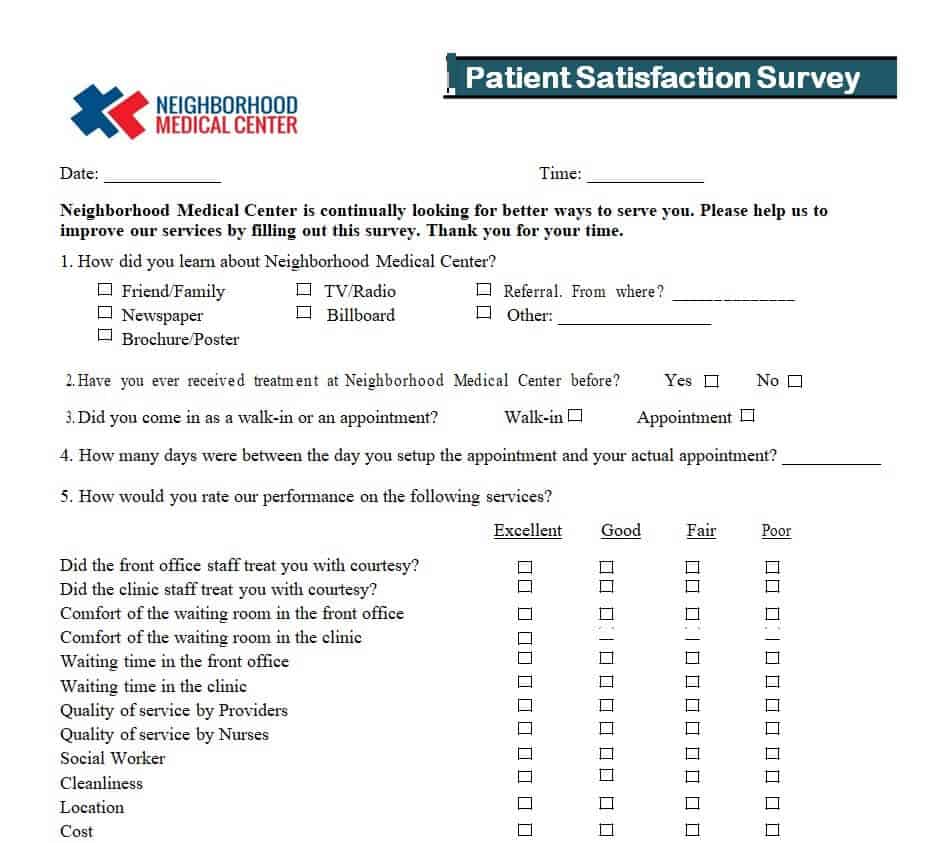
Medical Center’s Patient Satisfaction Survey Template
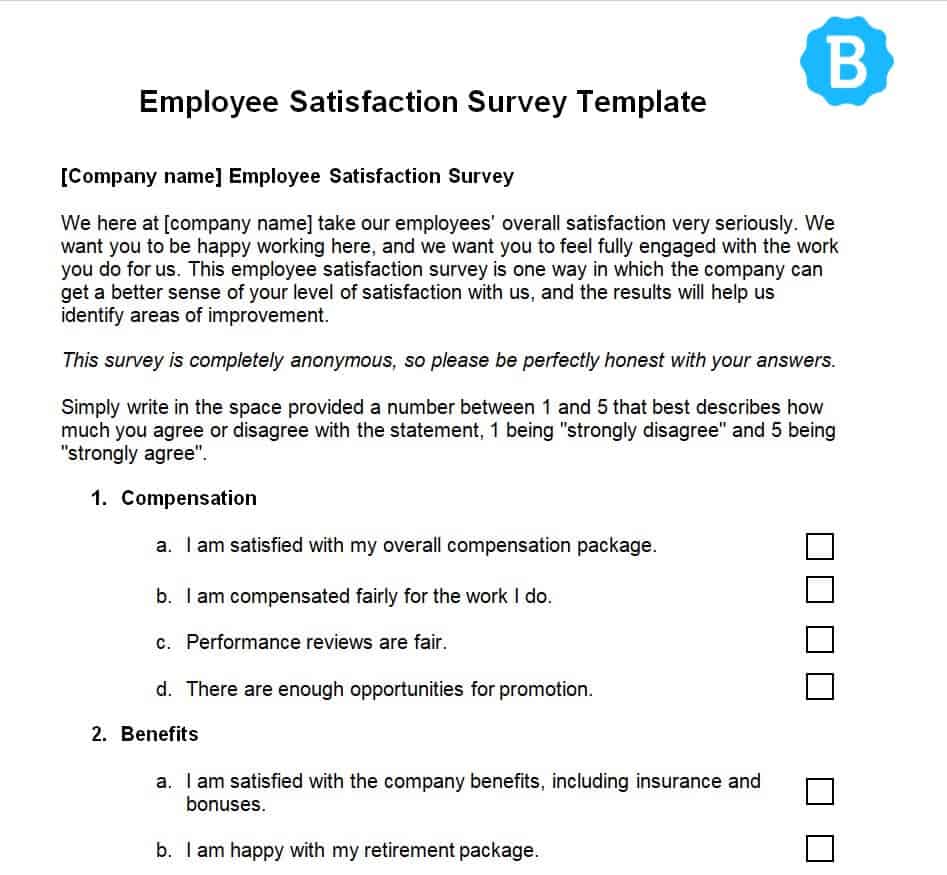
Company Employee Satisfaction Survey Template
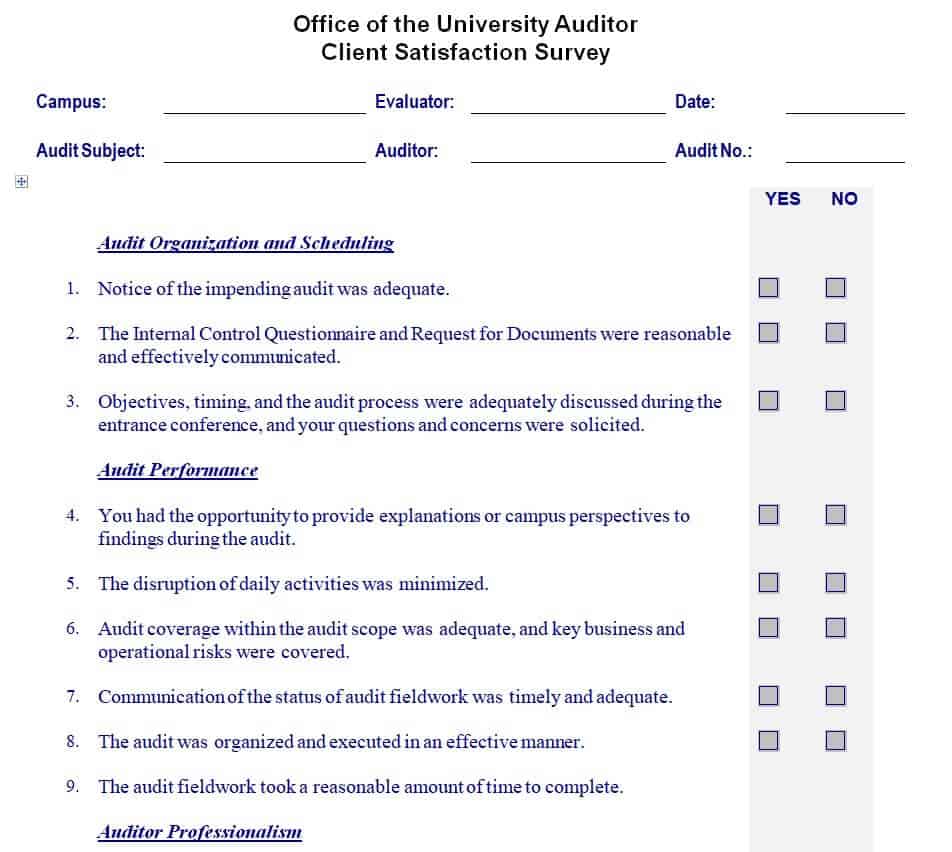
Sample Client Satisfaction Survey Template
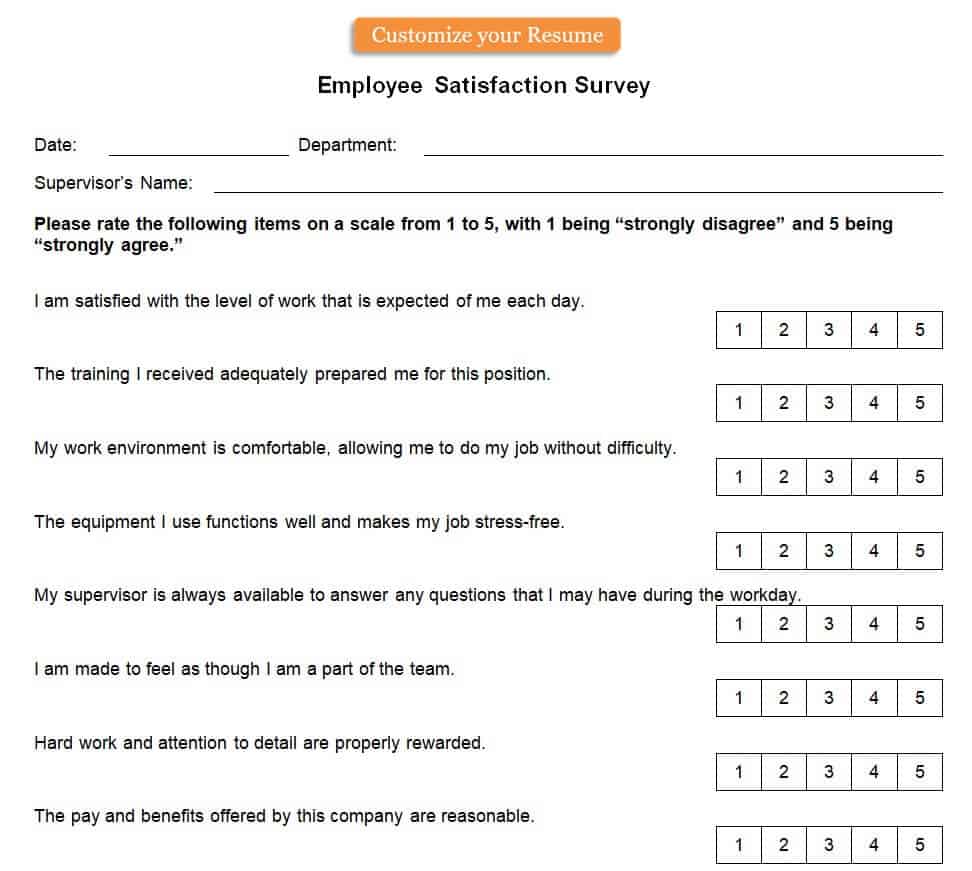
Customizable Employee Satisfaction Survey Template
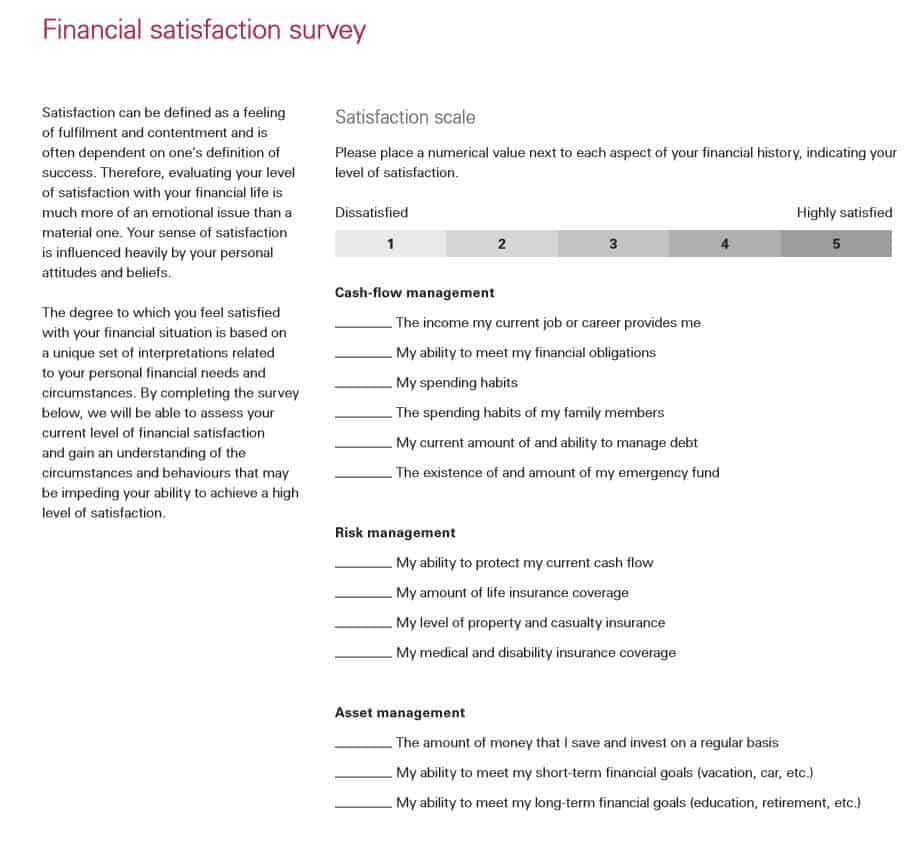
Financial Satisfaction Survey Template PDF
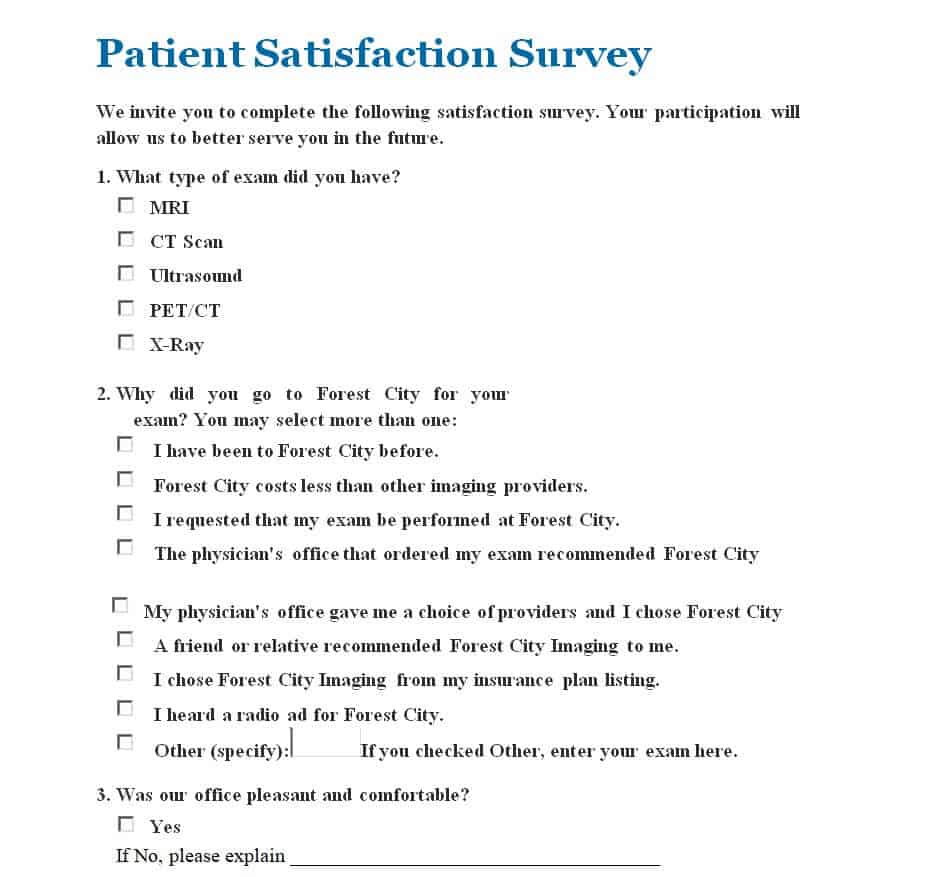
Simple Patient Satisfaction Survey Template WORD
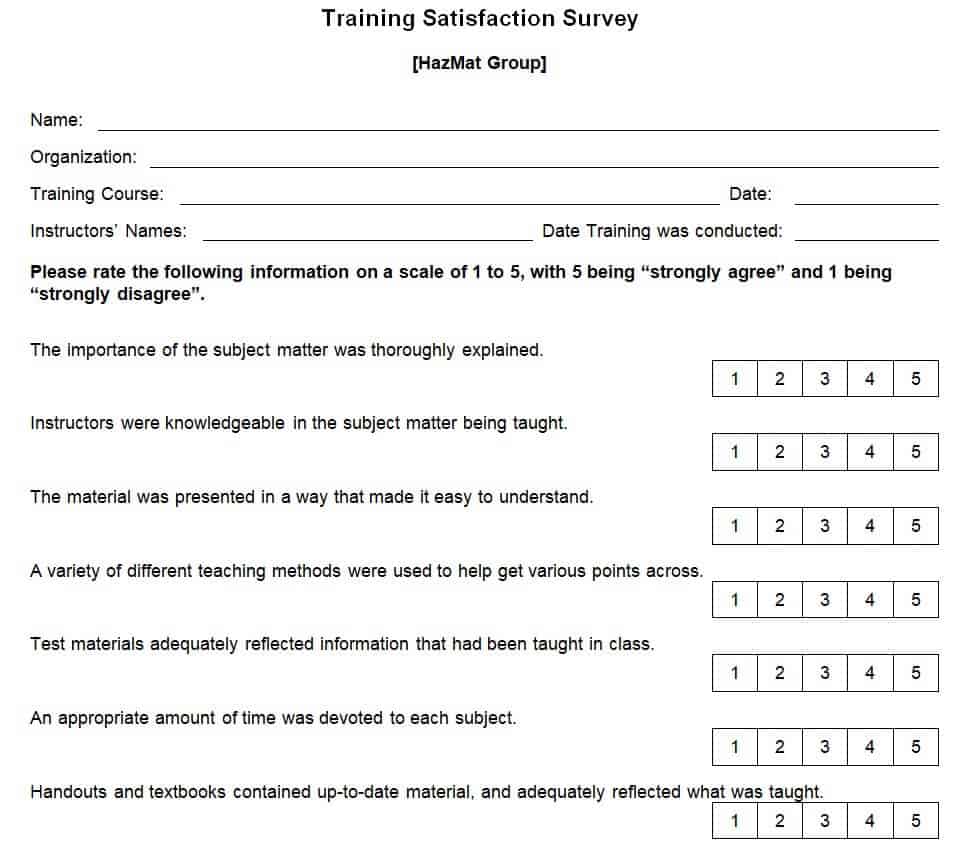
Free Training Satisfaction Survey Template
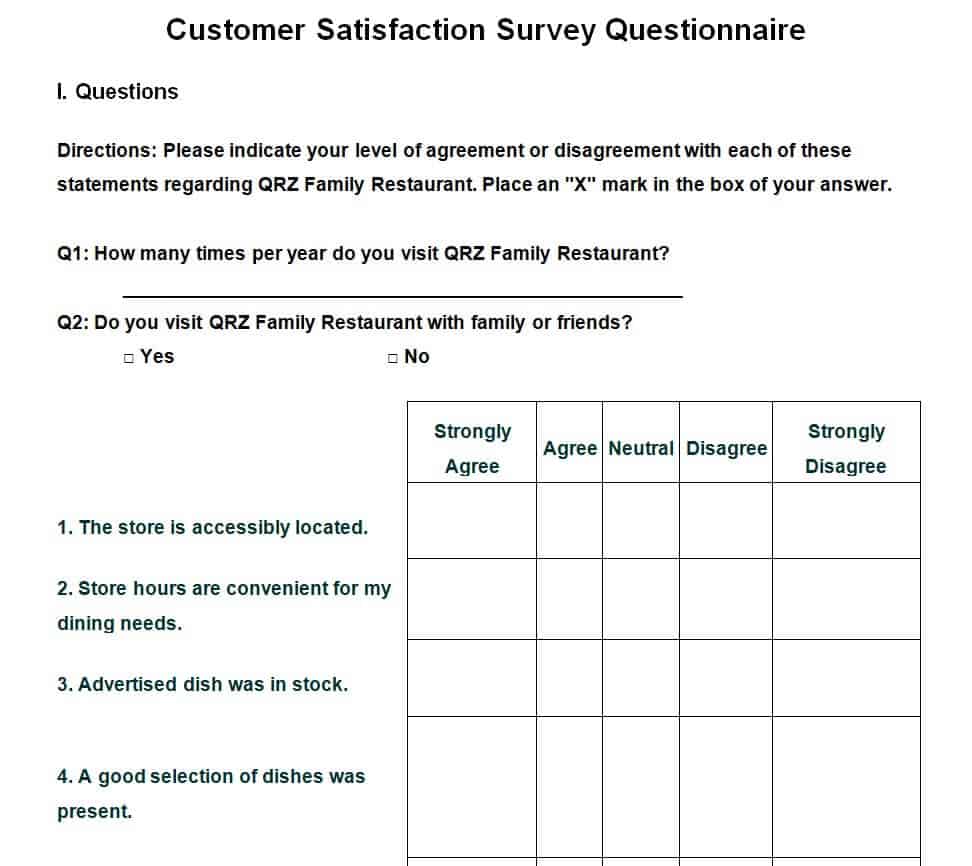
Customer Satisfaction Survey Questionnaire Template
Printable Job Satisfaction Survey PDF Template
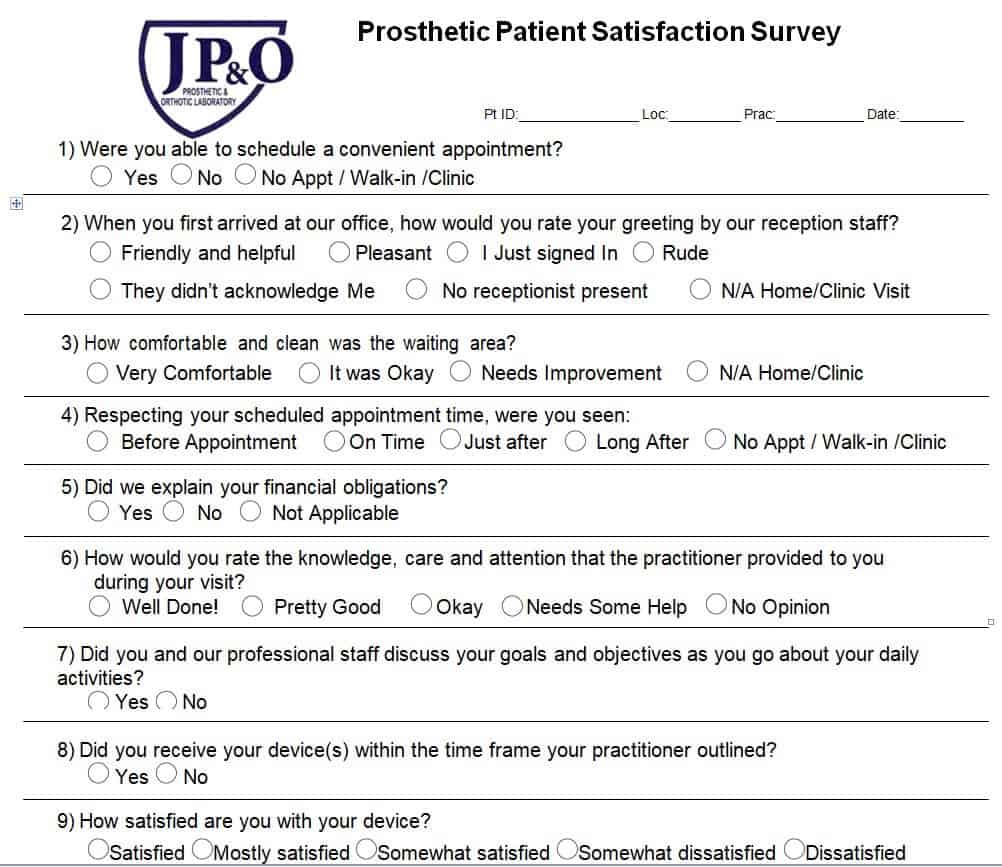
Editable Prosthetic Satisfaction Survey Template
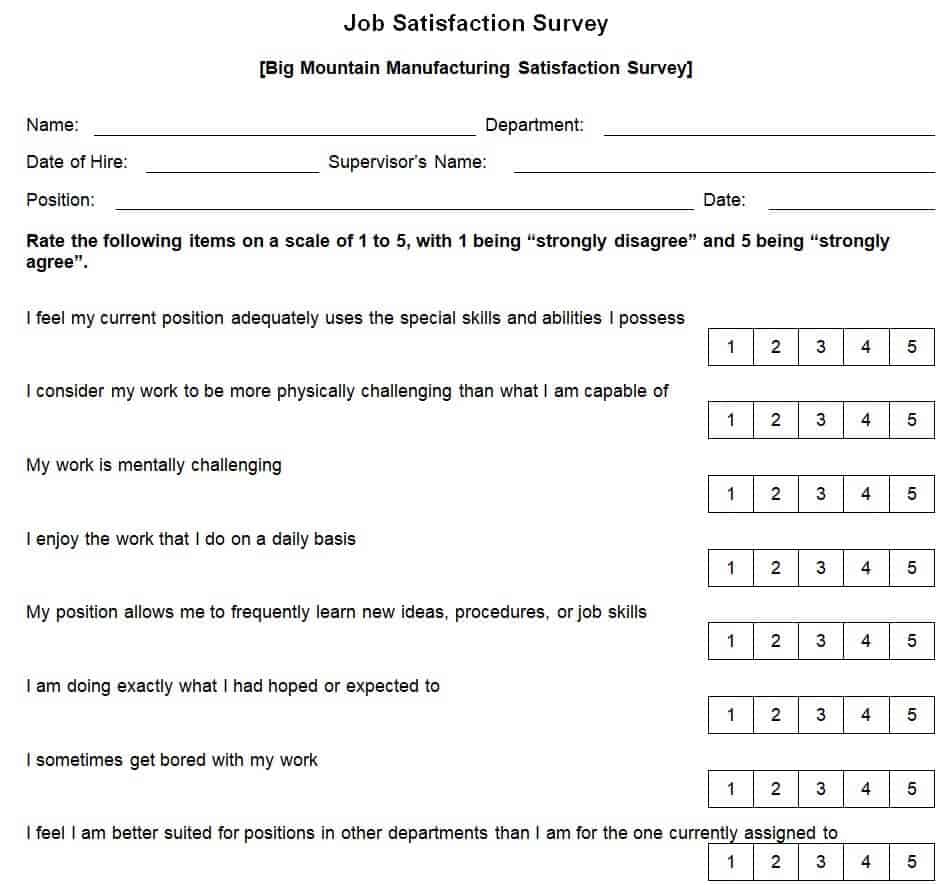
Manufacturing Facility’s Job Satisfaction Survey Template
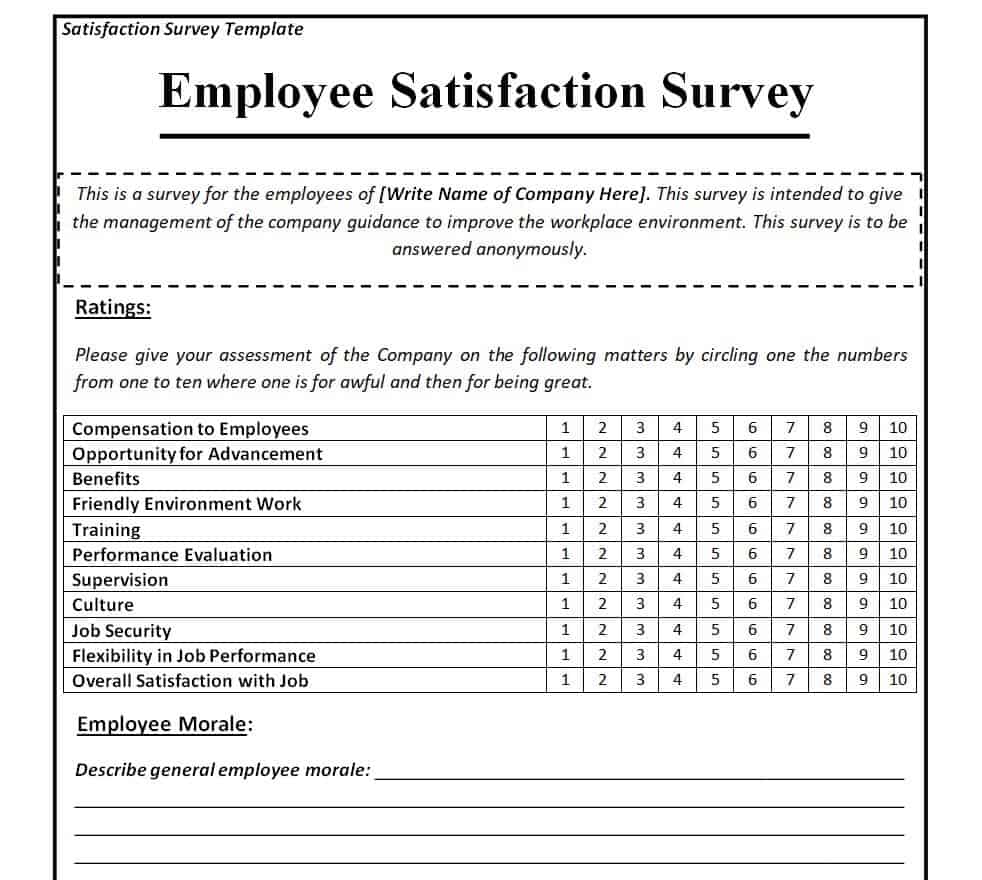
Employee Satisfaction Short Survey Template
Sample Patient Satisfaction Survey Template in DOC Format


![15+ Printable Food Journal Templates [WORD, PDF]](https://www.docspile.com/wp-content/uploads/2022/03/food-journal-example-3907401-150x150.jpg)