
It will be very much easy if you can make a list of all the grocery items you are going to purchase or manage. For this purpose, you can consider using the given Grocery List Templates that are designed for your convenience so that you can make good, attractive lists. We have provided you with some useful grocery list templates below which are available in Microsoft Word, Excel, and PDF formats. So scroll down and choose to download any template of your liking.
A Grocery List is a list of the heterogeneous things that somebody desires to purchase for consumption on a daily, weekly, or monthly basis. Most people love to do grocery on a weekly or monthly basis. This way they can easily manage to purchase daily-use items in bulk. Moreover, it is also an important tool if you focus on buying things that facilitate your health and fitness goals. You can make a grocery list of healthy items only.
Importance of a Grocery List Template:
Grocery is a collection of foodstuff and various household items bought by a grocery store. Whereas a grocery list is a document or list containing all grocery items such as foods, vegetables, meat, oil, other kitchen items, and household supplies. A grocery list can be prepared for various reasons. It can be prepared when you wish to buy grocery items from the market.
It can be the best tool to make you able to not forget any single grocery item that you want to buy. One can easily design a grocery list to manage the grocery section of the house in the best way. A grocery list template can indicate the location of each grocery item that you keep. It also helps while you making a meal or cooking. You can prepare a grocery list on a piece of paper and on your computer as well. Nowadays, grocery list templates exist on the internet to make the best grocery list for your kitchen.
What Is a Grocery List Template and Why Use One
A grocery list template is a ready-made checklist you fill in before every shopping trip, instead of building a new list from scratch each time. Because the categories and layout are already there, all you have to do is jot down quantities and check items off as you shop. That small head start makes a real difference: a printed or digital template keeps you moving through the store with purpose instead of wandering the aisles trying to remember what you ran out of at home.
Using a template also protects your wallet. When you shop with a plan, you are far less likely to toss extra snacks or impulse buys into the cart, and you avoid the classic mistake of buying things you already have at home. Many templates include a spot to jot down prices or a running total, so you can see roughly what you are spending before you reach the checkout. Over a month of weekly trips, that kind of awareness can add up to meaningful savings.
A good template also cuts down on food waste. When your list is organized around what you actually need for the meals you have planned, you buy closer to the right quantity instead of guessing and over-purchasing perishable items that end up forgotten in the back of the fridge. In short, a grocery list template turns a routine chore into a faster, cheaper, and less wasteful habit.
Who Benefits from a Grocery List Template
Busy families use grocery list templates to keep the weekly shop simple even when everyone’s schedule is different. A shared template posted on the fridge or saved on a phone lets any family member add an item the moment they notice it is running low, so nothing gets forgotten between trips.
Meal-preppers rely on a template to translate a week of planned meals into a single, organized shopping trip. Because the template is already broken into categories, it is easy to add every ingredient a recipe calls for without missing anything or buying duplicates of pantry staples already on hand.
Budget-conscious shoppers benefit from templates that include a price or budget column, which makes it simple to compare what is planned against what is actually spent. And anyone managing a dietary restriction, whether it is gluten-free, dairy-free, low-sodium, or another need, can use a template’s notes section to flag which items to double-check on the label before they go in the cart.
Key Elements of a Good Grocery List Template
Not every grocery list template is built the same way, and a few key features make a real difference in how useful one is at the store:
- Categorized sections such as produce, dairy, meat, pantry, frozen, and household items, ideally arranged to match the layout of the store you shop at most.
- A quantity column so you know exactly how many of each item to grab instead of guessing at the shelf.
- Checkboxes next to each line, so you can see at a glance what is still needed and what is already in the cart.
- A budget or price column to track estimated cost per item and keep a running total as you shop.
- A notes area for brand preferences, dietary flags, coupons, or substitutions in case an item is out of stock.
The templates below cover all of these elements in different styles and formats, so scroll through and pick the one that best fits how you like to shop.
Grocery List WORD Templates:
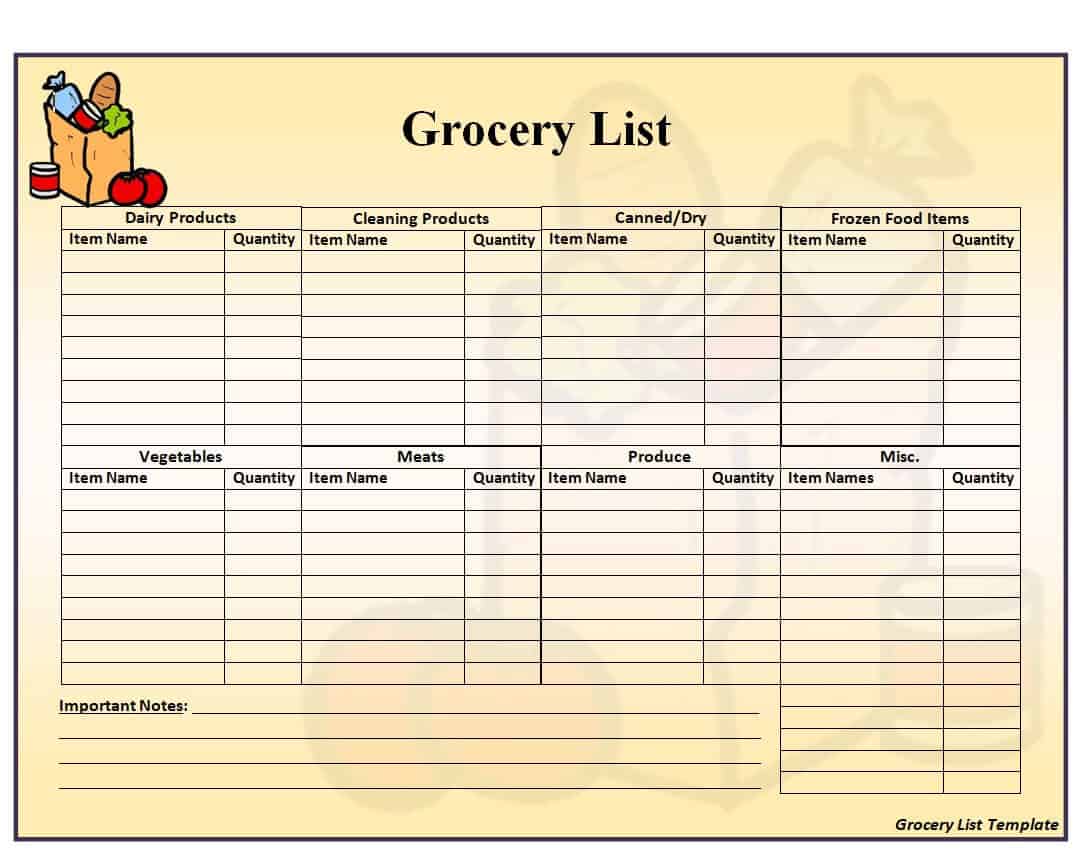
Simple Grocery List Template
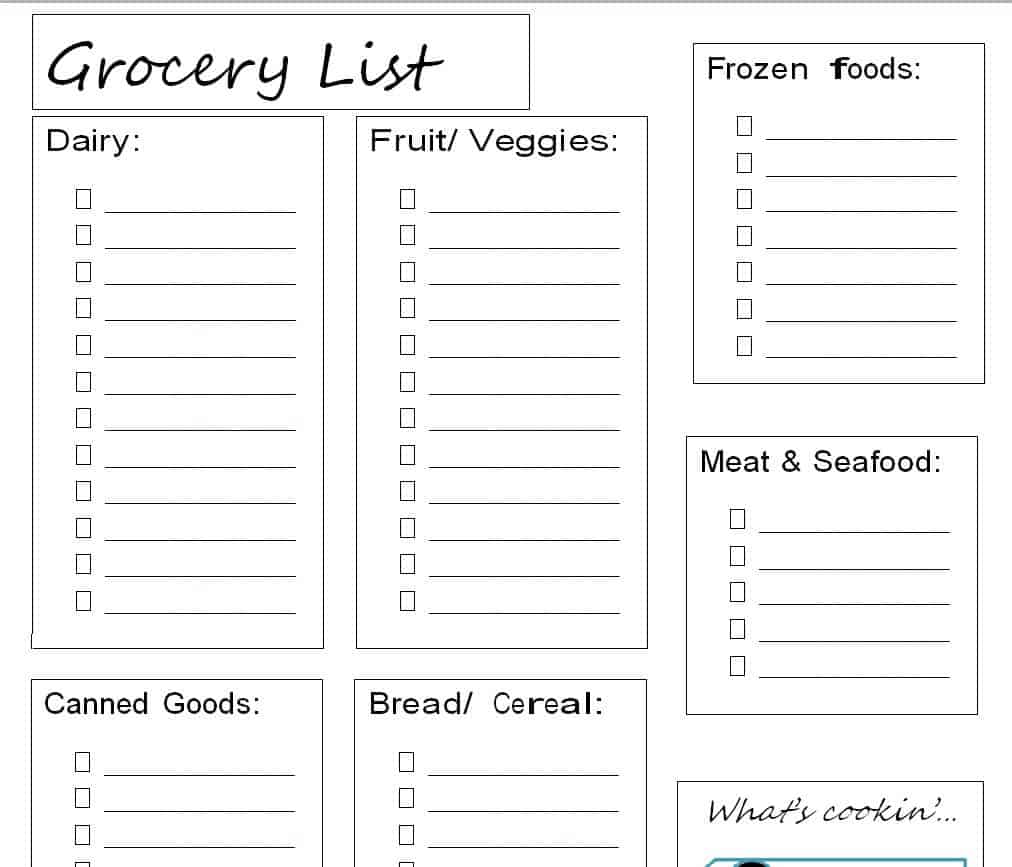
Stylish Grocery List Template WORD
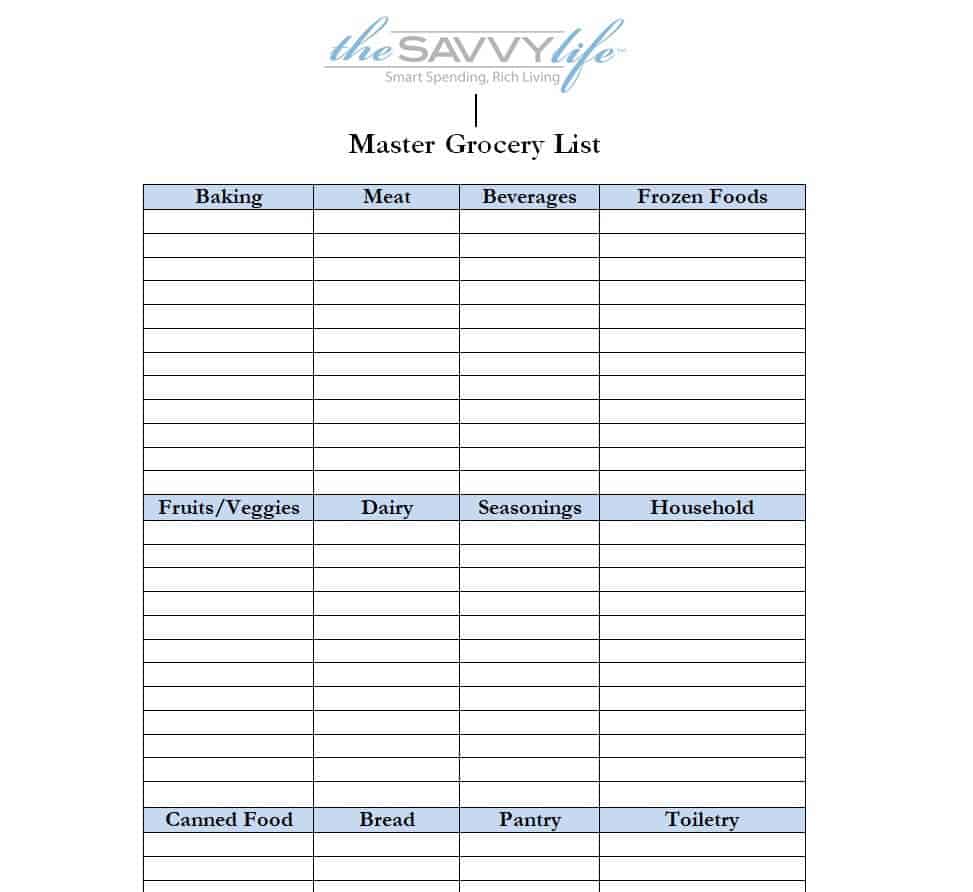
Master Grocery List Template
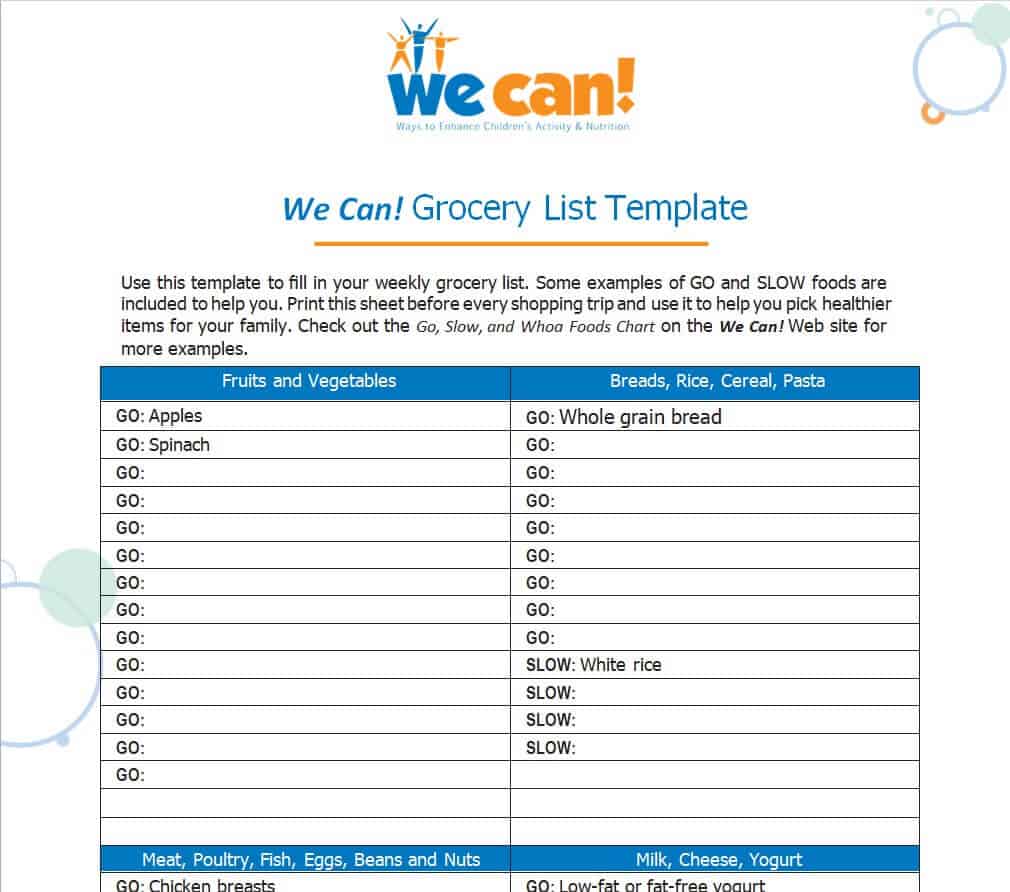
Official Grocery List Template
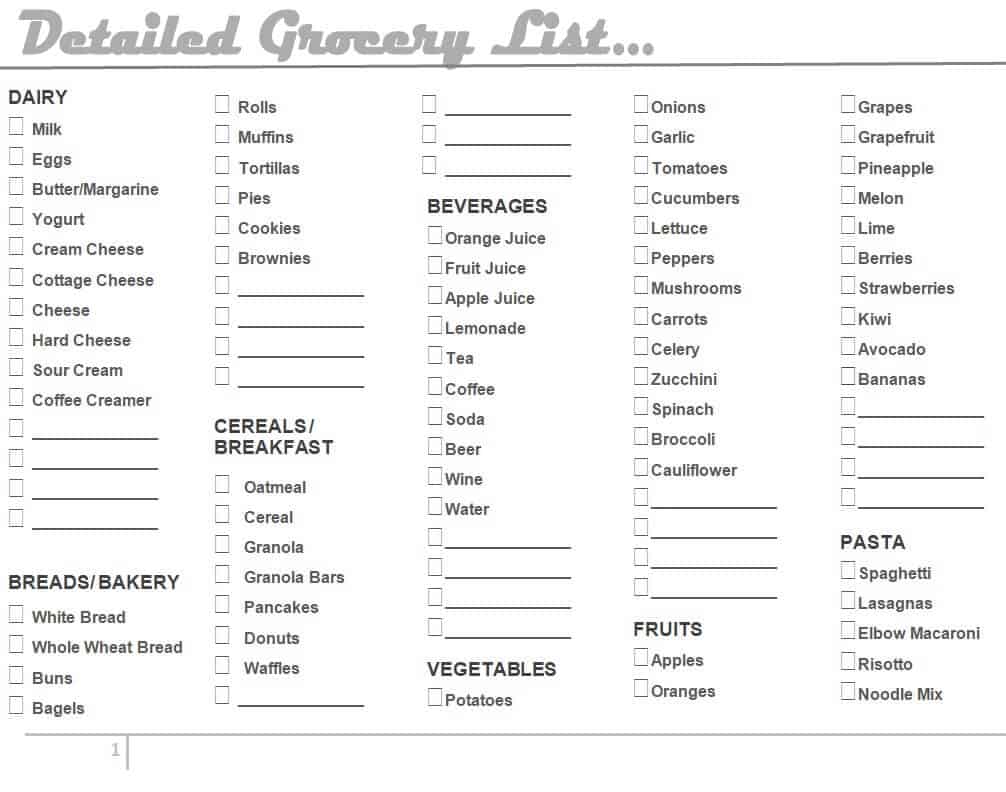
Detailed Grocery List Template DOC Format
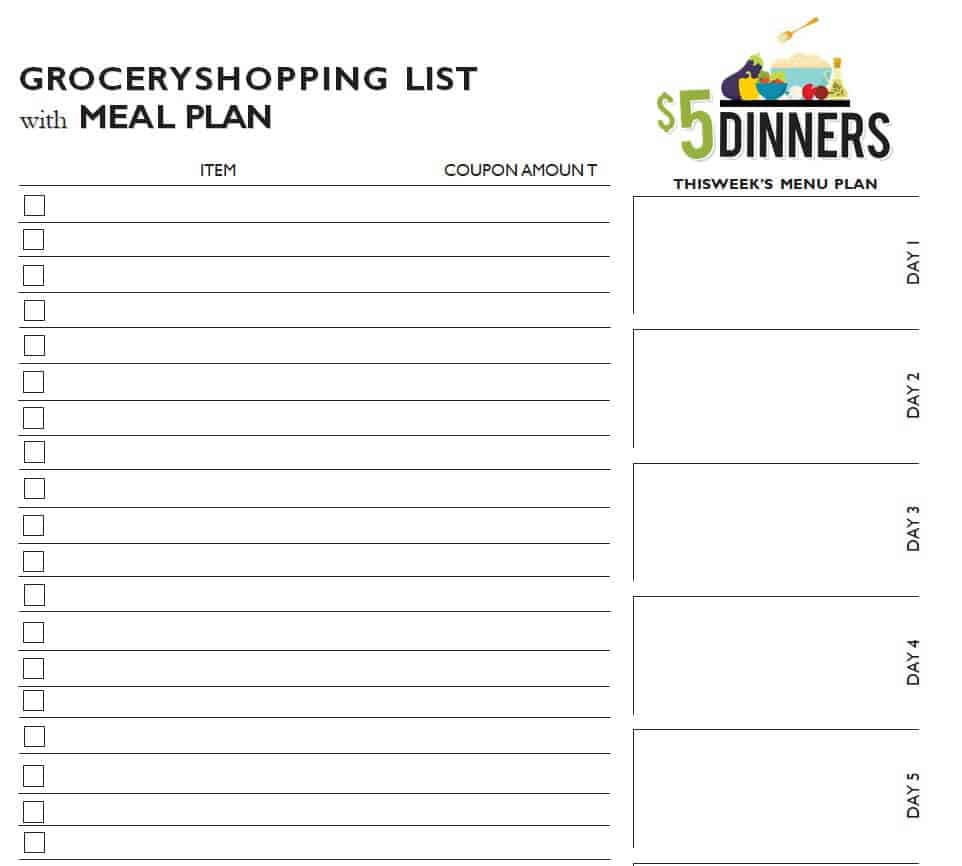
Grocery Shopping List Template with Meal Plan
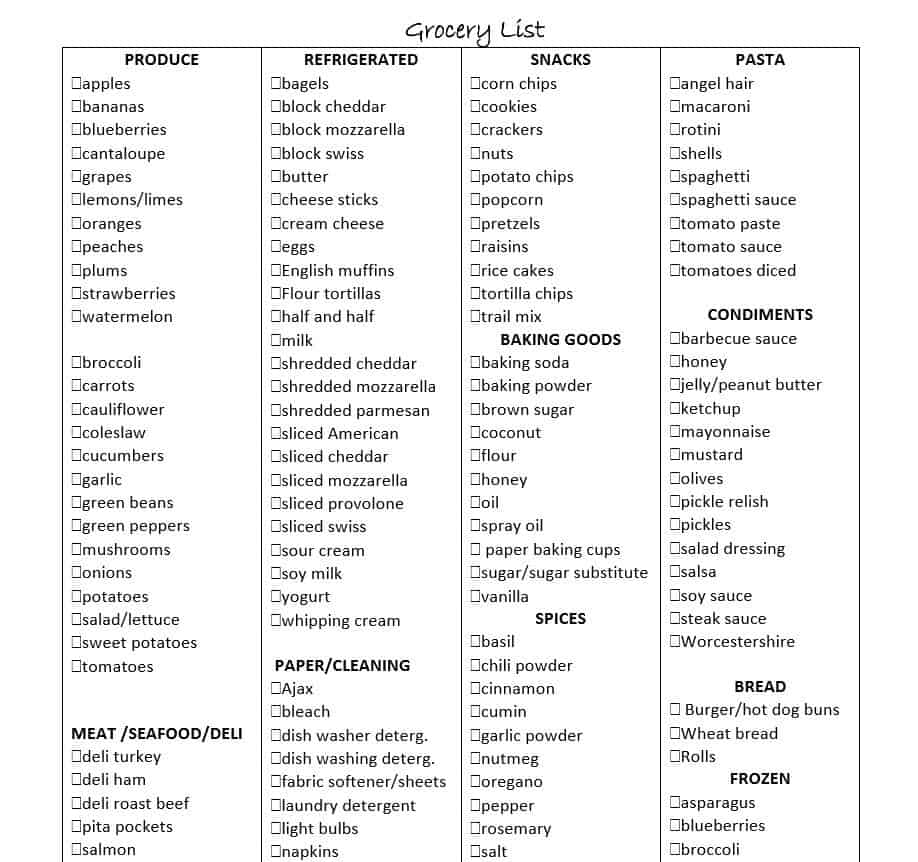
Grocery List PDF Templates:
Practical Grocery List Template
Free Grocery Checklist Template
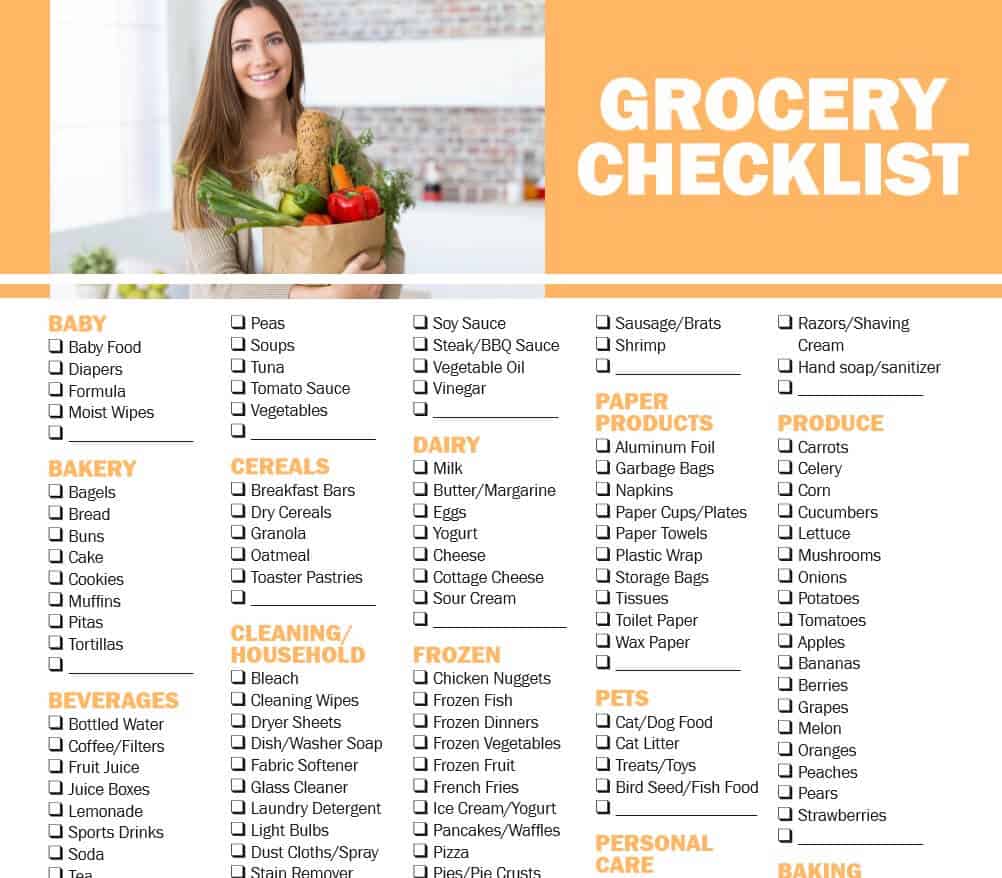
Example Grocery List PDF Template
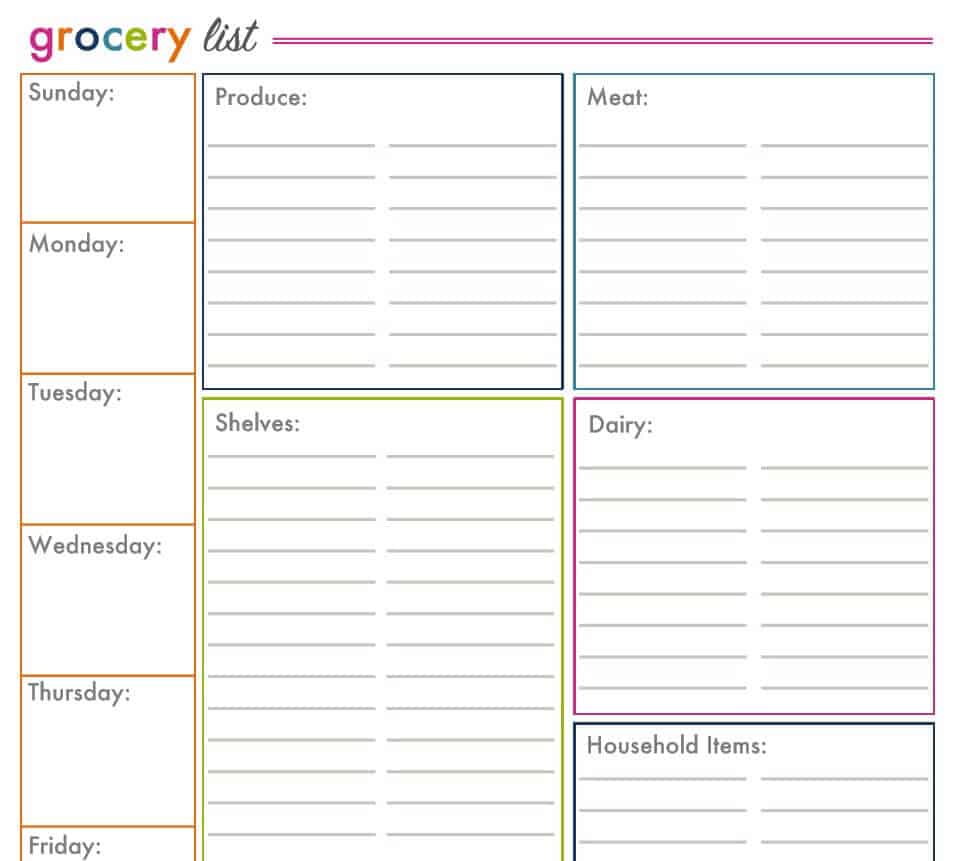
Useful Grocery List Template

Special Grocery List Template
Grocery List EXCEL Templates:
Standard Grocery List Template
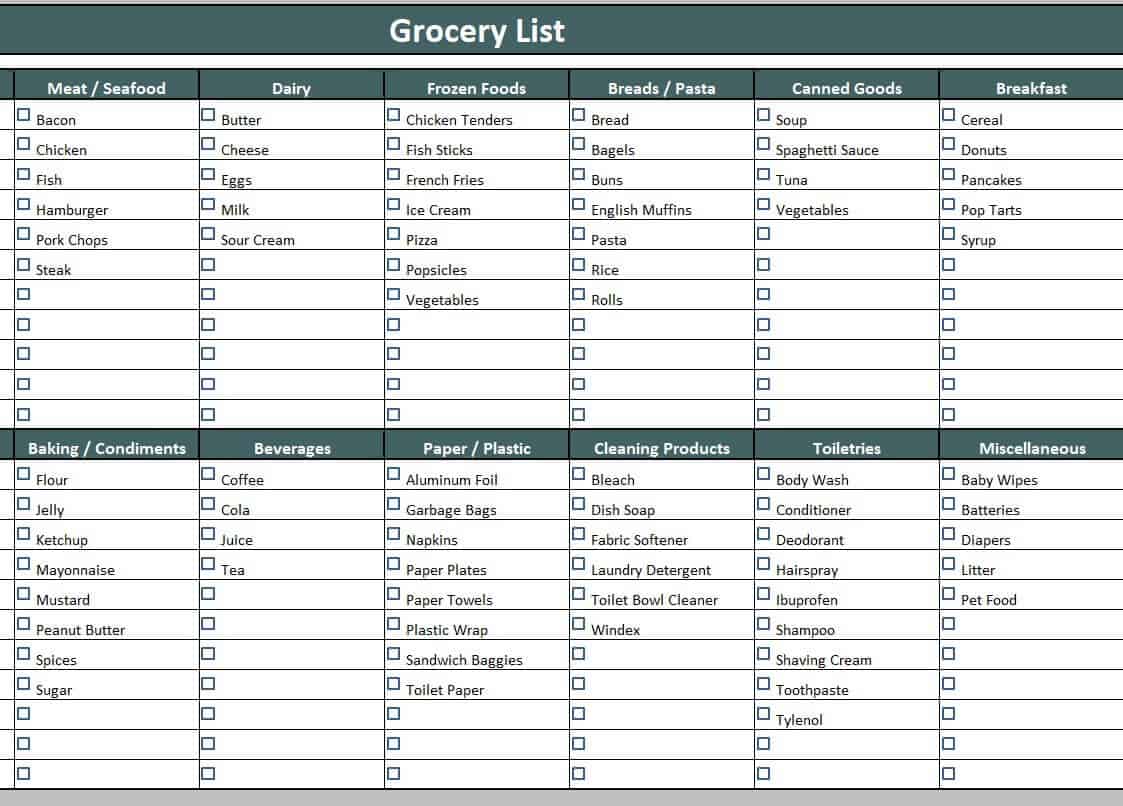
Printable Grocery List Template
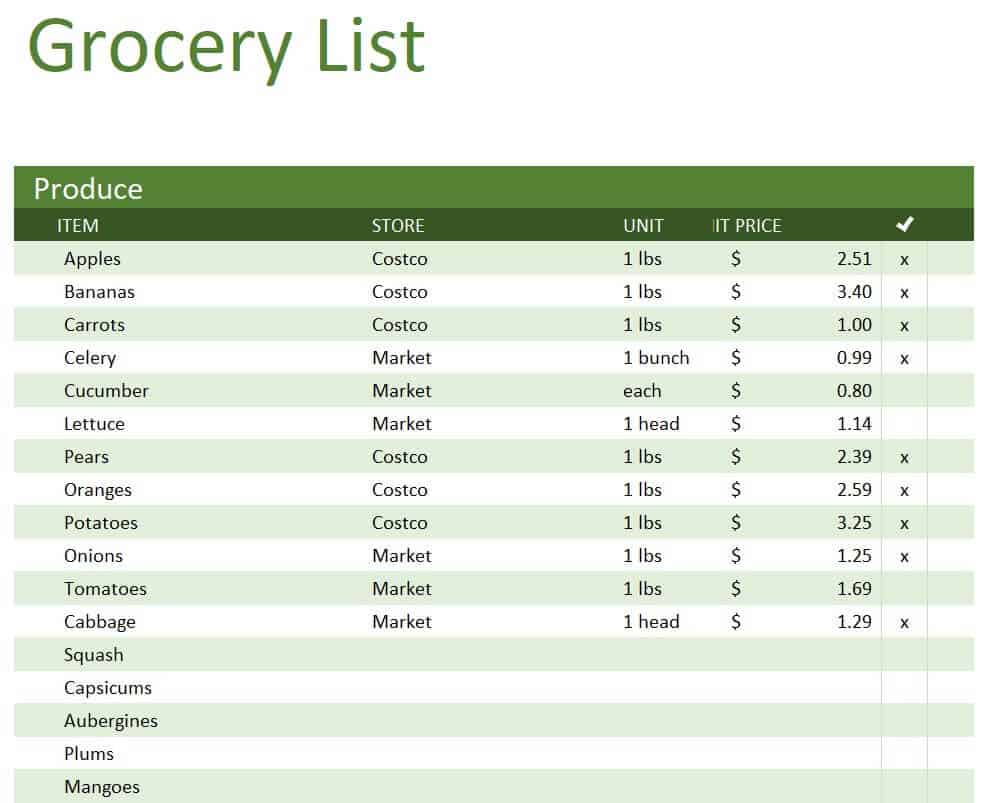
My Grocery List Template EXCEL
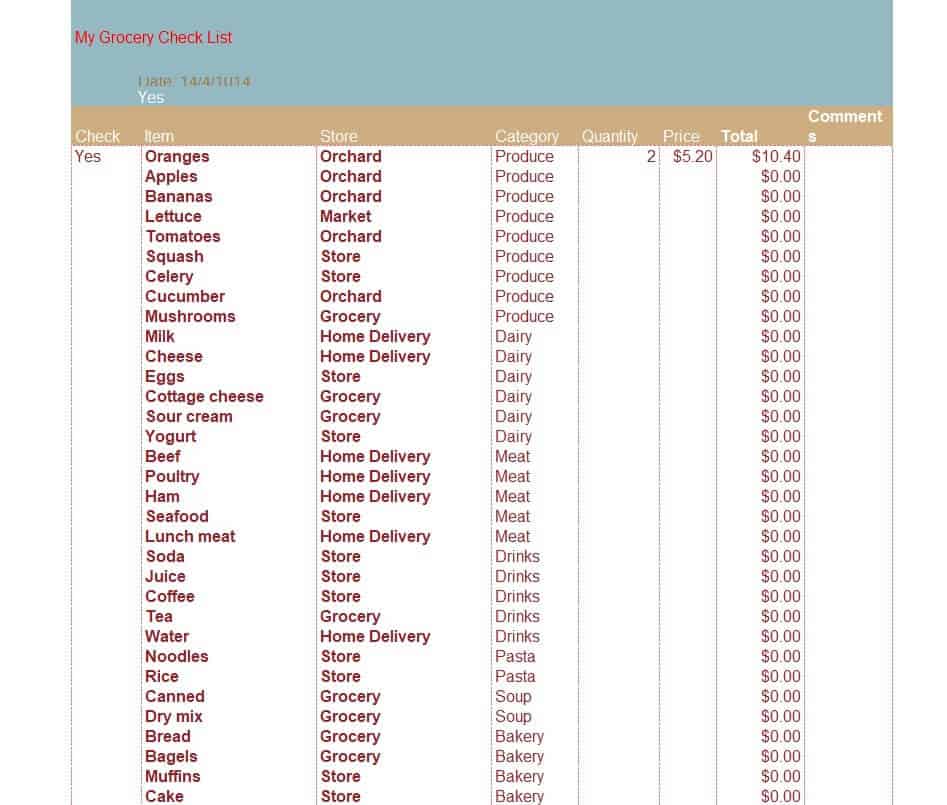
Simple Grocery List Template
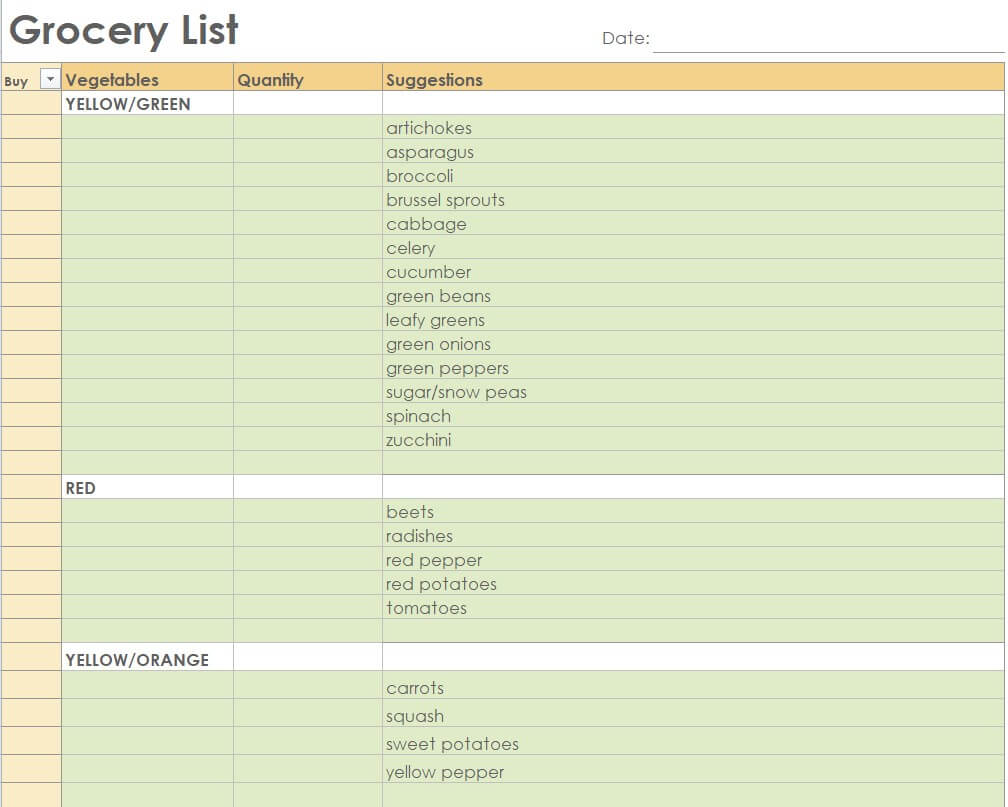
Model Grocery List Template

Sample Grocery List EXCEL Template

How to Plan Meals and Build an Efficient Grocery List
Building an efficient grocery list starts before you ever open the template. Follow these steps to make sure your next trip is quick, complete, and on budget:
- Plan your meals first. Sketch out breakfasts, lunches, and dinners for the week, or however far ahead you shop, so your list is built around real meals instead of guesswork.
- Check what you already have. Look through the fridge, freezer, and pantry before you write anything down, so you do not buy duplicates of things you already own.
- Write down every ingredient. Go recipe by recipe and add each ingredient you are missing to the matching category on your template.
- Add household and personal-care items. Toss in the non-food items you are low on, like cleaning supplies or toiletries, so one trip covers everything.
- Organize by store layout. Arrange the list, or choose a template already organized, to match the order you walk through the store, from produce to frozen to checkout.
- Set a rough budget. Jot down an estimated price next to bigger-ticket items so you have a target total in mind before you shop.
Common Mistakes to Avoid
Even with the best intentions, a few habits can undo the benefits of a grocery list. Shopping without a list at all is the biggest one, since it almost always leads to impulse buys and forgotten essentials. Not categorizing the list by store layout is another common slip, since it forces you to backtrack across the store instead of moving through it in one smooth pass.
Forgetting to check what is already at home before you shop is another frequent mistake, and it is one of the easiest to fix. A quick look in the pantry and fridge takes two minutes and can save you from buying a third jar of something you did not need. Finally, writing a list that is too vague, such as “snacks” or “vegetables” with no detail, makes it easy to grab the wrong thing or forget the specific item you actually needed.
Tips for Saving Money and Time at the Grocery Store
Shop with a full stomach and a set list. Shopping hungry or without a plan is one of the fastest ways to overspend. Stick to the perimeter of the store first, where fresh produce, dairy, and meat are usually kept, then move into the center aisles only for the specific pantry items on your list.
Compare unit prices rather than package prices, since the larger box is not always the better deal. Keep a running total as you shop using the budget column on your template, so there are no surprises at checkout. And try to shop on a consistent schedule, whether that is weekly or biweekly, so you are buying in a predictable rhythm instead of making frequent, smaller trips that tend to cost more overall.
Frequently Asked Questions
How do I make a grocery list that saves money?
Start by planning your meals for the week, then only add ingredients you do not already have. Include a budget column on your list to track estimated prices, compare unit prices while you shop, and avoid grocery shopping on an empty stomach, which tends to lead to impulse purchases.
Should a grocery list be organized by store aisle?
Yes. Organizing your list by category, such as produce, dairy, meat, and pantry, in the same order you walk through your usual store saves time and reduces the chance of doubling back for something you missed.
What’s the best way to track a grocery budget?
Use a template with a dedicated price or budget column, jot down an estimated cost next to each item before you shop, and keep a running total as you add items to your cart so you can adjust before reaching the register.
Can a grocery list template help with meal planning?
Absolutely. A template built around meal planning lets you list the meals you intend to cook first, then pull ingredients directly from each recipe onto the shopping list, which reduces missed ingredients and cuts down on last-minute store runs.