
A job description is a document that explains the purpose, duties, responsibilities, qualifications, skills, and expectations associated with a particular position. Employers use job descriptions to communicate what a role involves and what they expect from someone hired to perform it.
A well-written job description template can save time when creating descriptions for new or existing positions. Instead of starting with a blank document, you can use a structured format and customize it with the job title, department, responsibilities, qualifications, working conditions, and other information relevant to the position.
Job Description Templates
A clear job description helps employees and applicants understand what a position involves. It can describe the main purpose of the role, key responsibilities, required qualifications, skills, experience, reporting relationships, and other expectations.
The level of detail should match the position. A straightforward administrative role may need a relatively short description, while a technical, managerial, or specialized position may require more detailed information about qualifications, responsibilities, and performance expectations.
Job Description Template in Word
A job description template in Word is convenient because Microsoft Word allows employers to edit and reuse the document easily. You can replace the sample job title, company information, responsibilities, qualifications, and other sections with details specific to the position.
Organizations can also maintain a consistent format across different departments. Using the same basic structure makes job descriptions easier to review and update when responsibilities or requirements change.
What to Include in a Job Description
A useful job description may include:
- Job title
- Department or business unit
- Position summary
- Key duties and responsibilities
- Required qualifications
- Preferred skills or experience
- Reporting relationship
- Work location
- Working schedule
- Physical or technical requirements where relevant
- Employment type
- Other role-specific expectations
Not every position requires every section. Include information that helps candidates and employees understand the role accurately.
Job Responsibilities and Duties
The job responsibilities section should explain the main work the employee is expected to perform. Use clear and specific language rather than vague statements.
For example, instead of simply saying that an employee is responsible for “office work,” identify relevant activities such as preparing reports, maintaining records, communicating with customers, scheduling appointments, or supporting administrative processes.
Prioritize the most important responsibilities and avoid creating an unnecessarily long list. The description should reflect the actual position rather than an idealized version of the role.
Job Qualifications and Skills
The qualifications section explains the education, experience, technical knowledge, certifications, or other skills needed for the position. Separate essential requirements from preferred qualifications when appropriate.
Be realistic about the requirements. Listing unnecessary qualifications can reduce the number of suitable applicants and make the job description less useful. Requirements should be relevant to the actual responsibilities of the role.
Job Description for Hiring
A job description for hiring can form the foundation of a job posting. Employers can use the role summary, responsibilities, and qualifications to communicate the opportunity to potential applicants.
Review the description before publishing it to make sure the information is accurate and current. The job title, responsibilities, qualifications, working arrangement, and other important details should reflect the actual position being offered.
Employee Job Description
Job descriptions can also be useful after an employee has been hired. A written description gives employees and managers a common reference for understanding the scope of a position.
Responsibilities can change as an organization grows, so job descriptions should be reviewed periodically. Update the document when major duties, reporting relationships, required skills, or other important aspects of the role change.
How to Write a Job Description
Start with a concise summary explaining why the position exists and what its main purpose is. Then list the most important responsibilities in a logical order.
Add the qualifications, skills, experience, and other requirements that are genuinely relevant to the position. Finally, review the complete document from the perspective of an applicant or employee. Someone unfamiliar with the organization should be able to understand the role from the description.
Download Free Job Description Templates
These free job description templates provide a practical starting point for employers, managers, HR professionals, and business owners. Choose a format that fits your needs, customize the job title and responsibilities, and add the qualifications and requirements relevant to the position.
Whether you are hiring for a new role, documenting an existing position, or standardizing job descriptions across your organization, a ready-made template can save time and help keep your documents organized and consistent.
Download Free Job Description Templates:
1. Job Description Template
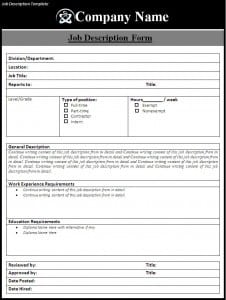
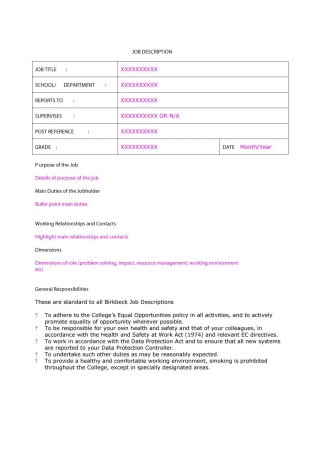
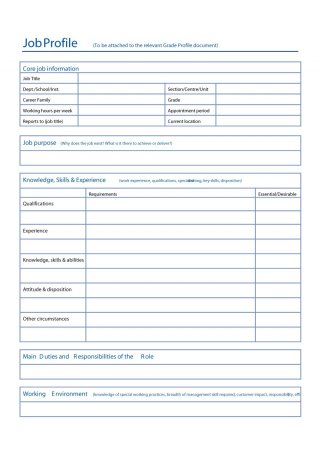
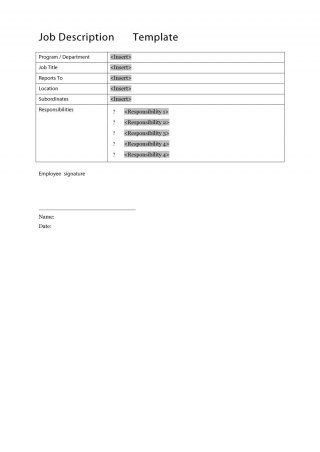
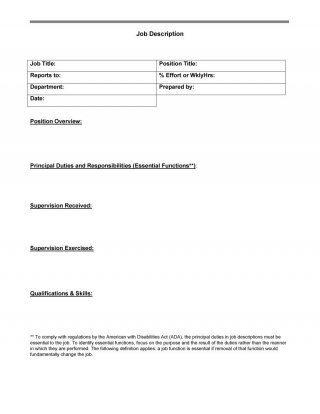
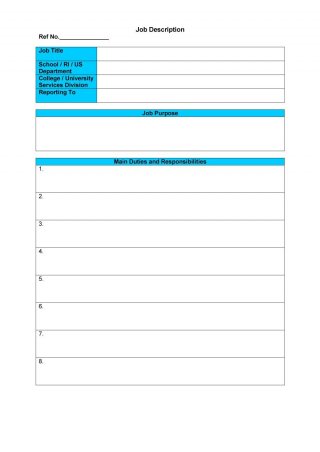
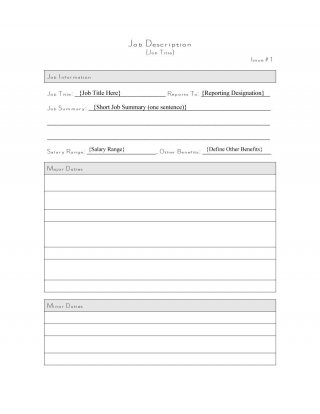
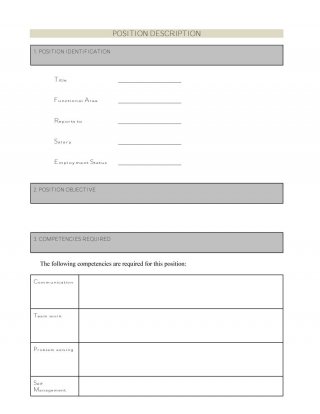
This job description template provides a structured starting point for documenting the duties and requirements of a position. It can help employers organize the job title, role summary, responsibilities, qualifications, skills, and other information in a consistent format.
The template can be customized for different positions, departments, and industries. Replace the sample information with details that accurately reflect the actual role, and review the description whenever the position’s responsibilities change.

FAQs
1. What is a job description?
A job description is a document that explains a position’s purpose, duties, responsibilities, qualifications, skills, and expectations.
2. What should a job description include?
It commonly includes the job title, position summary, responsibilities, qualifications, skills, reporting relationship, location, schedule, and employment-related details.
3. Can I create a job description in Word?
Yes. A Word job description template can be edited and customized for different positions within an organization.
4. What is the difference between a job description and a job posting?
A job description defines the role and its responsibilities, while a job posting is usually written specifically to attract and inform potential applicants.
5. How long should a job description be?
There is no fixed length. It should be detailed enough to explain the role clearly without including unnecessary information.
6. Should a job description list required skills?
Yes. Include skills and qualifications that are genuinely relevant to performing the position’s responsibilities.
7. Can a job description be changed after hiring?
Yes. Job descriptions should be reviewed and updated when significant responsibilities, requirements, or reporting relationships change.
8. Who can use a job description template?
Employers, HR professionals, managers, recruiters, small business owners, and organizations can use job description templates to document and communicate job requirements.