

Meeting minutes are written or recorded detail of discussions and decisions during the meeting. The Meeting Minutes Templates are required by many on daily basis. The main purpose of meeting minutes is to let non-attendees know about the happenings in a meeting.
You can also browse our full collection of free word templates for more ready-to-use designs.
Well-written meeting minutes may include the name of the person who wrote the minutes, the names of the people who were present during the meeting, complete detail of the discussion, and the name of the person who put off the meeting. Meeting minutes are very important to remember meeting’s decisions and can also inform people who were not at the meeting.
Meeting minutes should be prepared carefully and distributed to everyone who was in the meeting as soon as possible, so questions can be raised and any necessary changes to the minutes can be made at the time. Meeting minutes templates can help a lot to write or prepare perfect meeting minutes. These meeting minutes templates will save a lot of your time.
The document which is used to inform the attendees and non-attendees about the happenings during the meeting is known as meeting minutes. The meeting minutes are recorded during the meeting so the participants have a record of what happened during the meeting.
The meeting minutes includes the name of participants, the items covered, the decision made by the leader and the follow-up actions, the due date for completion of commitments, and any other discussion about the betterment and growth of the business. The minutes serve as a reminder of the commitments made during the meeting.
The meeting minutes are an effective contributor to successful meetings when minutes are appropriately written and distributed in a timely manner. It is important for the person who has not attended the meeting to take meeting minutes. The meeting minutes are about all the discussions between the leader and the team.
Who Records and Uses Meeting Minutes
Meeting minutes are relied on by a wide range of people, not just corporate secretaries. Executive assistants and administrative staff often take the lead on board and leadership meetings, since accuracy and neutrality matter most when decisions carry legal or financial weight. Project managers use minutes to track scope changes, risks, and action items across the life of a project, turning conversation into a written trail that can be checked later. Human resources teams document policy discussions, onboarding sessions, and staff meetings so that agreements are clear and disputes can be resolved by referring back to what was actually said. Non-profit boards, homeowners associations, school committees, and academic departments also depend on well-kept minutes to meet governance and reporting requirements. Even small businesses and startup teams benefit from a simple, consistent record instead of relying on memory or scattered chat messages that are easy to lose track of.
Key Elements Every Good Meeting Minutes Document Should Include
Regardless of the format you choose, effective meeting minutes tend to share the same core building blocks. Start with the basics: the date, start and end time, and location or platform (in-person, phone, or video call) so there is no ambiguity about when and where the meeting took place. Next comes the attendee list, which should separate those present, those who sent apologies, and any guests or invited specialists who joined for part of the discussion. The agenda items covered should be listed in the order they were discussed, each with a short summary rather than a verbatim transcript. Decisions made under each item need to be recorded clearly, including any votes taken and their outcome. Action items deserve their own attention: each one should name the person responsible, describe the task in a few words, and include a realistic deadline, since vague action items are one of the most common reasons follow-up work gets dropped. Finally, note the date, time, and location of the next meeting if one has been set, so attendees can plan ahead without needing a separate reminder.
Make sure to check out the given-below free and editable meeting minutes templates provided here in this article.
FREE Meeting Minutes Templates:
Academy Meeting Minutes Template
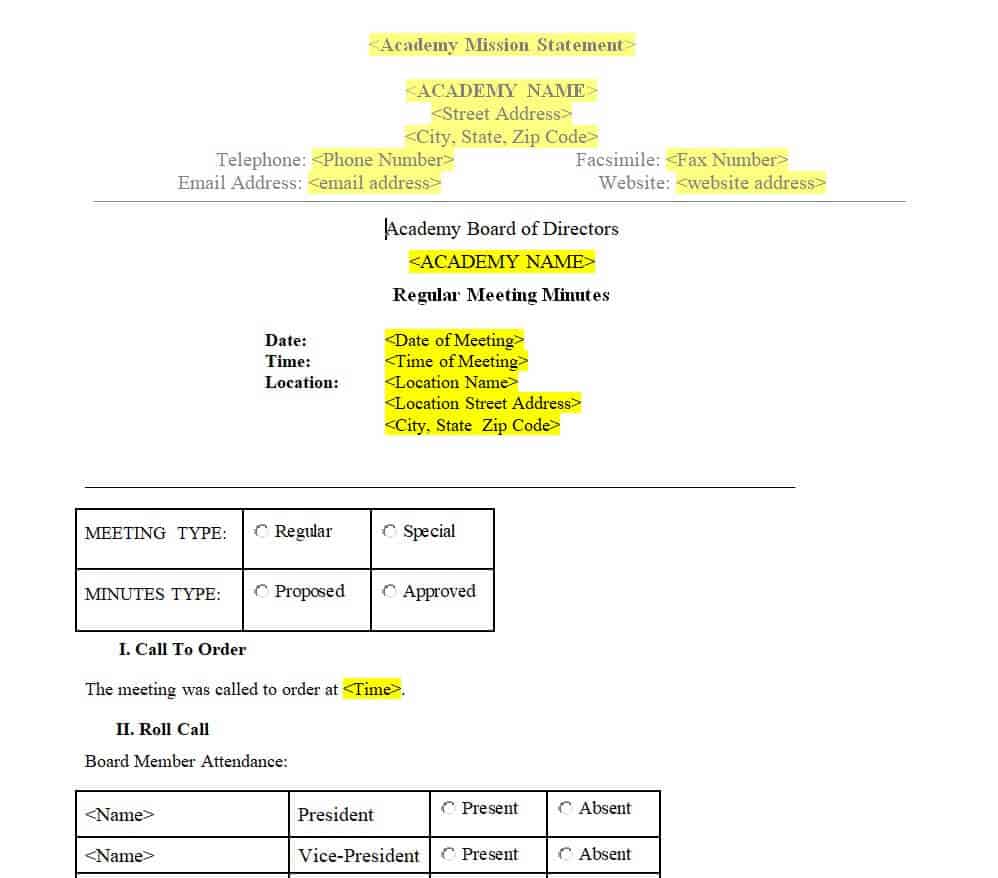
Organization Meeting Minutes Template
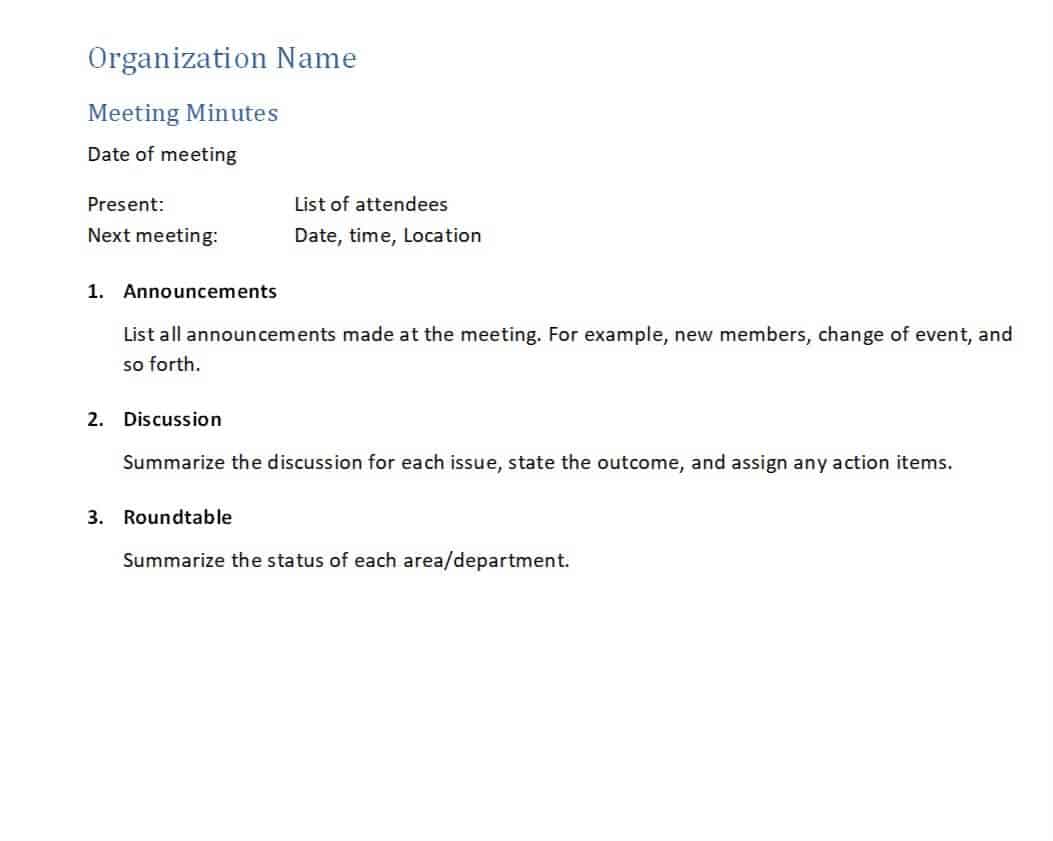
Corporate Meeting Minutes Template
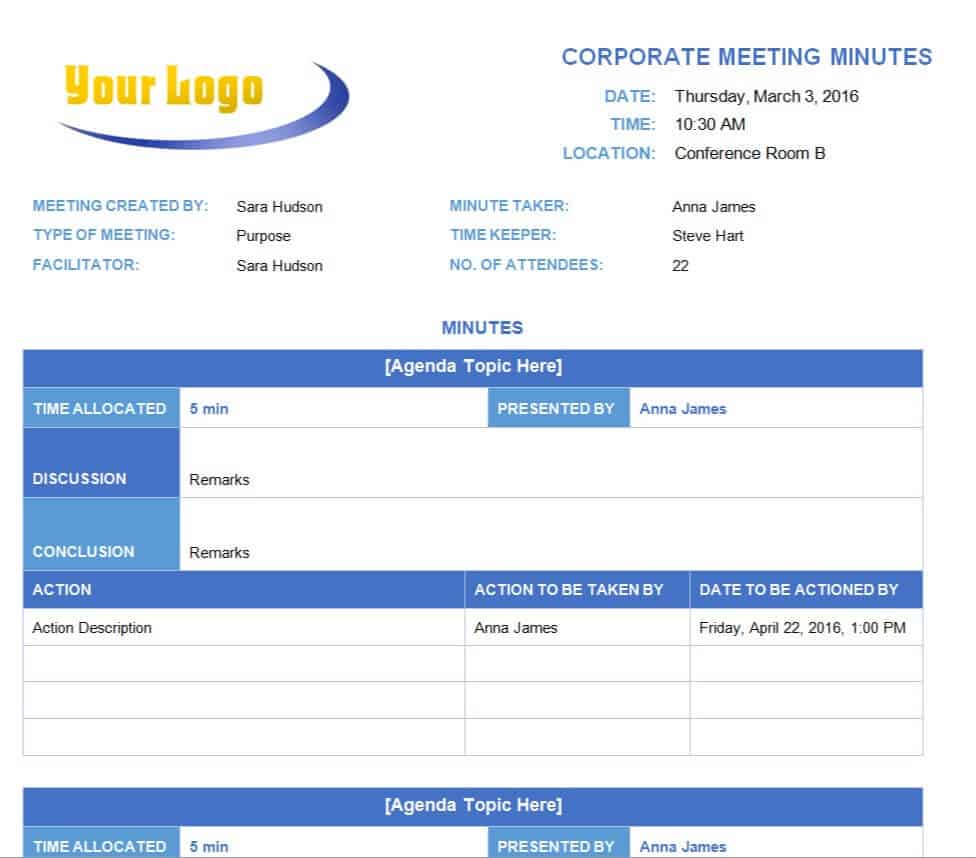
Informal Meeting Minutes Template
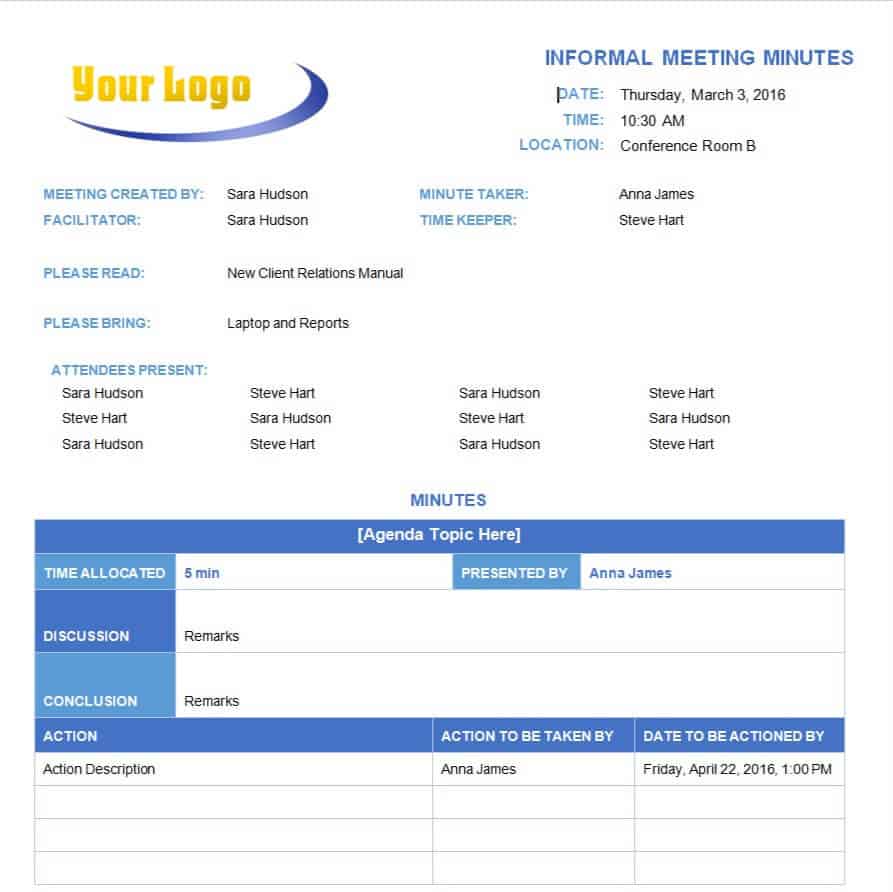
Team Meeting Minutes Template
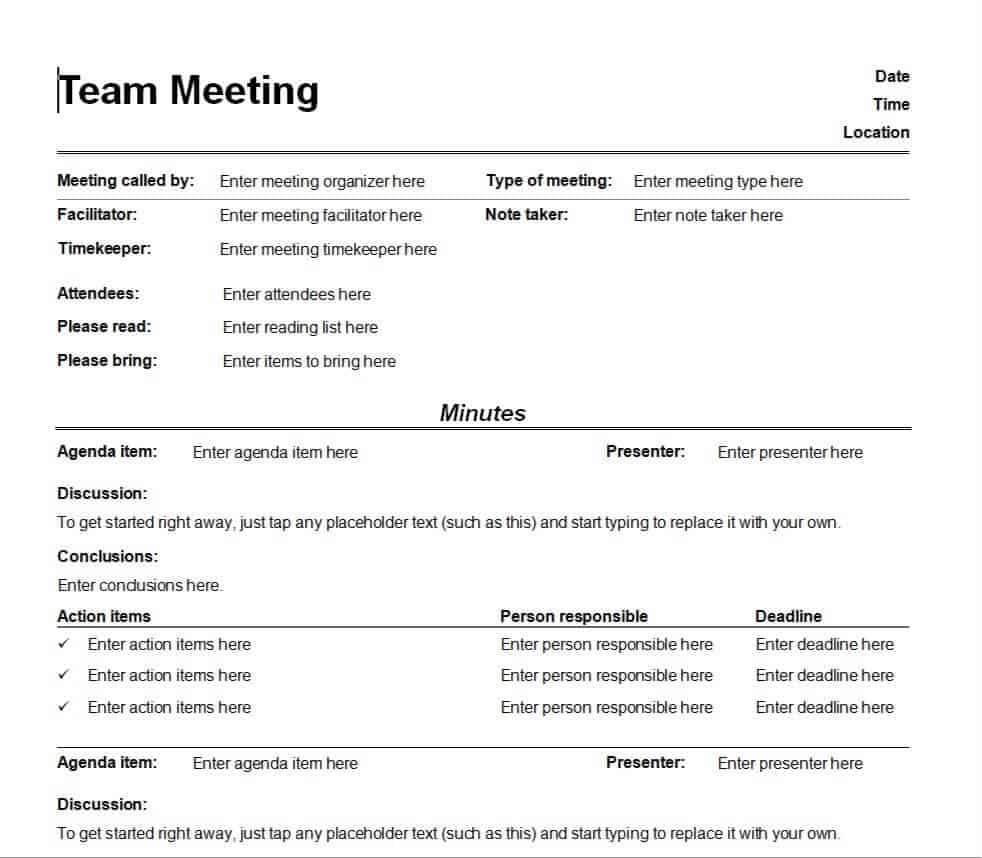
Sample Meeting Minutes Template
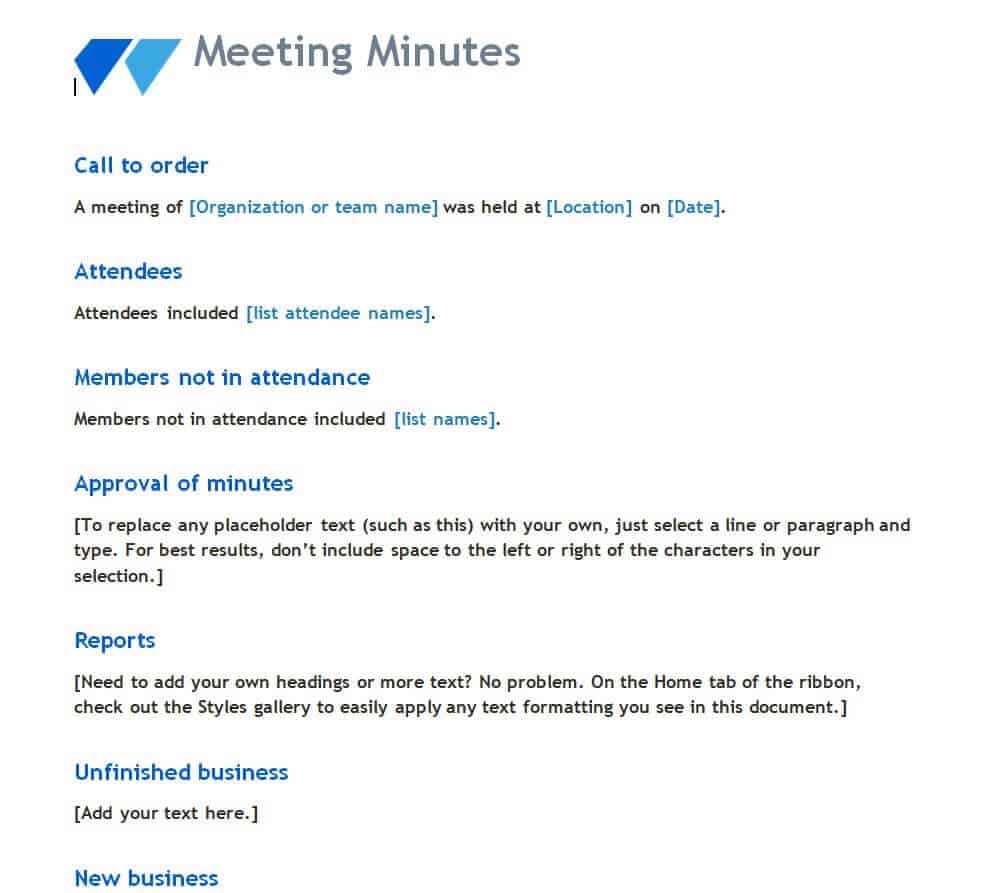
Departmental Meeting Minutes Template
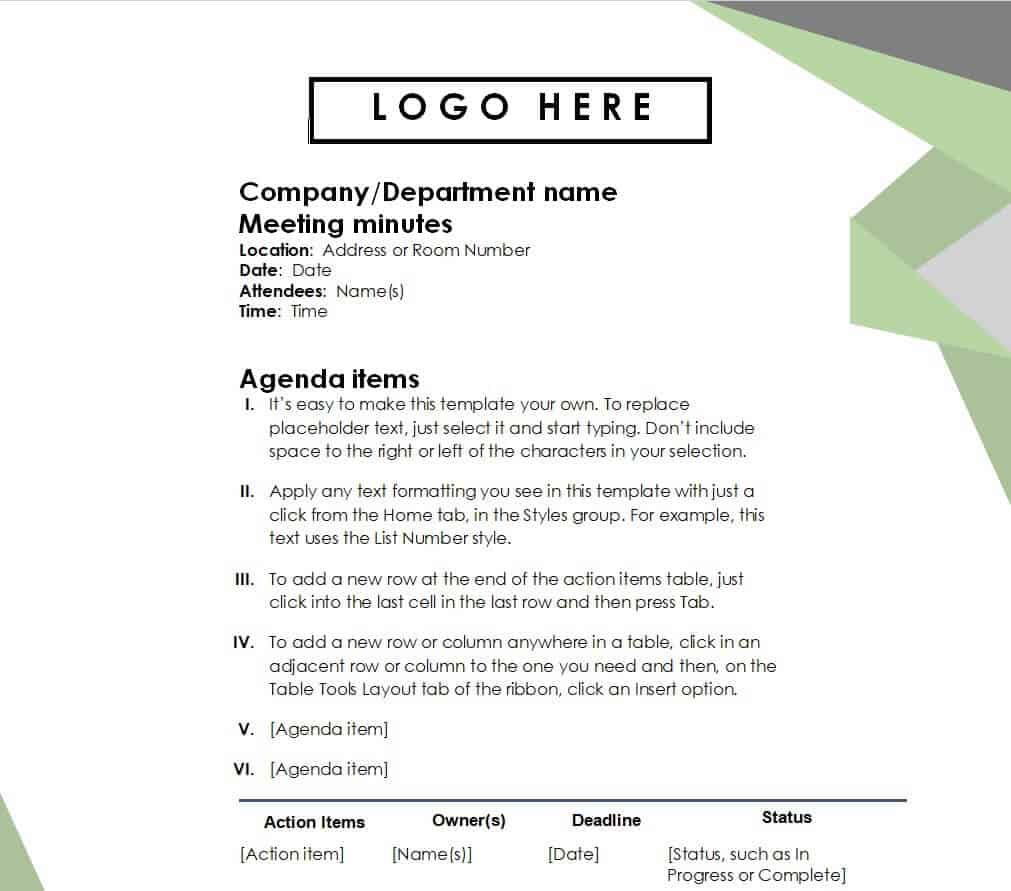
Basic Meeting Minutes Layout Template
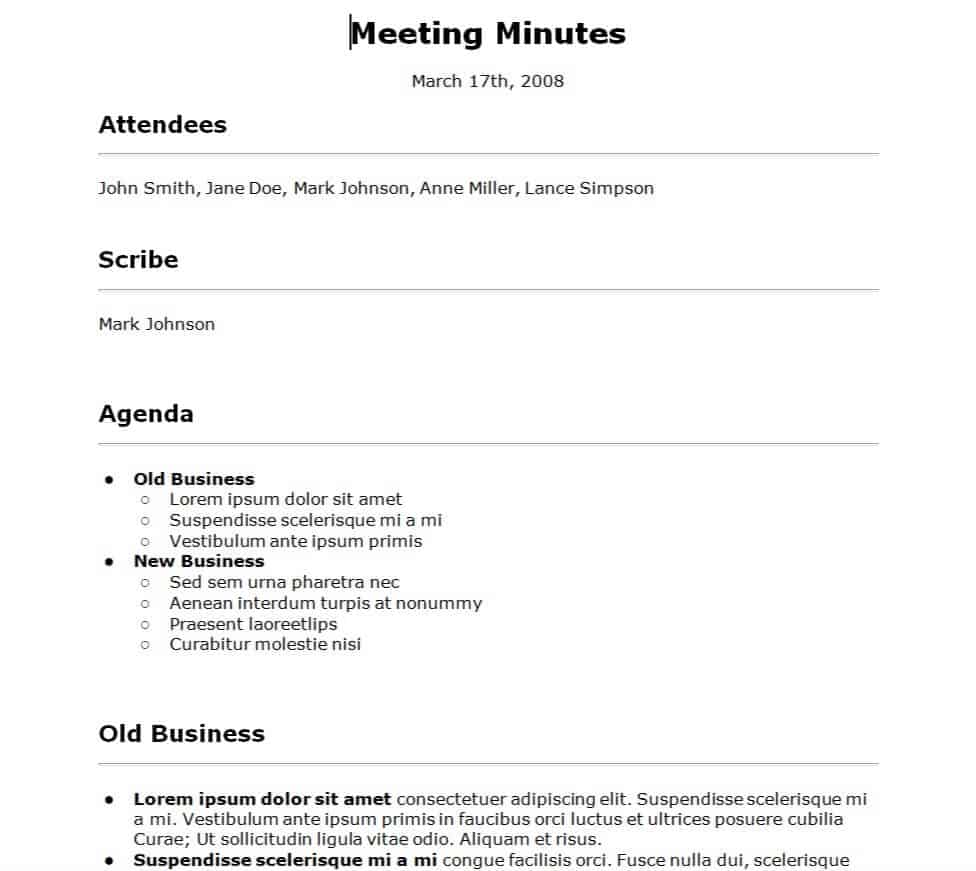
Project Meeting Minutes Template WORD

Special Meeting Minutes Template
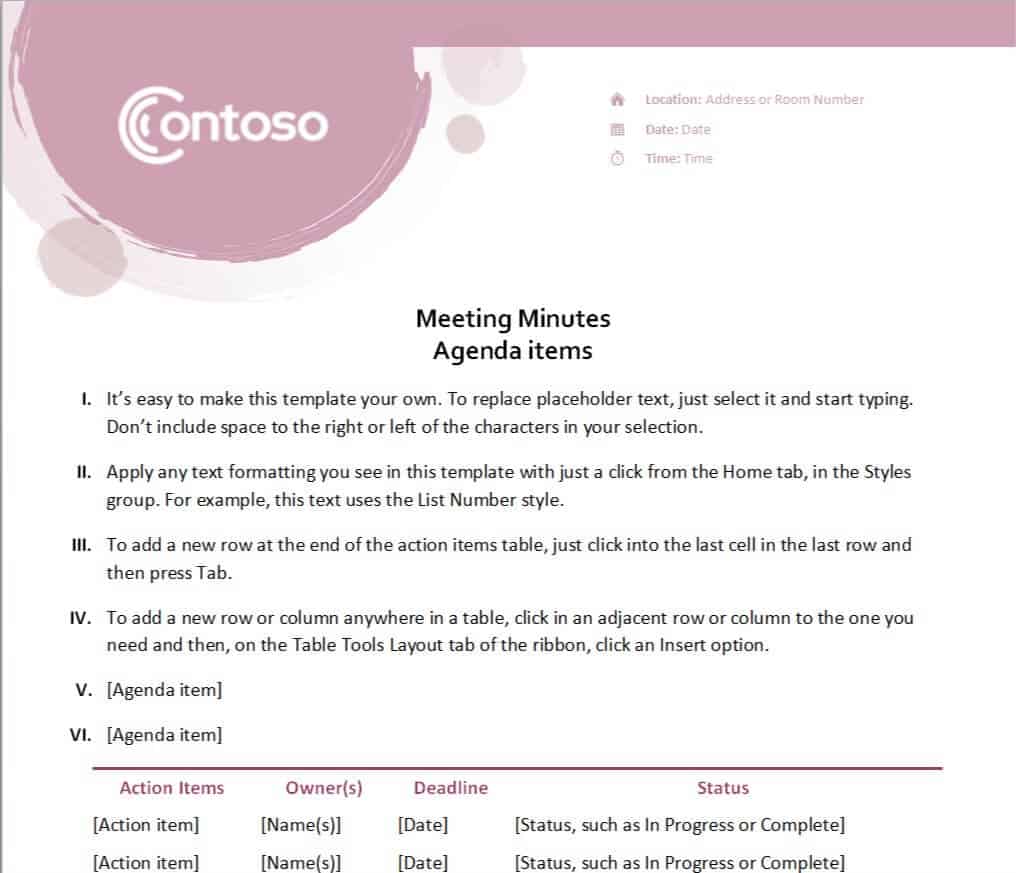
Official Meeting Minutes Template

Government Department Meeting Minutes Template
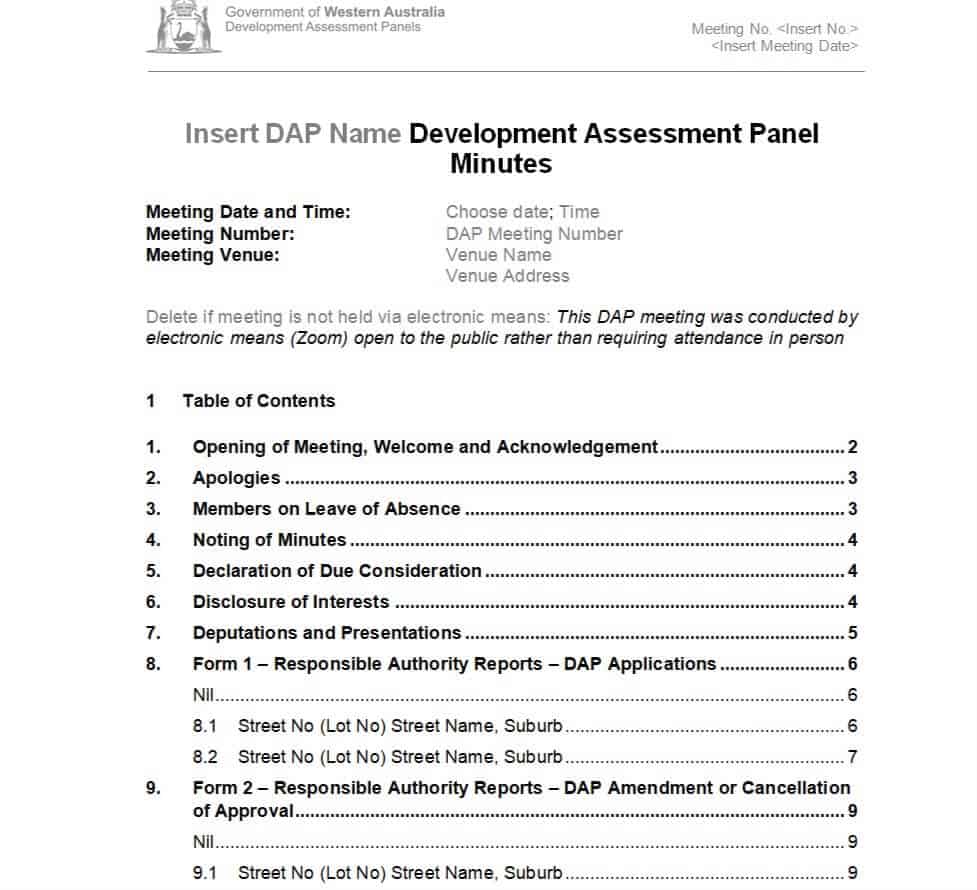
Online Meeting Minutes Word Template
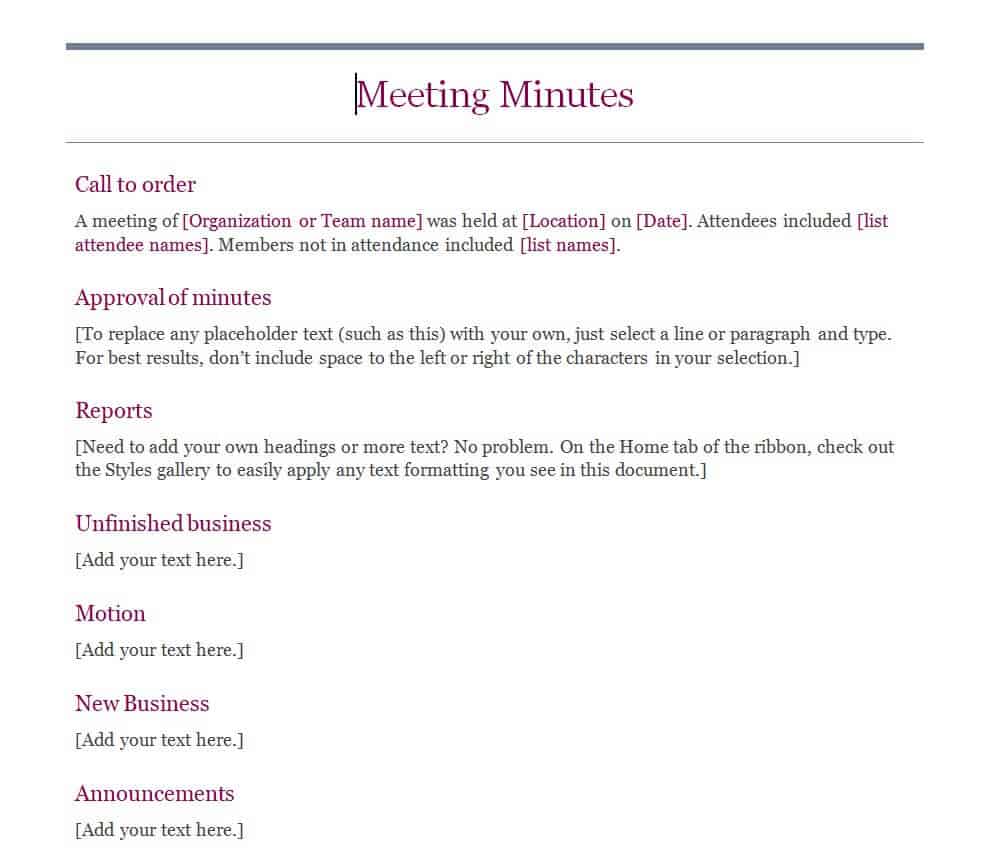
Standard Meeting Minutes Template
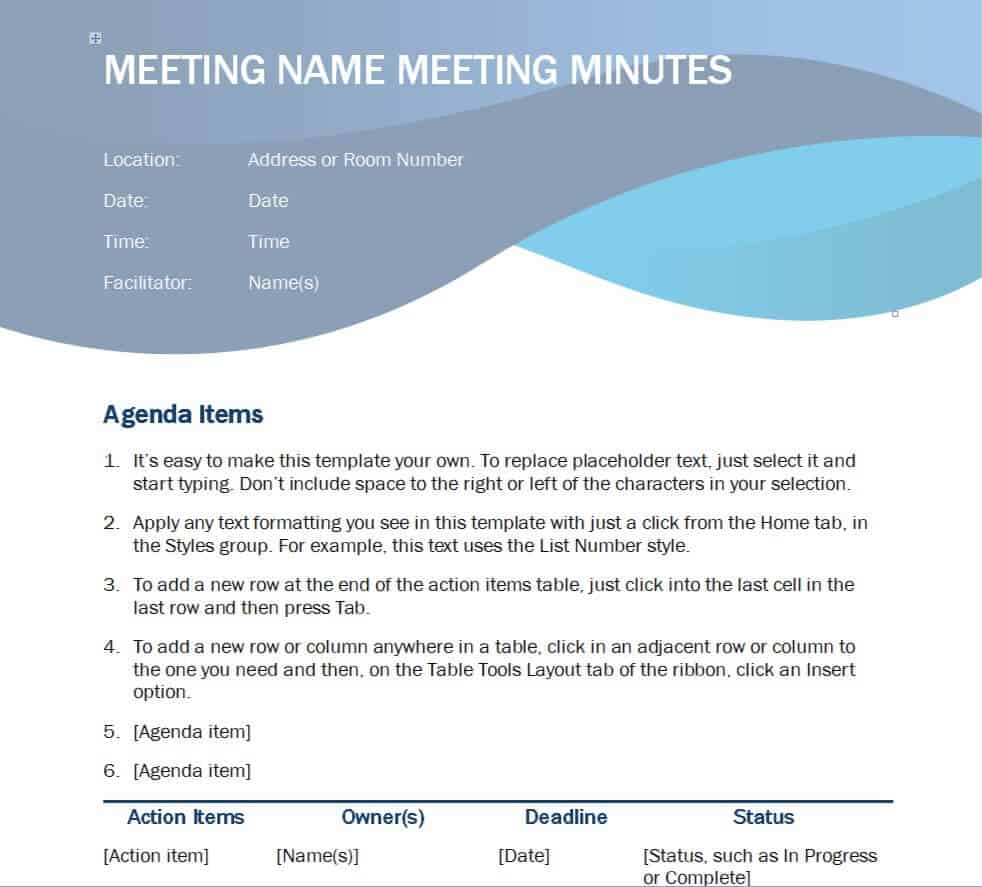
Editable Meeting Minutes Template

Free Board Meeting Minutes Template
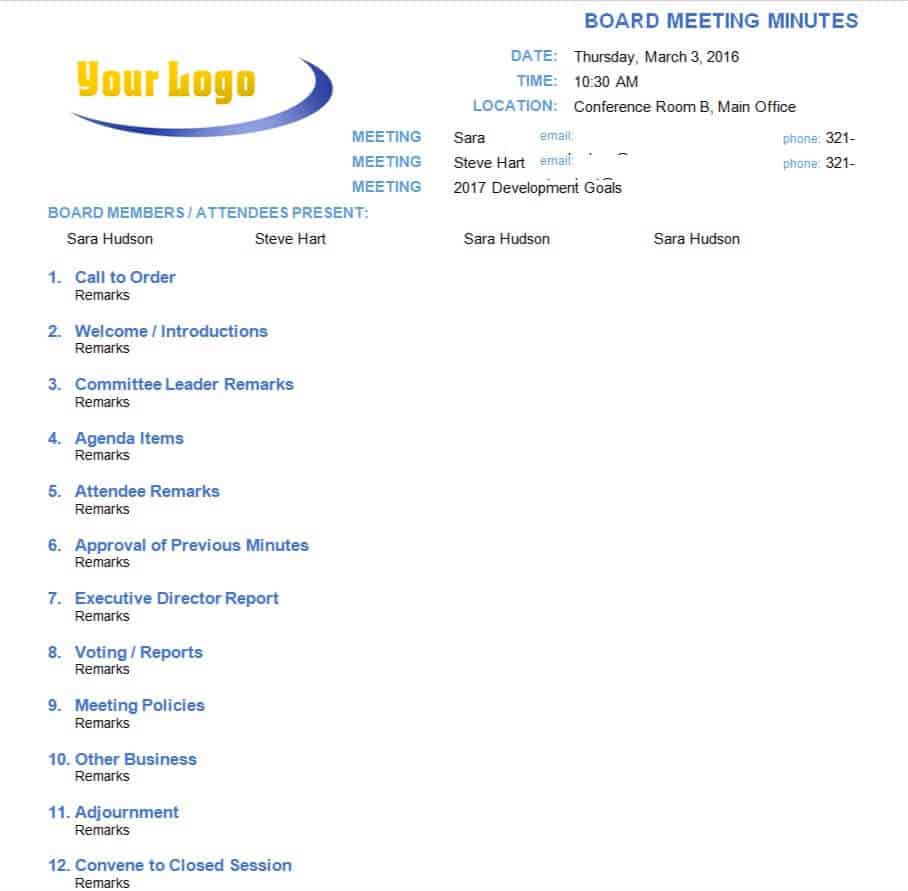
Example Meeting Minutes Template DOC Format
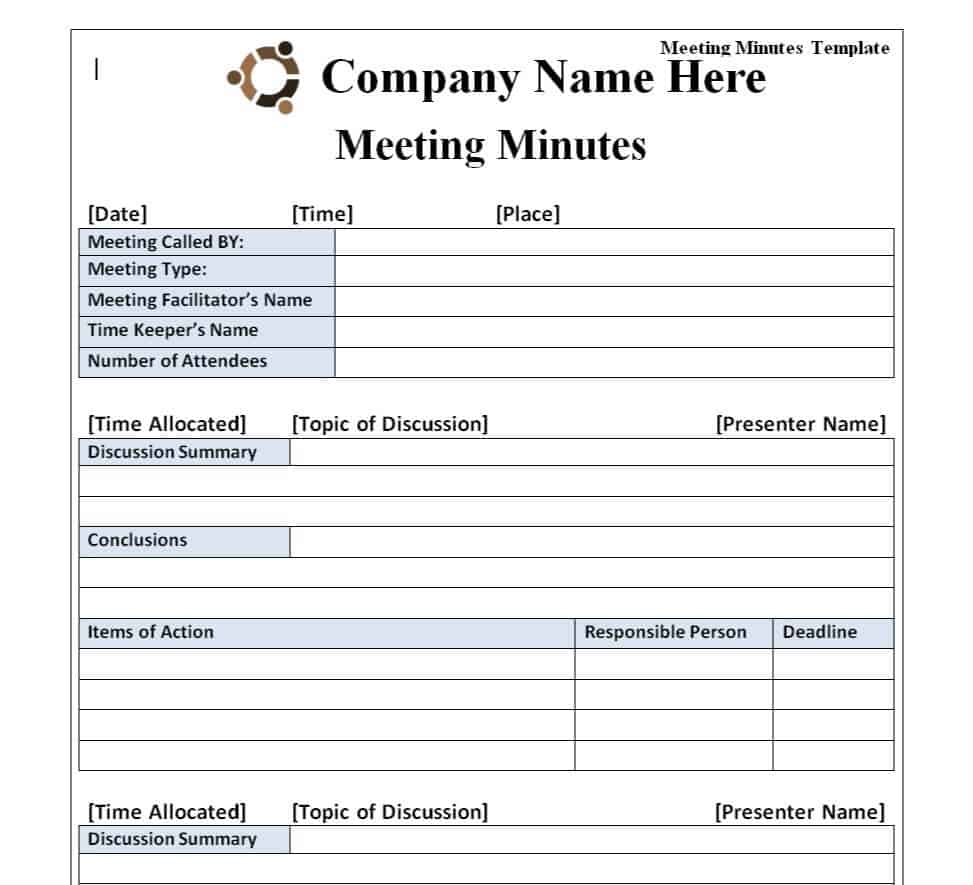
Formal Meeting Minutes Template
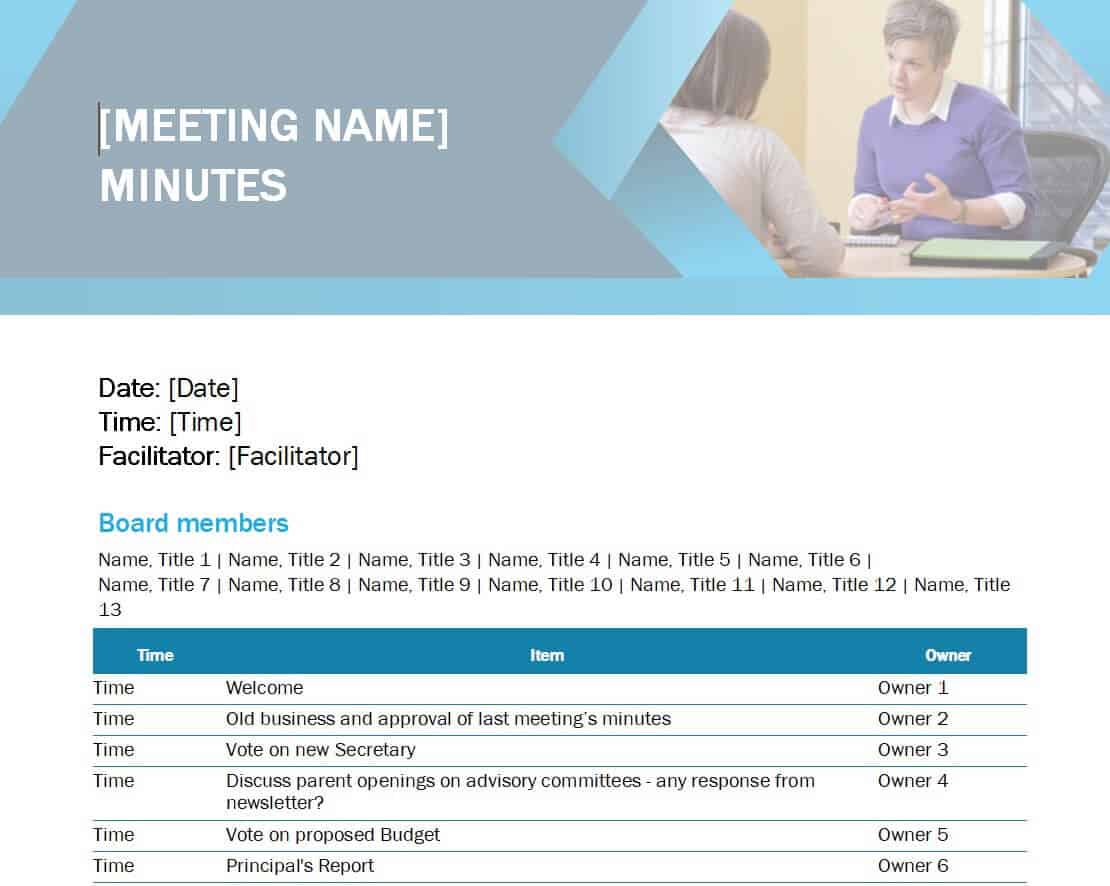
Advisory Board Meeting Minutes Template
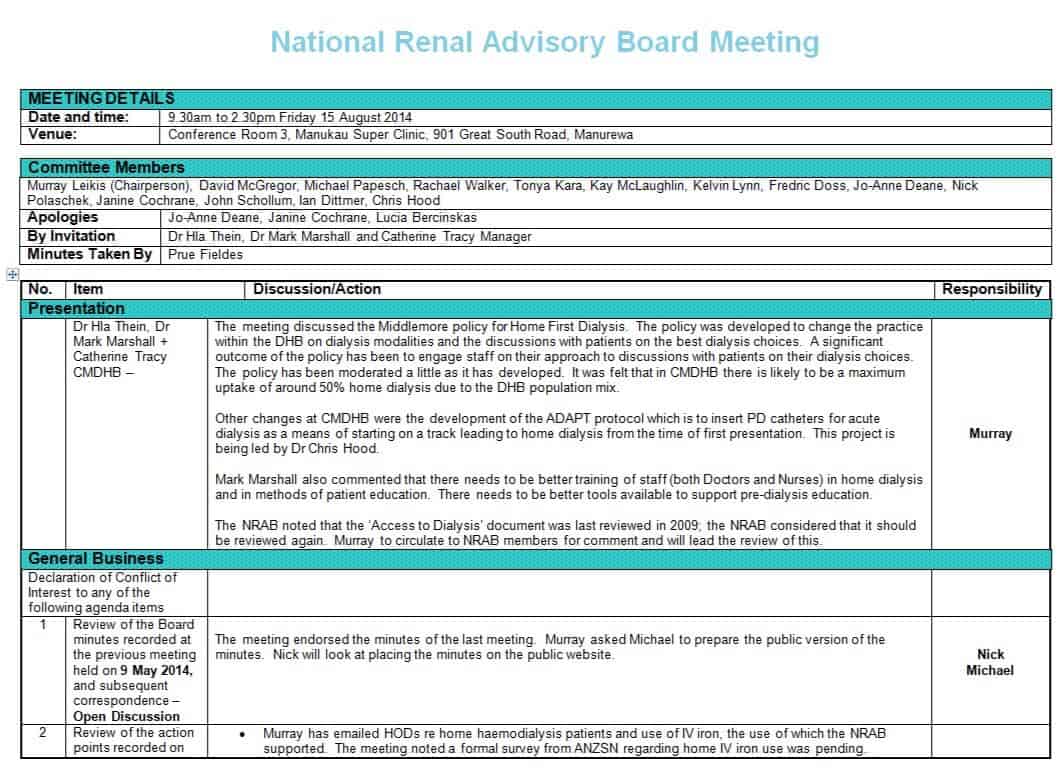
University Meeting Minutes Template
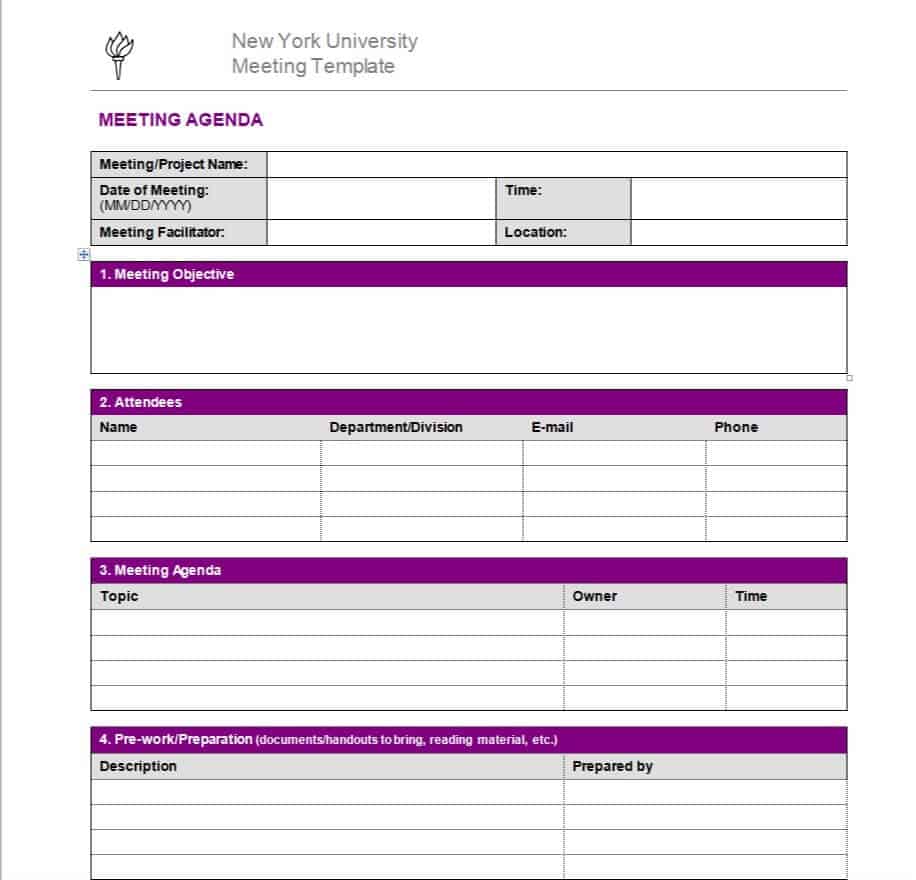
Sample Staff Meeting Minutes Template

Simple Meeting Minutes Template
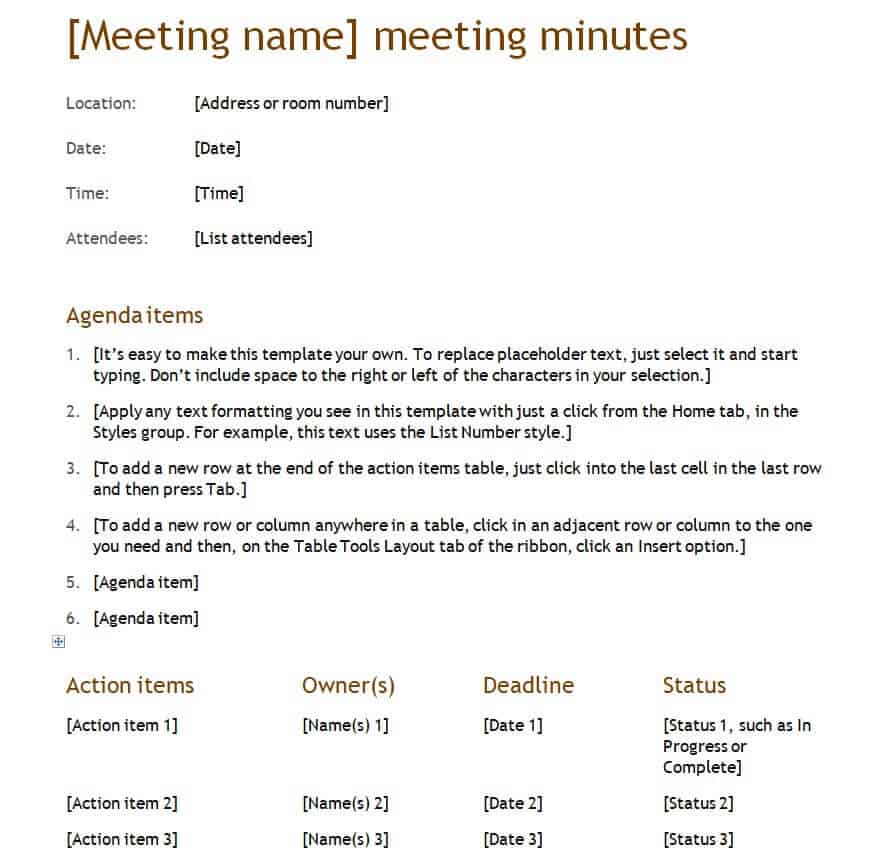
How to Write Effective Meeting Minutes
Good minutes are written in two stages: during the meeting and shortly after it. While the meeting is happening, focus on capturing facts rather than trying to write full sentences. Note who is present as people arrive, jot down each agenda item as it comes up, and write down decisions and action items the moment they are agreed, including names and deadlines, since these details are the easiest to forget once the conversation moves on. It helps to use a template with the structure already built in, so you are filling in blanks rather than deciding on formatting in the middle of a discussion.
After the meeting, review your notes while the discussion is still fresh, ideally within a few hours and no later than the next working day. Turn shorthand notes into clear, complete statements, check that every action item has an owner and a due date, and remove anything that was said off the record or is not relevant to the outcome. Send the draft to the meeting organizer or attendees for a quick review, then distribute the final version to everyone who needs it, including anyone who could not attend. Store a copy somewhere the whole team can find it later, whether that is a shared drive, an intranet, or a physical minute book for formal boards.
Common Mistakes to Avoid
A few habits are responsible for most poor-quality minutes. The first is being too verbose: minutes are a record of decisions and outcomes, not a word-for-word transcript, and trying to capture every sentence makes the document harder to read and slower to produce. The second is failing to separate action items from general discussion, which leaves readers unsure of what was actually agreed versus what was simply mentioned in passing. The third is delaying the write-up; the longer you wait, the more detail gets lost and the harder it becomes to remember exactly who committed to what. The fourth is skipping approval: minutes that are never reviewed or formally approved by attendees can be disputed later, especially for boards and committees where the minutes serve as an official record. Finally, watch out for vague action items such as “look into this” with no owner or deadline attached, since these almost never get done.
Tips for Using These Templates Effectively
Pick the template that best matches the formality of your meeting: a board or official meeting usually calls for a more structured, formal layout, while a quick team stand-up can use a simpler, informal one. Once you have chosen a template, customize the header with your organization’s name and logo so the document looks consistent with your other materials, and keep the same template for recurring meetings so attendees know exactly where to find each section. Use the action items table consistently, even for small meetings, since it is often the most-referenced part of the whole document weeks later. If your meetings are recurring, consider keeping a shared folder of past minutes in date order, which makes it easy to trace how a decision evolved over several sessions.
Frequently Asked Questions
Are meeting minutes legally binding?
Meeting minutes are not a contract on their own, but they can serve as important evidence of what was discussed and agreed. For boards, committees, and other formal bodies, approved minutes are often treated as the official record of decisions and can carry real weight in legal or regulatory reviews, which is why accuracy and timely approval matter.
Who should approve meeting minutes?
Typically the meeting chair or the attendees themselves review and approve the minutes, usually at the start of the next meeting or by email if a quicker sign-off is needed. Approval confirms that the record accurately reflects what happened and gives anyone who disagrees a chance to raise it before the document is treated as final.
How long should meeting minutes be kept?
Retention periods vary by organization and jurisdiction, but many businesses keep routine meeting minutes for several years and keep board or shareholder minutes indefinitely as part of the corporate record. When in doubt, check your organization’s document retention policy or applicable regulations rather than deleting older minutes.
What is the difference between meeting minutes and a meeting agenda?
An agenda is prepared before the meeting and lists the topics that will be discussed, giving attendees a chance to prepare. Minutes are prepared during and after the meeting and record what actually happened, including decisions, discussion points, and action items, making the two documents complementary rather than interchangeable.
Related templates you may find useful: free timetable templates, free meeting agenda templates and free timesheet templates.