

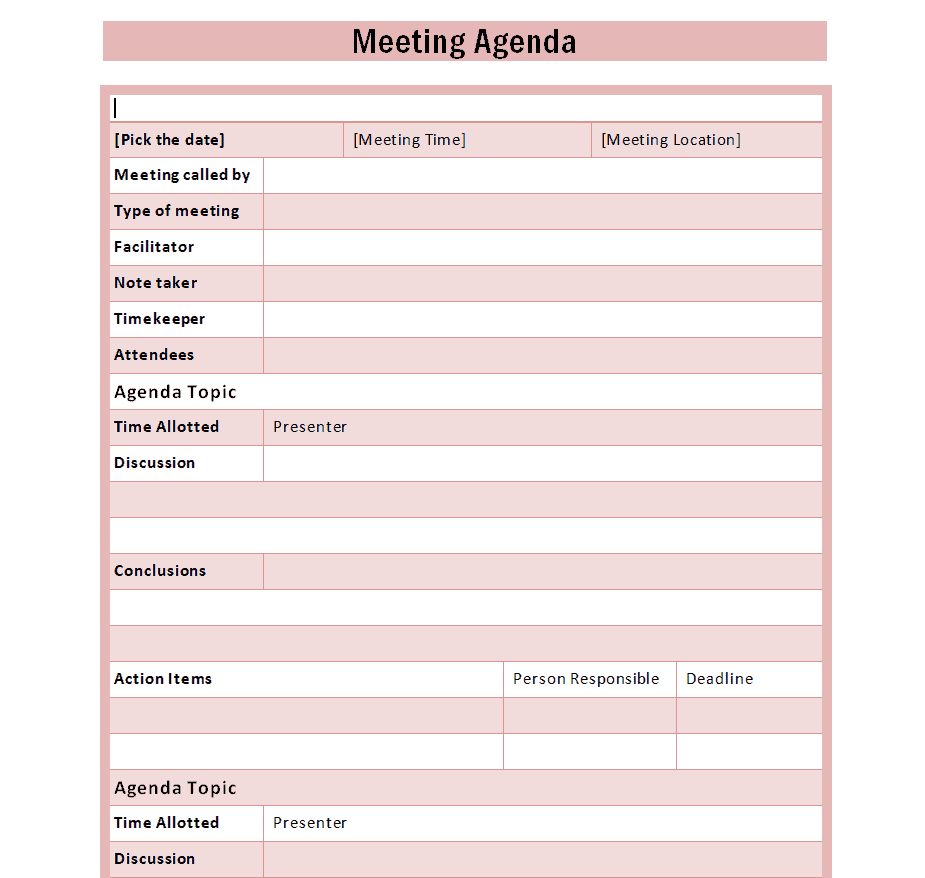
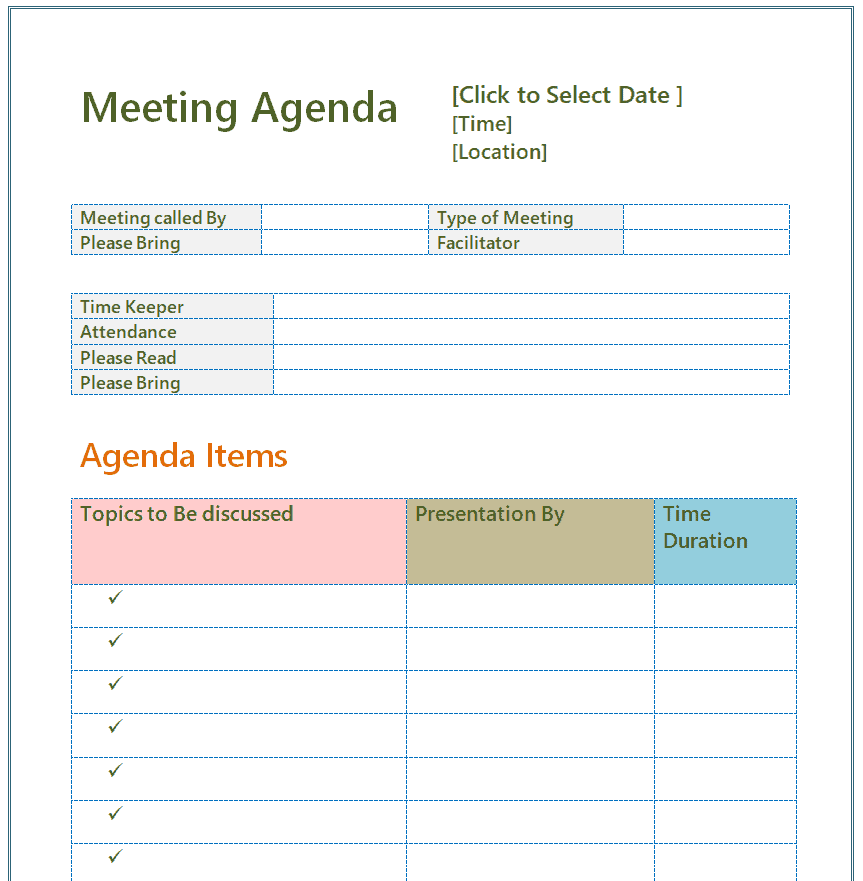
The agenda means the list of items prepared for discussion in a meeting. A Meeting Agenda is prepared by the head of the office or the organization, going to conduct that meeting. You can download the free Meeting Agenda Templates in MS WORD from this page. Outlines of necessary points to be mentioned in the meeting are included in Meeting Agenda Template Word. It is possible to avoid things that are not needed to be discussed in the meeting with the help of the meeting agenda. A number of Meeting Agenda Format available for download through the internet. It is possible to download and save the blank Meeting Agenda Format that can be edited any number of times for preparation of the Meeting Agenda. These particular templates are prepared in MS word format so that changing and customizing them is easy for you. You can change the color scheme and text of this template very easily. The format of the meeting agenda includes complete information about the company such as an address, phone number, email address, website name, etc. The meeting agenda format consists of rows and columns . Hope you will like this Meeting Agenda Template.
You can also browse our full collection of free agenda templates for more ready-to-use designs.
Meeting agenda is a document containing a list of things or items that members wish to accomplish at a meeting. It includes all important specific items of business to be discussed in the meeting. It is important to prepare the agenda carefully and distribute it to the participants before the meeting. Preparing an agenda is making a plan for the meeting that is held and the Meeting agenda template is so much helpful in this. You should start with your main goal or purpose that you want to accomplish on a priority basis. A clear agenda is a very important tool that can help to improve the effectiveness and efficiency of any meeting. If your goals will be clear, your meeting will be successful and you can get better results. Meeting agenda templates and samples are best to utilize in order to design a meeting agenda by yourself. You can get Meeting agenda templates on the internet free of cost.
What Is a Meeting Agenda and Why It Matters
A meeting agenda is a structured plan that lays out what a meeting is meant to accomplish, in what order, and how much time each item deserves. Rather than a simple list of topics, a good agenda works as a contract between everyone in the room: it tells attendees what to expect, gives them time to prepare, and gives the person running the meeting a clear path to follow. Without one, meetings tend to drift, run long, and end without a decision. With one, the same hour can produce real outcomes, because everyone already knows why they are there and what needs to happen before they leave.
Who Prepares a Meeting Agenda, and Who Is It For?
In most organizations, the agenda is put together by whoever is calling or chairing the meeting: a department head, a project manager, a team lead, or a company secretary in the case of formal board and shareholder meetings. In smaller teams, this task often falls to whoever owns the meeting’s outcome, such as the person leading a specific initiative. Once drafted, the agenda is shared with everyone expected to attend, including presenters, decision-makers, and anyone whose input is needed on a specific item, so that each person can arrive prepared rather than hearing about a topic for the first time when it comes up.
Key Elements of a Good Meeting Agenda
A well-built agenda usually includes the following pieces of information, laid out clearly enough that anyone glancing at it understands the shape of the meeting before it starts:
- Meeting title, purpose, date, time, and location or video call link
- A list of attendees, noting who is required and who is optional
- Each topic or agenda item, listed in the order it will be discussed
- A time allocation for each item, so the meeting does not run over
- The objective of each item, such as a decision, an update, or a brainstorm
- The name of the person presenting or leading each item
FREE Meeting Agenda Templates are Here:
Formal Meeting Agenda Template

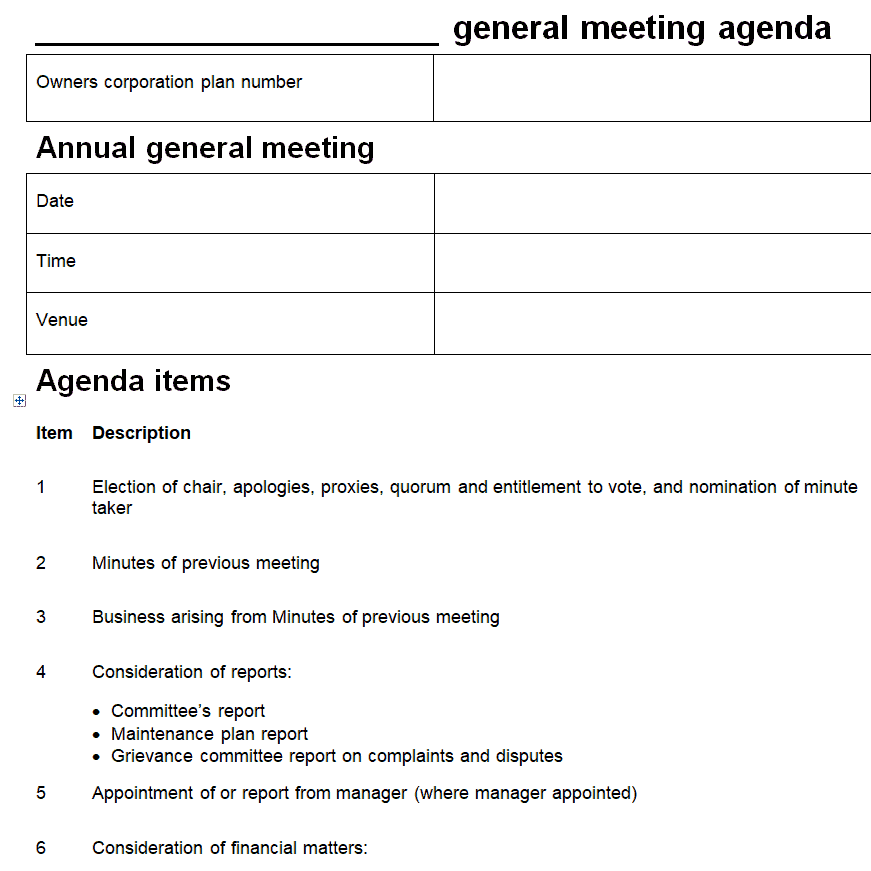
Annual General Meeting (AGM) Agenda Template
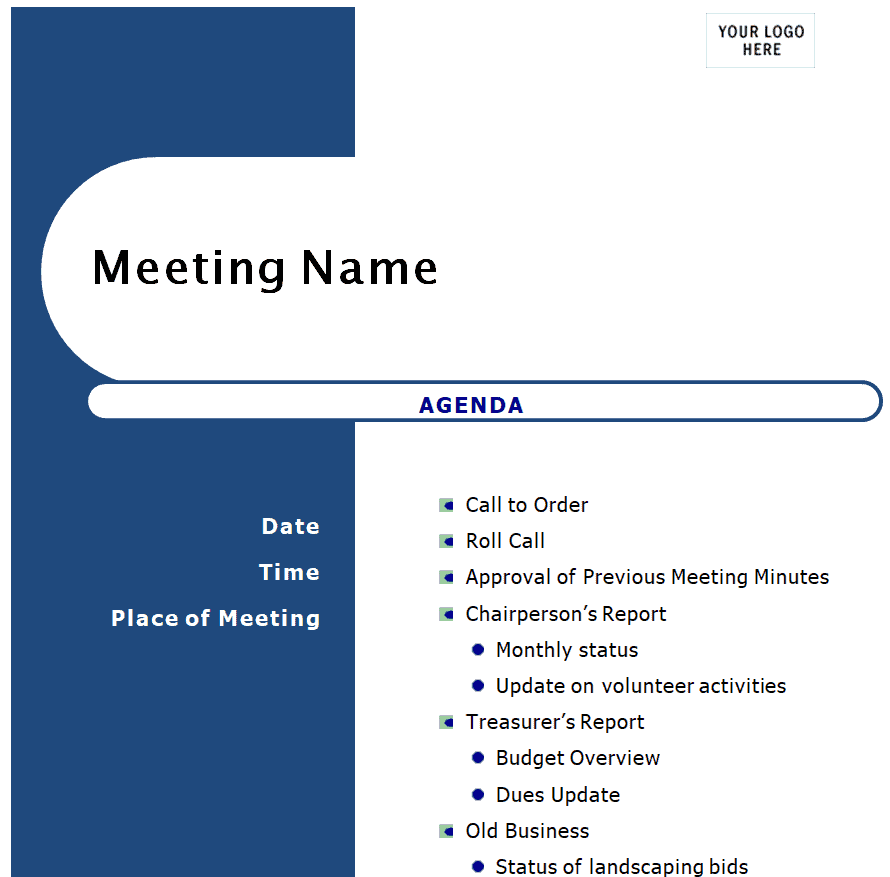
Official Meeting Agenda Word Template
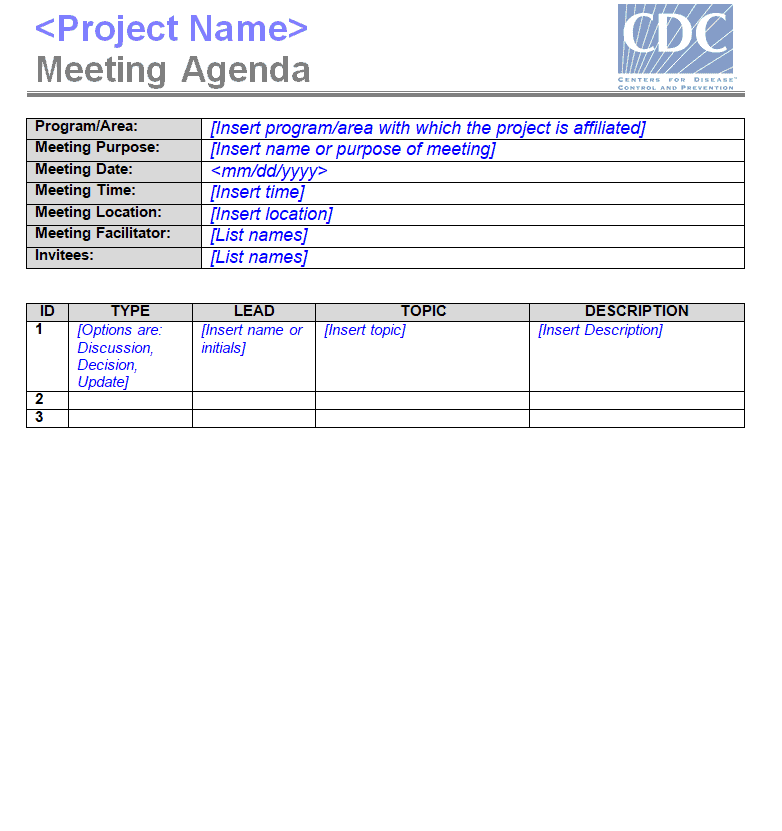
Meeting Agenda Template for a Project
Simple Meeting Agenda Format
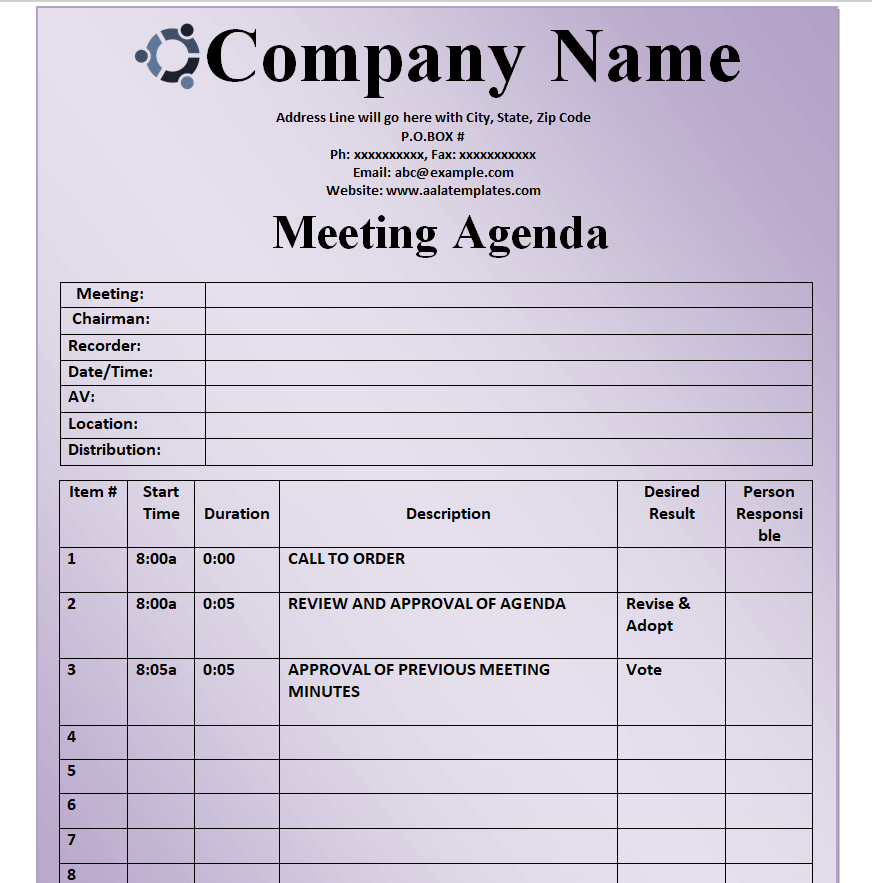
Company Meeting Agenda Example Doc
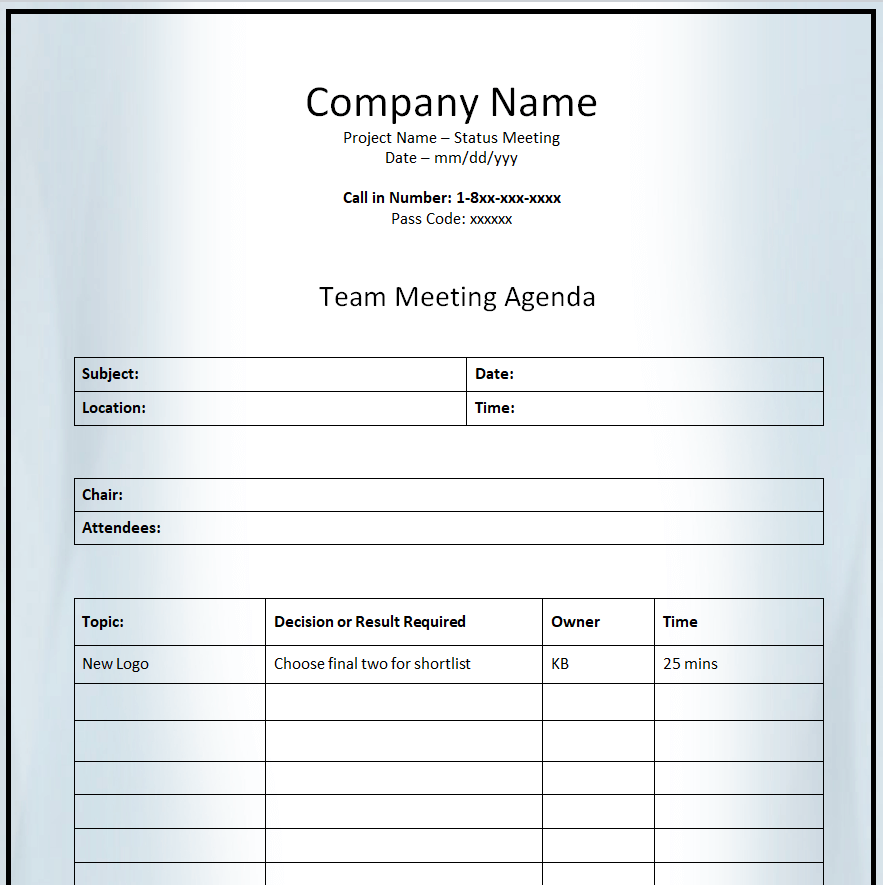
Team Meeting Agenda Word Template
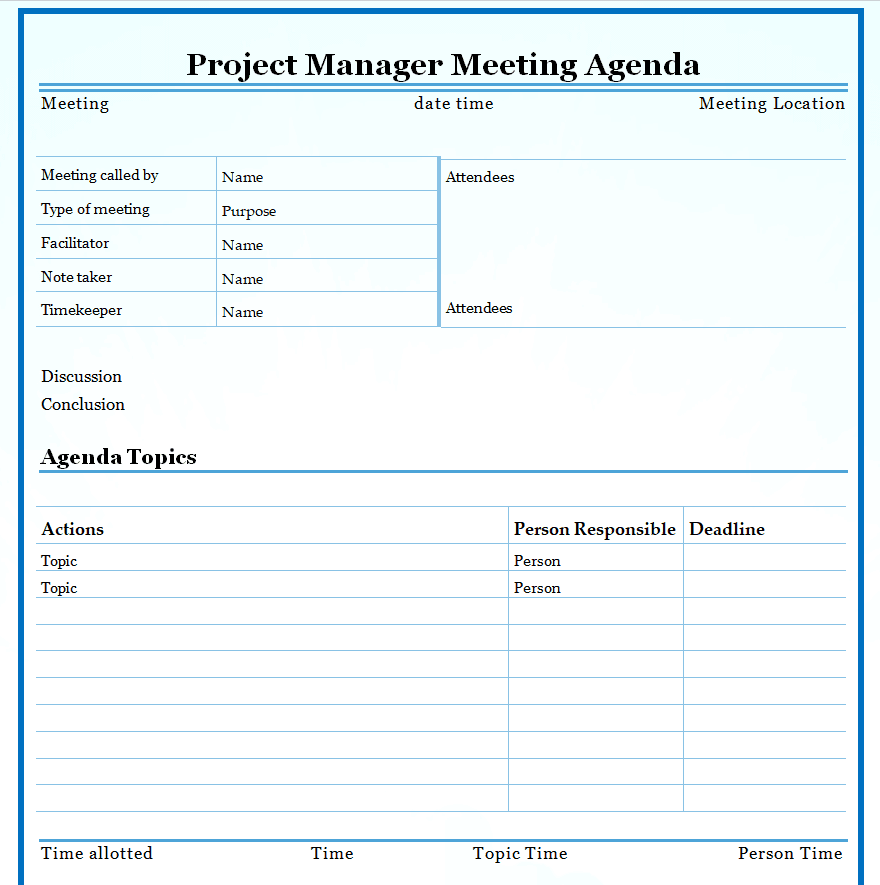
Project Manager Meeting Agenda Doc Template
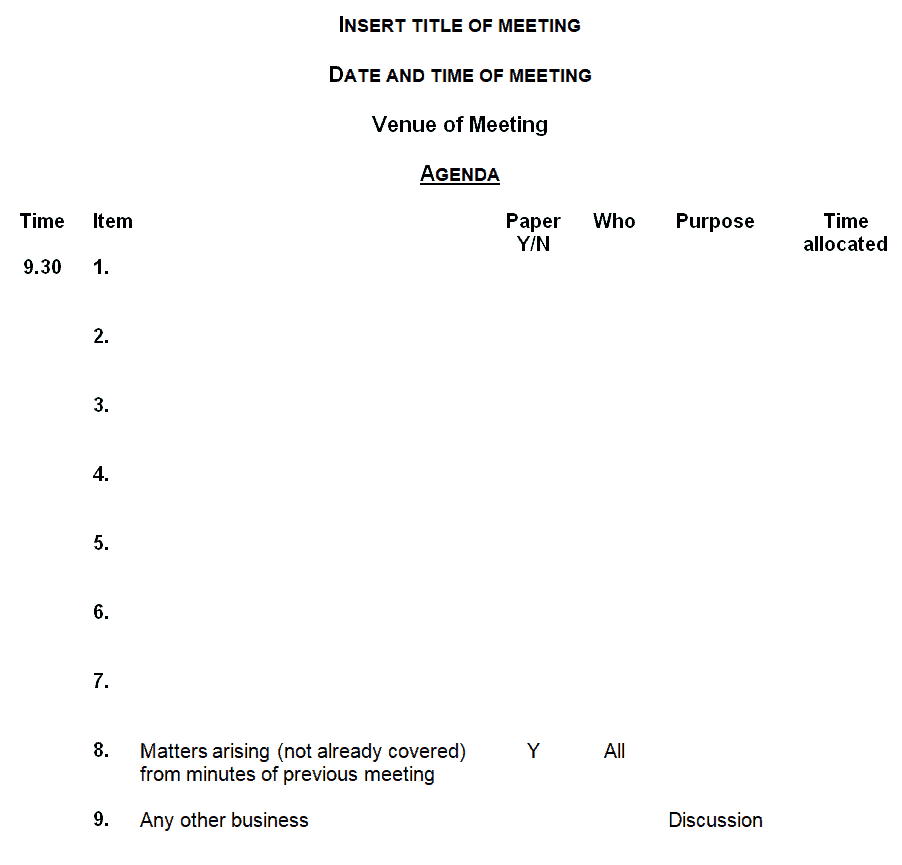
Free Editable Meeting Agenda Template in MS WORD
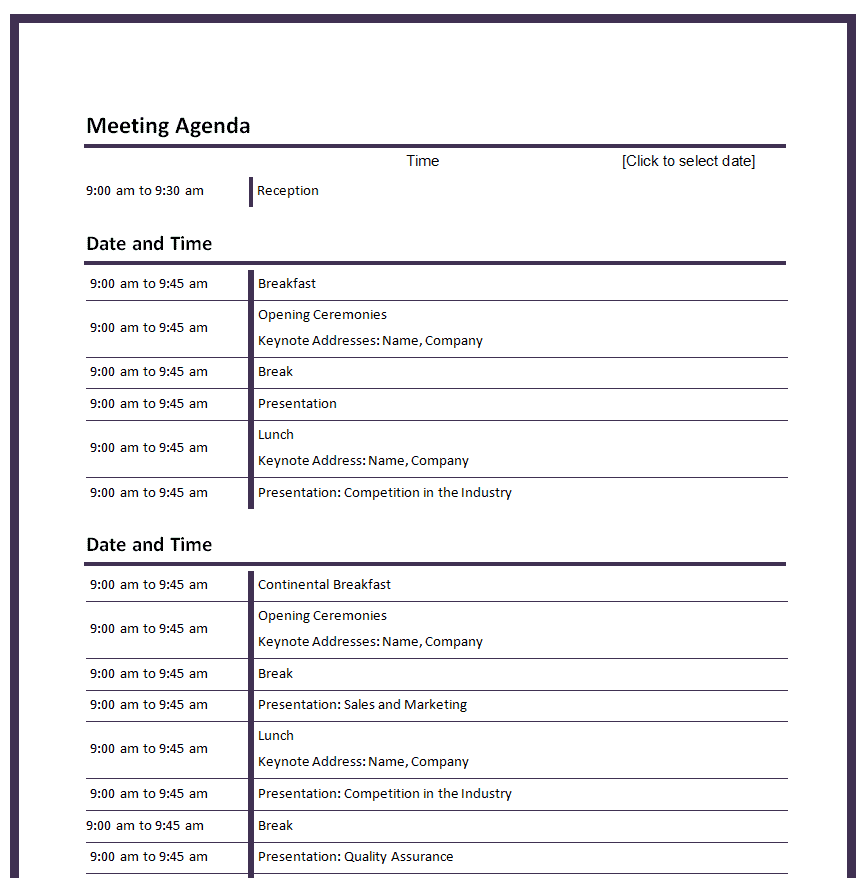
Professional Meeting Agenda Template
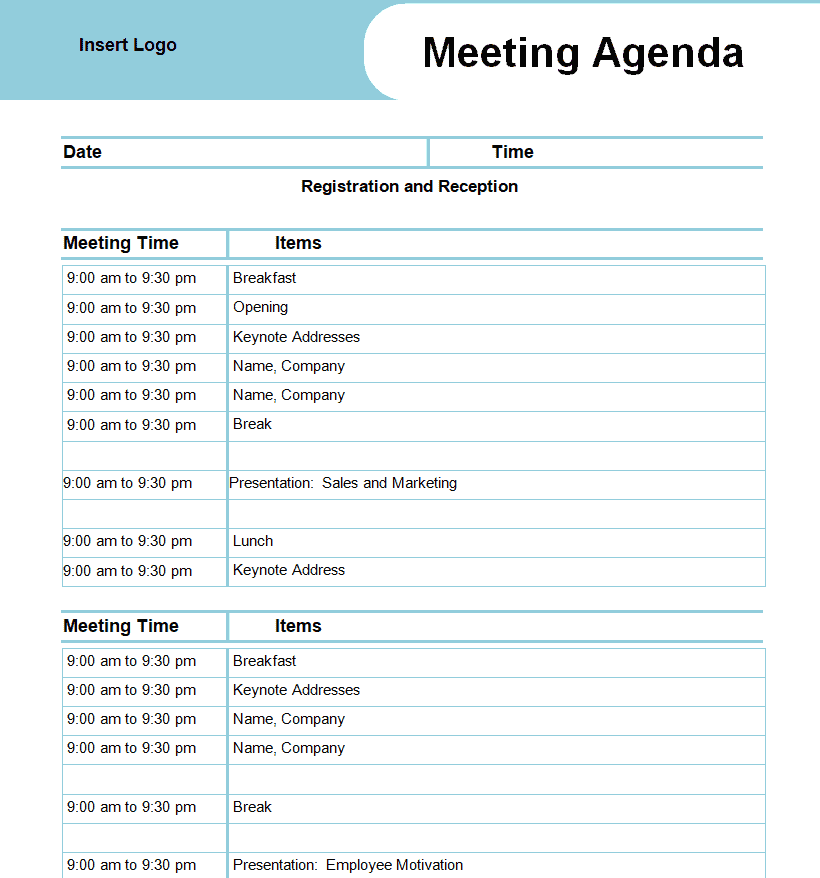
Senior Management’s Meeting Agenda Sample MS WORD
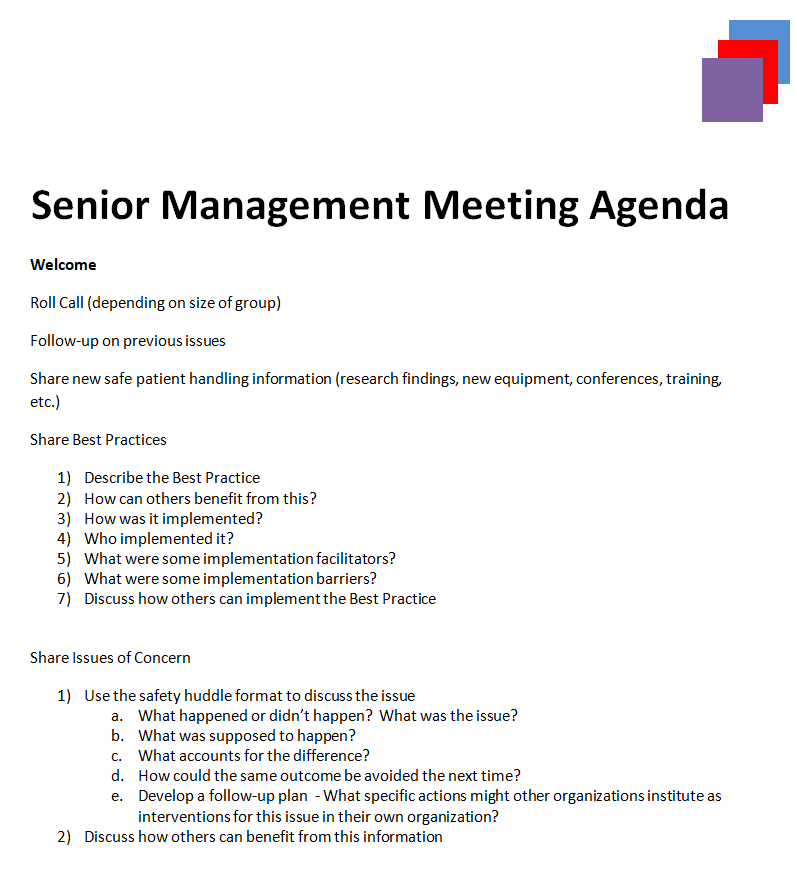
Fillable Meeting Agenda Template Doc
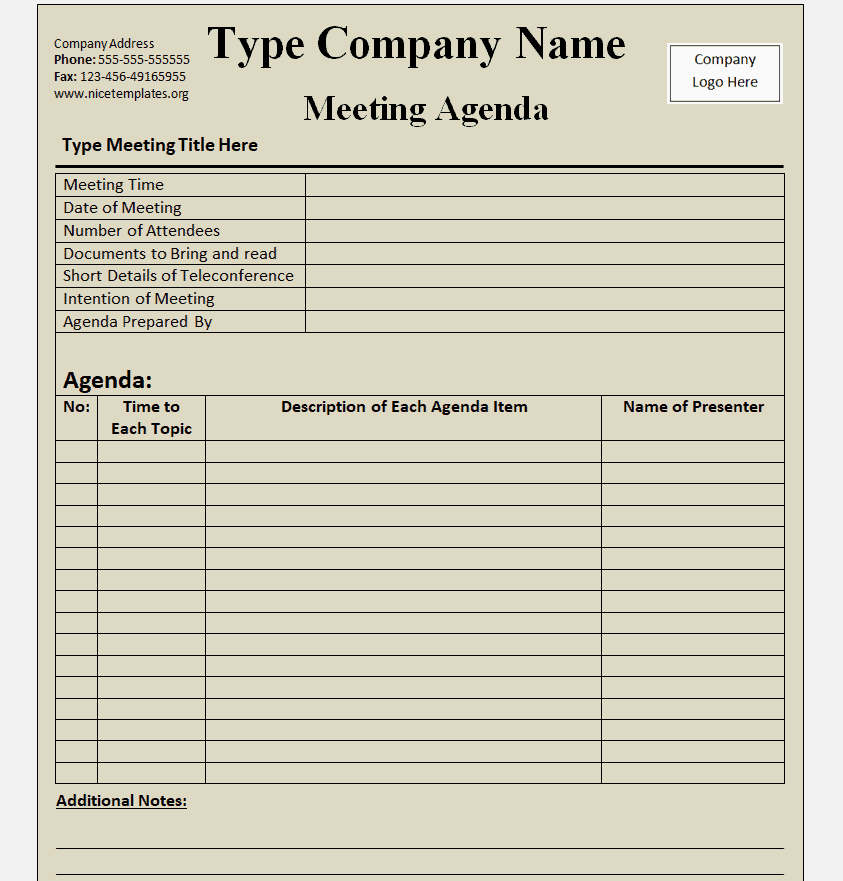
Meeting Agenda Template for a Company
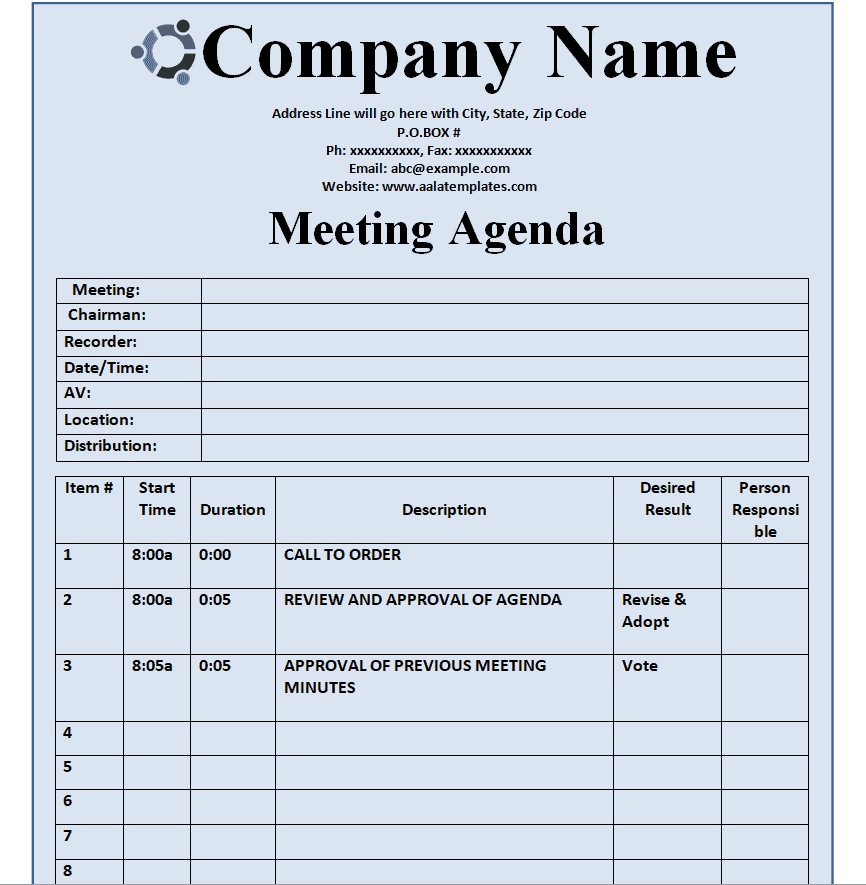
Special Meeting Agenda Format
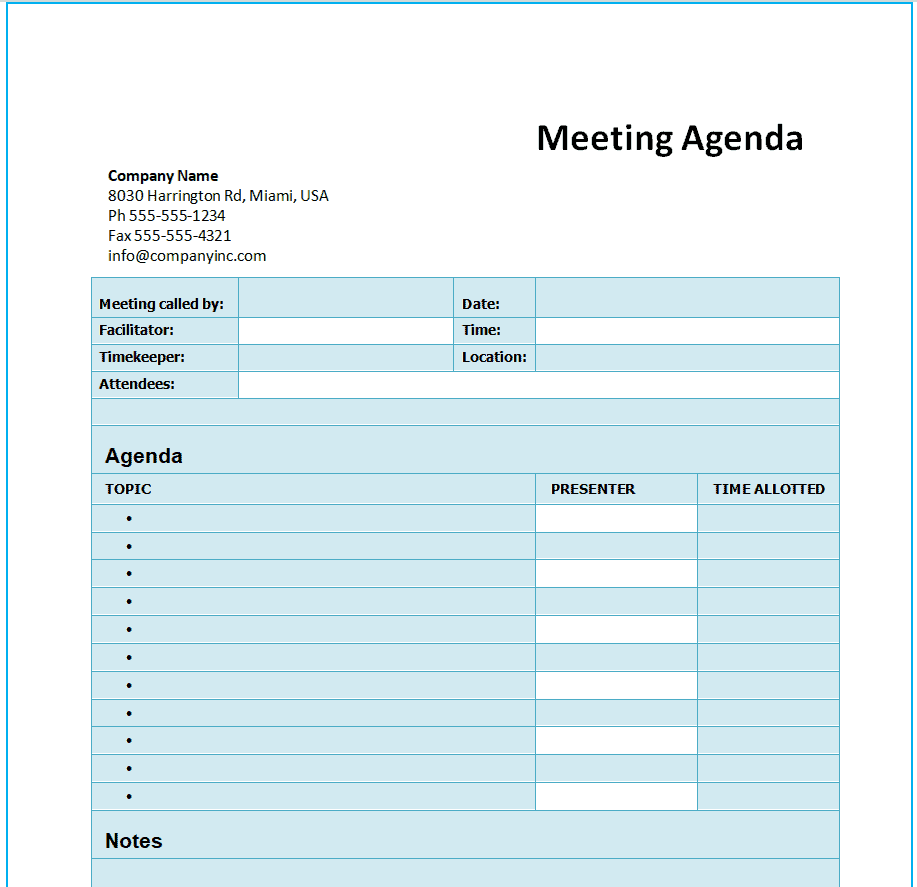
Community Meeting Agenda Template MS WORD
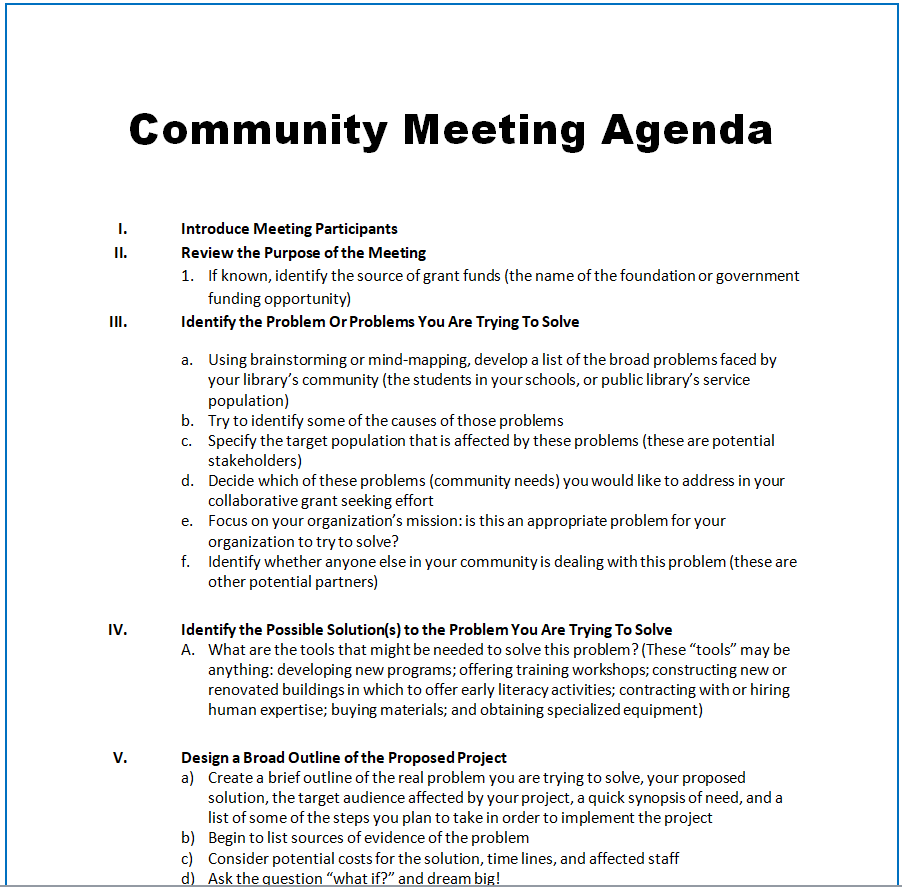
Blank Meeting Agenda Format
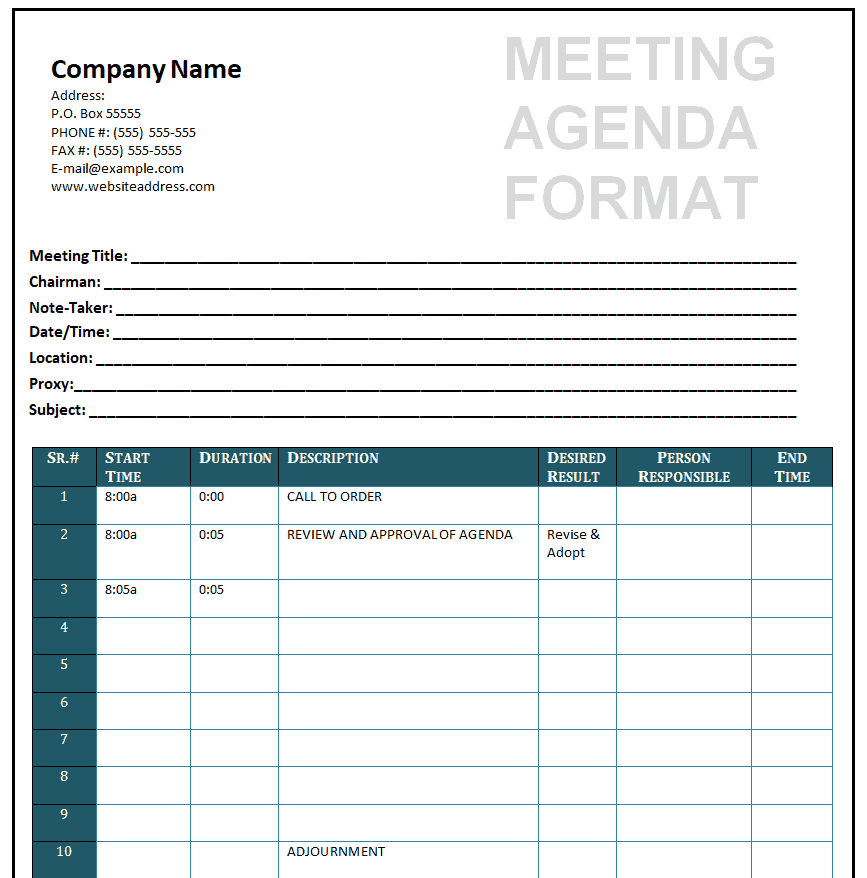
Standard Meeting Agenda Sample Doc
How to Write and Distribute an Effective Meeting Agenda
Writing an agenda that actually gets used is less about formatting and more about discipline in what you choose to include. The following steps cover the basics of putting one together and getting it in front of the right people in time:
- Define the meeting’s single most important outcome before listing anything else.
- List only the topics that genuinely need the group’s attention, and move anything else to a written update instead.
- Assign a realistic time limit to each item, based on how much discussion it truly needs.
- Note who is presenting or responsible for each item, so no topic arrives without an owner.
- Send the finished agenda to all attendees at least 24 to 48 hours before the meeting.
- Ask attendees to flag any item they think is missing before the meeting starts.
Common Meeting Agenda Mistakes to Avoid
- Packing in too many items, so nothing gets discussed properly
- Writing vague topics like “Marketing” instead of a specific question to answer
- Leaving out time limits, which lets one item take over the whole meeting
- Sending the agenda out late, or not at all, leaving attendees to walk in unprepared
- Failing to mark which items are for a decision versus for information only
- Never revisiting old action items, so the same issues resurface at every meeting
Tips for Keeping Meetings on Track Using the Agenda
An agenda only works if it is actually used once the meeting starts. Keep a visible copy in front of the group, either on-screen or in print, and refer back to it out loud when moving between items. Assign someone other than the chairperson to watch the clock and give a gentle warning when an item is running over its allotted time. Park unrelated discussion points on a separate list to revisit later rather than letting them derail the current topic, and close the meeting by reading back any decisions and action items directly from the agenda so nothing gets lost.
Frequently Asked Questions
How far in advance should a meeting agenda be sent?
As a general rule, send the agenda at least 24 to 48 hours before the meeting so attendees have time to review it, gather any information they need, and flag missing items. For larger or more formal meetings, such as a board meeting, sending it several days in advance is common practice.
What is the difference between an agenda and meeting minutes?
An agenda is prepared before the meeting and outlines what will be discussed; meeting minutes are written during or after the meeting and record what was actually discussed, decided, and assigned. In short, the agenda is the plan, and the minutes are the record of how that plan played out.
Should a meeting agenda include break times?
For longer meetings, yes. Adding scheduled breaks to the agenda helps attendees stay focused, sets clear expectations for how long the meeting will run, and prevents the group from losing track of time during a long session.
Can attendees add items to the agenda?
In many teams, yes. Sharing a draft agenda in advance and inviting attendees to suggest additional items, within reason, helps make sure the meeting covers what the group actually needs, rather than only what the chairperson thought of beforehand.
Related templates you may find useful: free meeting minutes templates.