

A collection of high-quality incident report templates is here for your convenience. Using these Incident Report Templates is very simple. An incident report is a written document that describes the details about an event, incident, or injury that occurs. An incident report may be required by the hospital in order to get details and information of a serious injury. The details and information related to an incident are extremely important as they are often used by insurance companies or in case of lawsuits.
You can also browse our full collection of free report templates for more ready-to-use designs.
An incident report template word must include all important information like name of victims, date and time, location, witnesses and any other involved party, etc. It is very important to stick to the facts, not your feelings, emotions, or thoughts on the situation or event while you are writing an incident report. An incident report should be clear, concise, and to the point. If you need information about how to write an incident report, you must search on the internet to get some useful tips.
An incident is the occurrence of a particular situation. In health care centers such as hospitals and nursing homes, a form is filled out to record details of an unusual event such as an injury to the patient is known as an incident report. This document is required by doctors, lawyers, and cops. The objective of the report is to describe all the facts and observations felt by all the people who were part of an incident.
This document is kept by the courts till at the end of the hearing by the judge. The aggrieved party and victims are part of the report. The liability issues related to the event are resolved by this report in the future if there is misconduct. If there is an injury to the patient in a criminal case doctor requires an incident report from the police department for doing the treatment of a patient.
What Is an Incident Report and Why Does It Matter?
An incident report is a formal written record created immediately after something goes wrong: a workplace injury, a slip-and-fall accident, a security breach, property damage, a vehicle collision, or even a near-miss that could have caused harm but didn’t. Organizations of every kind, from small businesses to hospitals, schools, and manufacturing plants, rely on these documents to capture what happened while the details are still fresh. A well-written report protects everyone involved: the person affected has an accurate account on file, the organization has documentation for insurance and legal purposes, and safety teams gain the information they need to prevent the same thing from happening again.
Beyond the immediate paperwork, incident reports form a running history of what goes wrong in a workplace or facility. Reviewed over time, that history reveals patterns, a particular piece of equipment that keeps failing, a hallway where people keep tripping, a process step that keeps getting skipped, that a single report would never show on its own. This is why organizations don’t just file these reports and forget them; they analyze them to guide training, budget decisions, and policy changes.
Who Typically Files and Reviews Incident Reports
In most organizations, the person who witnesses or is involved in the incident is responsible for filing the initial report, often the affected employee, a coworker who saw it happen, or the supervisor on duty at the time. From there, the report typically moves up a chain of review: a direct supervisor or manager checks it for completeness, human resources logs it and checks for compliance with company policy, and a designated safety officer or risk management team reviews it for hazards that need correcting. In cases involving injury, property damage, or potential liability, insurance carriers and legal counsel may also review the report before it is closed out. Some organizations route certain categories, such as security incidents or data breaches, to a specialized team (IT security, loss prevention) rather than a general safety officer.
Key Elements Every Incident Report Should Include
Regardless of the industry or the specific template used, a complete incident report generally covers the same core information:
- Date, time, and exact location of the incident, recorded as precisely as possible.
- People involved, including the names and roles of anyone injured, at fault, or otherwise affected.
- A factual description of what happened, written in plain, objective language rather than opinion.
- Witness information, including names, contact details, and a brief note on what each witness observed.
- Immediate actions taken at the scene, such as first aid administered, equipment shut down, or the area secured.
- Follow-up needed, such as further investigation, equipment repair, additional training, or a policy review.
Leaving out any one of these elements can weaken a report’s usefulness later, whether that’s for an insurance claim, a legal proceeding, or a simple safety review months down the line.
Download Incident Report Templates WORD:
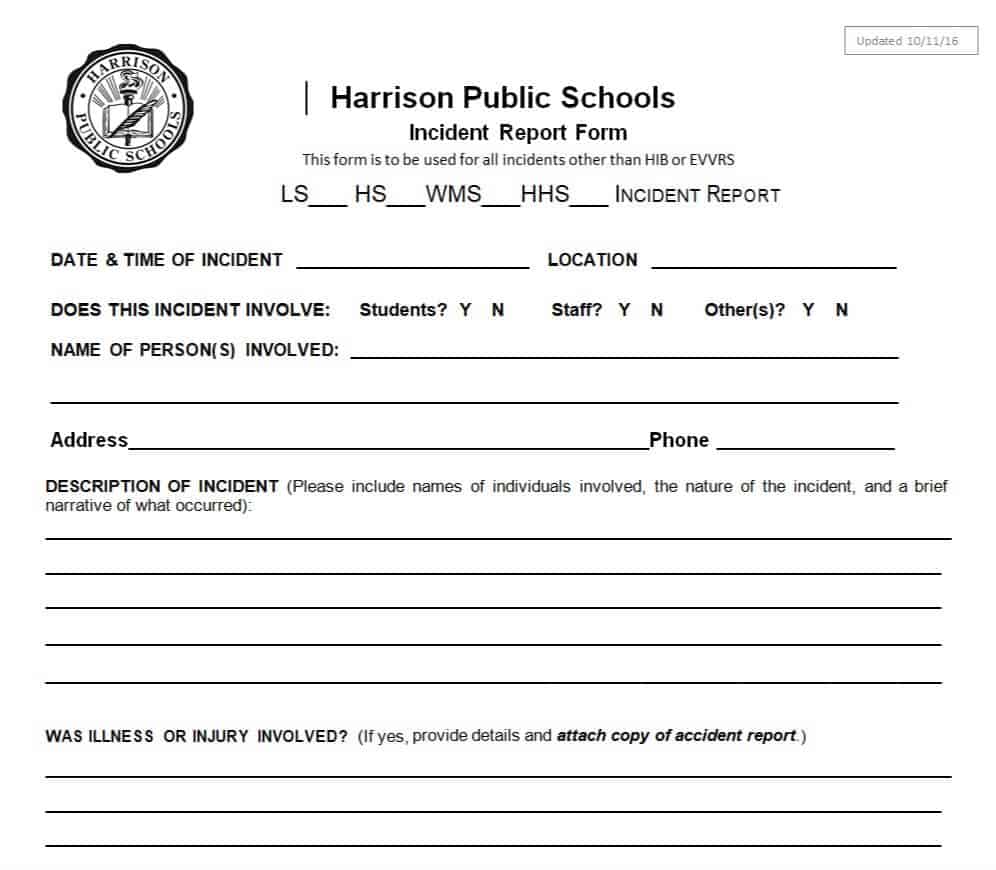
Organization’s Incident Report Template
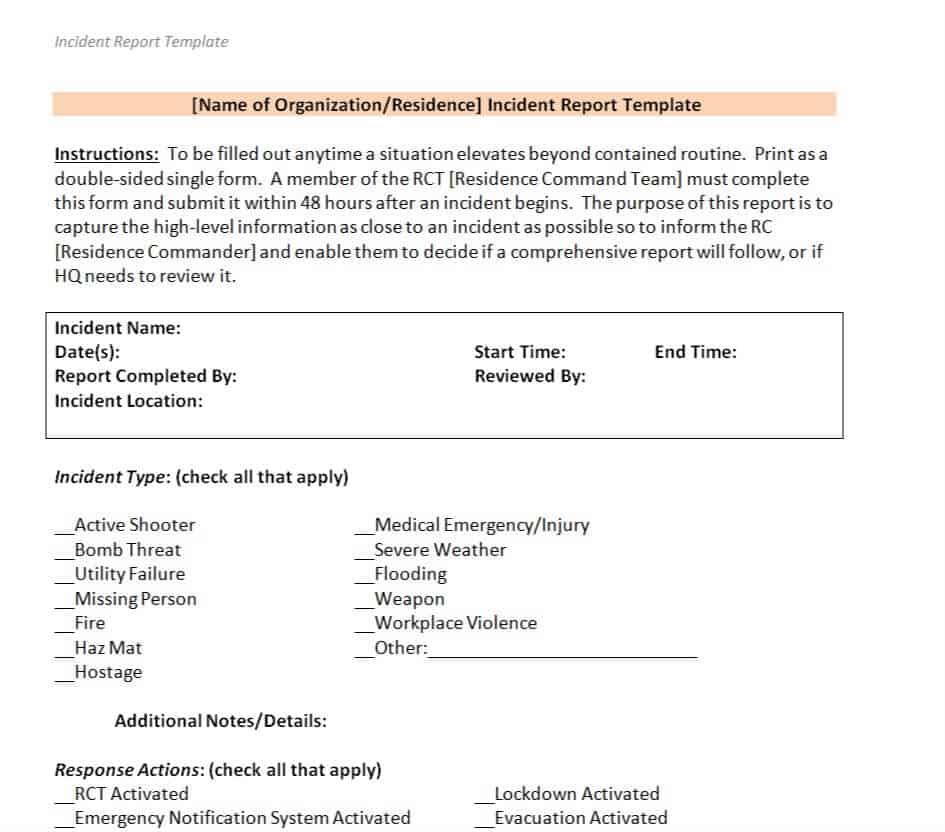
Injury Incident Report Form Template
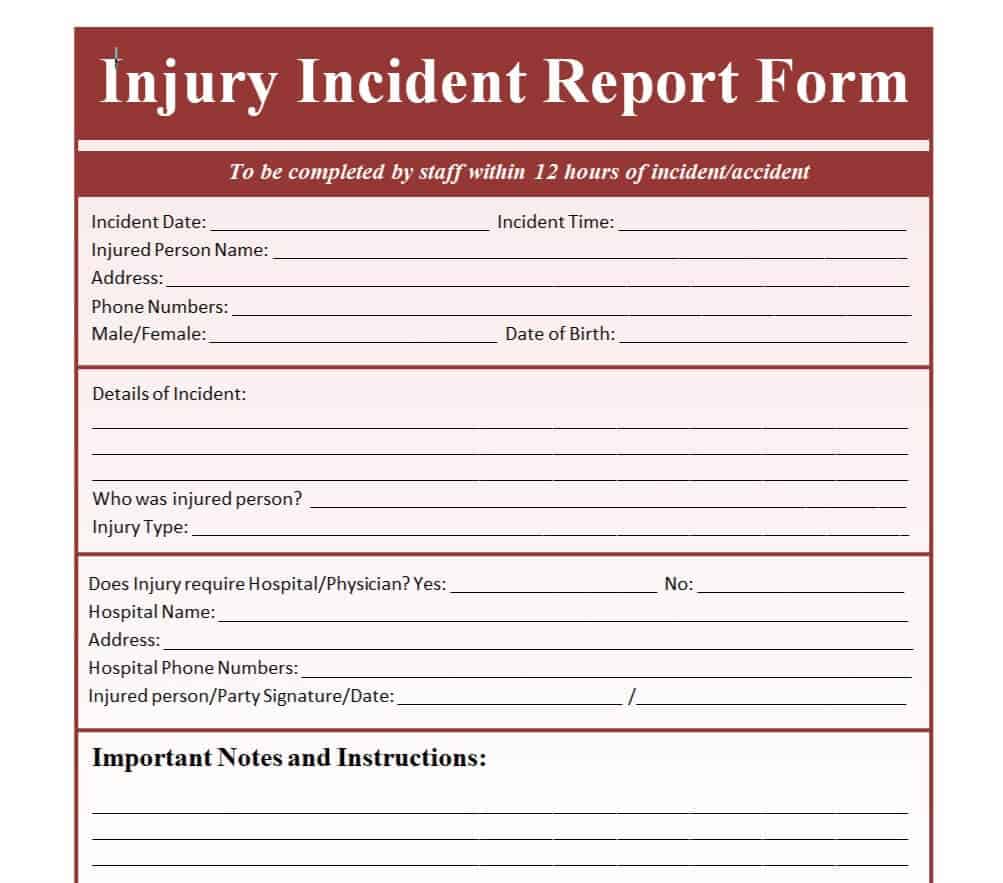
Company’s Incident Report Form Template
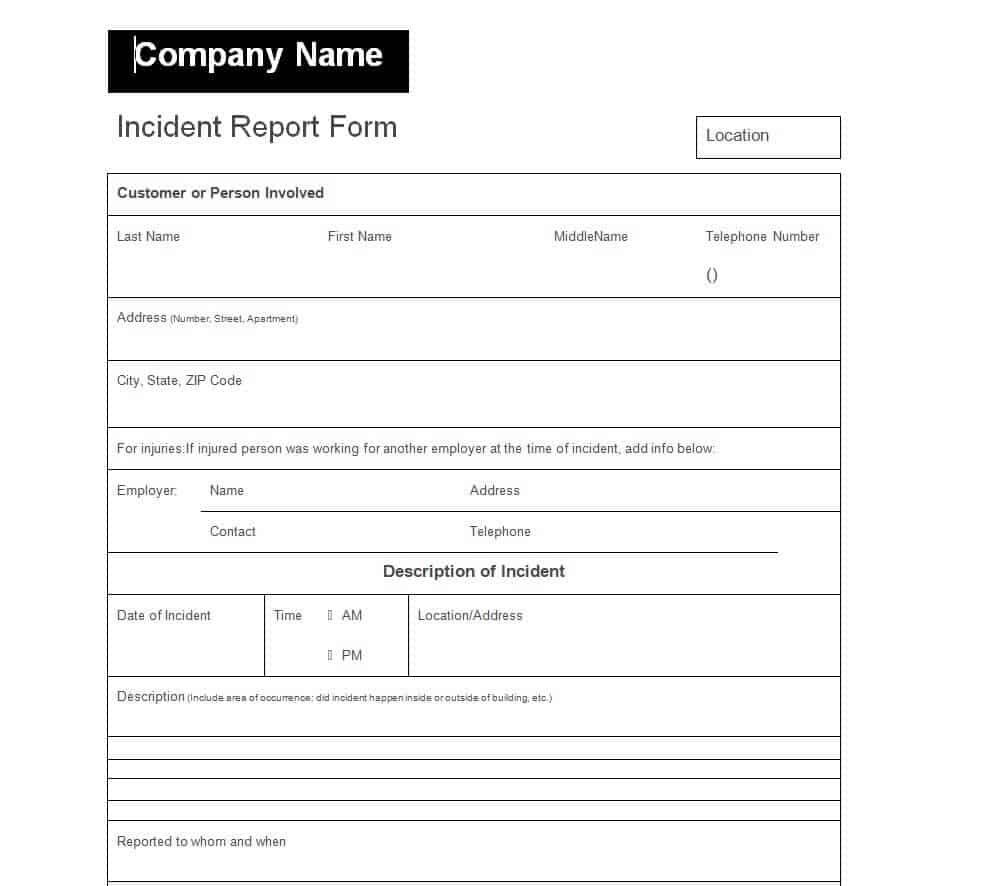
Public School’s Incident Report Template
Employer Incident Investigation Report Template
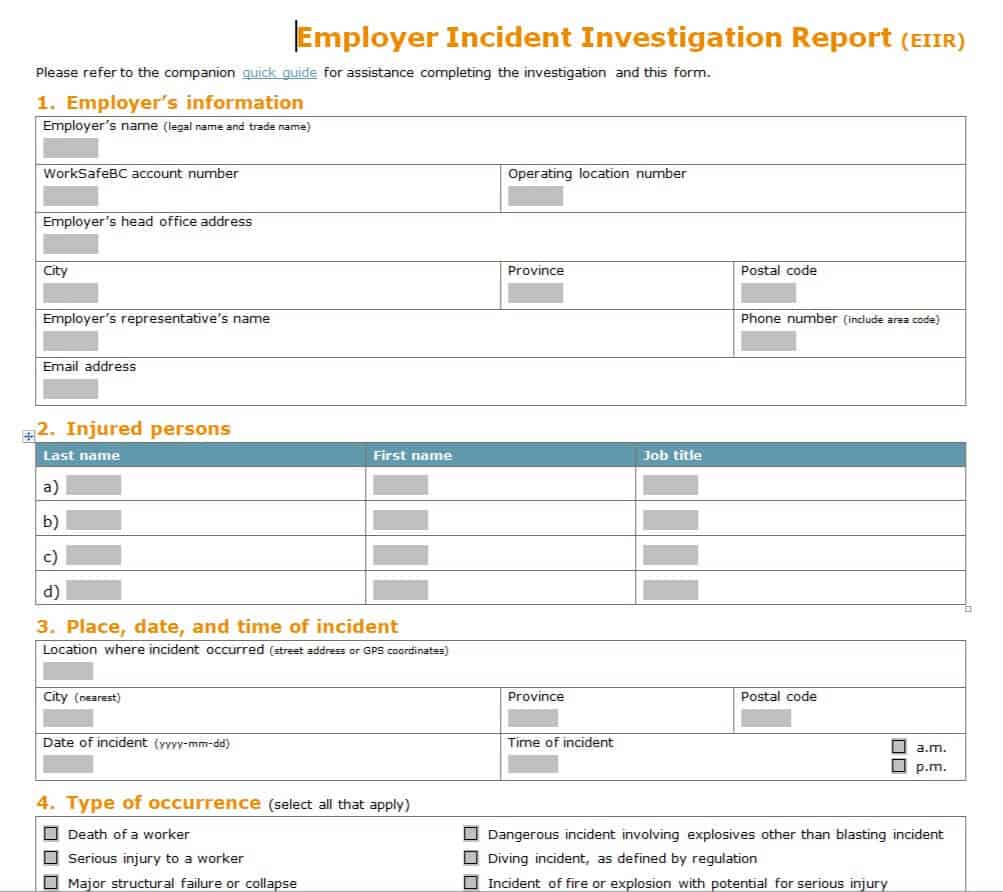
Summer Camp Incident Report Template
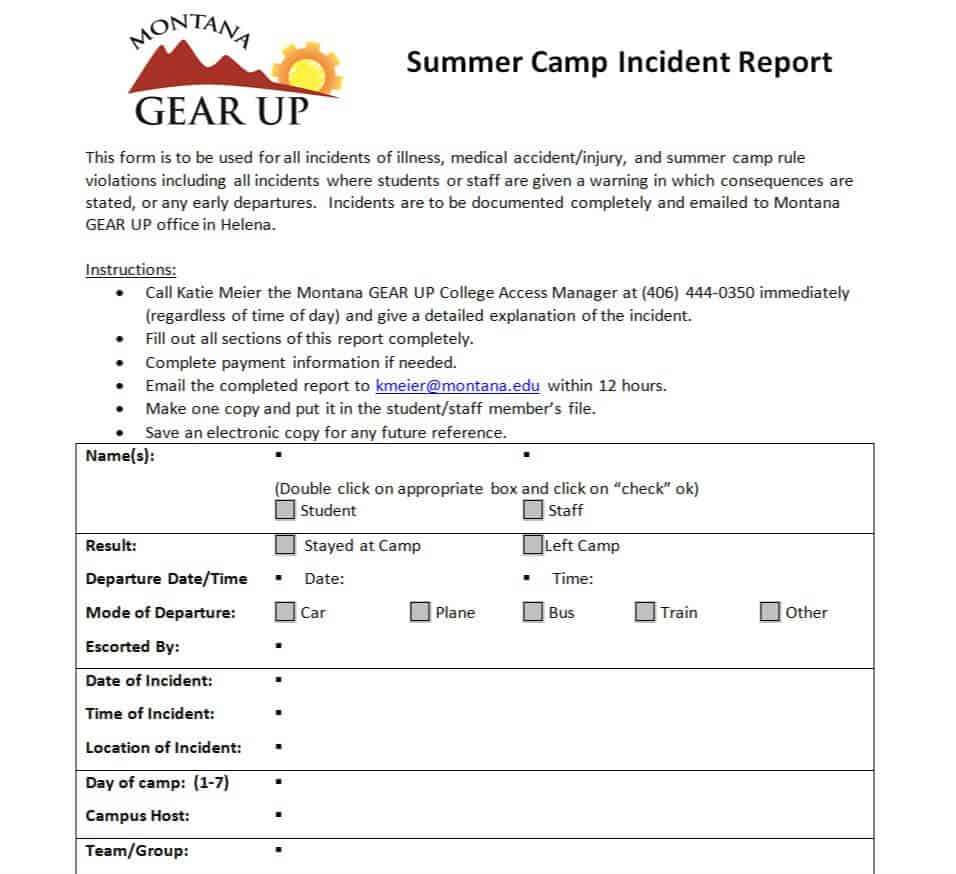
Cyber Security Incident Report Free Template
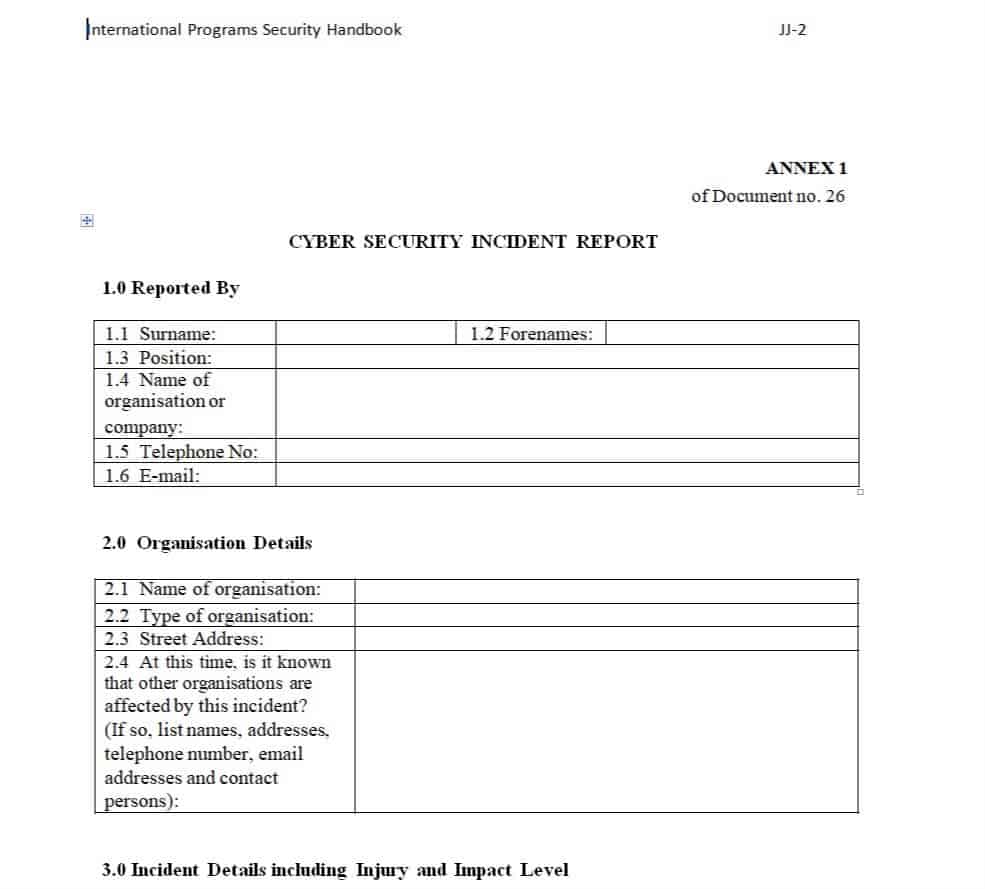
Sample Offense Incident Report Form Template
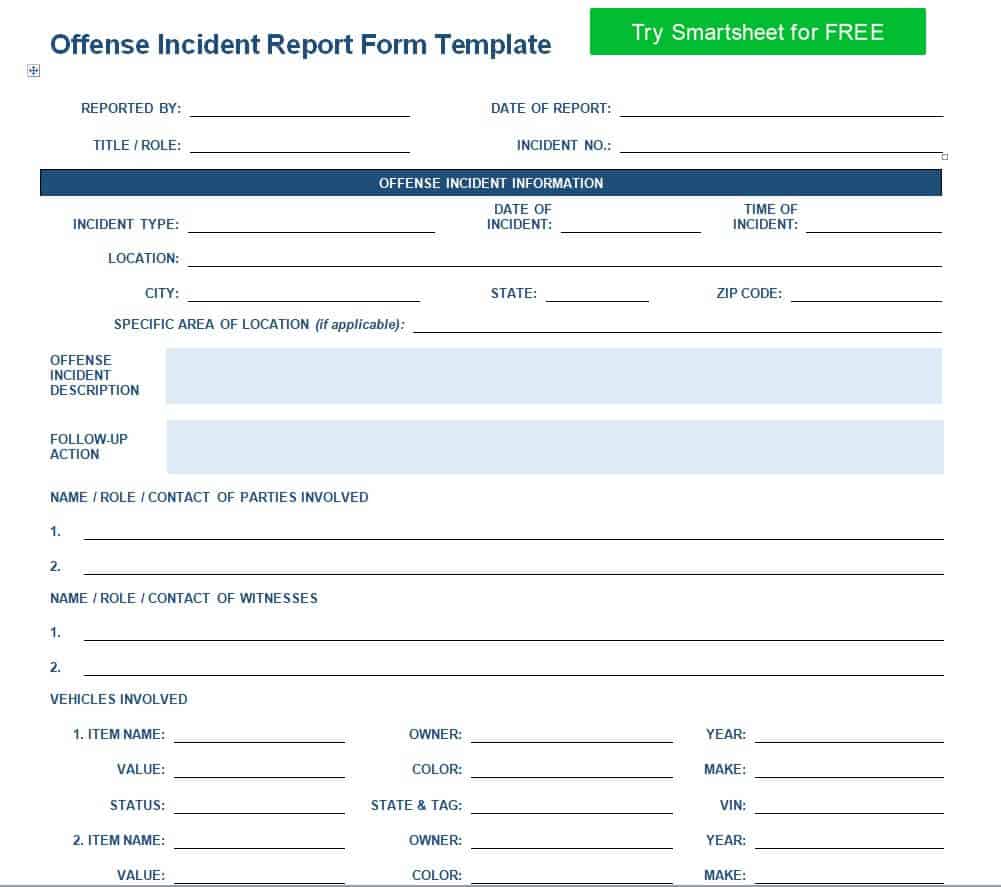
Incident Reporting Format Template
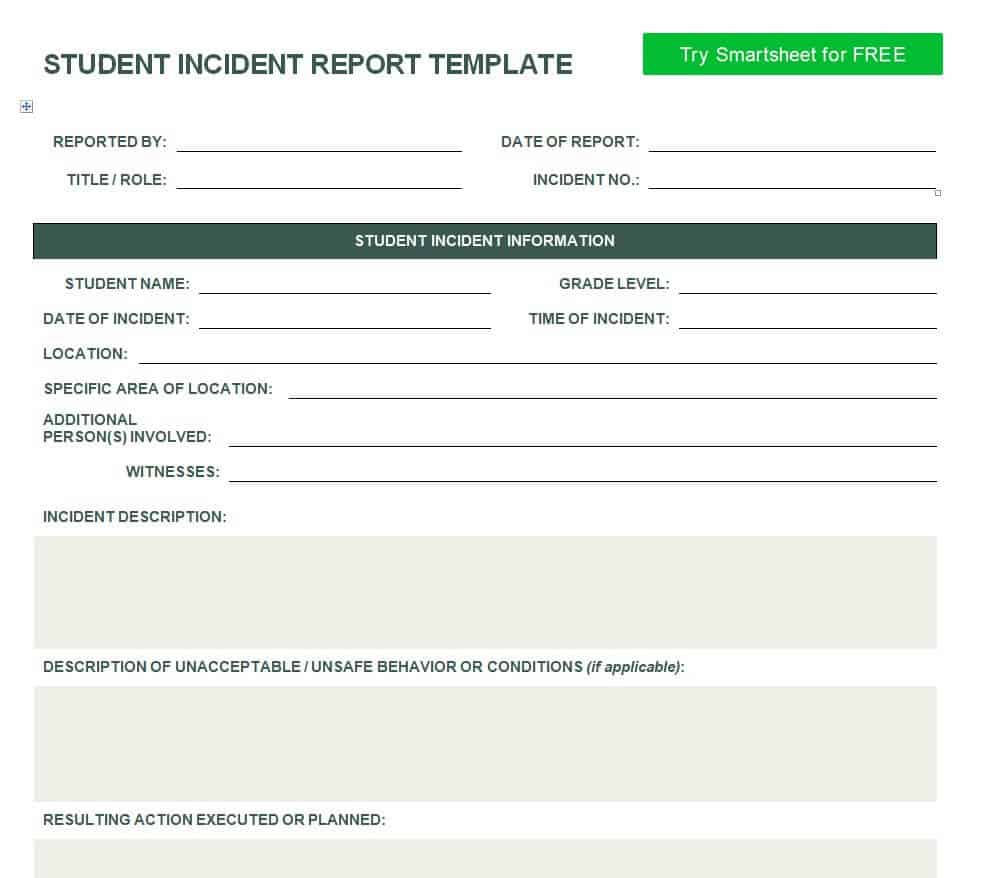
Student Incident Report Template WORD
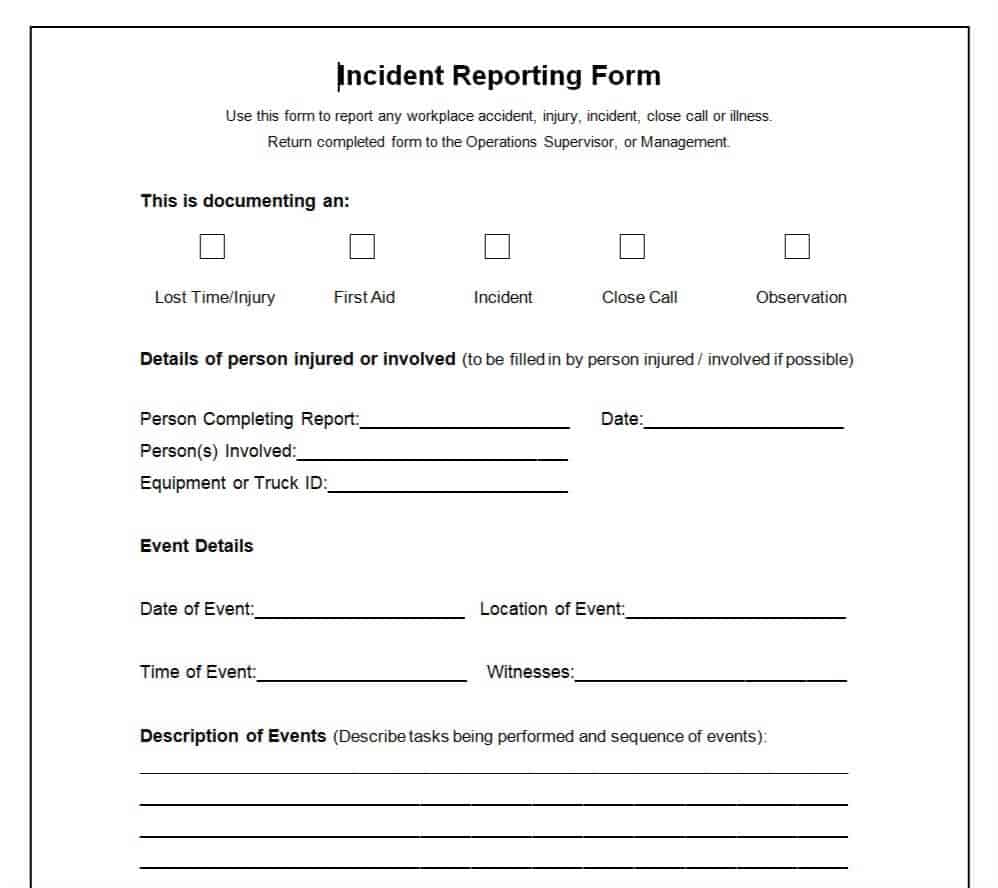
Blank Incident Report Form Template
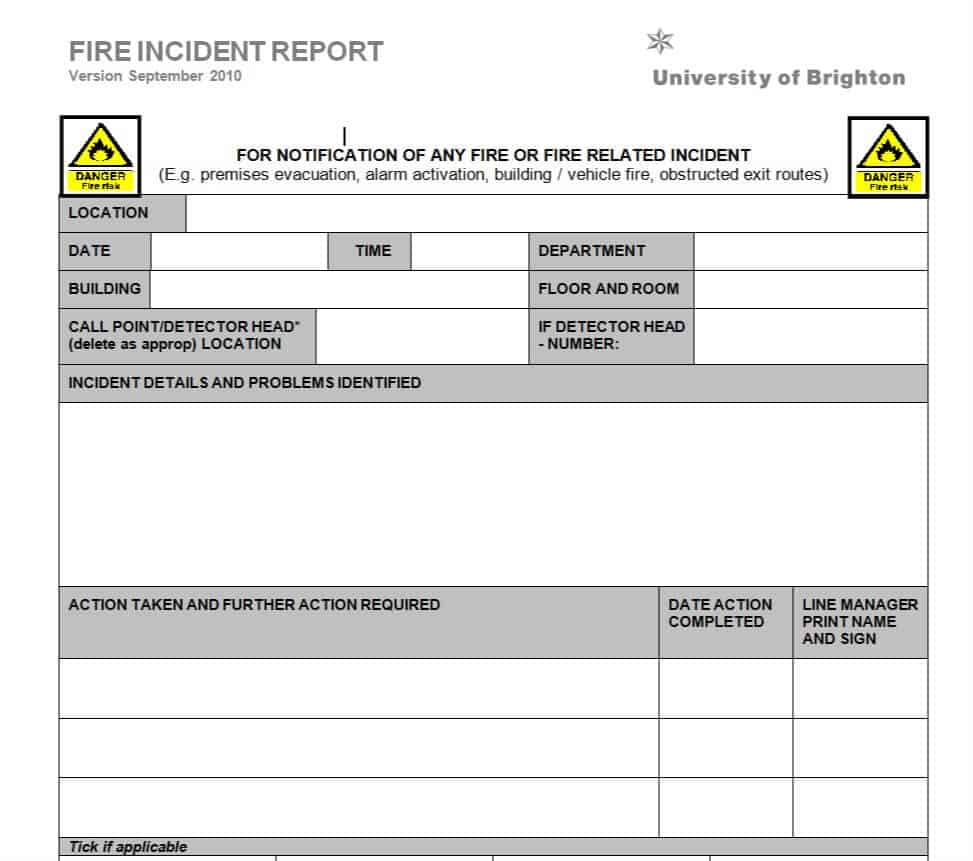
Fire Incident Report Template
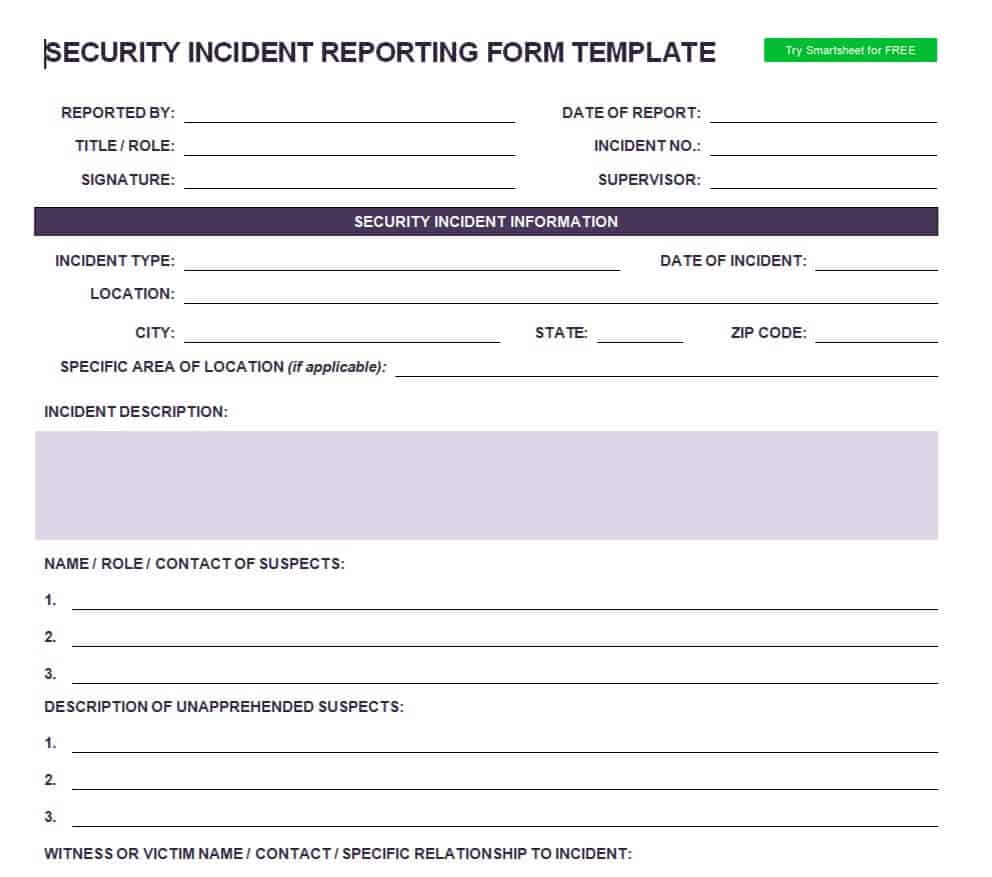
Security Incident Report Form Template DOC
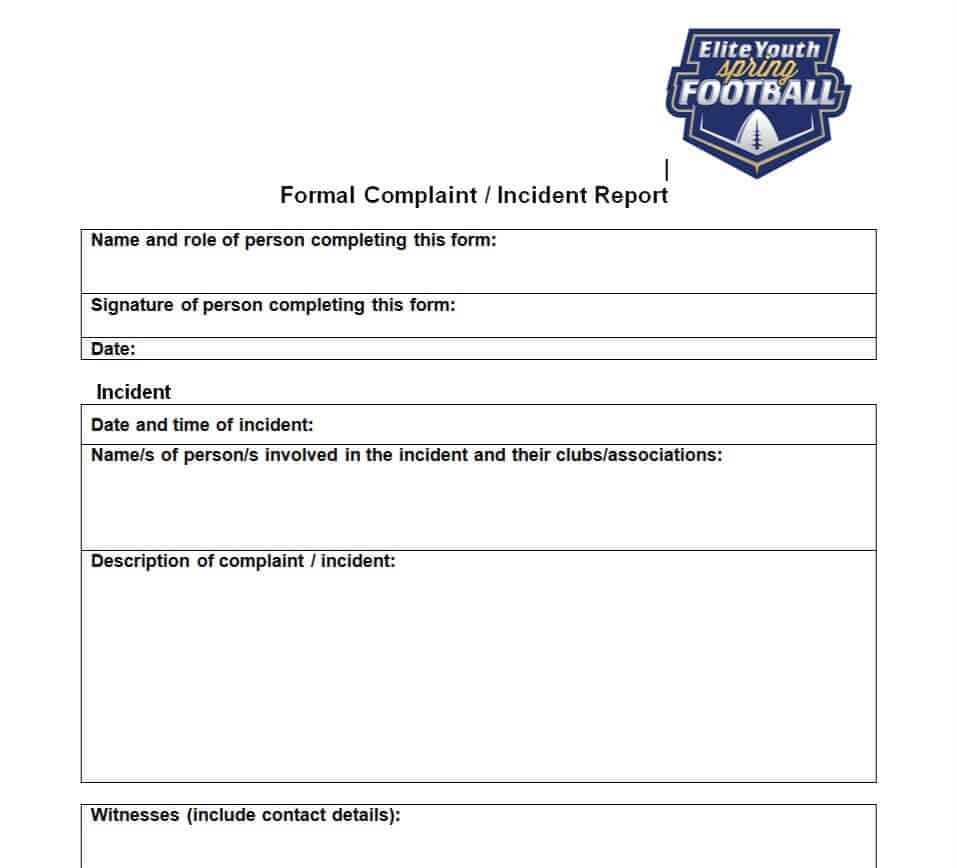
Formal Incident/Complaint Report Template
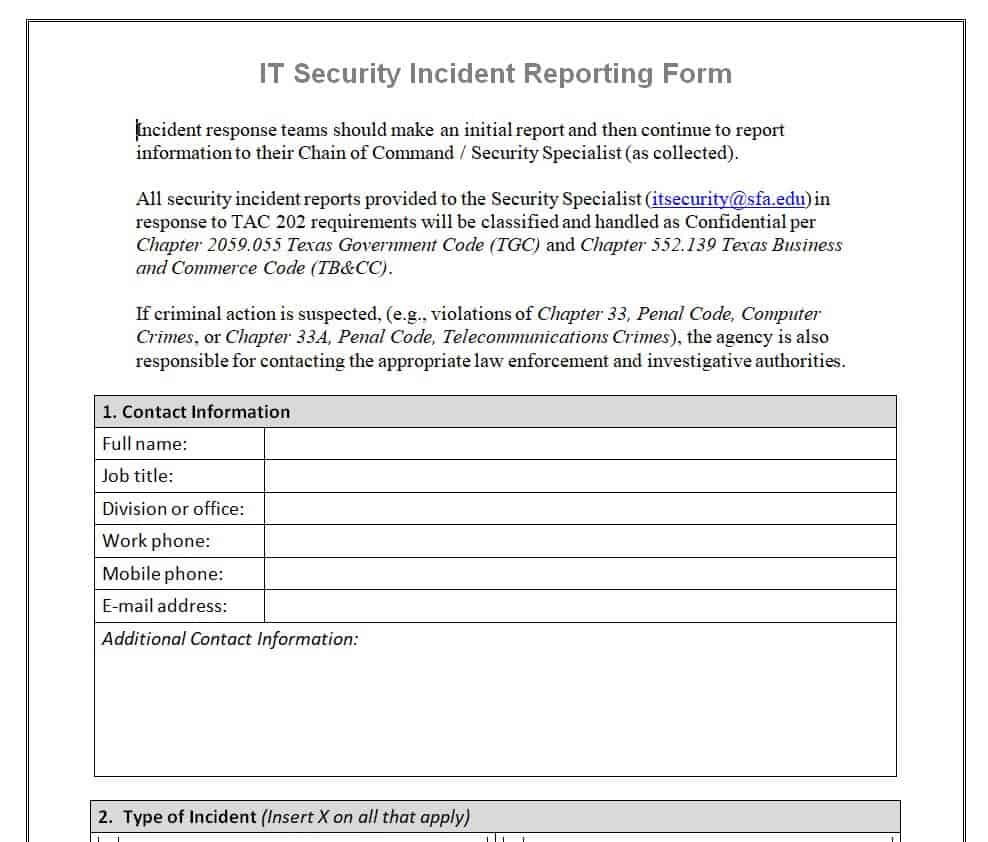
Simple IT Security Incident Report Template
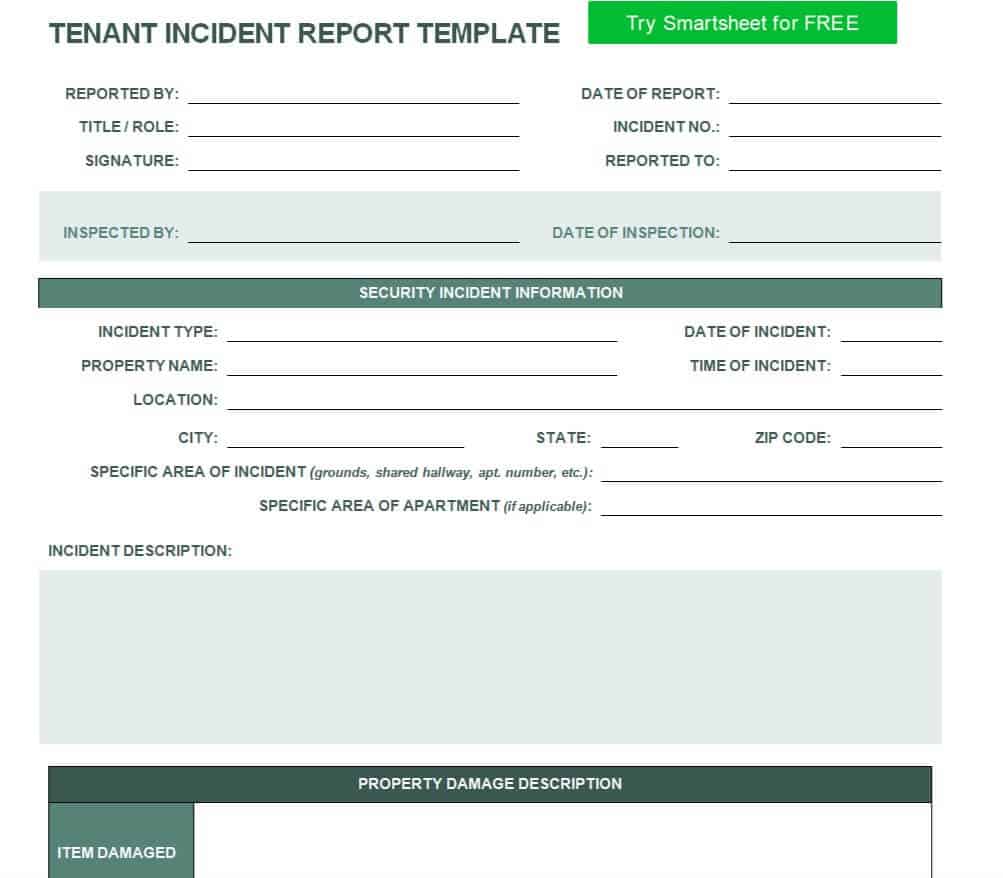
Tenant Incident Report Template
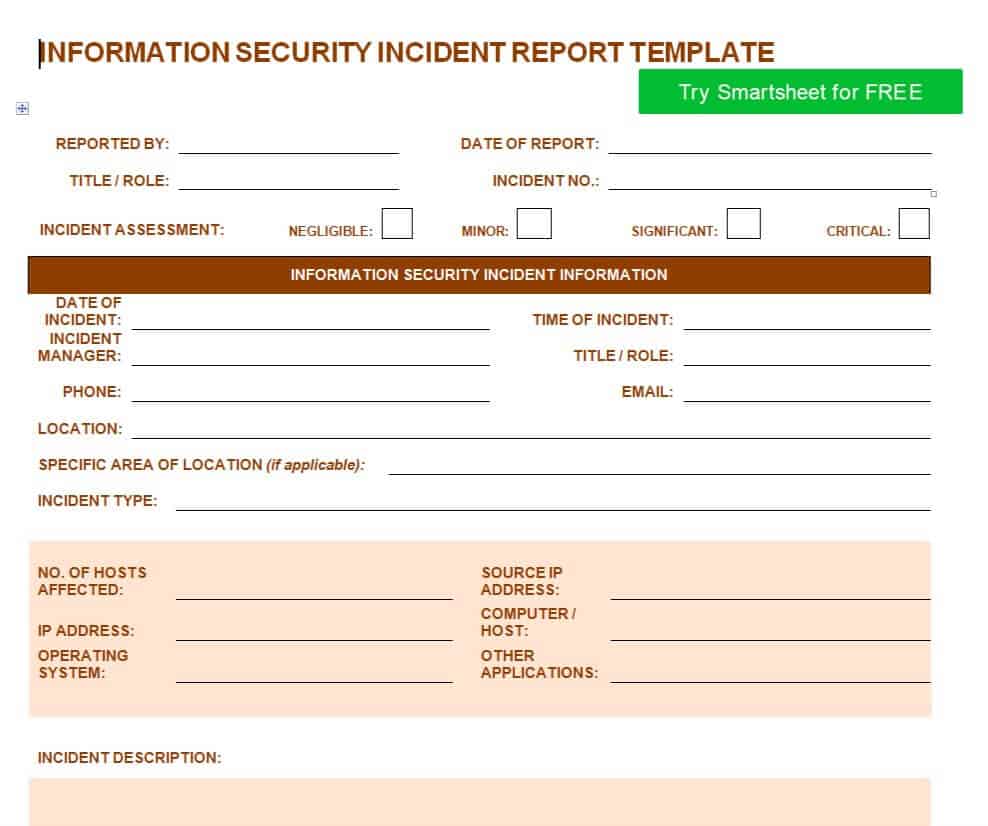
Information Security Incident Report Template
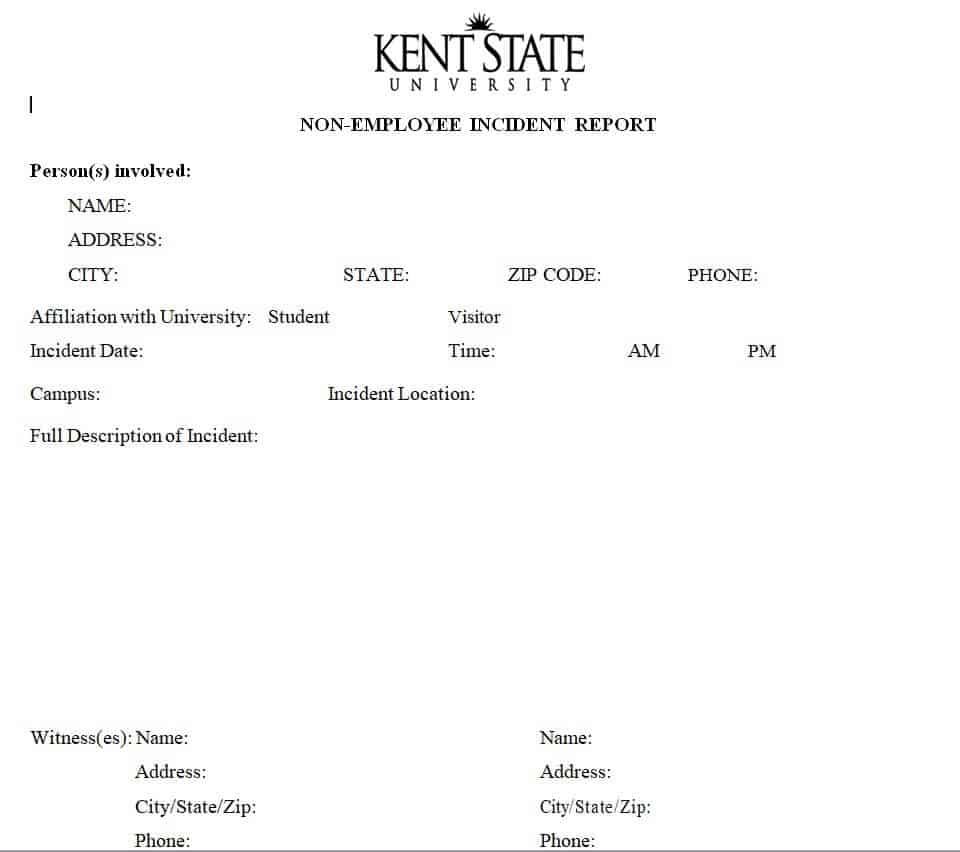
Non-Employee Incident Report Template
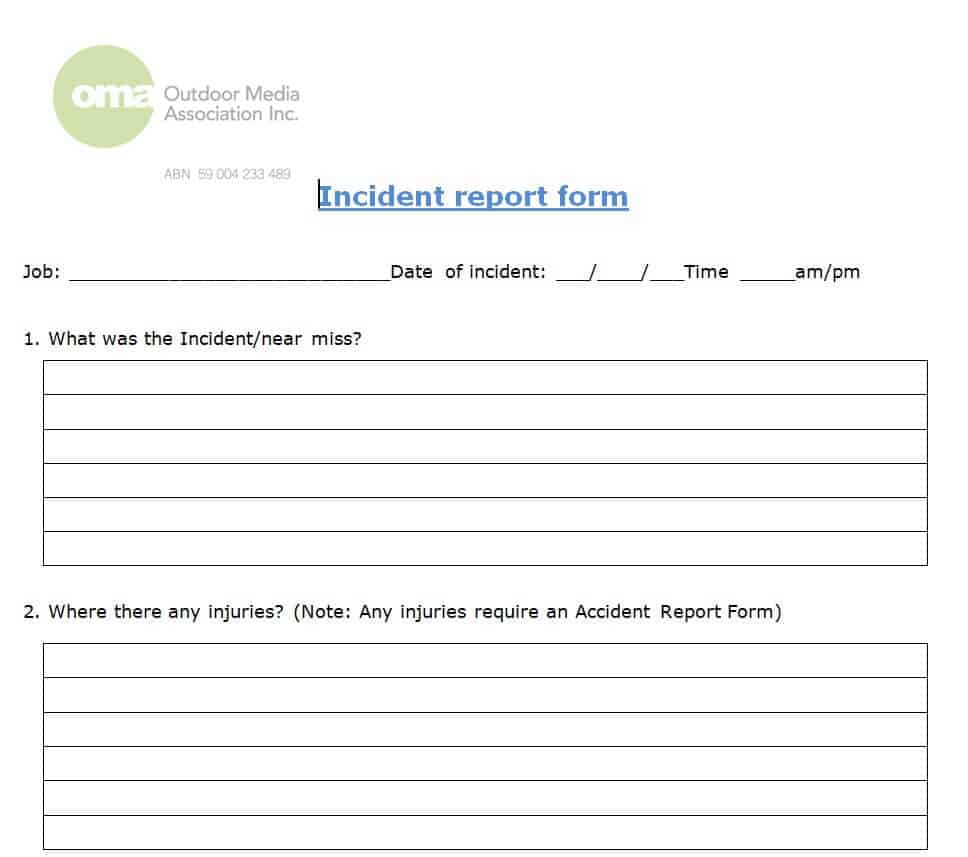
Basic Incident Report Outline Template
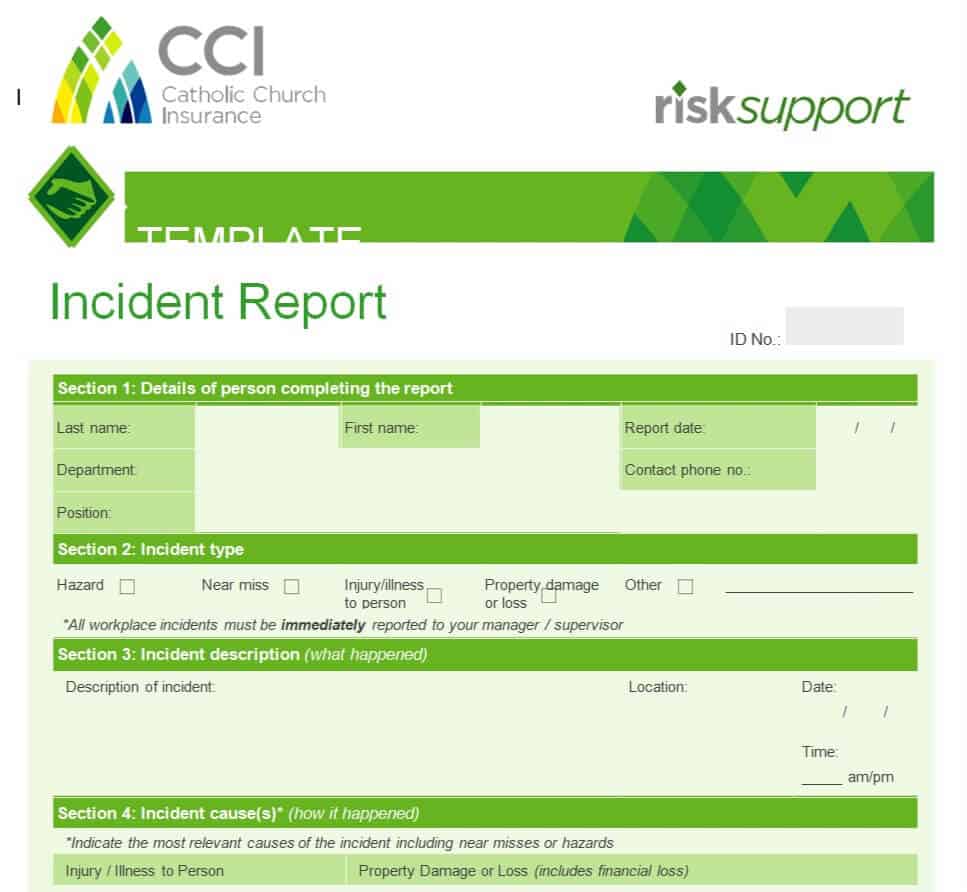
Editable Incident Report Template
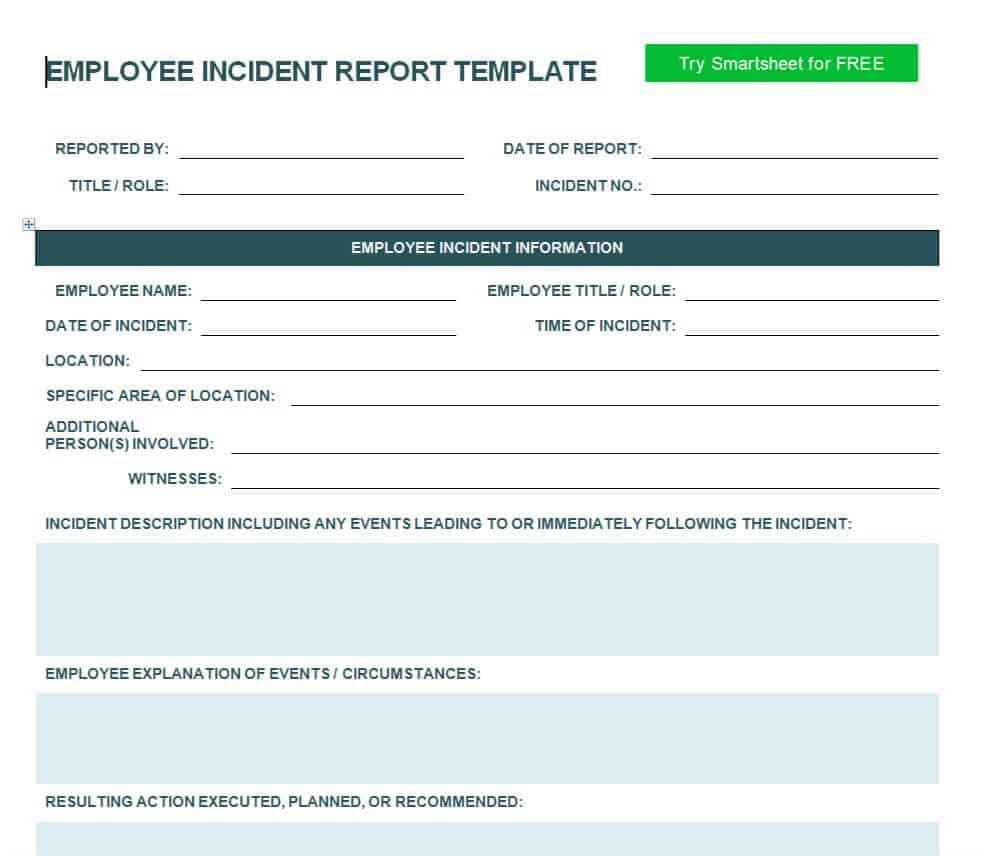
Employee Incident Report Template MS WORD
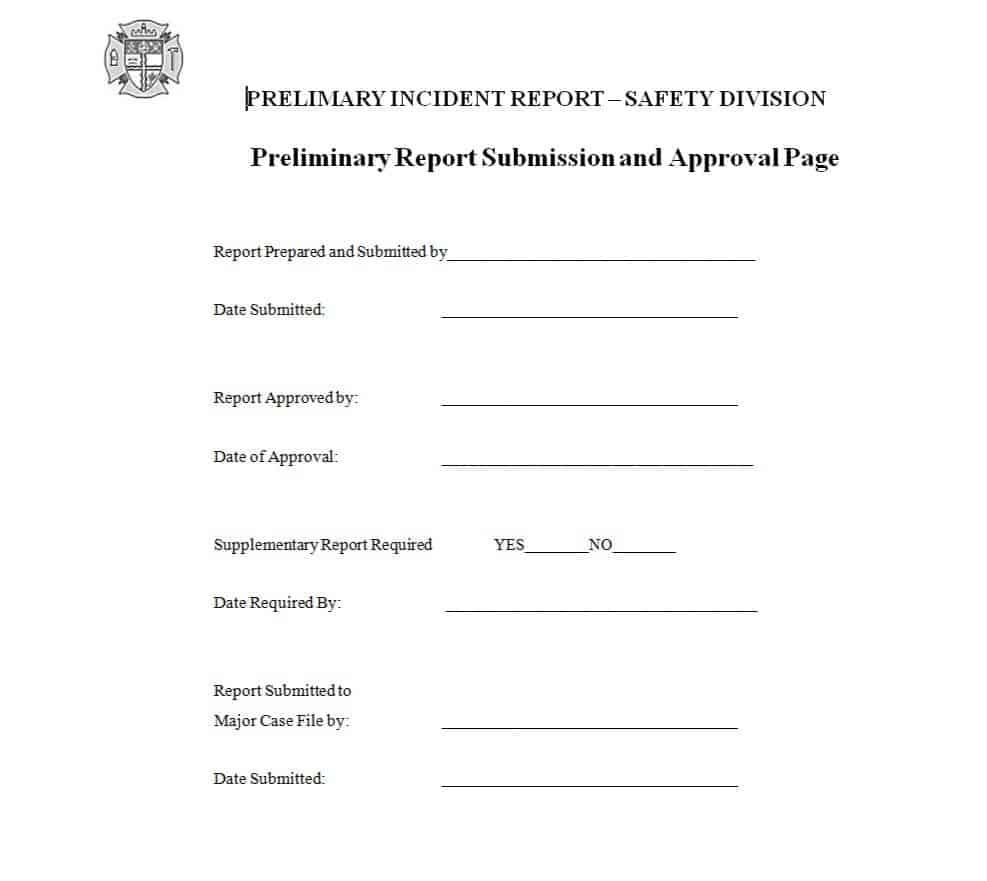
Preliminary Incident Report Template
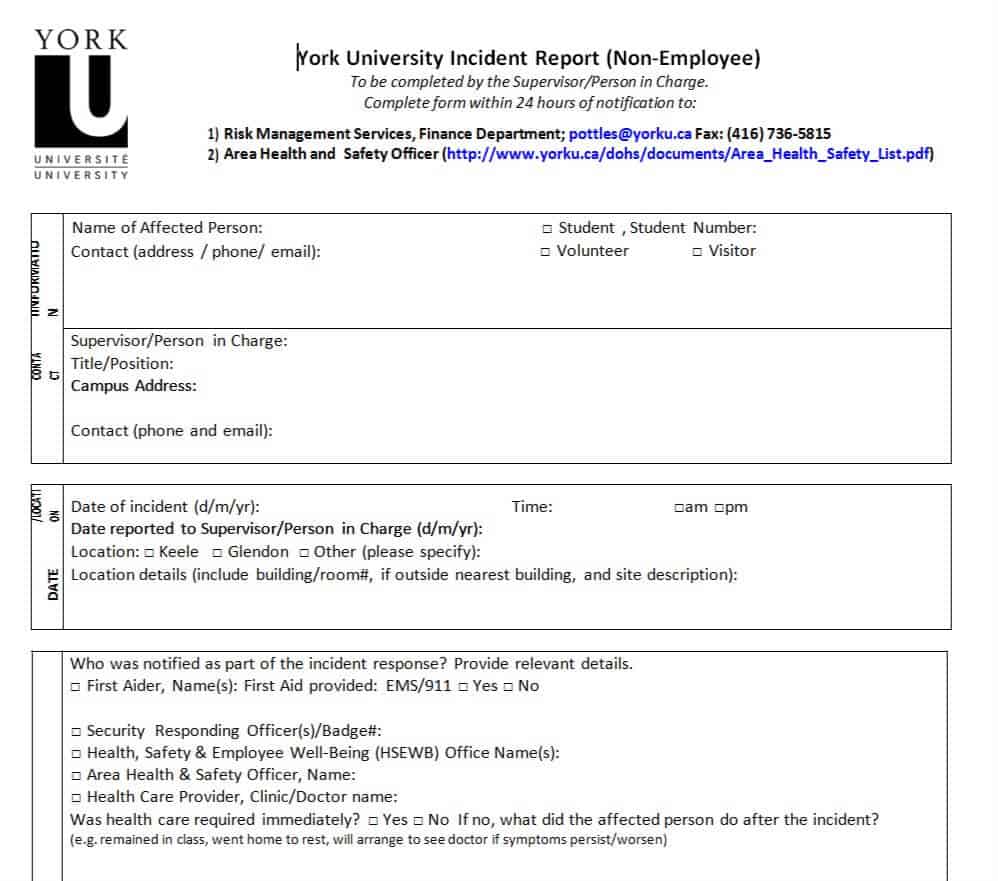
University’s Incident Report WORD Template
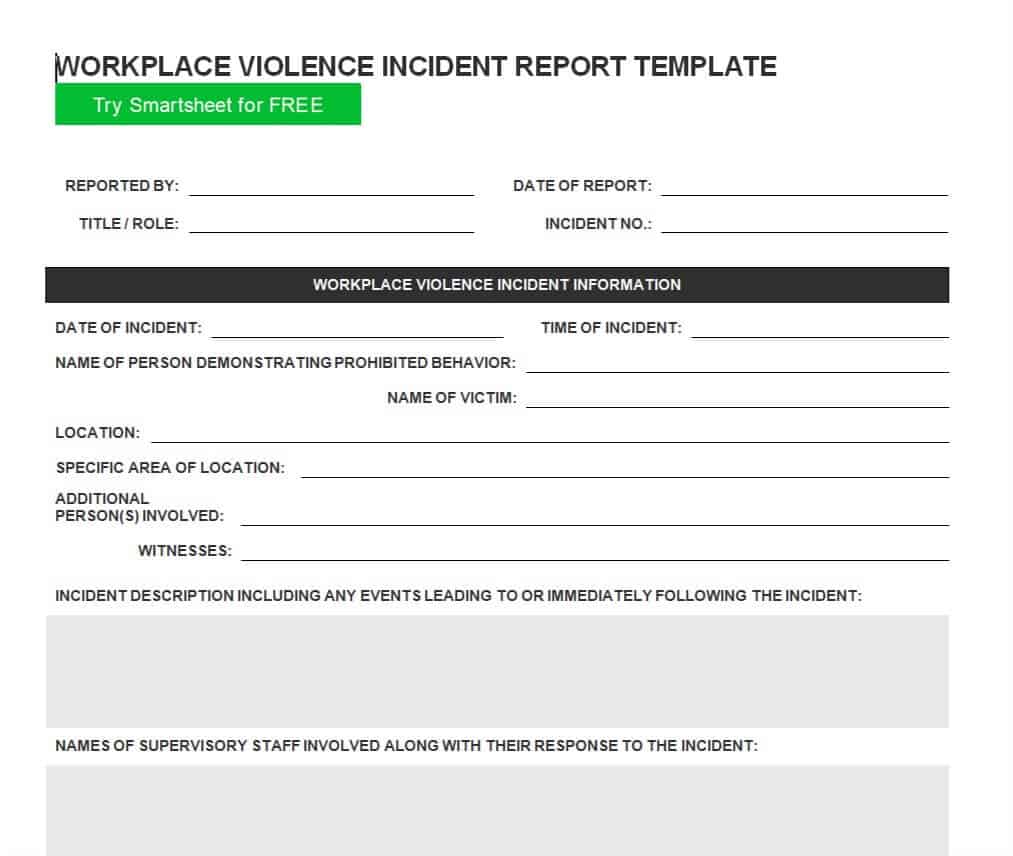
Workplace Violence Incident Report Template
Sample Incident Report Template
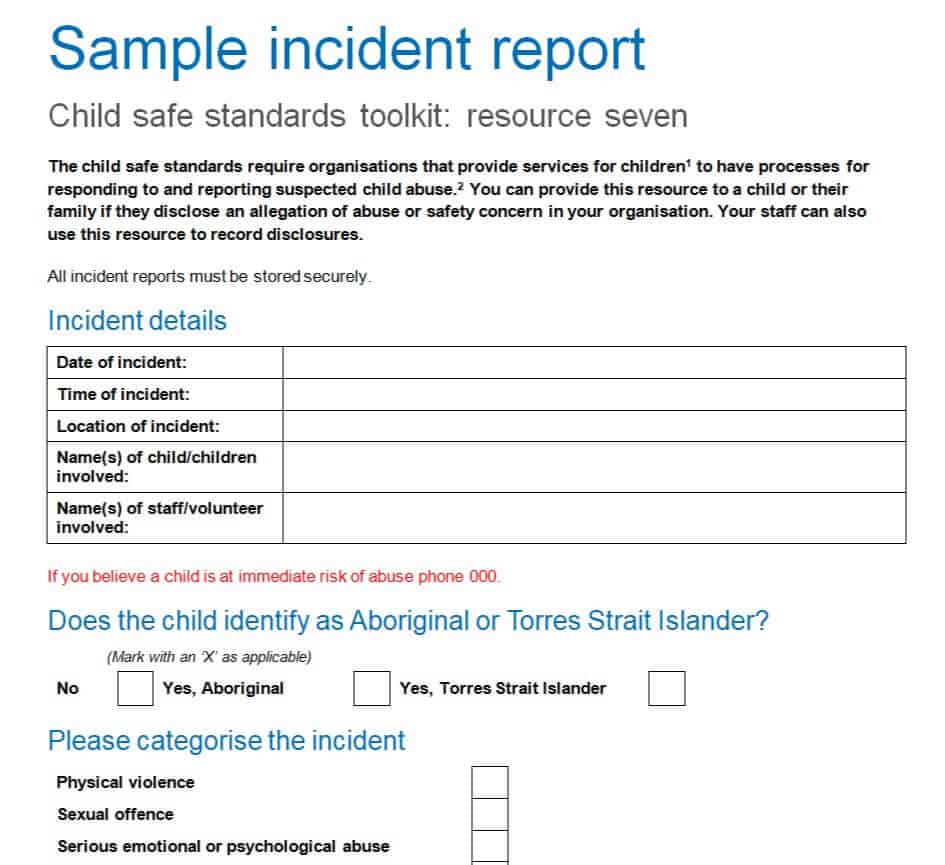
How to Write a Clear, Objective Incident Report
Writing a strong incident report is a skill, and it becomes much easier when you follow the same basic process every time:
- Report as soon as possible. Write the report while details are fresh, ideally within hours of the incident, before memory fades or details blur together.
- Record the basics first. Note the exact date, time, and location before anything else, so the rest of the report has a clear anchor.
- Describe events in order. Walk through what happened step by step, in the sequence it occurred, rather than jumping around.
- Stick to observable facts. Write what you saw and heard, not what you assume was intended or who you believe was to blame.
- Name every witness. Record full names and contact information for anyone who saw the incident, even if their account seems minor.
- Note the immediate response. Document any first aid, equipment shutdowns, or containment steps taken right after the incident.
- Review before submitting. Read the report back to confirm it is complete, factual, and free of assumptions or emotional language.
Common Mistakes to Avoid
Even well-intentioned reports can lose their value if they fall into a few common traps:
- Delaying the report. Waiting days or weeks to write things down means details get forgotten or distorted.
- Mixing in opinions or blame. Phrases like “he was careless” or “this was obviously her fault” replace facts with judgment and can undermine the report’s credibility.
- Leaving out witness details. A report with no names or contact information for witnesses is far harder to verify or follow up on later.
- Writing vague descriptions. “Something fell and someone got hurt” tells almost nothing; specifics about what, where, and how matter.
- Skipping the follow-up section. Failing to note what needs to happen next means corrective action can fall through the cracks entirely.
Using Incident Reports to Strengthen Workplace Safety
An incident report shouldn’t be treated as paperwork to file away and forget. Reviewed regularly, a collection of reports becomes a diagnostic tool: it can reveal a recurring hazard, a training gap, or a process that needs redesigning before someone gets seriously hurt. Many organizations hold periodic safety meetings specifically to walk through recent incidents and near-misses, looking for patterns rather than treating each one in isolation. Sharing relevant lessons with the wider team, without naming or blaming individuals, also helps build a culture where people feel comfortable reporting problems early rather than hiding them. Over time, that openness does more to prevent serious incidents than any single corrective action.
Frequently Asked Questions
How soon after an incident should a report be filed?
As soon as reasonably possible, ideally the same day. Most organizations expect a report within 24 to 48 hours so details remain accurate and any necessary follow-up can begin quickly.
Who should have access to incident reports?
Access is typically limited to those with a legitimate need: supervisors, HR, safety officers, and, when relevant, legal or insurance representatives. Because reports often contain personal and sensitive details, most organizations restrict general access and store them securely.
Are incident reports legally required?
In many industries, yes. Workplace safety regulations often require documentation of injuries, and healthcare, aviation, and other regulated sectors have their own specific reporting obligations. Even where it isn’t strictly mandated, keeping a report on file is standard best practice.
What’s the difference between an incident report and an accident report?
An accident report specifically documents an event that caused injury or damage. An incident report is broader, covering accidents as well as near-misses, security events, and other unusual occurrences that didn’t necessarily cause harm but are still worth recording.
Related templates you may find useful: free expense report templates, free progress report templates and free project report templates.