

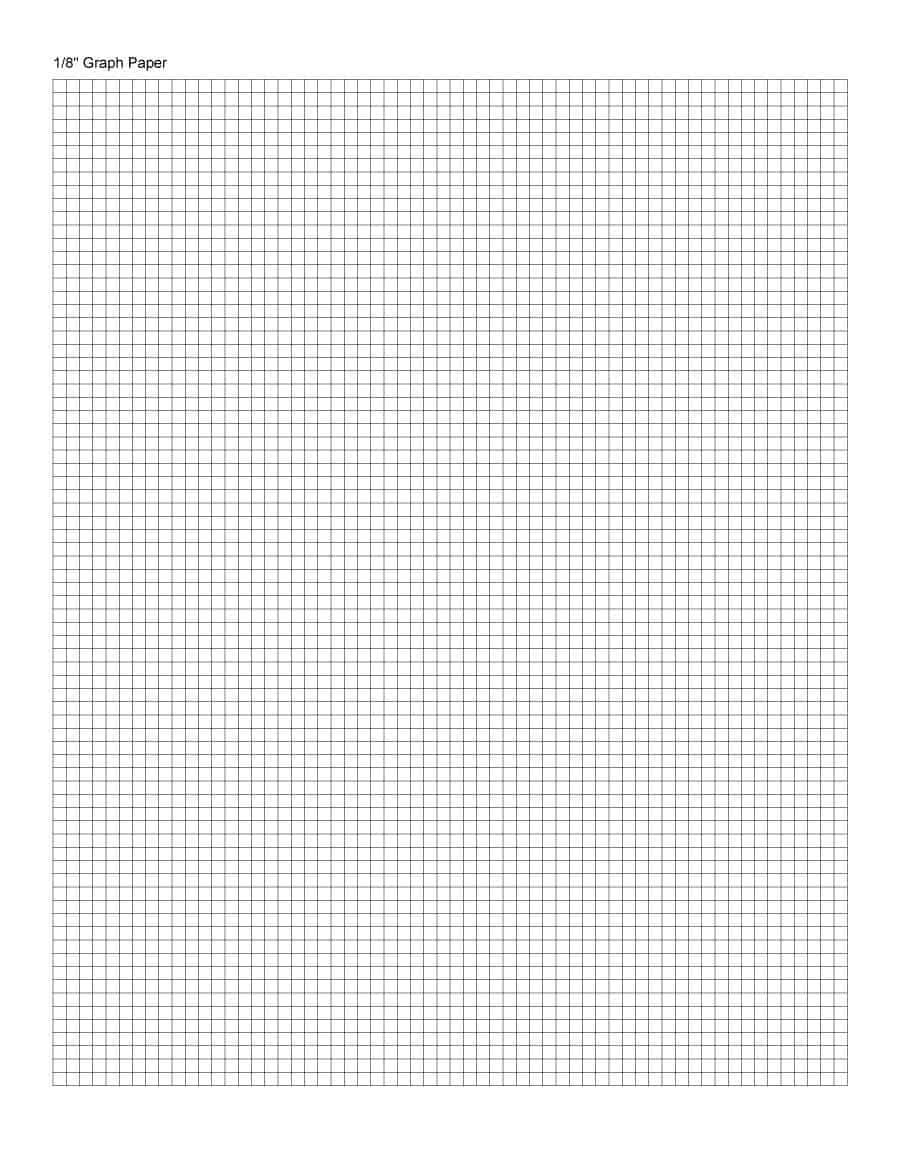
You can download Plenty of Graph Paper Templates from this page. The paper in which lines are drawn horizontally and vertically for making graph is known as graph paper. The graph paper is mostly used by the economist and engineers. The graph is prepared by the students for giving it to teacher .the graph paper is basically used for making curves and angels after analysis on subjects such as mathematics and economics. These graph paper templates can be used to make graph paper of your own style.
You can also browse our full collection of free word templates for more ready-to-use designs.
The objective of the graph is to demonstrate the idea taken from the context mentioned in the book. Making graph is an important aspect of study and it shows the interest and behavior of student about the theory. The graph paper is available at stationary shops for the convenience of the students. The graph paper comprises on small squares for making diagrams in a proper way. Mostly the graphs are prepared with the lead pencil. This activity is considered to be important for knowledge. For your help Graph Paper Template is available.
Common Types of Graph Paper
Not all graph paper looks the same, and picking the right style makes a real difference in how easy a task is to complete. Standard quad-ruled paper, usually with 4 or 5 squares per inch, is the most common choice for basic algebra, plotting simple functions, and general note-taking. Engineering graph paper uses a finer grid, often with subdivisions per square, and is preferred for technical drawings and scale diagrams. Isometric graph paper uses a triangular grid instead of squares, which makes it the right choice for 3D sketches, architectural concepts, and product design mockups. Polar graph paper is laid out in concentric circles divided by radial lines, and is used for plotting angles, trigonometric functions, and polar coordinates. Dot grid paper, which shows only the intersection points instead of full lines, has become popular for bullet journaling and hand-lettering because it guides alignment without a busy, printed grid.
Who Uses Graph Paper Templates
Students use graph paper constantly, from plotting coordinates in a math class to drawing accurate diagrams in a science lab. Teachers use it to create worksheets and test papers with pre-formatted grids. Engineers and architects rely on graph paper for scale drawings, floor plans, and technical sketches before moving a design into specialized software. Quilters, cross-stitch designers, and other craft hobbyists use grid paper to plan patterns square by square. Even outside of academic or technical settings, people use graph paper for budgeting spreadsheets by hand, garden layout planning, and simple data visualization.
How to Use and Customize These Templates
- Choose the file format that fits your needs – the Word (.docx) files are best if you want to add labels, titles, or instructions before printing, while the PDF files are ready to print exactly as designed.
- Open the template and check the page size and margins match your printer’s default paper size (Letter or A4) before printing a full batch.
- If you are editing the Word version, you can resize the grid, add a header with your name or class, or change the line color and weight to suit your project.
- Print a single test page first and measure the squares with a ruler to confirm the scale is accurate, especially if you need a precise measurement like 1 square = 1 inch.
- For technical or engineering work, use the finer, more detailed grids; for quick sketches or journaling, the standard or dot grid options are usually easier to work with.
- Print on a quality printer and, where precision matters, use plain white paper of at least 20 lb weight so the lines stay crisp.
Tips for Best Results
Always print a test page before running a large batch, since printer scaling settings can sometimes shrink or stretch a page just enough to throw off the grid measurements. If you plan to write on the paper with ink, choose a lighter grid so your own markings stand out more than the background lines. For binder or notebook use, check whether the template includes margin space for hole punching, or add it yourself in the Word version. Keep a digital copy of your preferred template so you can reprint more whenever you run out, instead of searching for the same style again.
Common Mistakes to Avoid
- Printing without checking the page scaling setting, which can distort the grid size.
- Using the wrong grid type for the task, such as standard grid paper for isometric drawing.
- Ignoring paper weight and quality, which can cause ink to bleed through thin sheets.
- Forgetting to leave margin space when the printed pages will go into a binder or notebook.
Frequently Asked Questions
What size are the squares on standard graph paper?
Most standard graph paper uses either 4 or 5 squares per inch, though engineering and specialty grids can be much finer.
Can I edit these templates before printing?
Yes, the Word (.docx) files can be opened and edited to add labels, change grid size, or adjust line color, while the PDF files are best used as-is.
What is the difference between graph paper and grid paper?
The terms are often used interchangeably, but graph paper generally refers to paper meant for plotting mathematical functions and data, while grid paper is a broader term that also covers general-purpose ruled grids used for writing or design.
Which grid type works best for architectural sketches?
Isometric graph paper, with its triangular grid, is the standard choice for quick 3D architectural and product sketches.
Do these templates work on both Letter and A4 paper?
Check the template dimensions before printing internationally, since a template designed for US Letter size can print with slightly different margins on A4 paper, and vice versa. Most PDF readers offer a “fit to page” or “scale to fit” print option, but this can subtly change the grid measurements, so it is worth comparing a printed square against a ruler if exact scale matters for your project.
A Short History of Graph Paper
Graph paper as a standardized printed product dates back to the early 19th century, when French mathematicians and engineers began using pre-ruled paper to plot data and functions more accurately than freehand grids allowed. Its use spread quickly through schools and technical fields because it removed a source of human error: without a printed grid, hand-drawn axes and scales rarely stay perfectly consistent across a page. Today, digital tools can generate graphs and charts instantly, but printed graph paper has remained popular precisely because it is fast, requires no software, and works anywhere a pencil and printer are available – which is part of why templates like the ones on this page continue to be downloaded regularly.
Download Graph Paper Templates:
Following are the PDF printable files and Word printable files for your graphs. Print on quality printers and you will get best result you want.







Related templates you may find useful: free writing paper templates, free checklist templates and free non-disclosure agreement templates.

