

A special kind of paper that used for writing only is known as writing paper. Writing papers are made from special kind of material and only use for writing something such as letter writing, application writing and report writing etc. Some writing papers specially used by children to get better handwriting. Such kind of papers contains special writing lines and spaces that allow improving handwriting effectively. Writing papers are also helpful for guiding early writers in proper letter height, width and placement of letters and words. Writing papers are available in different kinds and shapes in market. You may download and print writing papers from various websites without any cost. A large number of websites on internet also provide different kinds of writing paper templates that you can use to make and print a writing paper of y our choice.
The paper of good quality used for writing letters,novels,essays and story is known as writing paper. The quality of paper varies with the material used for making the paper. A good quality paper is soft and smooth and on which the ink of a pen does not spread. The paper is of two types 1-with the narrow line 2-plain paper. the paper with narrow lines is used for writing and the plain paper is used for drawing and printing. The writing papers are used for catalog, magazines, books and business forms. The writing papers are available on stationary shops. The writing papers are for using by the printers,scanners,press machines and for writing quotations and business letters. The words written on the paper depends upon the quality of paper so they should be neat and clean for presenting it to someone.
Common Formats of Writing Paper Templates
Writing paper templates come in a handful of standard formats, each suited to a different kind of writing task. Blank writing paper has no printed lines at all and is often chosen for drawing, brainstorming or free-form journaling. Lined writing paper is the most common format and includes evenly spaced horizontal rules that keep handwriting level across the page; it is the default choice for letters, notes and everyday practice. Handwriting practice paper, sometimes called “primary paper,” adds a dashed midline between the solid top and bottom rules so young learners can judge the correct height for lowercase letters, ascenders and descenders. Letter paper, also known as stationery paper, usually combines a narrower line spacing with a decorative border or header area, making it suitable for personal correspondence, invitations or formal notes. Some templates also include a story-writing format that pairs a blank drawing box at the top of the page with a few lines of writing space below it, a layout many elementary classrooms use for creative writing assignments.
Who Uses Writing Paper Templates
Writing paper templates are used by a wide range of people, not just students. Elementary school teachers rely on lined and dashed-midline templates to teach letter formation and handwriting fluency, often printing a fresh worksheet for every lesson. Homeschooling parents use the same templates to build a consistent handwriting curriculum without buying pre-printed workbooks. Older students use plain or narrow-ruled writing paper for essay drafts, class notes and exam answers where lined structure keeps their writing neat and easy to grade. Writers and journalers often prefer wide-ruled or unruled templates for longhand drafting, since the extra space between lines leaves room for edits and margin notes. Letter writers, including people sending handwritten thank-you notes, greeting cards or pen-pal letters, use decorative letter paper templates to give a personal, polished look without needing design software. Businesses occasionally use branded writing paper templates for quotations, internal memos or handwritten client notes.

Click on the download button and make this writing paper template your own.

More Writing Paper Templates Are Here
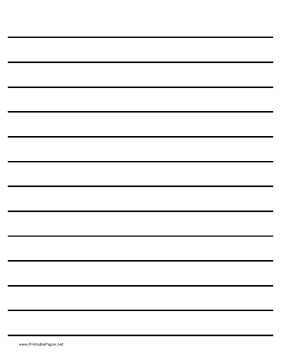
1. Printablepaper

2. Pinterest

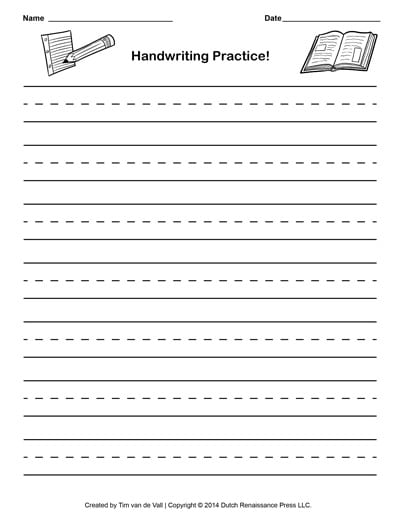
3. Timvandevall
4. First-school

5. Activityvillage

Key Elements and Variations to Look For
Not every writing paper template is built the same way, and a few details make a real difference in how usable it is. Line spacing is the most important variable: wider spacing (around 3/4 inch) suits kindergarten and first-grade learners who are still forming large letters, while narrower spacing (around 3/8 inch) works better for older students and adults writing in cursive or longhand. Margins matter too, since a template with a generous left margin leaves room for three-hole punching or binder storage, while a narrow margin maximizes writing space on smaller paper sizes. Decorative borders and header graphics are common on letter and stationery templates, but they should never crowd the writing area itself. Printable size is another variation to check before downloading: most templates are formatted for standard Letter size (8.5 x 11 inches), but some are designed for A4, which is the standard in most countries outside North America, so printing an A4 template on Letter paper (or the reverse) can cut off the bottom rule.
How to Choose and Print the Right Format
Picking the right template only takes a few steps, but skipping one of them is the most common reason a printed page does not look right.
- Decide the purpose first: handwriting practice, a letter, a story assignment or general note-taking, since that determines whether a dashed midline, plain lines or no lines at all is needed.
- Match the line spacing to the age of the writer; wider spacing for early learners, narrower spacing for teens and adults.
- Check the paper size setting in the print dialog against the intended size of the template (Letter or A4) before printing, so nothing is scaled or cropped.
- Print a single test page first, especially for templates with borders or graphics, to confirm the margins and artwork line up the way they look on screen.
- Use a slightly heavier paper stock (24 lb or higher) for templates that will be written on with fountain pens or markers, since standard copy paper can allow ink to bleed through.
Common Mistakes to Avoid
A few avoidable mistakes show up again and again when people print writing paper at home. The most frequent is choosing a line spacing that is too tight for a young learner: cramped lines make it physically difficult for a five- or six-year-old to keep letters inside the rules, which slows down handwriting practice rather than helping it. Another common error is printing an A4-formatted template on Letter-size paper (or the reverse) without adjusting the print settings, which shifts the margins and can cut off the last line on the page. People also sometimes skip checking whether “fit to page” or “scale to fit” is enabled in the printer settings; if a template is scaled down to fit a different paper size, the line spacing changes along with it, defeating the purpose of a precisely ruled template. Finally, reusing a single generic template for every age group is a missed opportunity, since a first grader and a fourth grader benefit from noticeably different line spacing, so it is worth keeping two or three versions on hand.
Practical Tips for Printing and Using Writing Paper
For home use, keep a small stack of each format already printed so a worksheet or letter sheet is ready without waiting on the printer. Teachers running a full classroom can save paper and toner by printing double-sided lined paper, since most handwriting practice only needs light ink coverage. Storing templates as PDFs rather than image files keeps the line weight sharp at any print size and avoids the slightly blurry rules that can result from printing a low-resolution image. For personal letters, printing letter paper on cream or ivory-colored cardstock gives handwritten notes a more finished, stationery-shop look without any extra design work.
Frequently Asked Questions
What paper size should I use for writing paper templates?
Most templates on this page are formatted for standard Letter size (8.5 x 11 inches). If the printer default is set to A4, switch it to Letter before printing so the line spacing and margins print as designed.
Can I edit these templates before printing?
Templates provided as editable files, such as Word or PDF forms, can usually have the title, name field or header text changed before printing. Templates provided as flattened images or scanned PDFs are best printed as-is.
What line spacing is best for a young child learning to write?
Wider line spacing, generally close to 3/4 inch with a dashed midline, works best for kindergarten and first-grade handwriting practice. Narrower spacing suits students who already write consistently sized letters.
Are these writing paper templates free to download and print?
Yes, every template linked in this post can be downloaded and printed at no cost for personal or classroom use.

![Top 8 Credit Reminder Templates & Samples [WORD, PDF]](https://www.docspile.com/wp-content/uploads/2022/03/credit-reminder-template-3004101-150x150.jpg)
