

Event planning is an important part when you are going to organize any event or occasion. Irrespective of the type and nature of an event or an occasion, it is important to make a proper and effective plan to avoid any future issues. In this regard, the event planning templates will be really helpful for you. There are so many service providers available in different parts of the world that offers you a chance to hire them for the planning and management task for your event or occasion.
This planning involves planning the budget, selection of dates, choosing and reservation of the event site, establishing alternate dates, taking permissions, and organization of parking and transportation for the attendees. Due to the lots of service providers, it might create confusion in your mind, but online research is a perfect option for you to find out the best and most professional event management company easily and quickly. So, you can go online to hire a professional company or you can simply download an Event Planning Template of your choice from the given event planning templates on this page, customize it and use it as per your requirements.
Significance of an Event Planning Template
Event planning is a procedure of planning small and large events such as festivals, concerts, parties, ceremonies, annual meetings of the company, etc. If you are going to celebrate a special event, you should hire an event planner. An event planner can manage all affairs of event planning.
An event planning template may include budgeting, date and time of the event, reservation of event site or venue, etc. effective event planning can help you to manage your event with the best and also make an event more enjoyable. Event planning begins with determining the task or objective that the sponsoring person or company wants to achieve.
If you don’t want to hire an event planner and want to plan your event yourself, you should follow the instructions provided on the internet for event planning. You can also get templates and samples regarding event planning that you can use for your ease.
What Is an Event Planning Template?
An event planning template is a ready-made document, usually built in Word or Excel, that lays out every task, deadline, and detail needed to bring an event together. Instead of starting from a blank page, you fill in a structure that already accounts for the moving parts of a wedding, a corporate conference, a birthday party, or a community fundraiser. Planners use a template because it turns a long, easy-to-forget list of responsibilities into a single working document that can be updated as decisions are made, shared with vendors and clients, and referred back to on the day of the event itself.
Weddings benefit from a template because so many vendors, dates, and payments have to line up months in advance. Corporate events rely on one to keep sponsors, speakers, and logistics on schedule. Parties and smaller celebrations use a lighter version to track guests and a simple budget, while conferences and multi-day events need a template robust enough to coordinate sessions, staffing, and run-of-show timing across several rooms or days.
Who Uses Event Planning Templates?
Professional event planners use these templates as the backbone of every client engagement, since a consistent format lets them manage several events at once without losing track of details. Hosts who are organizing their own wedding, anniversary, or family celebration use a template to stay organized without needing to hire a planner, working through the same checklist a professional would use. Corporate event coordinators use them to keep internal stakeholders, budgets, and approvals aligned, especially when multiple departments or outside vendors are involved. In each case, the template does the same job: it gives everyone working on the event a single, shared reference for what needs to happen and when.
Key Elements Every Solid Event Plan Should Include
A dependable event plan covers a handful of core elements, regardless of the size or type of event:
- Budget — every expected cost, from the venue to favors, plus a contingency line for the unexpected.
- Guest list — names, contact details, RSVP status, and any special requirements such as dietary needs or accessibility.
- Vendor list — caterers, photographers, decorators, and entertainers, along with contract terms, deposits, and payment due dates.
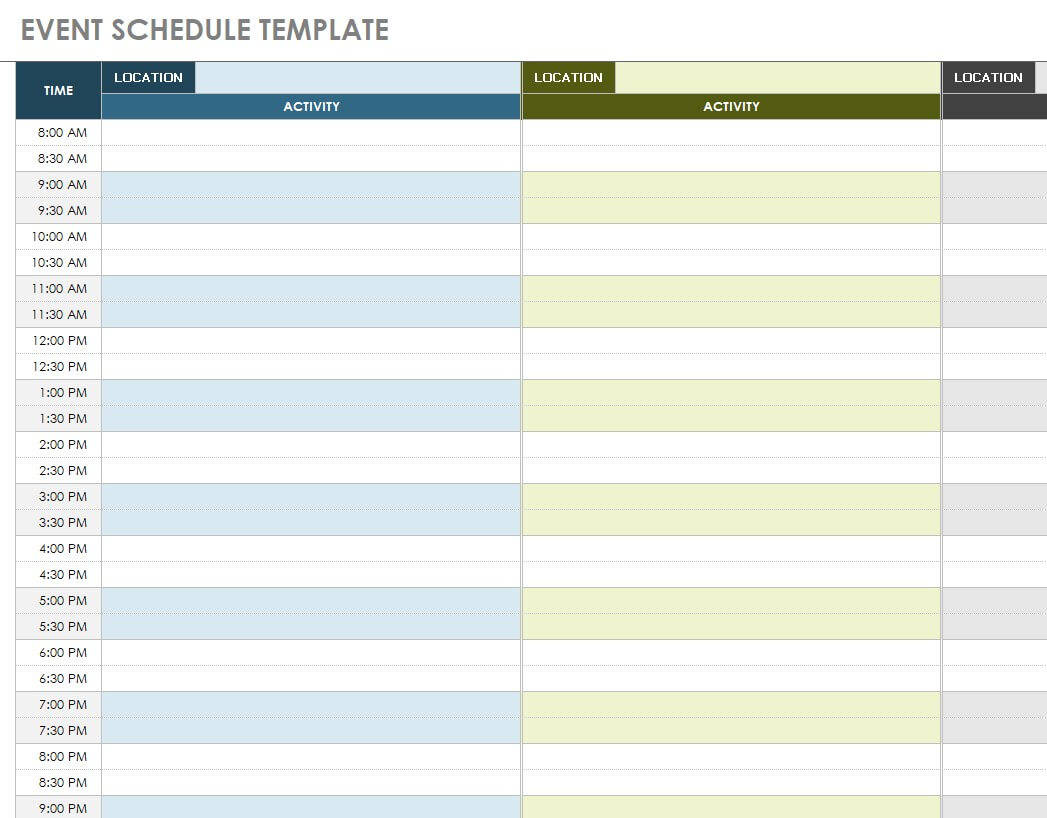
- Timeline or run-of-show — a minute-by-minute or hour-by-hour schedule for the day itself.
- Venue details — capacity, layout, parking, load-in times, and any restrictions the space imposes.
- Task checklist — who is responsible for each task and by what date it needs to be finished.
Having these six pieces in one place is what separates a plan that holds up under pressure from a list of good intentions.
Customizable Event Planning Templates:
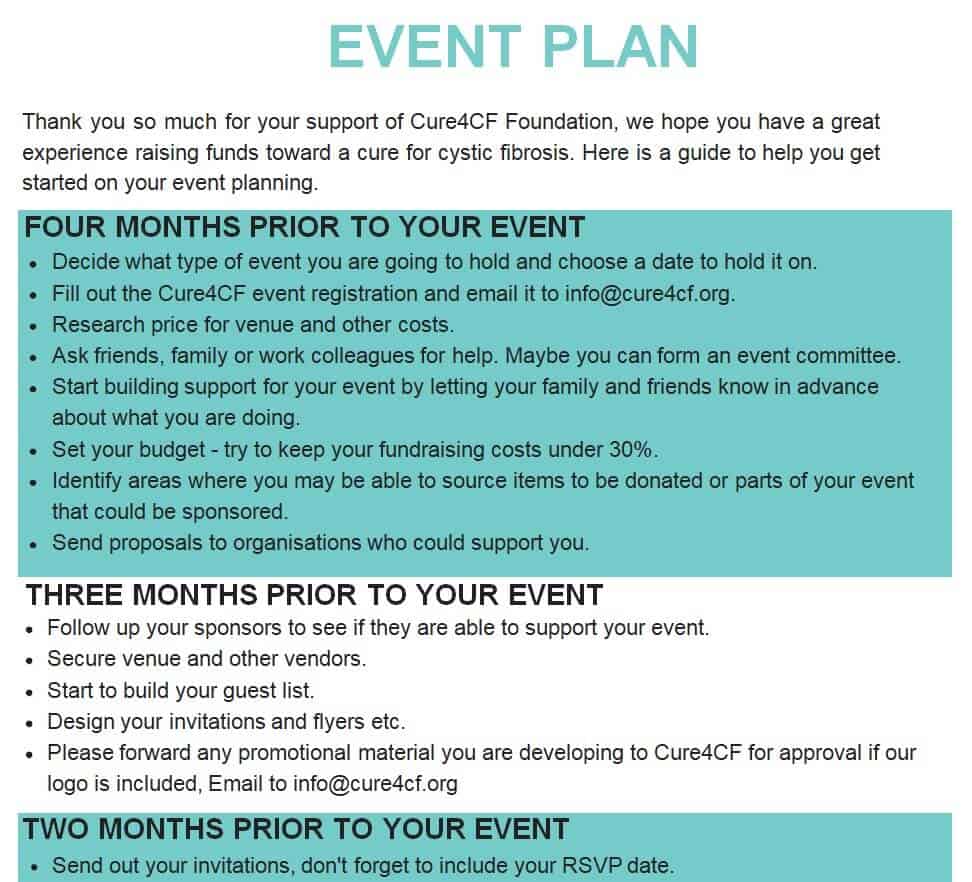
Detailed Event Plan Template
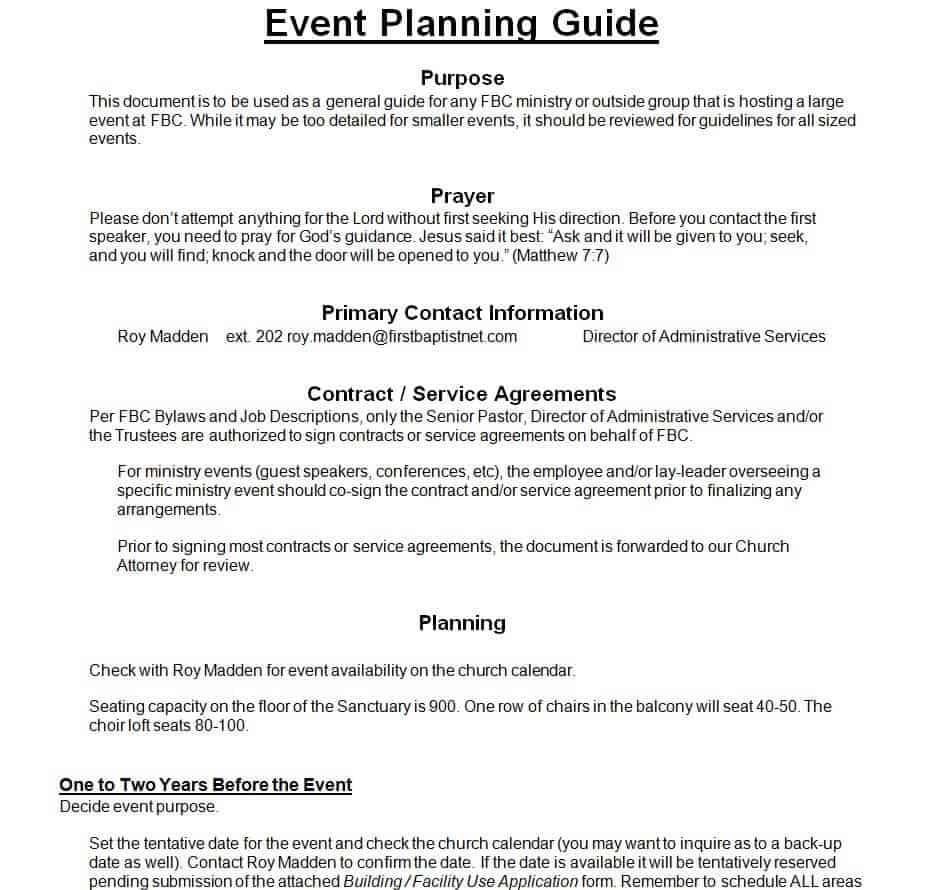
Event Planning Guide Template
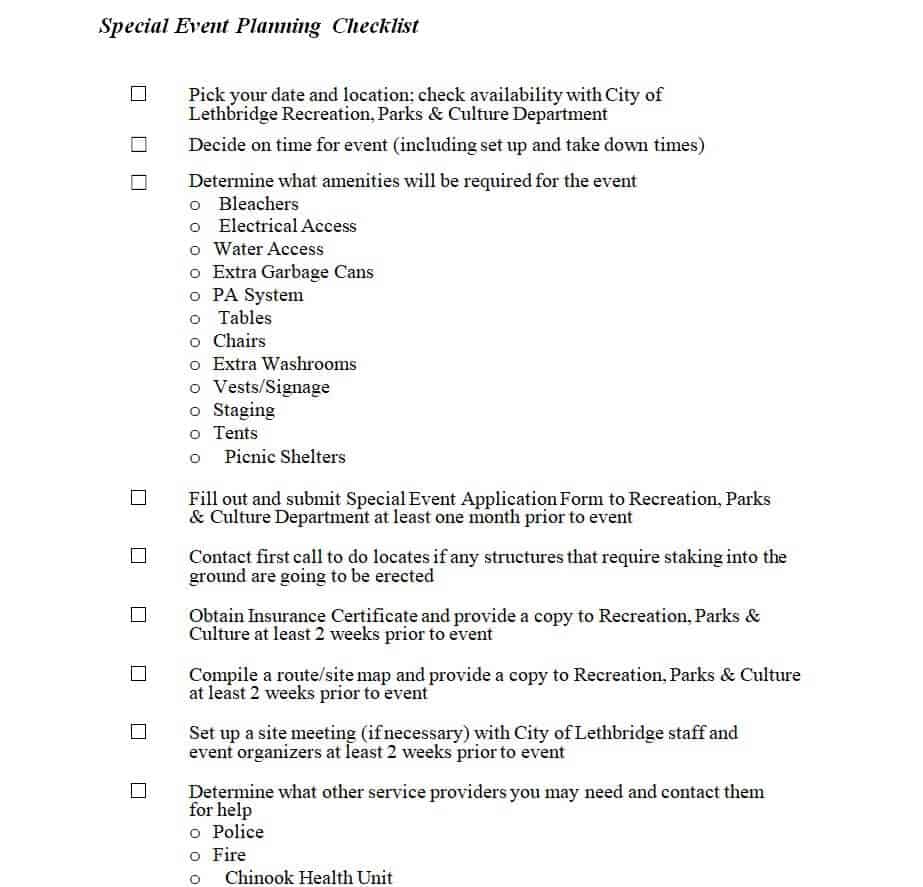
Special Event Planning Checklist Template
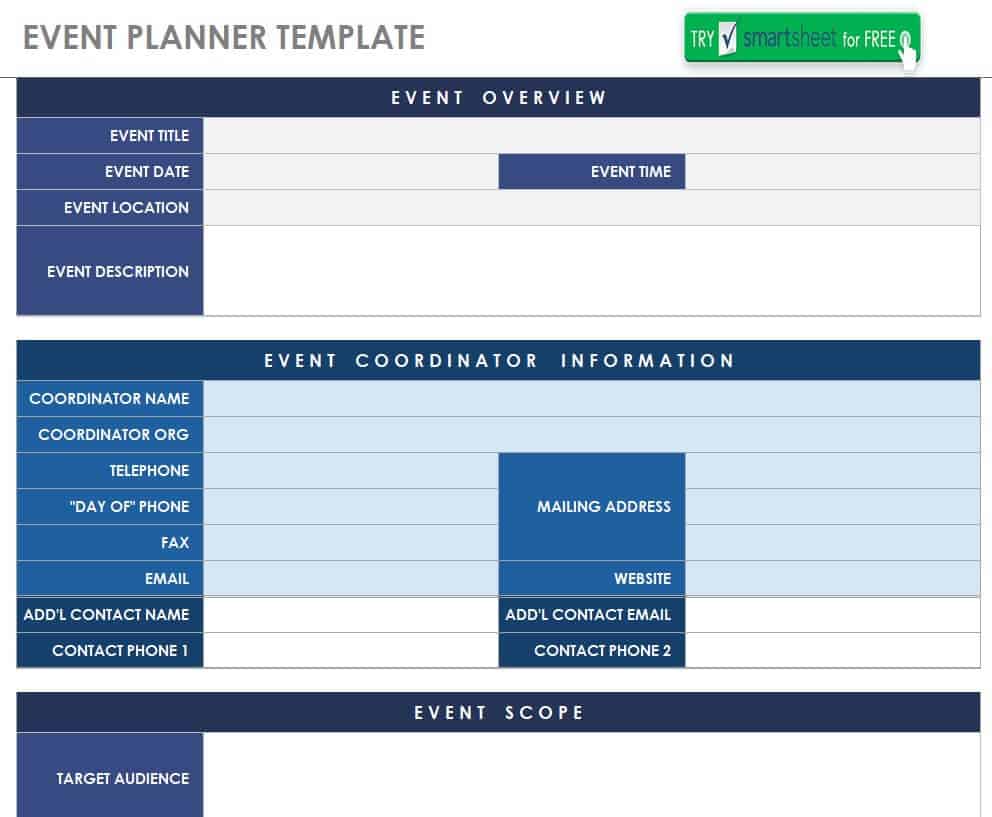
Official Event Planner Template EXCEL
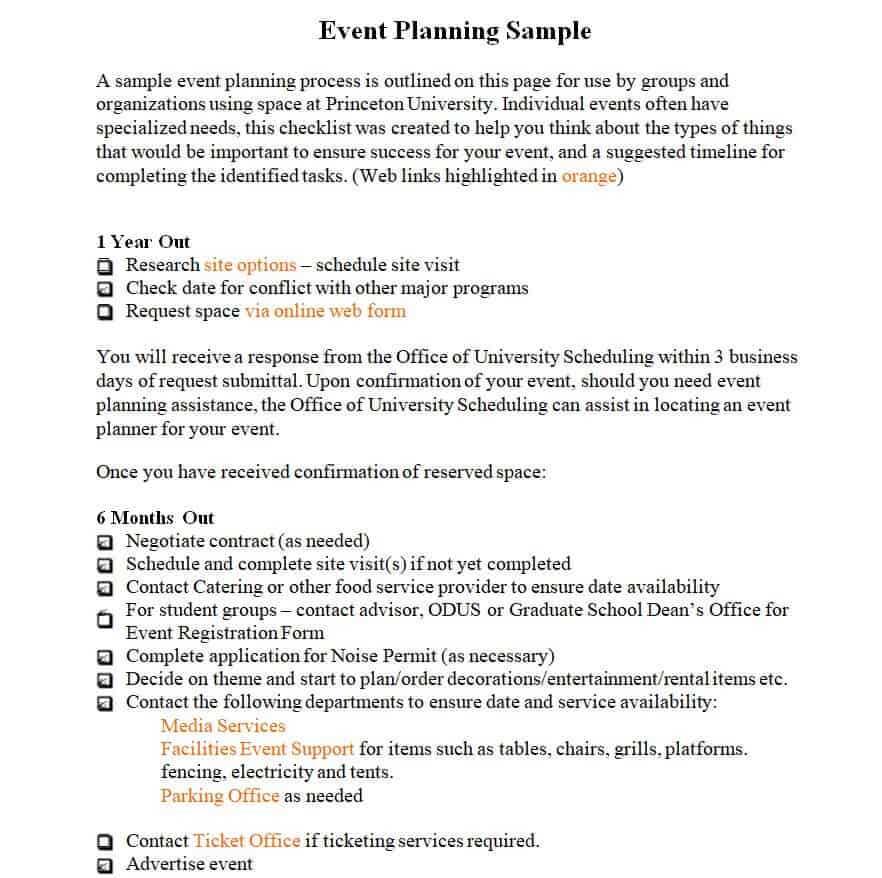
Event Planning Sample Template
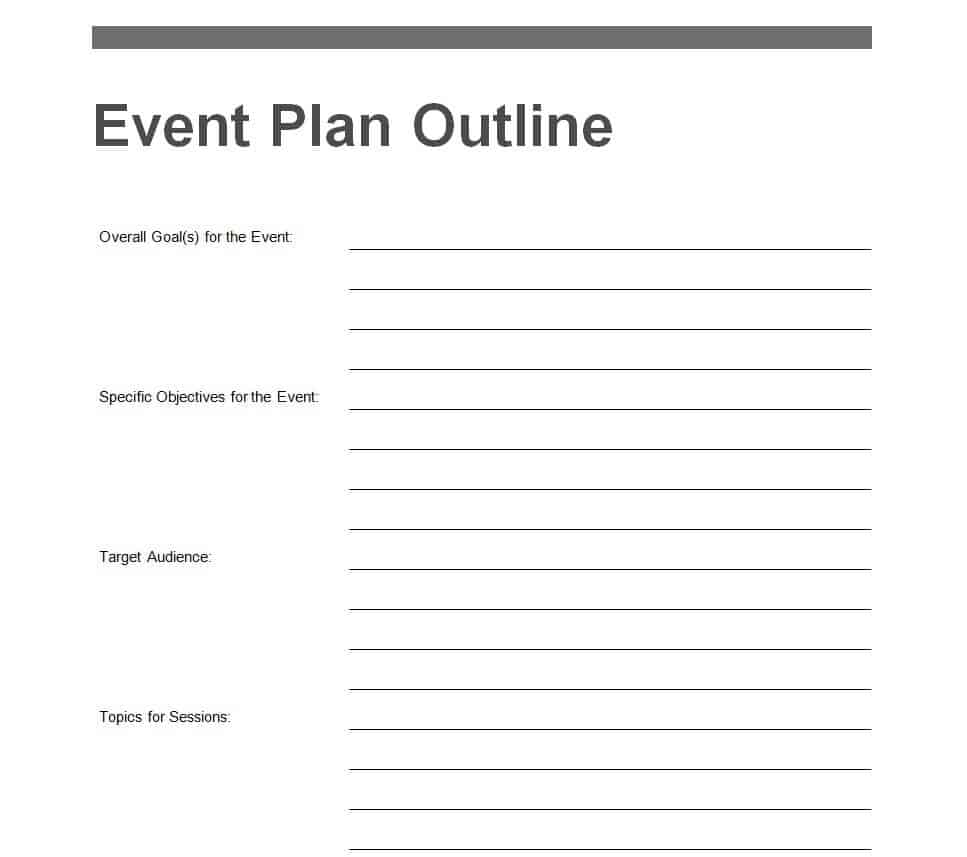
Event Planning Outline Template WORD
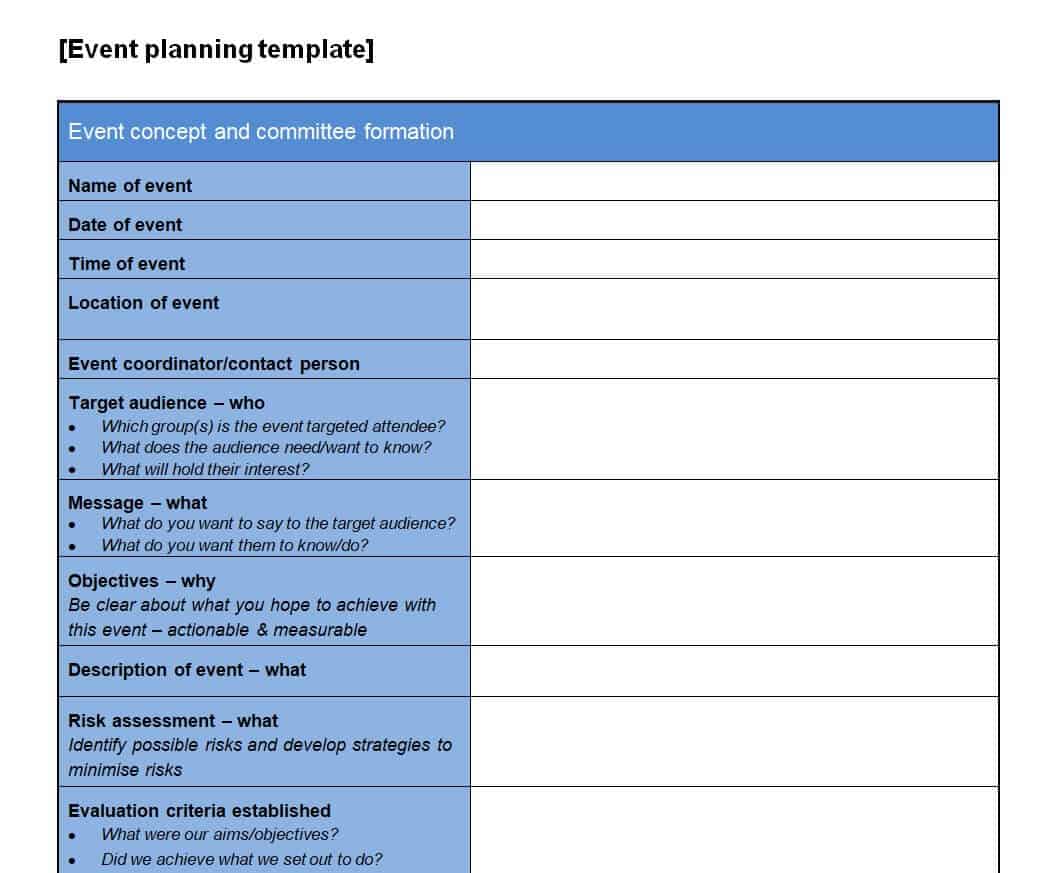
Free Blank Event Planning Template
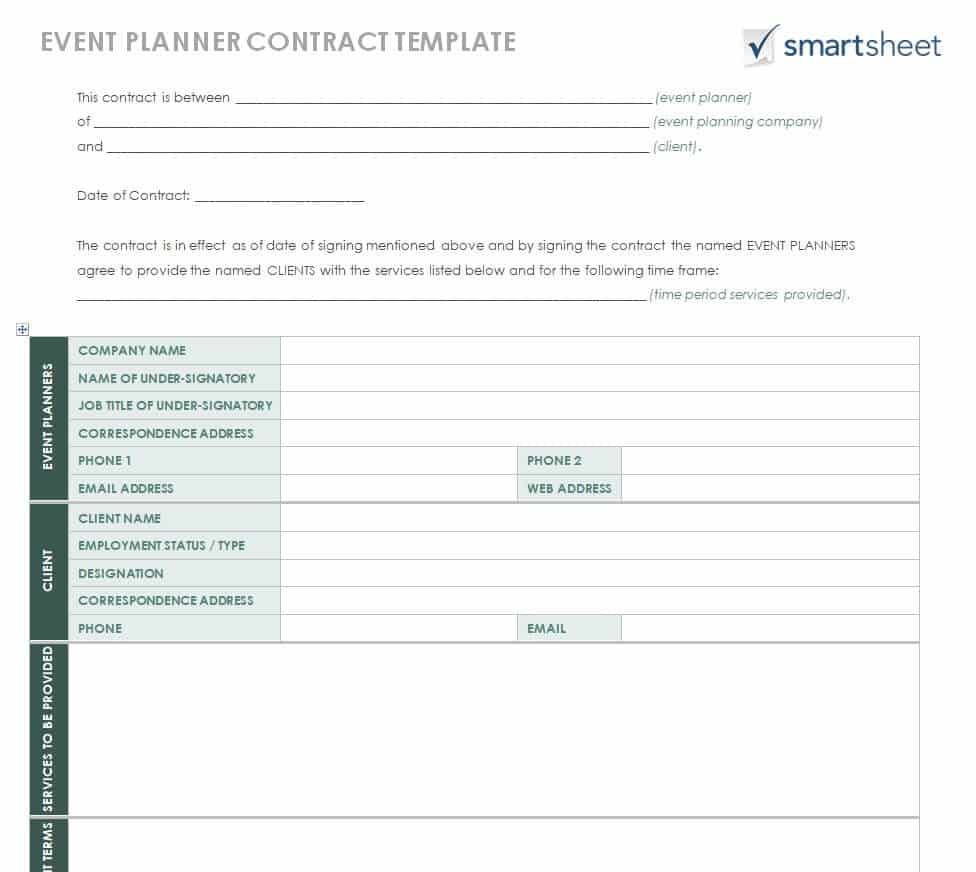
Editable Event Planner Contract Template
Company’s Proper Event Planning Template
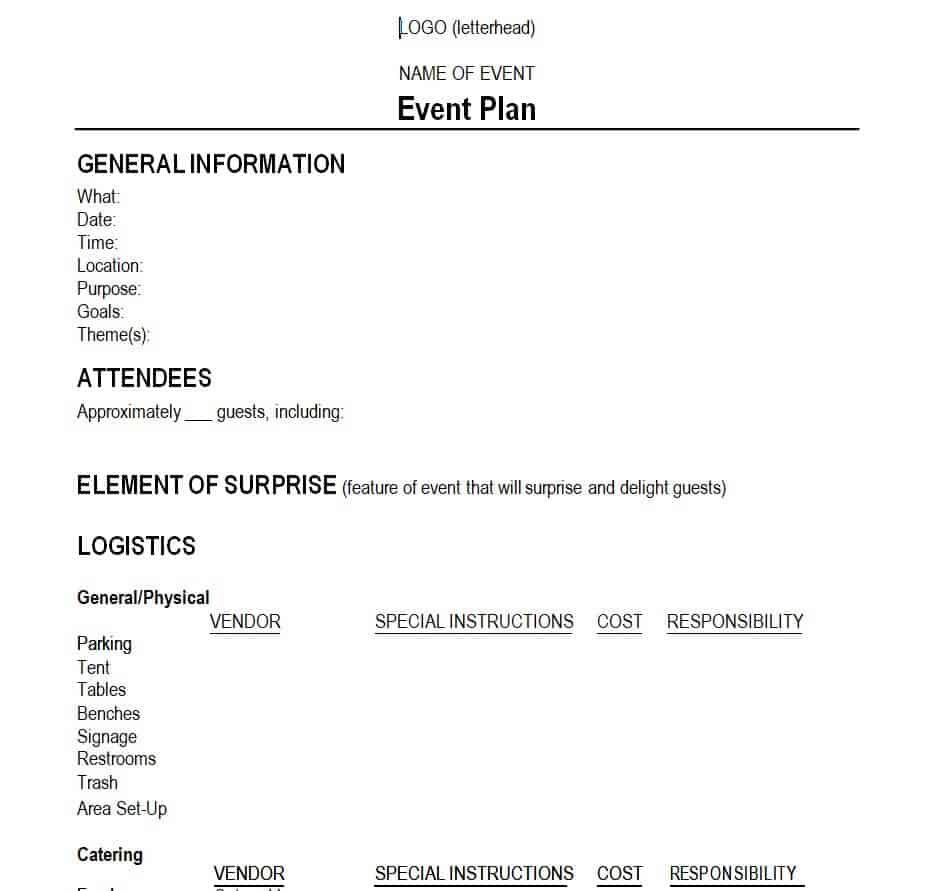
Sample Event Planning and Checklist Template
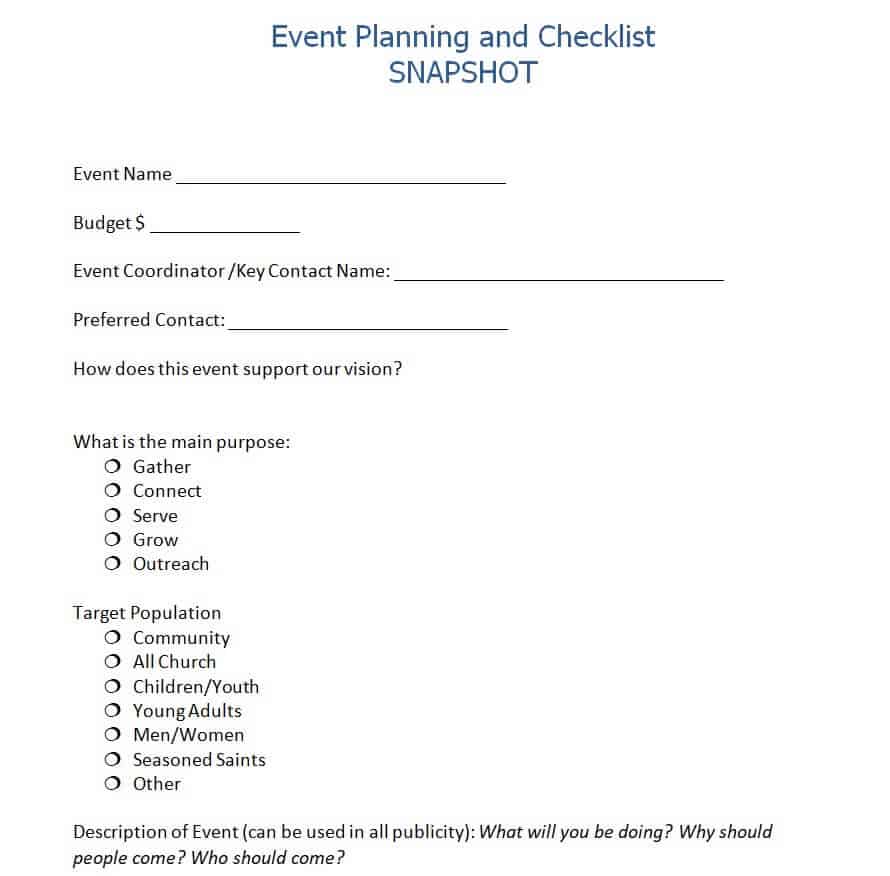
Basic Event Planning WORD Template
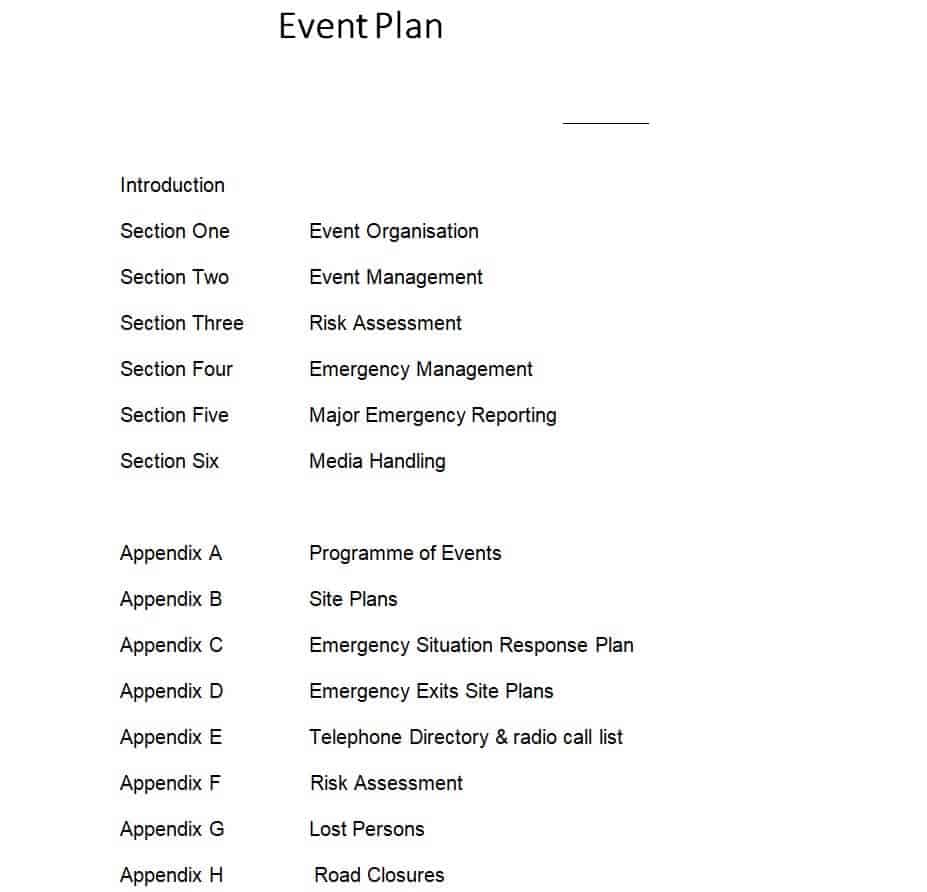
Month Wise Event Schedule Planner Template
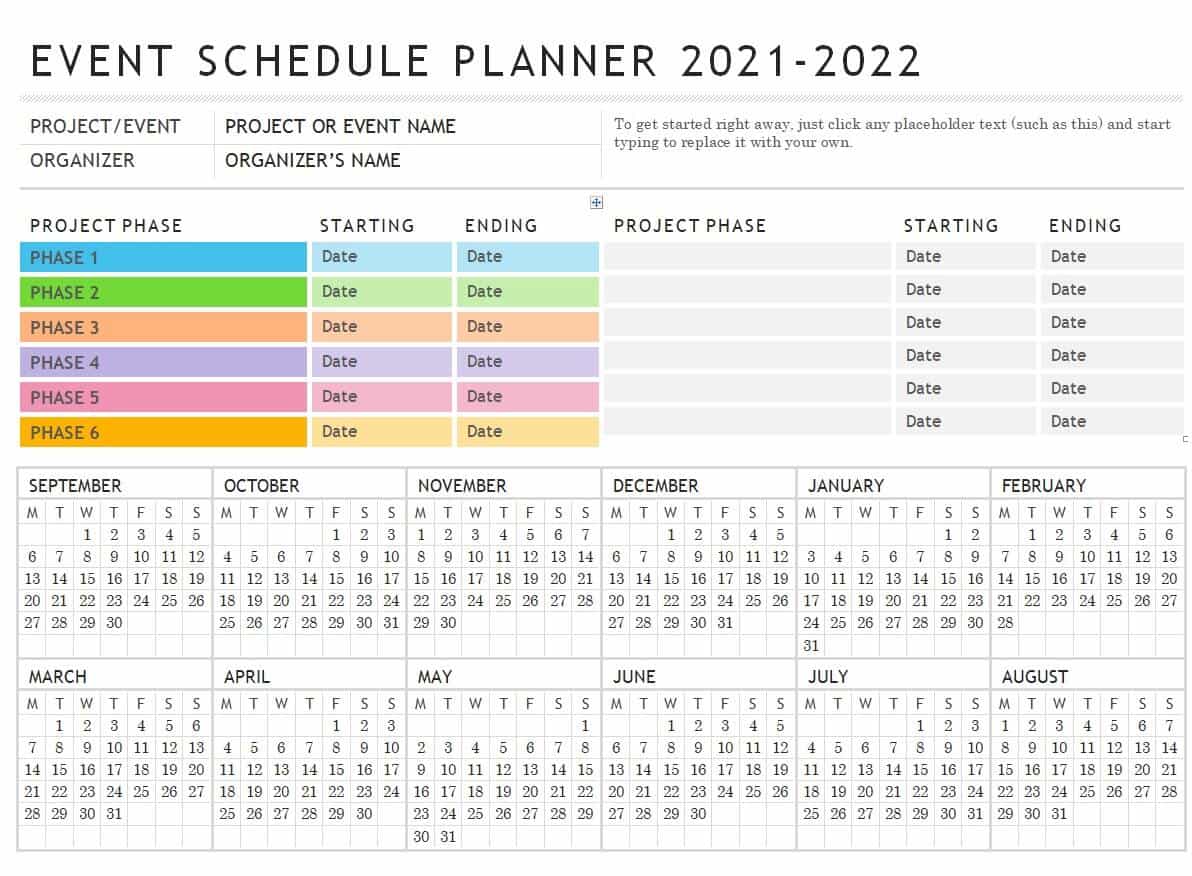
Printable Event Planning Schedule EXCEL Template
Special Event Planning Template
How to Plan an Event From Start to Finish
Start by defining the purpose of the event and a realistic date range, since the date affects venue availability, vendor pricing, and how much lead time you have. Next, set the budget before you fall in love with any single vendor or venue — this keeps every later decision anchored to what you can actually spend, with a contingency amount set aside from the start.
Once the budget is set, choose and book the venue, since almost every other decision, from catering to décor, depends on the space you have. From there, build your vendor list and lock in contracts and deposits early, particularly for popular dates when photographers, caterers, and venues book up months ahead. Build the guest list alongside this and send invitations with enough lead time to get accurate RSVP counts, since headcount drives catering orders, seating, and rentals.
With the big pieces booked, turn to the run-of-show: a detailed, timed schedule of the event day, from setup through breakdown, that you share with vendors and anyone with a day-of responsibility. In the final week, confirm every vendor, print or share the run-of-show, assign day-of point people, and do a last check of the guest count and any special requests. On the day itself, work from the checklist and timeline rather than memory, so nothing depends on any one person remembering every detail.
Common Event Planning Mistakes to Avoid
Even experienced planners run into the same handful of problems. Skipping a contingency budget is one of the most common — unexpected costs such as overtime staff, weather-related changes, or last-minute vendor substitutions come up on almost every event, and without a buffer they eat directly into other categories. A timeline with no slack is another frequent issue: back-to-back scheduling with no buffer between activities means one late vendor or delayed arrival throws off everything after it.
Forgetting to review vendor contracts and deposit deadlines closely can also cause real problems, since missed deposit dates can lose you a venue or vendor entirely. Finally, unclear day-of responsibilities — nobody quite sure who is handling setup, guest questions, or vendor coordination — is one of the most avoidable mistakes, and it is solved simply by writing down, in the plan itself, exactly who owns each task on the day.
Tips for Keeping Your Event On Budget and On Schedule
Track every cost against the budget template as soon as it is confirmed, not after the event, so you can see overspending while there is still time to adjust. Build in a contingency line of extra budget rather than assuming every quote will hold, and revisit the timeline regularly in the weeks leading up to the event rather than only once at the start. Confirm vendors a second time close to the event date, keep a single shared version of the run-of-show so everyone is working from the same schedule, and build short buffers between segments of the day so a small delay does not cascade into a bigger one.
Frequently Asked Questions
How far in advance should event planning start?
For weddings and large corporate events, six to twelve months is typical, since venues and popular vendors book far ahead. Smaller parties and simple gatherings can often be planned in four to eight weeks.
What should be included in an event budget template?
A solid budget template lists every cost category — venue, catering, décor, entertainment, staffing, and rentals — alongside the estimated cost, the actual cost once confirmed, and a contingency line for unplanned expenses.
How do I track RSVPs effectively?
Use a single guest list template with columns for invited, RSVP status, headcount, and any dietary or accessibility notes, and update it as responses come in rather than tracking replies across separate emails or texts.
What’s a run-of-show document?
A run-of-show is a timed, minute-by-minute schedule of everything happening on the event day, from vendor arrival and setup through the last activity and breakdown, shared with everyone who has a day-of responsibility.

