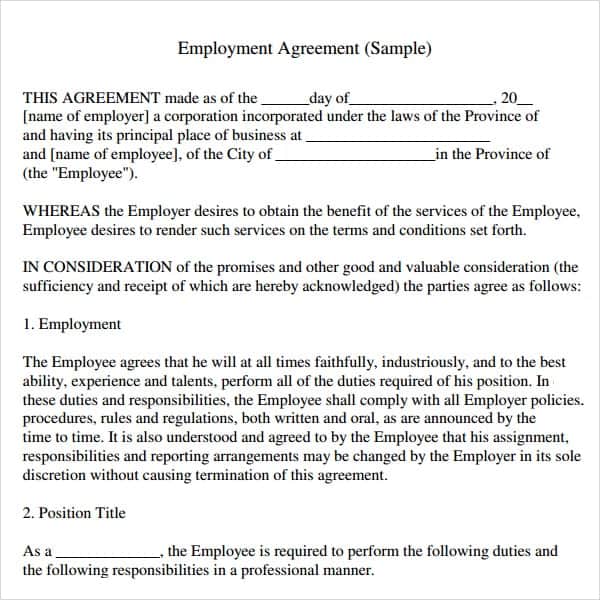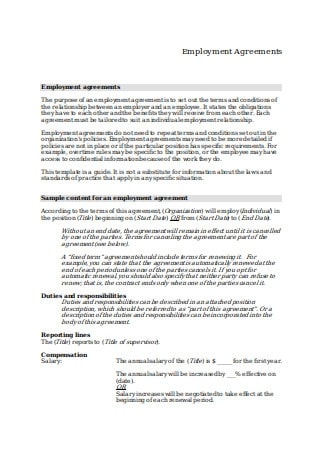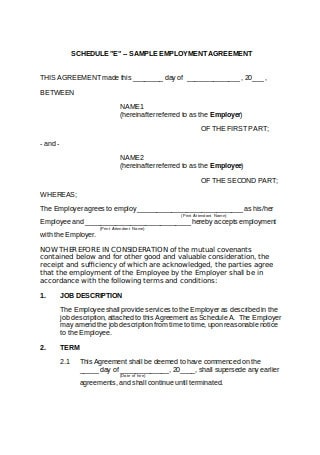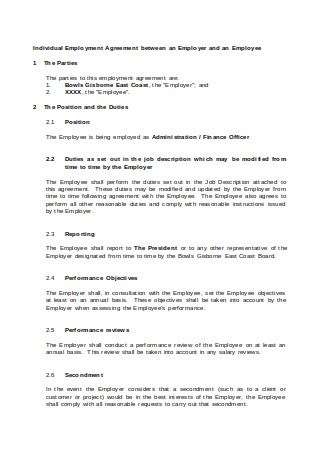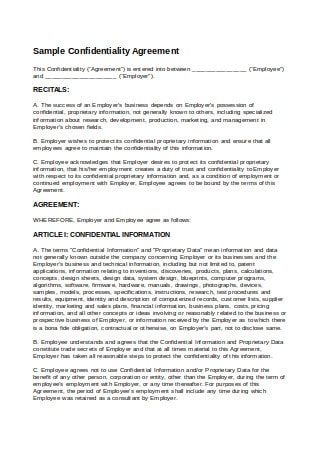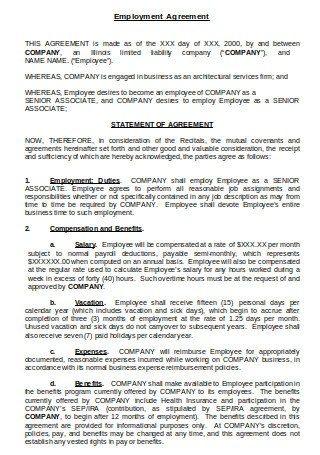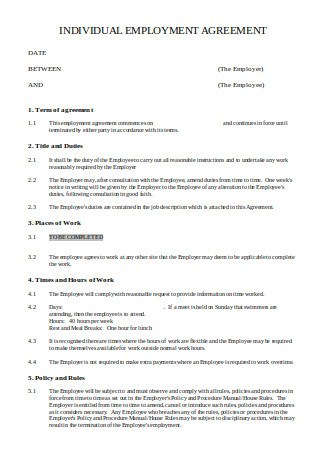

Do download these free Employment Agreement Templates here. It will help you making good agreement. An Employment Agreement is a class of agreement utilized in the law of the labor in order to attribute responsibilities and right between the companies or parties to a good deal. On the one end places an ‘employee’ who is appointed by an ‘employer’. In fact, it has developed out of the traditional master servant law or rule, utilized before the 20th century. Generally, this agreement signifies a relationship of social subordination and financial dependence. This contract essentially defined to state the same in the form of ‘contract of service’. An agreement of service has conventionally been differentiated from an agreement for the supply of services or products, an expression modified to entail the dividing line between an individual who is ‘employed’ and an individual who is ‘self employed’. If you own a business and wants to hire some employees, it is important to create this agreement. Important points are mentioned in Employment Agreement Templates.
An employment agreement is a legal formal agreement between an employer and an employee which indicates the terms and conditions of the relationship between both parties. It also describes the compensations and expectations of both parties. An employment agreement generally include nature of job and responsibilities, salary, other benefits by company, paid vacations, bonuses and other important information regarding job. Written employment agreement make sure that employees know what an employer expect from them and what their duties are, and also protects both involved parties. Different states have a slandered form of employment agreement and the law requires you to have a written employment agreement. You and your employee should both sign the agreement so there is no dispute in future about what was promised or agreed on. If you need some help to prepare an employment contract yourself, you should use employment agreement templates that are available on internet for free of cost.
Key Sections Every Employment Agreement Should Cover
A well-drafted employment agreement is more than a formality – it is the document both sides will refer back to if there is ever a disagreement. At minimum, a solid template should cover the job title and a clear description of duties, the start date and whether the position is full-time, part-time, or fixed-term, compensation (salary or hourly rate, pay frequency, and any overtime rules), benefits such as health insurance, retirement contributions, and paid time off, working hours and location, confidentiality and non-disclosure obligations, intellectual property ownership for work created on the job, grounds and notice periods for termination, and any non-compete or non-solicitation clauses that apply after the employee leaves. Leaving any of these out is one of the most common reasons employment disputes end up in front of a labor board or a court.
Who Uses These Templates, and When
Small business owners hiring their first employee, HR departments standardizing paperwork across a growing company, staffing agencies placing contract workers, and managers who need a quick, compliant document for a new hire all rely on employment agreement templates. They are especially useful when a company does not have in-house legal counsel and needs a starting point that already reflects common industry practice, rather than drafting a contract from a blank page. Freelancers and independent consultants sometimes adapt a simplified version of these templates too, when a client wants a signed agreement before work begins.
How to Customize the Template Step by Step
- Download the format that matches your software (Word, PDF, or the zipped package) and open it in your editor of choice.
- Replace the placeholder company name, address, and employee details with the real information for this hire.
- Fill in the exact job title, department, and a short but specific list of duties – vague descriptions cause confusion later.
- Enter the agreed salary or wage, pay schedule, and any bonus or commission structure.
- Add your state or country’s required clauses, such as minimum notice periods, statutory leave entitlements, or at-will employment language where it applies.
- Review the confidentiality, non-compete, and termination sections and adjust the wording so it matches what you can actually enforce in your jurisdiction.
- Have both the employer’s representative and the new employee read the full document, sign it, and keep a copy on file before the employee’s first day.
Common Mistakes to Avoid
- Copying a clause from an unrelated industry or a different country without checking whether it is legally valid where you operate.
- Leaving compensation or benefit terms vague, which invites disputes over what was actually promised.
- Forgetting to date and sign the agreement before the employee starts working.
- Using a non-compete clause that is broader than what local law allows, which can make the entire clause unenforceable.
- Not updating the template when a role, salary, or reporting line changes – an outdated agreement can create confusion during a later dispute.
Best Practices
Keep the language plain and specific rather than overly formal – both parties need to actually understand what they are agreeing to. Store signed copies securely, ideally in both digital and physical form, and give the employee their own copy for reference. Revisit the template periodically so it reflects current employment law, since minimum wage rates, leave entitlements, and notice requirements change from time to time. If your company hires across multiple states or countries, keep a separate version of the template for each jurisdiction rather than trying to make one document cover every case.
Frequently Asked Questions
Is an employment agreement legally required?
Not in every jurisdiction, but many states and countries require certain terms to be provided in writing, and having a signed agreement makes it far easier to resolve disagreements later.
Can I use the same template for every employee?
You can use the same base template, but you should still customize the job title, duties, compensation, and any jurisdiction-specific clauses for each individual hire.
What is the difference between an employment agreement and an offer letter?
An offer letter is a short, informal communication extending a job offer, while an employment agreement is the full, binding document that sets out detailed terms and conditions.
Do both the employer and employee need to sign?
Yes. A signature from both sides confirms mutual agreement to the terms and is what makes the document enforceable if a dispute arises.
Note: These templates are provided as a general starting point and are not a substitute for legal advice. Employment law varies significantly by state and country, so it is a good idea to have an employment lawyer or HR professional review the final agreement before you ask an employee to sign it.
Download Free Employment Agreement Templates:


More Employment Agreement Templates: