

Certificate of Completion is a document issued and certified by authorities as a reward on accomplishment of a special task, training session, coursework and any other educational goal. You can download free these Certificate of Completion Templates. It shows that the holding person complete his special task, project or a training session by following all terms and conditions. Sometimes many construction companies issue a certificate of completion when a specific construction project is completed by fulfilling all the terms and conditions. Certificate of completion may include name of the person, company or institute name, nature of task or training, date of issue, signatures of authorized person and special remarks. It should be prepared carefully and in professional manner. If you wish to prepare a certificate of completion and have no idea how to prepare, then certificate of completion template is a best tool to utilize. It is simply an outline to prepare a perfect certificate of completion yourself. We do hope that you will like these certificate of completion templates at this page.
The document given by an institution to the students for completing the course is known as certificate of completion. Certificate of Completion Template is useful item for download. The certificate includes the name of the student, duration of study, name of institution and remarks given by the head of department. The certificate of completion can be used for getting a good job. This certificate shows the experience of an individual in the subject he/she has chosen. The certificate of completion is given by the principal according to performance of student. The certificate of completion indicates that the person has the perfect knowledge about the subject. This certificate is given by an employer to the trainee for completing the tasks in a right way. The person having the certificate of completion can start his/her own business.
What Is a Certificate of Completion and Why It Matters
A certificate of completion is a formal document that confirms someone has finished a defined course, training program, workshop, or project according to its required standards. Unlike a diploma or degree, it does not represent years of accumulated coursework — it simply verifies that a specific, bounded body of work was finished. For recipients, a certificate of completion is proof they can point to on a resume, in a portfolio, or during a performance review. For the organization awarding it, the certificate signals that its programs meet a consistent standard and gives graduates a tangible, shareable record of their achievement. Because completion certificates are quick to design and easy to personalize, they are widely used across schools, corporate training departments, online course platforms, and community programs of every size.
You can also browse our full collection of free certificate templates for more ready-to-use designs.
Who Issues and Receives a Certificate of Completion
Certificates of completion are issued by any organization that runs a structured program with a clear start and finish. Schools and universities use them for short courses, seminars, and continuing-education credits that fall outside a formal degree. Corporate training departments issue them after employees complete onboarding, compliance training, or skills workshops. Independent trainers, coaches, and online course creators use them to give paying students something concrete to show for their time and effort. Construction firms and contractors issue completion certificates when a project or phase is finished according to the agreed terms and conditions. On the receiving end are students, employees, workshop participants, contractors, and program graduates — anyone who has met the requirements of a defined training program or project and needs a record that says so.
Key Elements Every Certificate of Completion Should Include
A certificate only does its job if it contains the right information, laid out clearly enough to be read and verified at a glance. At minimum, a well-designed certificate of completion should include:
- The full name of the recipient, spelled exactly as it should appear
- The title of the program, course, project, or training that was completed
- The date the requirements were finished, and where relevant, the program’s date range
- The name of the issuing organization, school, or company, along with its logo
- A signature line for the instructor, supervisor, or authorized official
- An optional certificate number or unique ID for later verification
Including these elements keeps a certificate looking professional and makes it easy for anyone — an employer, a licensing board, or a client — to confirm that it is genuine.
Download free Certificate of Completion Templates:
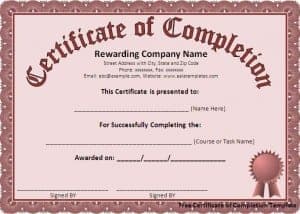

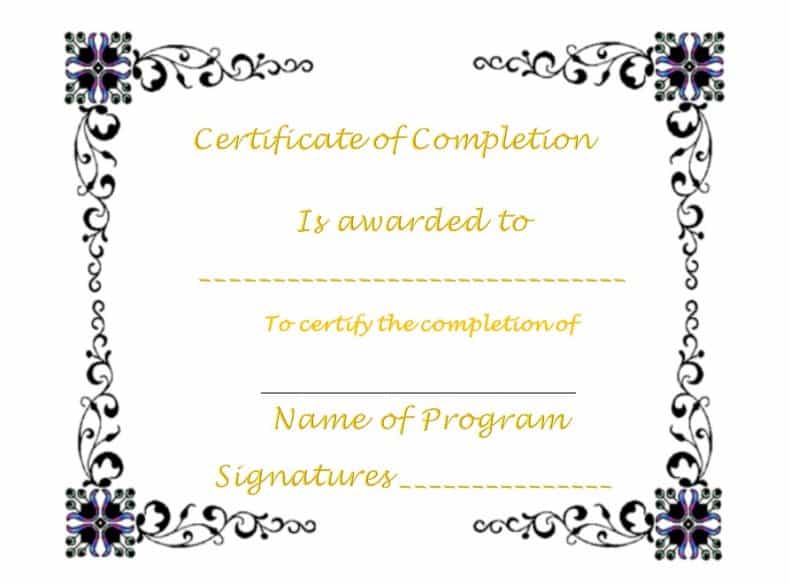
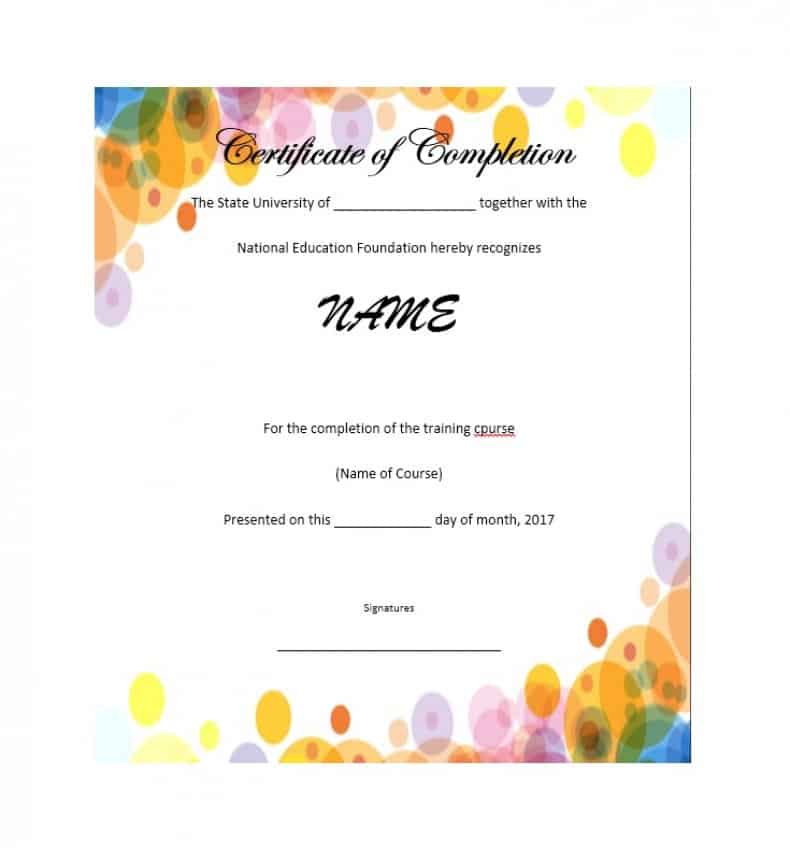
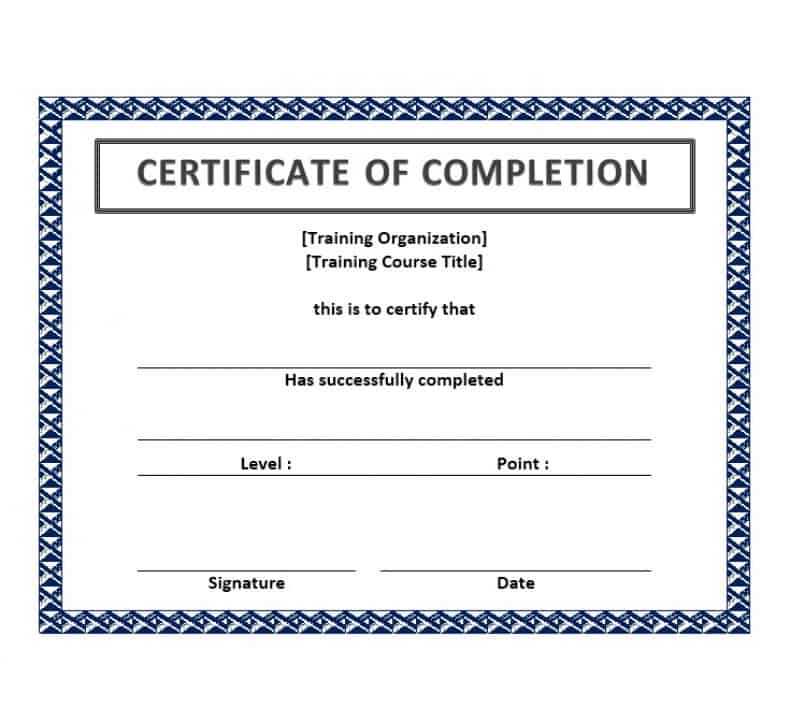
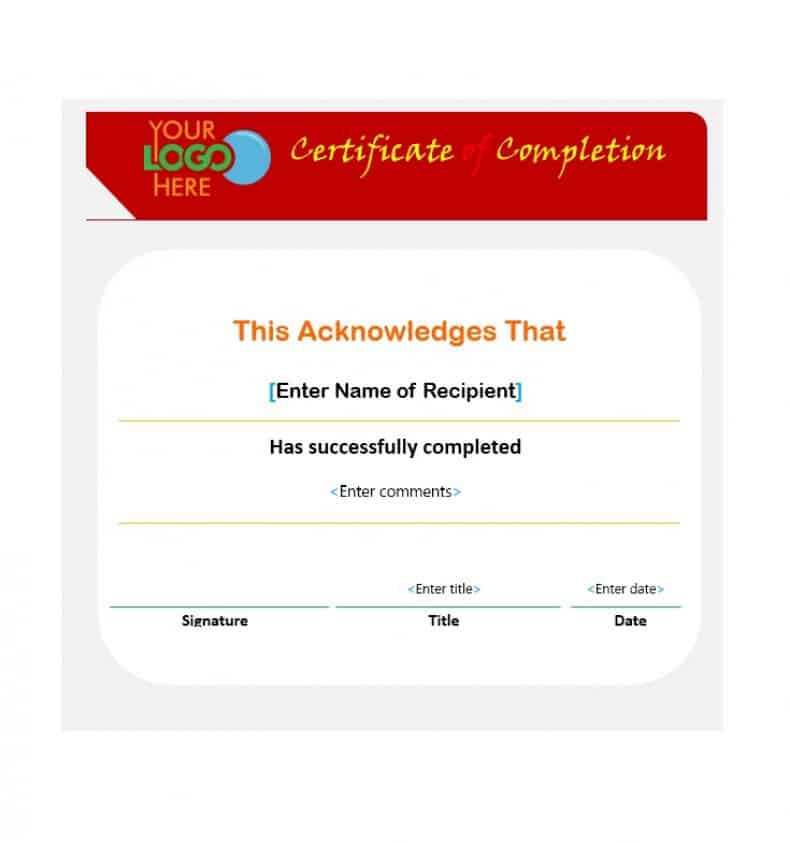

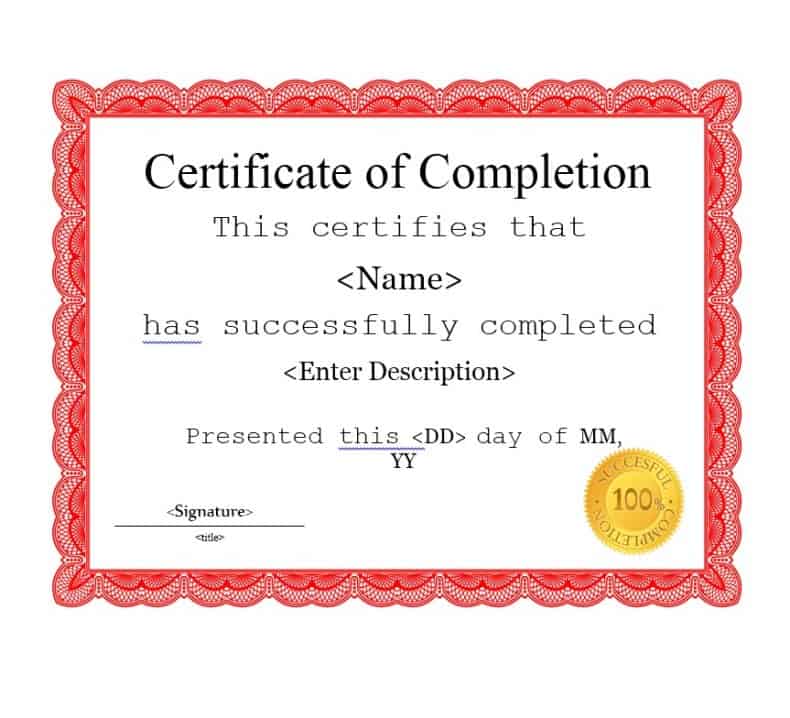
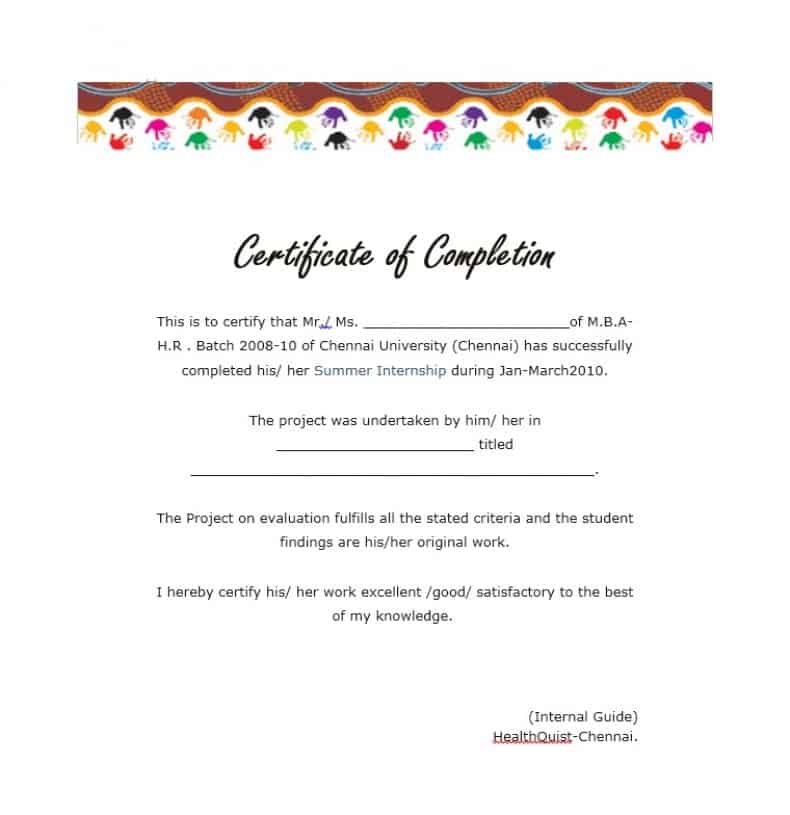
How to Customize and Issue a Certificate of Completion
Turning one of the templates above into a finished certificate takes only a few steps:
- Open the downloaded file in Word or your preferred editor and choose the template whose layout matches the tone of your program.
- Replace the placeholder title with your organization’s name and, if you have one, add your logo.
- Enter the recipient’s full name, the exact title of the course or project, and the completion date.
- Add the name and title of whoever is signing, and leave room for a physical or digital signature.
- If you are issuing many certificates, assign each one a unique certificate number so it can be looked up or verified later.
- Proofread every field — names and dates are the first thing a recipient checks — then print on quality cardstock or export as a PDF for digital delivery.
Common Mistakes to Avoid
Even a well-designed template can look unprofessional if it is filled out carelessly. Watch for these common mistakes:
- Misspelling the recipient’s name — always confirm spelling against an official source before printing
- Leaving the completion date blank, or using an inconsistent date format across a batch of certificates
- Skipping the signature line or an official seal, which makes a certificate look unofficial
- Using different fonts, colors, or layouts across certificates issued for the same program
- Forgetting to double-check the course or program title against the original enrollment or project records
Tips for a Meaningful, Professional Certificate
A certificate of completion carries more weight when it feels intentional rather than generic. Choose a template whose style matches the seriousness of the program — a clean, formal layout for professional training, a warmer design for a community workshop. Print on heavier paper or export at high resolution so the certificate looks good framed or scanned. Where possible, personalize the wording with a short line about what the recipient accomplished, rather than only their name and a date. Finally, keep a digital record of every certificate you issue, including its certificate number if you use one, so you can reissue or verify it later without starting from scratch.
Frequently Asked Questions
Are certificates of completion legally recognized credentials?
Generally, no. A certificate of completion documents that someone finished a specific course or project; it is not a legally regulated credential the way a professional license or accredited degree is. That said, many employers and clients treat it as valid proof of training.
What’s the difference between a certificate of completion and a diploma?
A diploma typically represents a full program of study, often tied to an accredited institution and a recognized qualification. A certificate of completion covers a narrower, shorter body of work, such as a single course, workshop, or project.
Should certificates include a unique ID number?
It’s a good practice, especially for training providers issuing many certificates. A unique certificate number lets you or a third party verify authenticity later without relying on memory or paper records.
Can certificates of completion be issued digitally?
Yes. Many organizations now generate certificates as PDFs and deliver them by email, alongside or instead of a printed copy. The same key elements — name, program, date, issuer, and signature — still apply.
Related templates you may find useful: free share/stock certificate templates, free salary certificate templates and free medical certificate templates.