

You can download Issue List Templates in Microsoft Excel here on this page for free and all these Issue List Templates are designed by professionals. An Issue List is a list of problems or issues meeting the chosen project, search keyword, issue tray, and filters. It provides a method to see the unlocked issues or problems for a project. It also displays unlocked issues or problems by default. Custom and standard areas can be utilized to develop a custom query. Once the filter is located, click on the tick to restore the issue list. Click on delete to clear the filters. It is feasible to choose multiple values at a time for a particular area by pressing the given button. This will transfer the menu of the drop-down in a selection list. In order to insert in the selection list, utilize the Ctrl key on the keyboard. A form allows you to provide it a name and choose the columns that you wish to be presented on the issue list for the given query.
An issue list is a list that may contain a set of issues faced during a project. An issue list is the best way in project management to track and look at the primary issues for a task or project. It is also known as an issue log. It is the best instrument to find and solve issues in time in order to complete projects and tasks effectively. Issue logs may also identify customer requests and remarks about the different problems that can be found in the current strategy. Many project managers prepare issue lists by using Microsoft software. Nowadays, a large number of software available in the market that can help you a lot in this matter. Issue list templates are also available on the internet that can be used to prepare a seamless issue list for your organization. It is easy to download issue list excel templates and to make changes as per your needs.
Download Issue List Excel Templates Here
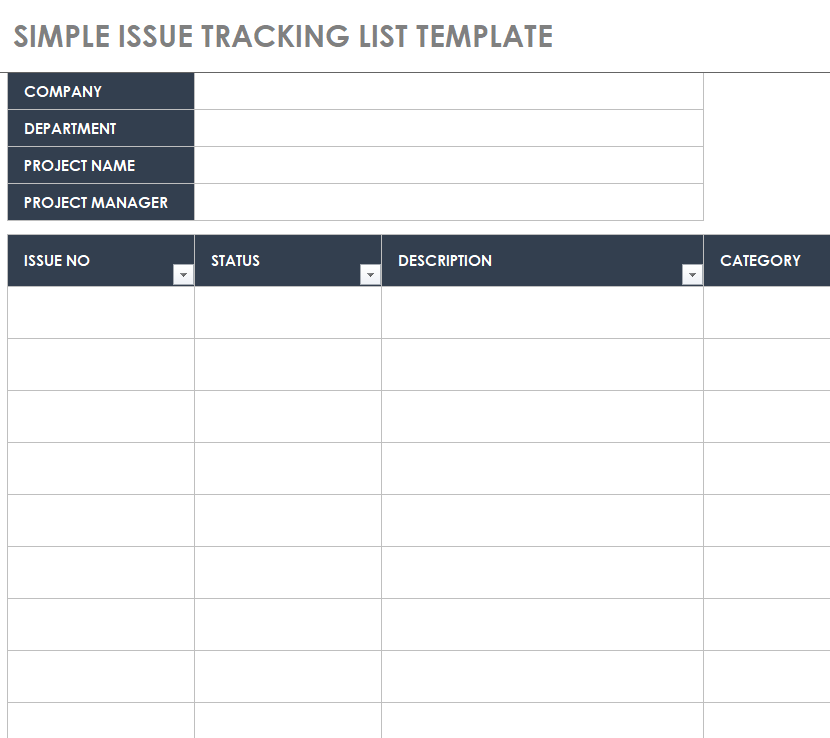
Simple Issue Tracking List Template

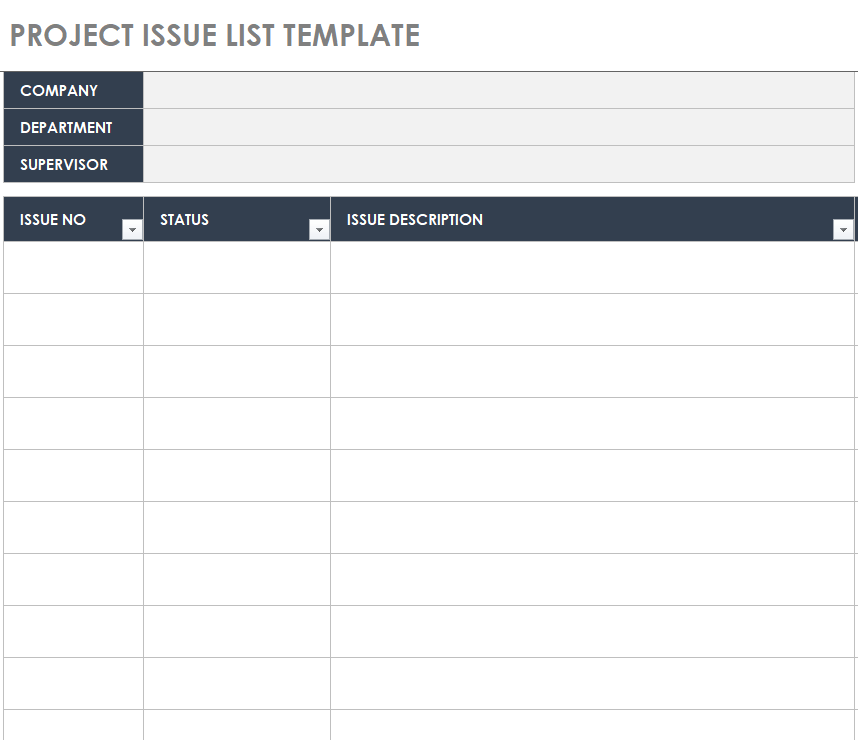
Project Issue List Excel Template
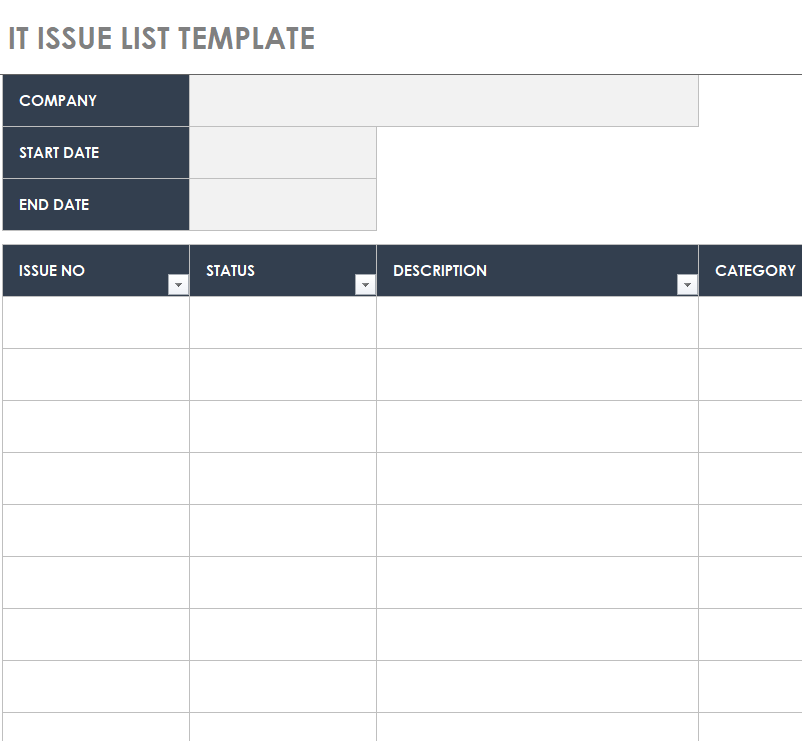
Blank Issue List Sample for an IT Company
Detailed Issue Log List Template for a Project
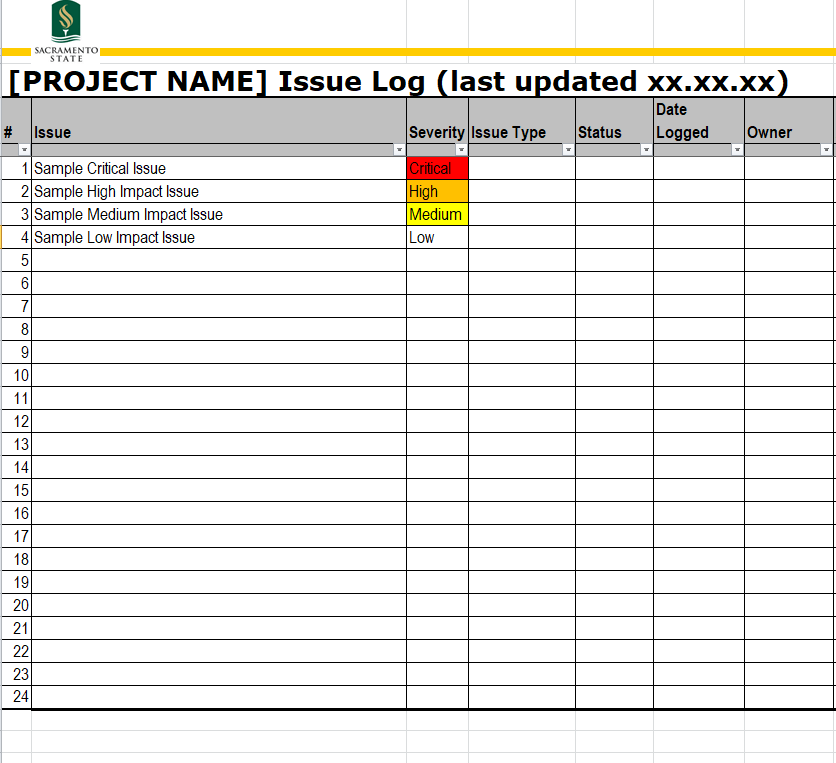
Free Customizable Issues List Word Template
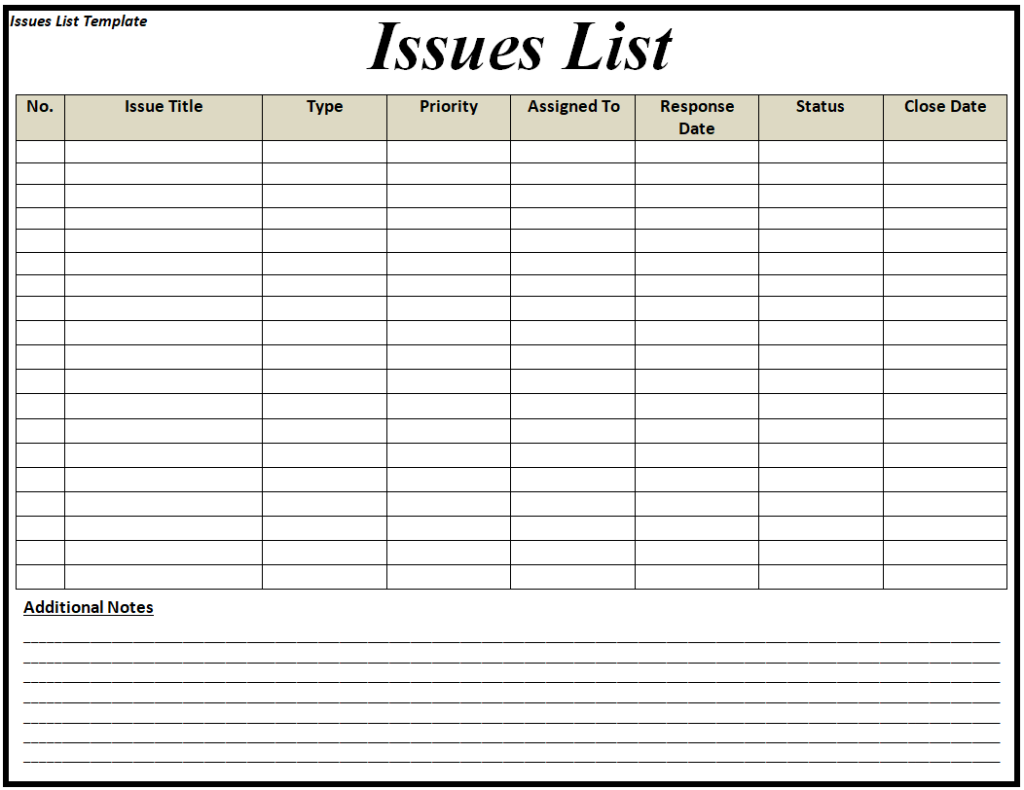
Agency’s Issue List Template MS Excel
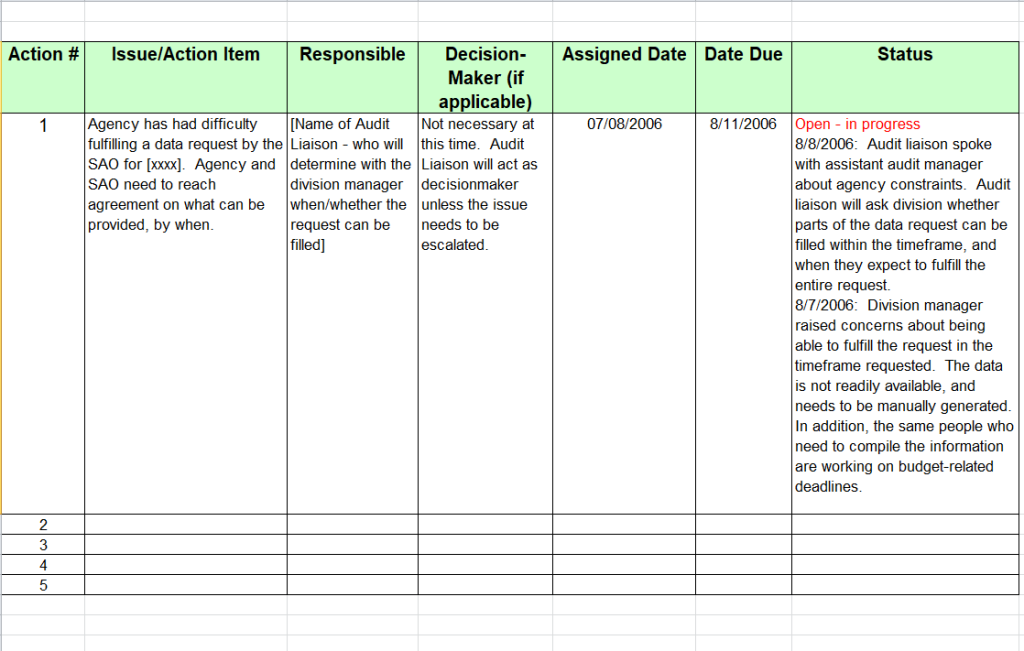
Detailed Issue Log List Template
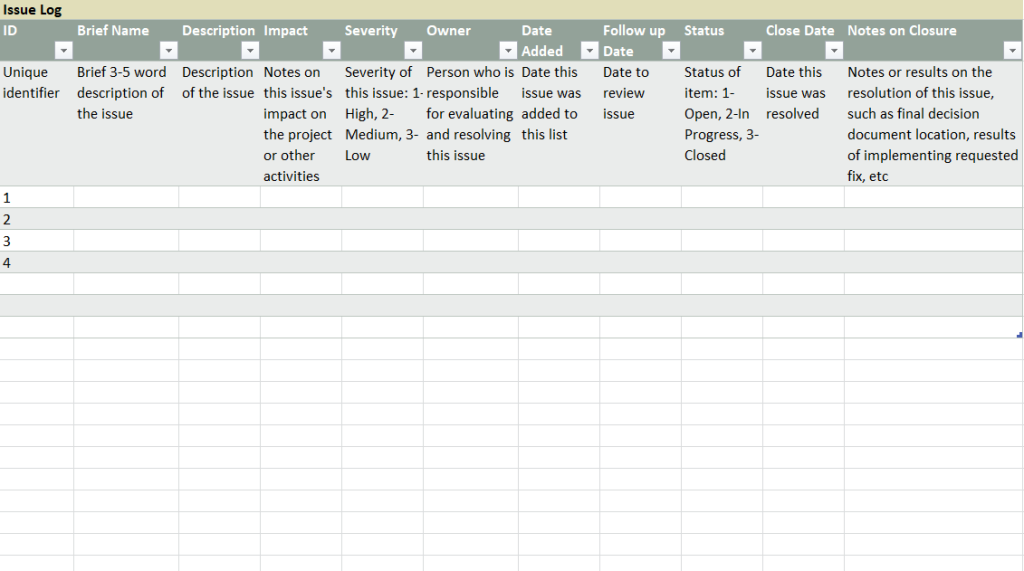
Issue Management Log Example Spreadsheet
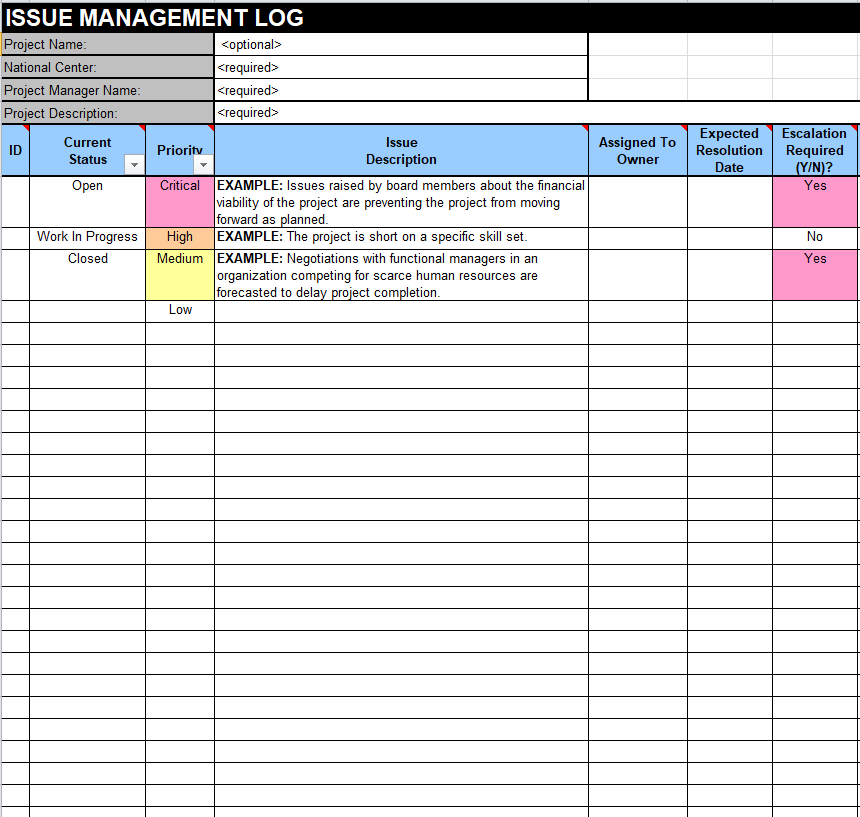
Department’s Issue Tracking List Template in XSLX Format
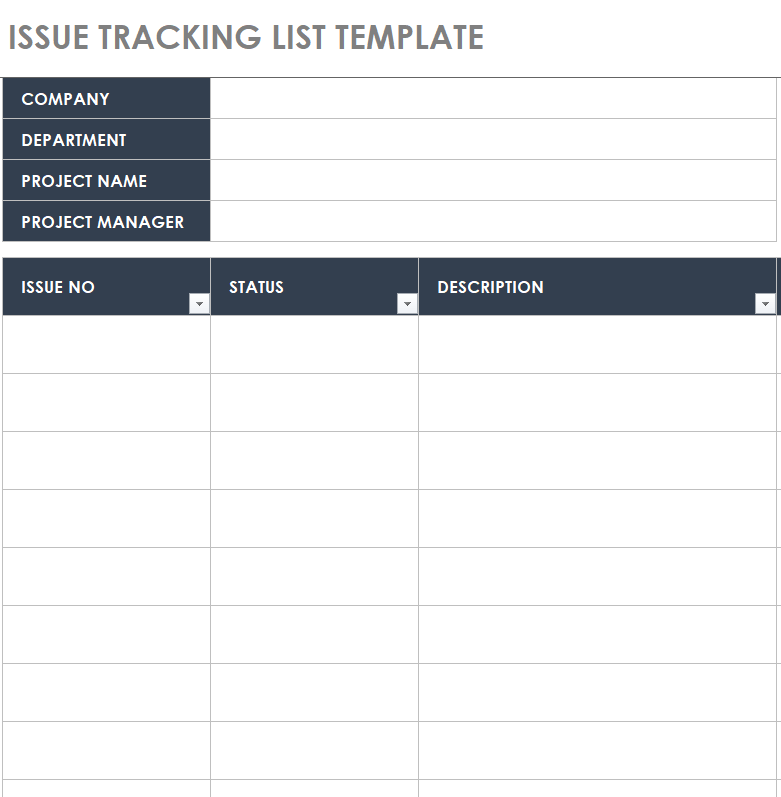
Free Editable Issue Tracking List Spreadsheet Template
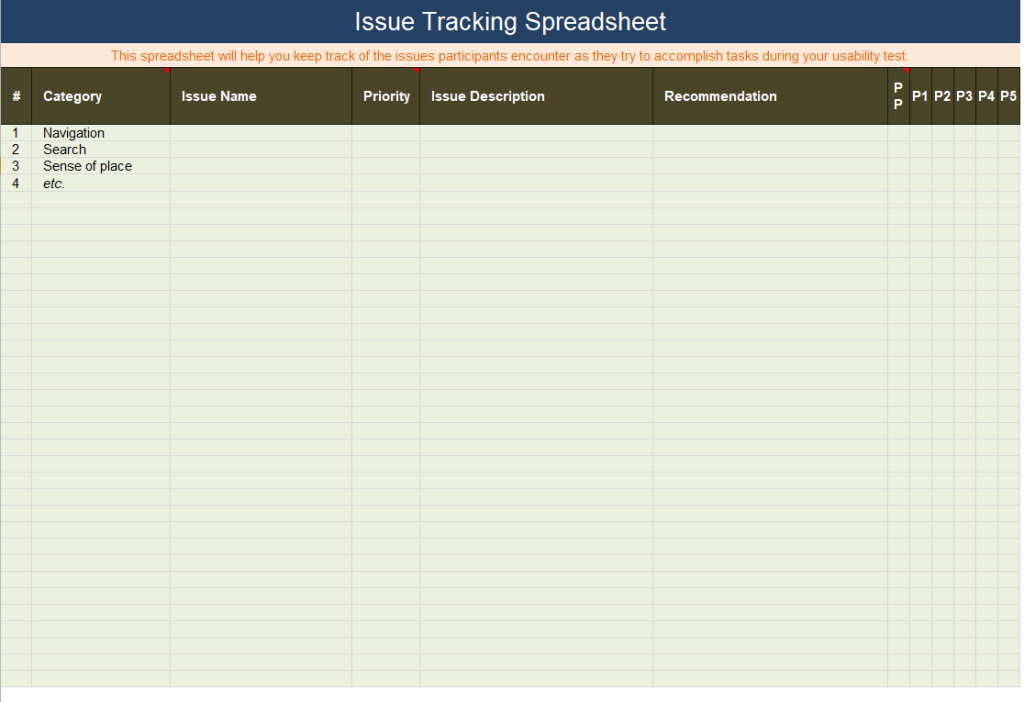
What Is an Issue List Template?
An issue list template is a pre-built spreadsheet that gives a project team a single, structured place to record, describe, and track every problem that comes up while a project is running. Rather than emailing issues back and forth or scattering them across chat threads and sticky notes, the team logs each one as a row in the sheet, with columns for who reported it, how serious it is, who owns the fix, and whether it has been resolved. Because the layout is already built, opening an Excel issue list template saves the time of designing columns and formulas from scratch, and it gives everyone on the team a consistent format to work from from day one.
The purpose of the template goes beyond simple record-keeping. A well-maintained issue list turns scattered problems into a visible, prioritized queue, which makes it possible to see patterns, such as one module of a project generating far more defects than the rest, or one vendor consistently causing delays. That visibility is what lets a project manager make decisions about where to put extra attention, rather than reacting to whichever issue was raised most recently.
Who Uses an Issue List Template?
Project managers are the most frequent users, since tracking open issues against scope, budget, and timeline is a core part of the job. Software and IT teams rely on issue lists to log bugs, configuration problems, and support tickets discovered during development or testing. Construction and engineering teams use them on site to record punch-list items, safety concerns, and defects found during inspections. Operations and facilities teams track equipment faults and maintenance requests the same way, and customer-facing teams use an issue log to capture recurring complaints so the underlying cause can be fixed rather than treating each complaint as a one-off. In every case, the appeal of the Excel format is the same: no special software is needed, the file can be shared by email or a shared drive, and anyone comfortable with a spreadsheet can update it immediately.
Key Elements of a Good Issue List Template
Not every issue list needs to be complicated, but a few columns make the difference between a log that actually gets used and one that gets abandoned after a week. At minimum, look for or build in the following:
- Issue ID: a unique number for each row so an issue can be referenced quickly in meetings or emails without describing it from scratch.
- Description: a short, specific summary of what went wrong, written so someone unfamiliar with the situation can understand it.
- Date raised: when the issue was first logged, which is essential for measuring how long problems stay open.
- Reported by: the person or team who flagged it, in case follow-up questions come up.
- Priority or severity: a simple rating (such as low, medium, high, or critical) that tells the team what to work on first.
- Status: where the issue currently stands, for example open, in progress, on hold, or closed.
- Owner: the specific person responsible for resolving the issue, not just a department or team name.
- Target resolution date: a realistic deadline that keeps the issue from drifting indefinitely.
- Resolution notes: a brief record of how the issue was actually fixed, which becomes useful reference material for similar problems later.
Some teams add extra columns for the affected project phase, related documents, or an estimated cost of the fix, but the nine fields above cover what most issue lists need to function well.
How to Create and Use an Issue List Template in Excel
Setting up and running an issue list is a short process once the template is in hand. The steps below work whether you build the sheet from scratch or start from one of the templates on this page.
- Download and open the template. Choose the layout above that best matches your project, then save a copy for the specific project or reporting period you are tracking.
- Set up the column headers. Confirm the template includes the fields your team actually needs (ID, description, priority, owner, status, dates) and remove any columns that do not apply to your situation.
- Turn the range into an Excel Table. Select the data and use Insert > Table so the sheet gains sortable, filterable headers automatically, which makes the list far easier to work with as it grows.
- Add data validation for key columns. Use Excel’s Data Validation feature to turn Priority and Status into drop-down lists, so every entry uses the same wording instead of free-text variations that are hard to filter later.
- Log issues as they arise. Add a new row the moment an issue is identified, while the details are still fresh, rather than trying to reconstruct them from memory at the end of the week.
- Assign an owner and a target date immediately. An issue without a named owner tends to sit untouched, so this step should happen as soon as the row is created, not after a delay.
- Review the list on a set schedule. A short weekly (or, for fast-moving projects, daily) review keeps the list current and gives the team a chance to reprioritize as new issues come in.
- Close out resolved issues with notes. Mark the status as closed and record how the issue was fixed, so the log doubles as a reference for anyone who hits a similar problem later.
Common Mistakes to Avoid
A handful of habits are responsible for most issue lists falling out of use. Writing vague descriptions, such as “system not working,” forces whoever reads the entry later to go track down the original reporter for details that should have been captured the first time. Leaving the owner field blank is just as damaging, since an issue with no one clearly responsible for it rarely gets resolved on its own. Letting the list grow without a regular review is another common failure point: issues pile up, priorities go stale, and the sheet stops reflecting what the team is actually working on. Teams also frequently skip resolution notes, which means the same type of issue gets solved from scratch every time it reappears instead of building on what was learned before. Finally, tracking issues in more than one place, such as a spreadsheet and a separate chat thread, splits the information and guarantees that something gets missed.
Practical Tips for Getting the Most Out of Your Issue List
Keep the priority scale small, three or four levels are usually enough, so that ranking an issue is quick rather than a judgment call that slows people down. Sort or filter the sheet by priority and status at the start of every review so the most urgent items are always the first thing the team sees. Use conditional formatting to color-code overdue items or unassigned rows, which makes gaps in ownership visible at a glance rather than requiring someone to scan every row. Archive closed issues into a separate tab instead of deleting them outright, since a history of resolved problems is genuinely useful when a similar issue turns up on a future project. If several people update the list at once, store it on a shared drive or in OneDrive/SharePoint so everyone is working from the same current version instead of emailing copies back and forth.
Frequently Asked Questions
Is an issue list the same as a risk register?
No. A risk register tracks things that might happen in the future, along with their likelihood and potential impact, so the team can plan ahead. An issue list tracks problems that have already happened and need to be resolved now. Some project managers keep both, and occasionally move an entry from the risk register to the issue list once a predicted risk actually occurs.
How often should an issue list be updated?
New issues should be logged the moment they are identified, not batched up for later. The full list is typically reviewed on a set cadence, weekly for most projects, daily for fast-moving or high-risk ones, so priorities and ownership stay current and nothing sits forgotten.
Can this Excel template be used for a small team or a personal project?
Yes. The templates on this page scale down easily, a small team or a single freelancer can use only the core columns (description, priority, owner, status) and skip the more detailed fields. The structure still helps even at a small scale, because it keeps issues out of scattered notes and email threads.
What is the difference between an issue and a bug?
A bug is a specific type of issue: a defect in software that causes it to behave incorrectly. “Issue” is the broader term and can cover a bug, but also a missed deadline, a miscommunication, a resource shortage, or any other problem that needs to be tracked and resolved. Software teams often use both terms, logging bugs in a dedicated tracker and using a general issue list for everything else.

![12+ Sample Satisfaction Survey Templates [WORD, PDF]](https://www.docspile.com/wp-content/uploads/2022/03/satisfaction-survey-template-66887401-150x150.jpg)