

Use the same reporting period for every figure. A monthly income statement can show whether sales covered costs in March, while a comparison column lets you see what changed since February.
How to Prepare an Income Statement Step by Step
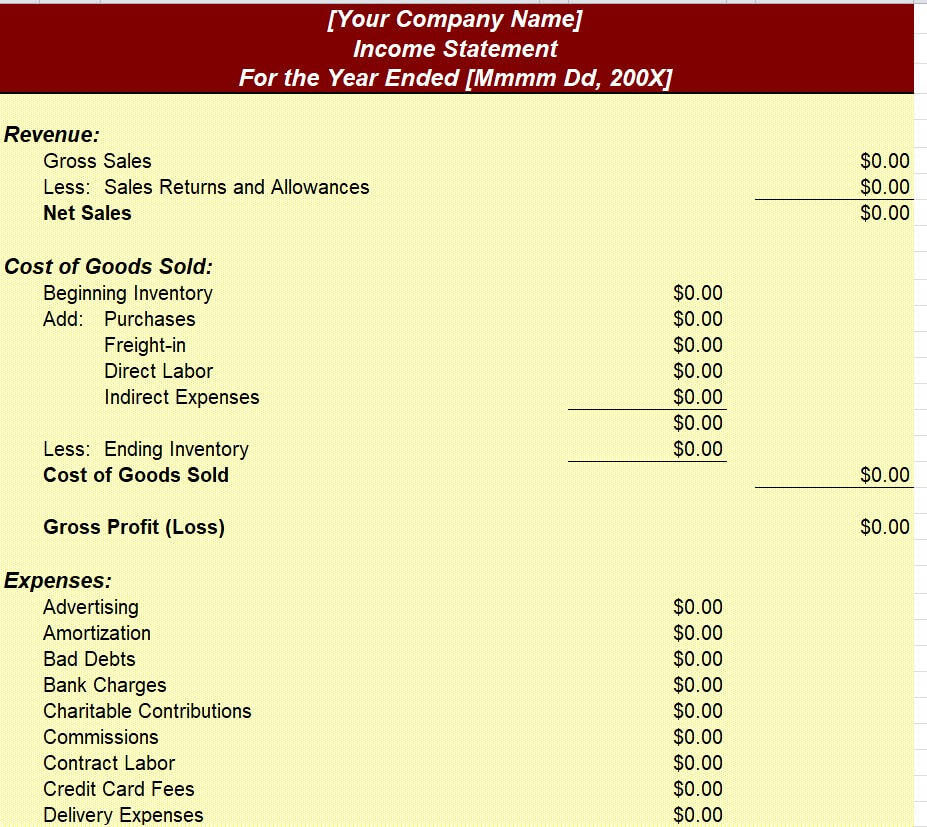
Once you have picked one of the templates below, follow these steps to fill it in accurately. Working through the process in order helps you avoid missing a line item or double-counting an expense.
- Choose the reporting period. Decide whether you are preparing a monthly, quarterly, or annual income statement, and make sure every figure you enter falls within that same period.
- Gather your source documents. Collect sales records, invoices, receipts, payroll reports, and bank statements covering the period so every number can be traced back to a source.
- Record total revenue. Add up all sales and other operating income earned during the period, before subtracting any costs.
- Enter the cost of goods sold. List the direct costs of producing what you sold, then subtract this from revenue to calculate gross profit.
- List operating expenses. Break out rent, wages, utilities, marketing, insurance, and other overhead costs into clear categories rather than one lump sum.
- Calculate operating income, then net income. Subtract operating expenses from gross profit, then factor in interest, other income or expenses, and taxes to arrive at the final net income figure.
- Review and double-check the totals. Confirm that each subtotal adds up correctly and that the figures are consistent with your other financial records before sharing the statement.
Who Uses an Income Statement?
A wide range of people rely on the income statement to make decisions. Business owners use it to track whether the company is actually profitable and to decide where to cut costs or invest further. Accountants and bookkeepers use it as the foundation for tax filings, budgeting, and other financial statements such as the balance sheet and cash flow statement. Investors and lenders study the income statement before putting money into a business, since it shows whether the company can generate consistent profit and service debt. Company managers also use it internally to compare actual results against budgets and to spot trends across multiple accounting periods.
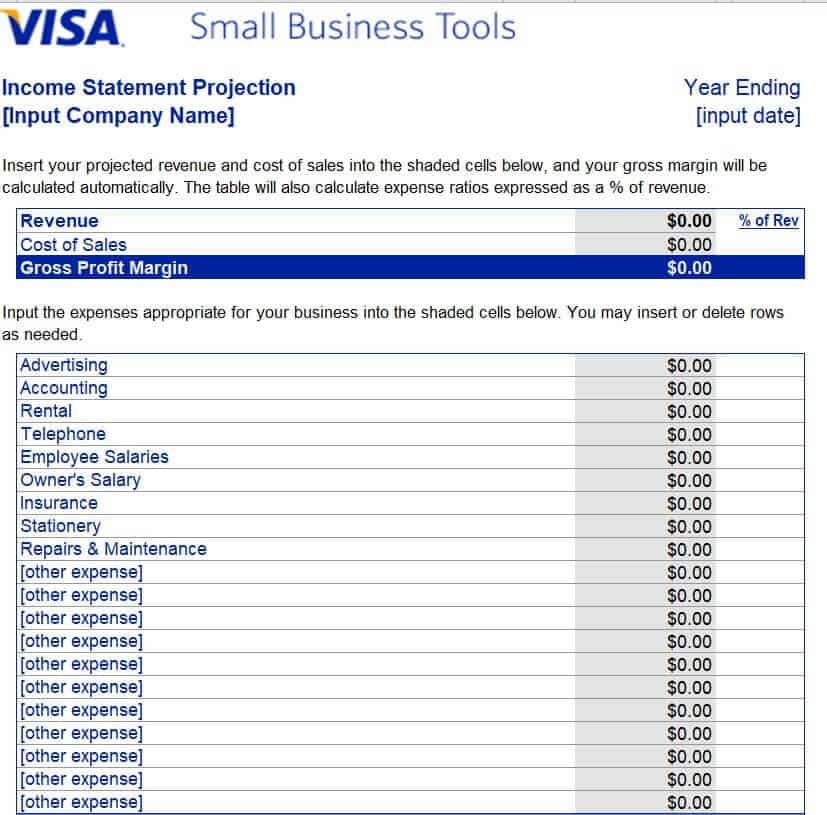
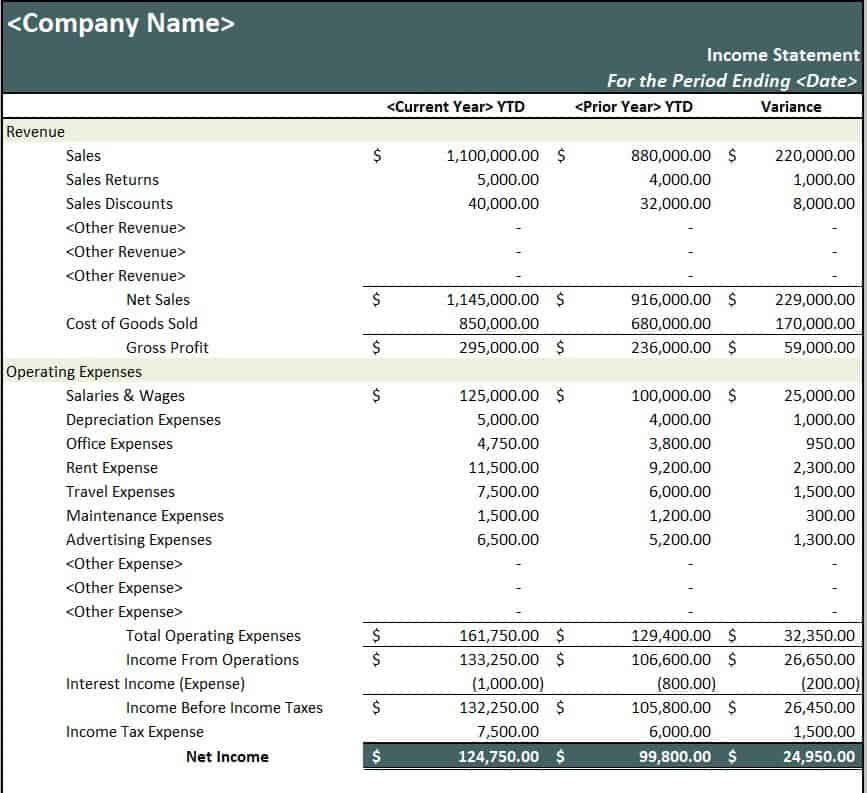
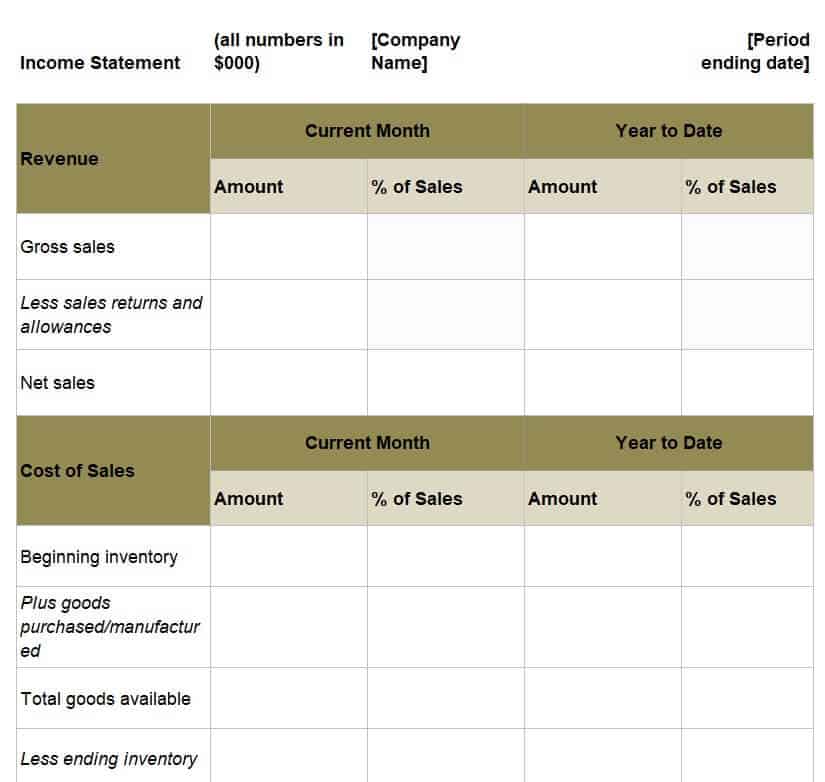
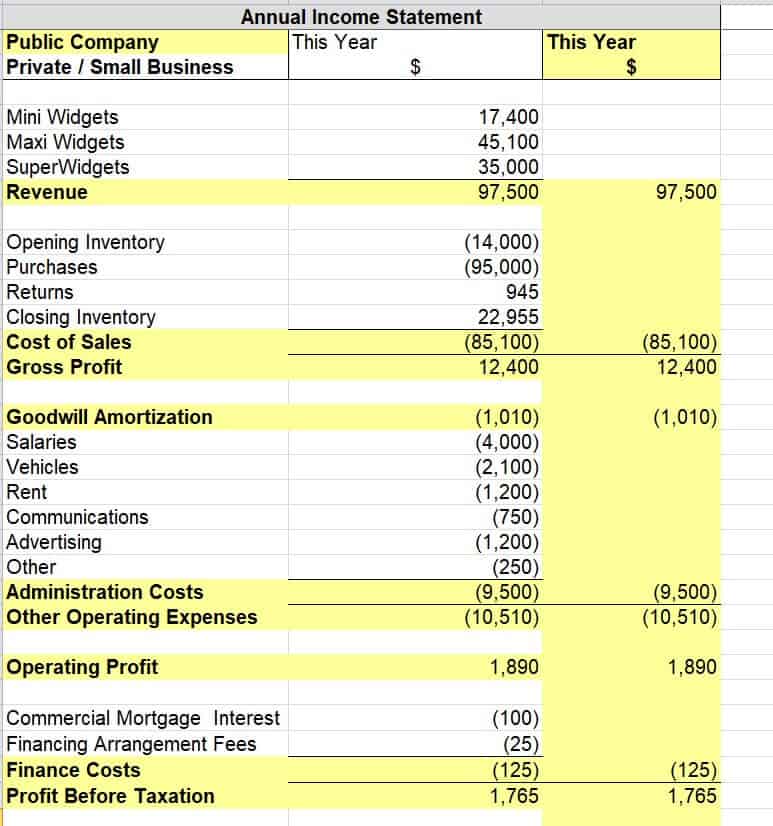
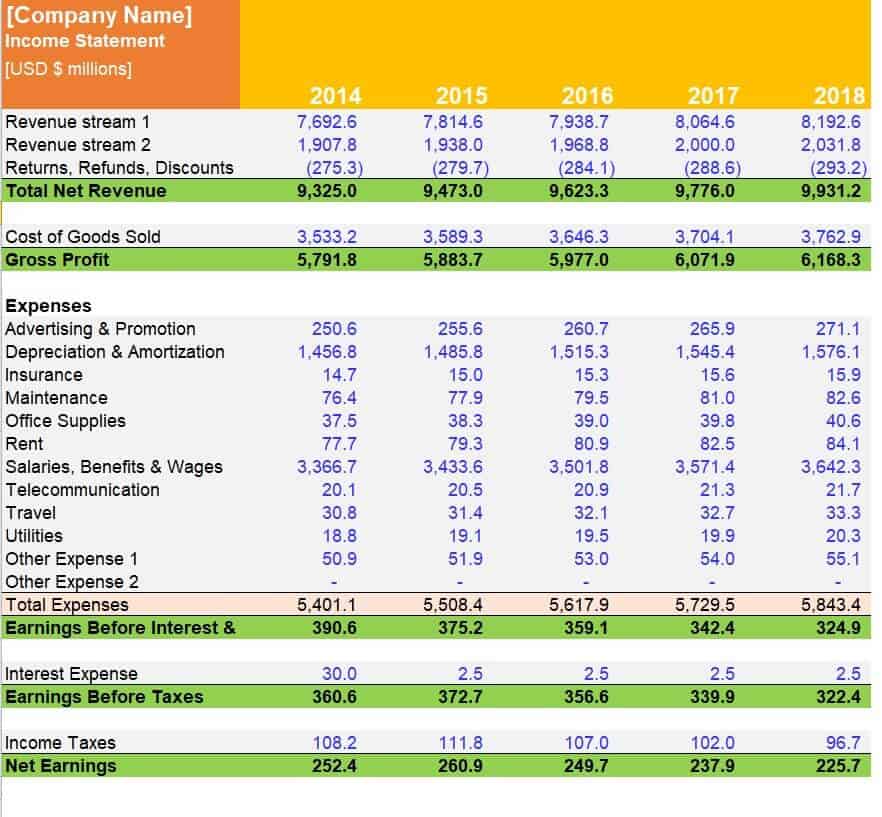
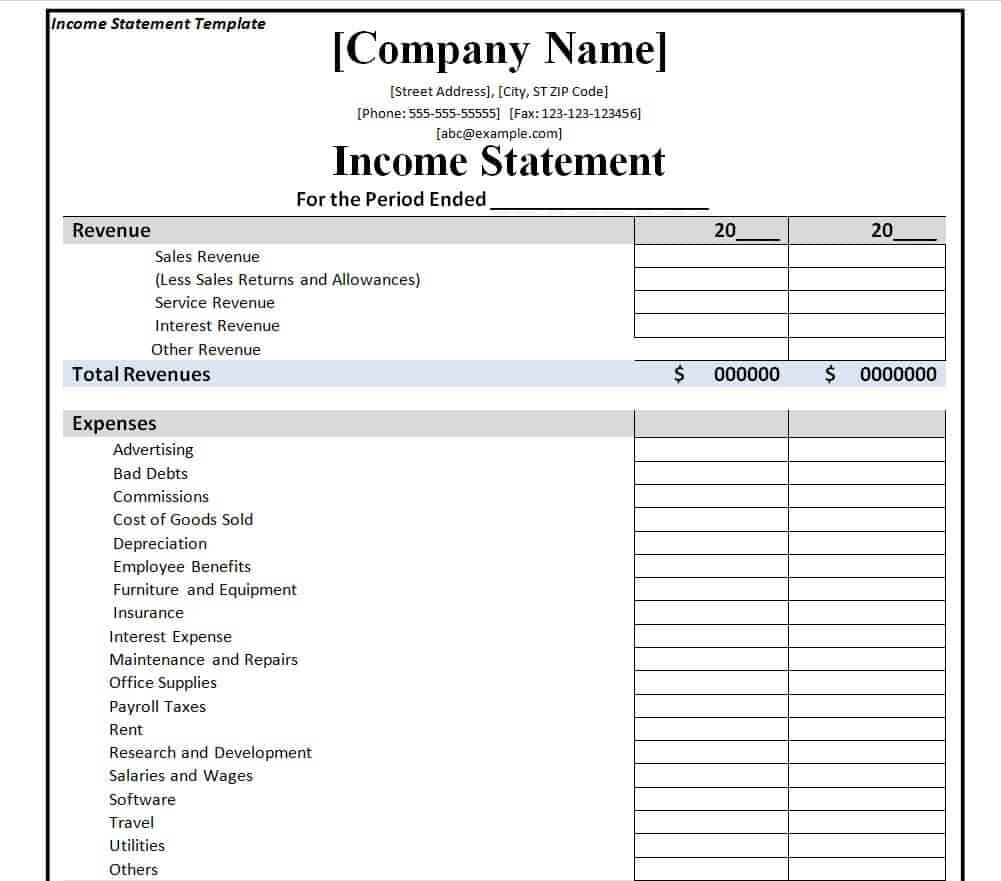
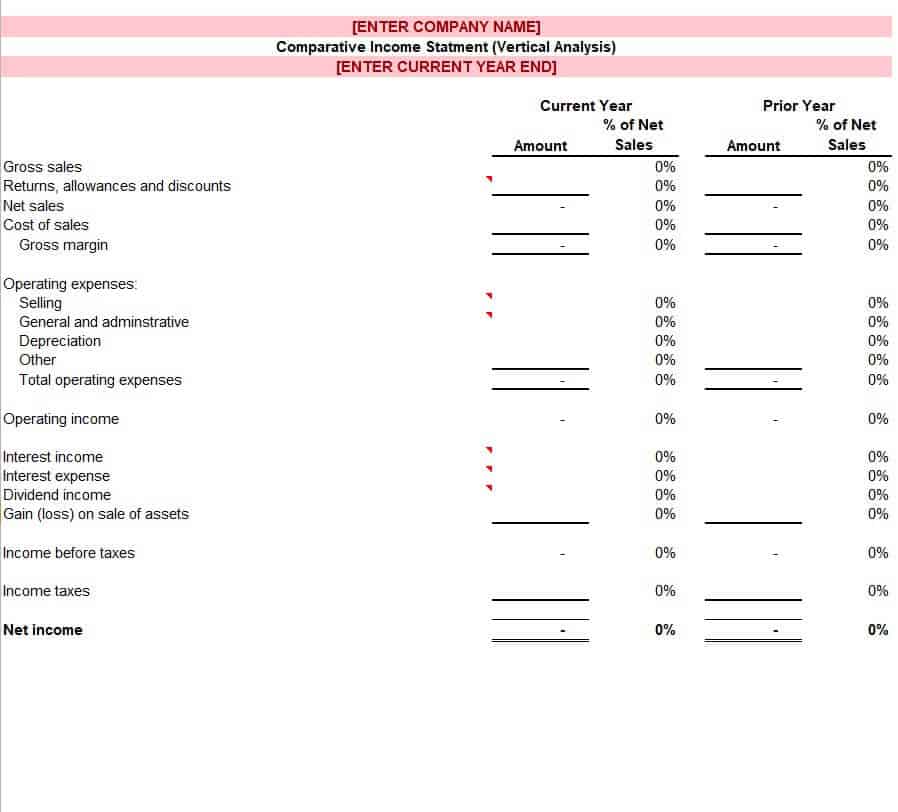
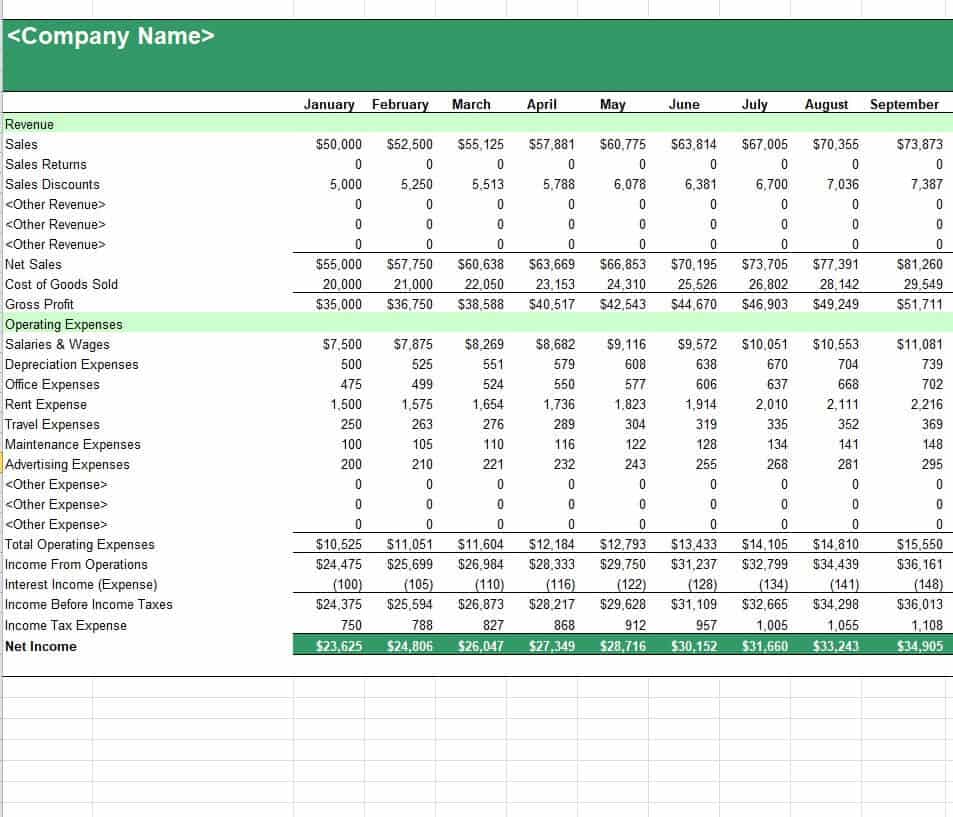
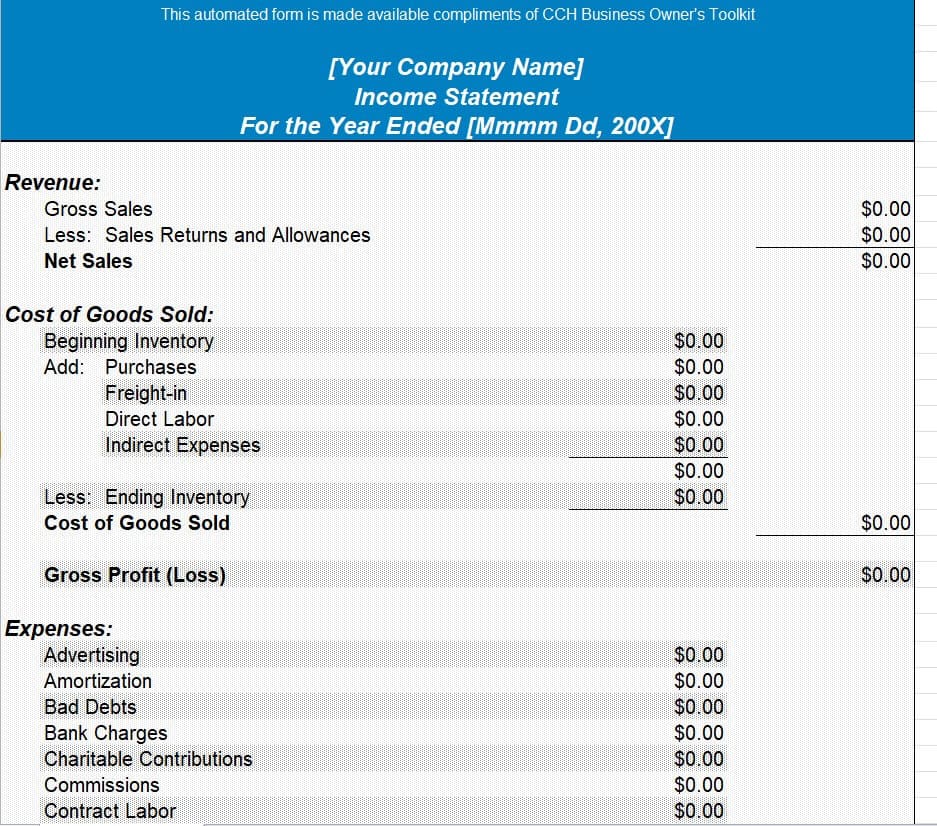
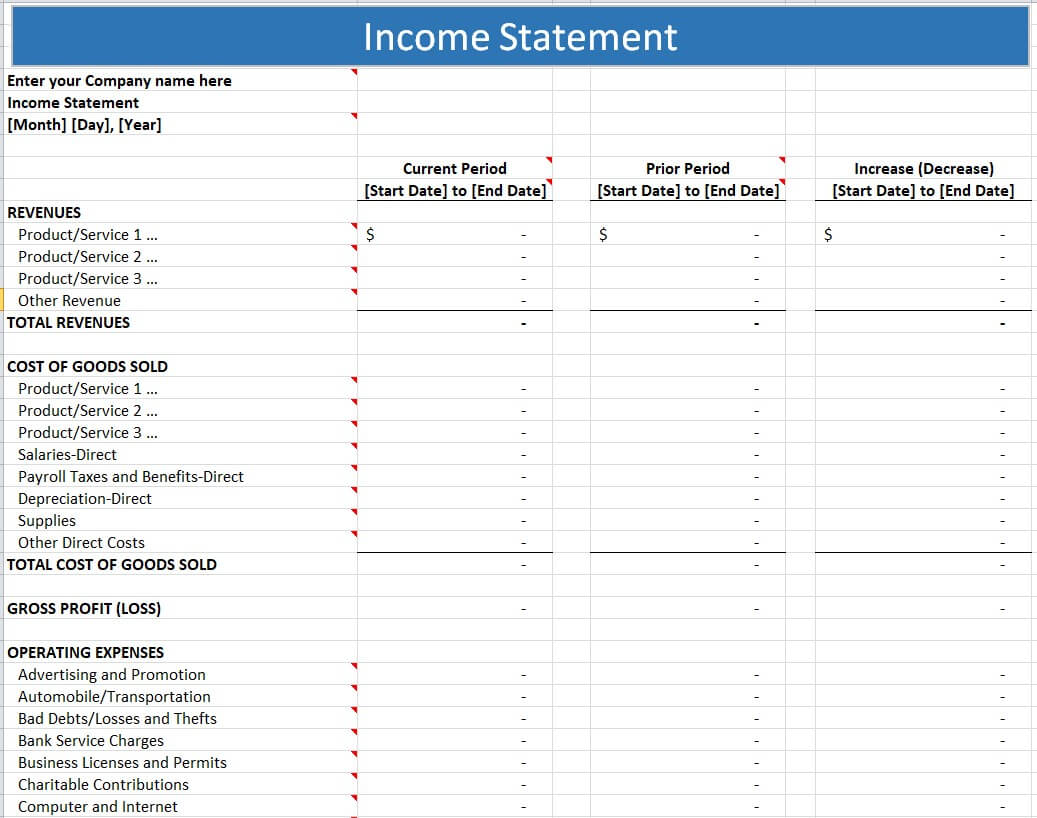
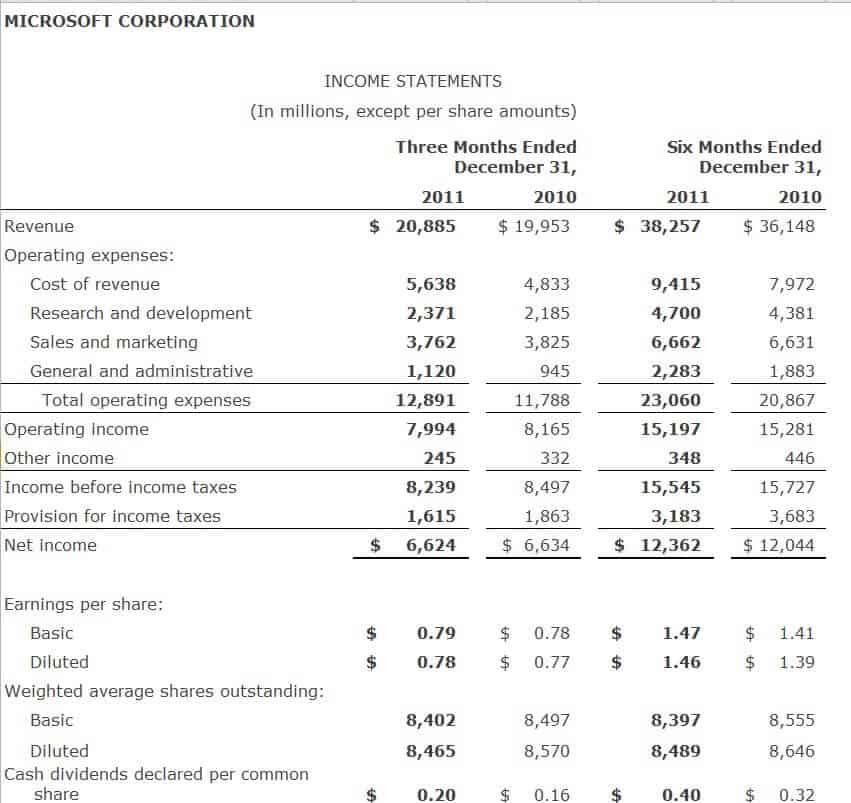
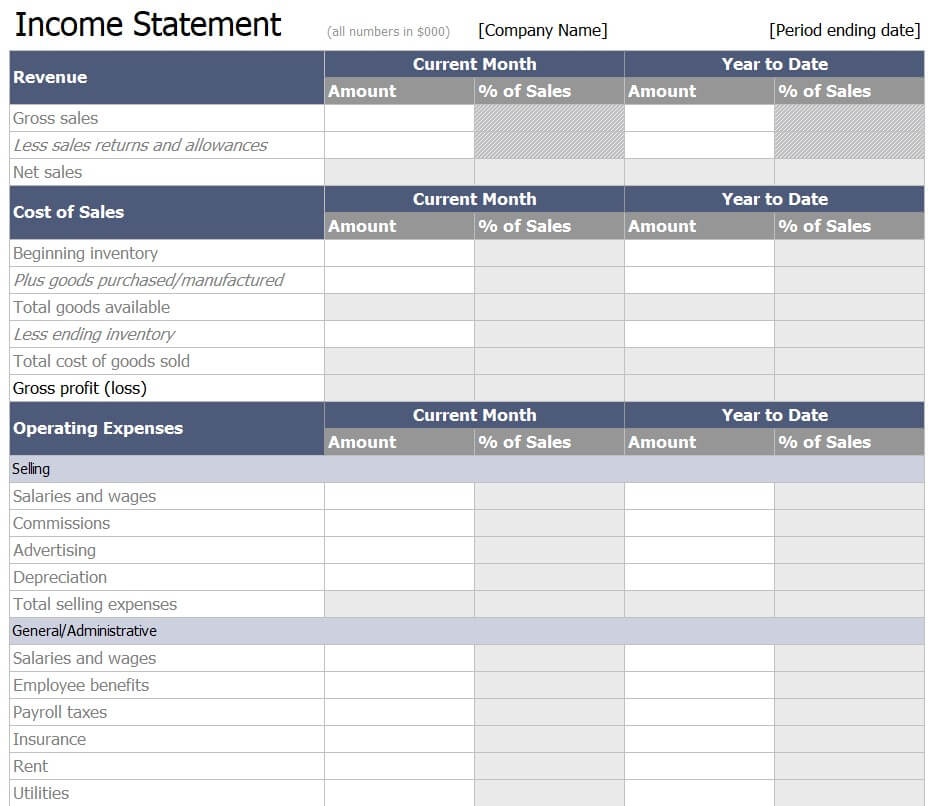
Download Income Statement Templates
Key Elements of an Income Statement
Even though the templates below vary in layout, every income statement is built from the same core line items. Understanding what each one means makes it much easier to fill in a template correctly and to read someone else’s financial statement.
- Revenue (Sales): The total amount of money earned from selling goods or services before any costs are subtracted.
- Cost of Goods Sold (COGS): The direct cost of producing the goods or delivering the services that were sold, such as materials and direct labor.
- Gross Profit: Revenue minus COGS. This shows how efficiently the core business turns sales into profit before overhead is considered.
- Operating Expenses: Ongoing costs of running the business that are not tied directly to production, including rent, salaries, marketing, and utilities.
- Operating Income: Gross profit minus operating expenses, representing the profit generated purely from normal business operations.
- Other Income and Expenses: Non-operating items such as interest income, interest expense, or one-time gains and losses.
- Taxes: Income tax owed on the company’s taxable profit for the period.
- Net Income: The final “bottom line” figure after all expenses, interest, and taxes have been subtracted from revenue.
Common Mistakes to Avoid
A few recurring errors show up again and again in hand-prepared income statements. Watching out for these will save you time and keep your financial reporting accurate.
- Mixing personal and business expenses, which distorts the true profitability of the company.
- Recording revenue when cash is received instead of when it is earned, which can misstate results if you use accrual accounting.
- Forgetting non-cash items such as depreciation, which still belong on the income statement even though no cash changes hands.
- Lumping all expenses into one category, making it hard to see where money is actually being spent.
- Skipping regular reconciliation with bank statements and receipts, which lets small errors accumulate unnoticed over several periods.
Practical Tips for Using These Income Statement Templates
Start by picking the template above that most closely matches the level of detail your business needs; a small business or freelancer usually does not need the same level of breakdown as a larger corporation. Keep a consistent format from one period to the next so you can compare results over time at a glance. Label every line item clearly and use the same terminology across all of your financial statements to avoid confusion. If you use accounting software, export your figures into the spreadsheet rather than retyping them, which reduces the chance of transcription errors. Finally, save a copy of each completed income statement so you can build a historical record that shows how the business is trending quarter over quarter or year over year.
Frequently Asked Questions
What is the difference between an income statement and a balance sheet?
An income statement reports revenue, expenses, and profit over a period of time, such as a month, quarter, or year. A balance sheet, by contrast, shows what a company owns and owes at a single point in time, listing assets, liabilities, and equity as of that date.
How often should a business prepare an income statement?
Most businesses prepare an income statement at least monthly for internal tracking, in addition to a quarterly and annual version for tax filing, lenders, or investors. Preparing it regularly makes it far easier to catch problems early instead of discovering them at year-end.
Can I edit these Excel income statement templates?
Yes. Each template above can be downloaded and opened in Microsoft Excel or a compatible spreadsheet program, where you can rename line items, add or remove rows, and adjust formulas to match how your business categorizes revenue and expenses.
What is a healthy net profit margin to look for?
A healthy net profit margin varies widely by industry, so it is best compared against similar businesses in your sector rather than a single universal number. Tracking your own margin from one income statement to the next is often more useful than comparing it to an unrelated industry benchmark.
Disclaimer: These income statement templates are provided for informational and general business use only and do not constitute financial, accounting, or tax advice. Every business situation is different, so please consult a qualified accountant or financial advisor before relying on any template for official reporting, filing, or investment decisions.
Related templates you may find useful: free project status report templates, free weekly schedule templates and free sales plan templates.
You can also browse our full collection of free report templates for more ready-to-use designs.

