

A commercial invoice is one of the most important documents used in international trade. When goods are shipped from one country to another, customs authorities use the commercial invoice to understand what is being shipped, who is buying and selling the goods, where the products were manufactured, and how much the shipment is worth.
Preparing a commercial invoice from scratch can be time-consuming, especially when you need to include information about the exporter, importer, products, quantities, values, shipping terms, country of origin, and other customs details. A ready-to-use commercial invoice template makes the process easier by providing a structured format that you can edit and reuse.
On this page, you can find free commercial invoice templates in Word and Excel formats for different business and shipping requirements. The collection includes simple, professional, detailed, fillable, customs, courier, and Excel-based commercial invoice formats.
What Is a Commercial Invoice?
A commercial invoice is a document prepared by a seller or exporter for an international sale of goods. It provides important information about the transaction and is commonly used by customs authorities to assess the shipment and determine applicable duties and taxes.
Unlike a basic sales invoice used for domestic transactions, a commercial invoice for international shipping usually requires additional information relevant to customs clearance.
Depending on the nature of the shipment and destination country, a commercial invoice may include:
- Exporter’s name and address
- Importer’s or buyer’s name and address
- Consignee information
- Invoice number
- Invoice date
- Purchase order number
- Description of goods
- Quantity of each product
- Unit price
- Total value
- Currency
- Net weight and gross weight
- Country of origin
- Harmonized System (HS) code
- Shipping terms
- Reason for export
- Freight and insurance information
- Signature and declaration
Requirements can vary depending on the countries involved, the carrier, the type of goods, and the applicable customs rules. Always verify the current requirements for the destination and shipment before using a template for an actual export.
Free Commercial Invoice Templates
A good commercial invoice template gives you a convenient starting point for preparing the documentation required for an international shipment.
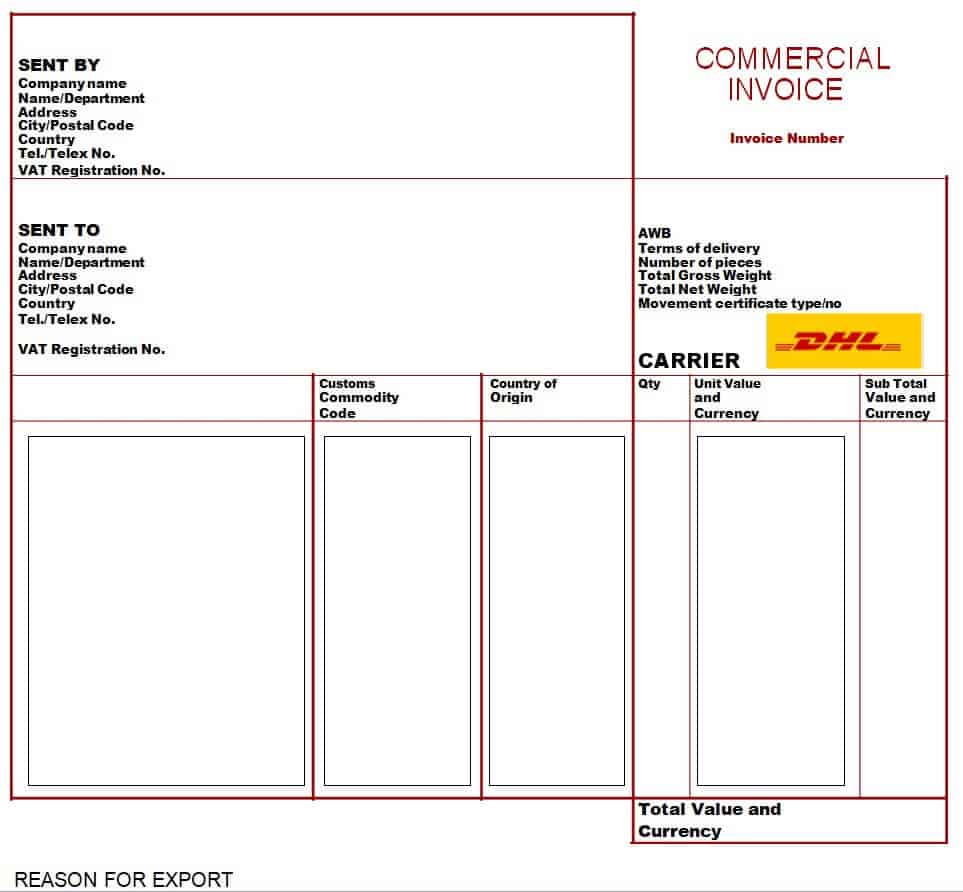
The collection on this page includes 17 formats covering different business situations, including a sample commercial invoice with instructions, courier commercial invoice, Excel commercial invoice, customs invoice, simple commercial invoice, detailed commercial invoice, fillable Word invoice, and professional commercial invoice.
You can choose the format that best matches your needs and customize it with your company and shipment information.
Commercial Invoice Templates Included
- Sample Commercial Invoice Template with Instructions
- Courier Commercial Invoice Template
- Company Commercial Invoice Template in Excel
- Business Blank Commercial Invoice Template
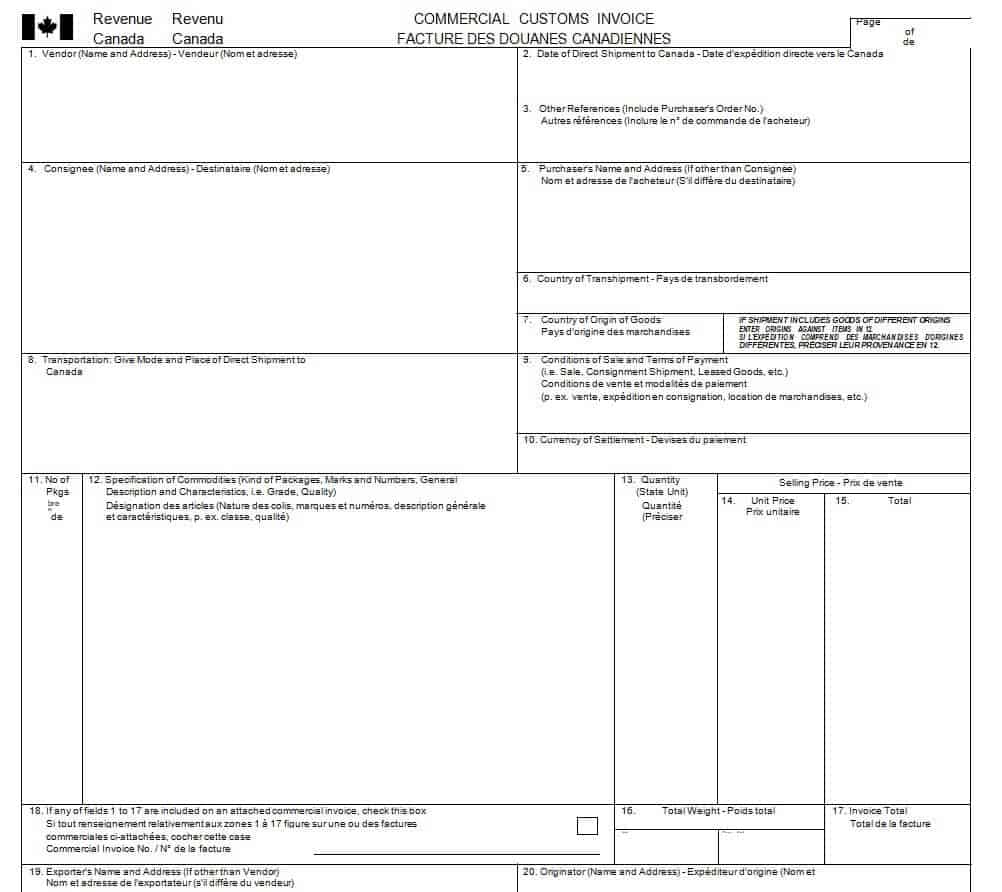
- Commercial Customs Invoice Template
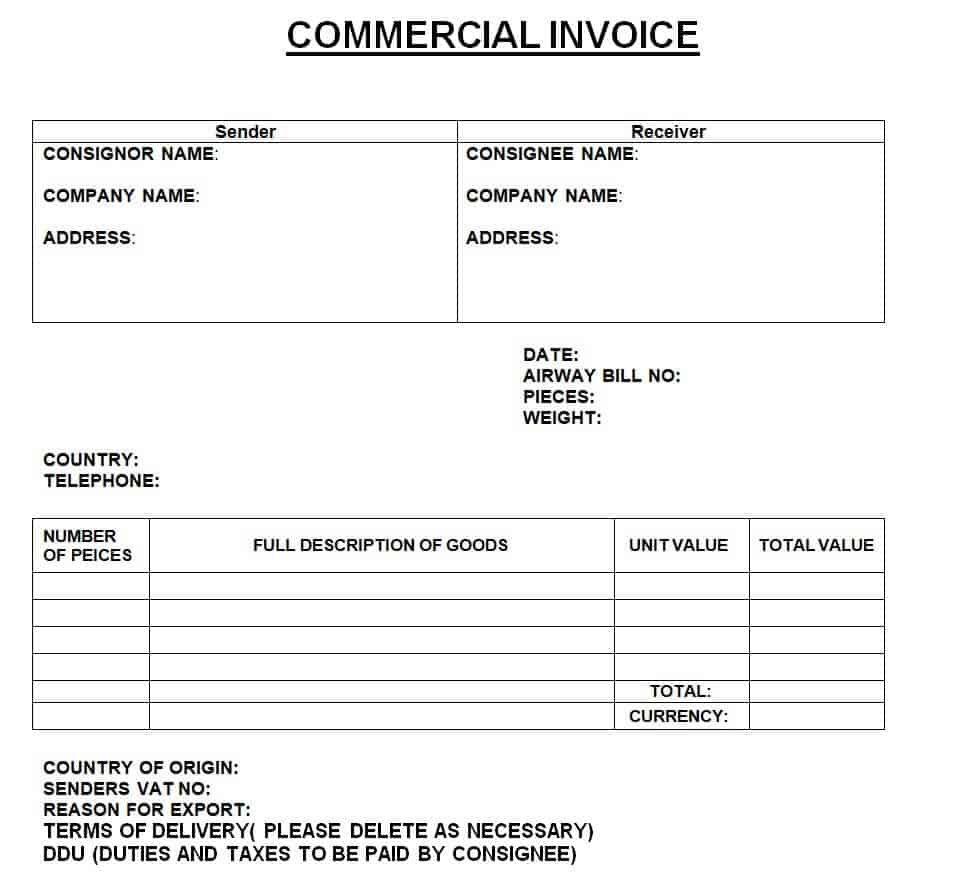
- Simple Commercial Invoice Template
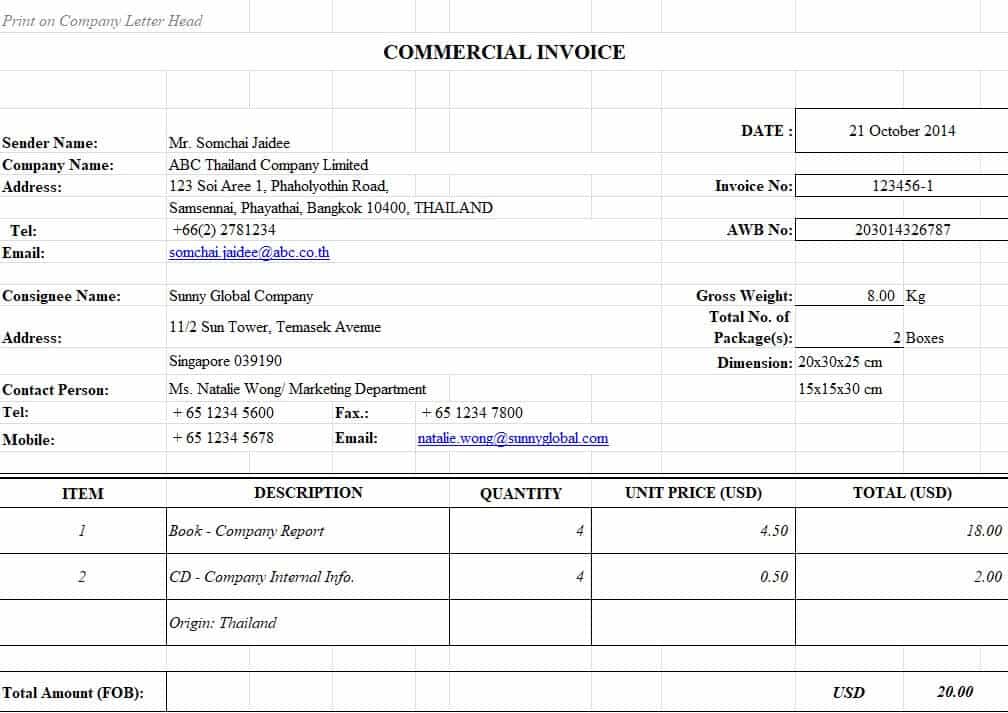
- Commercial Invoice Template in Excel Format
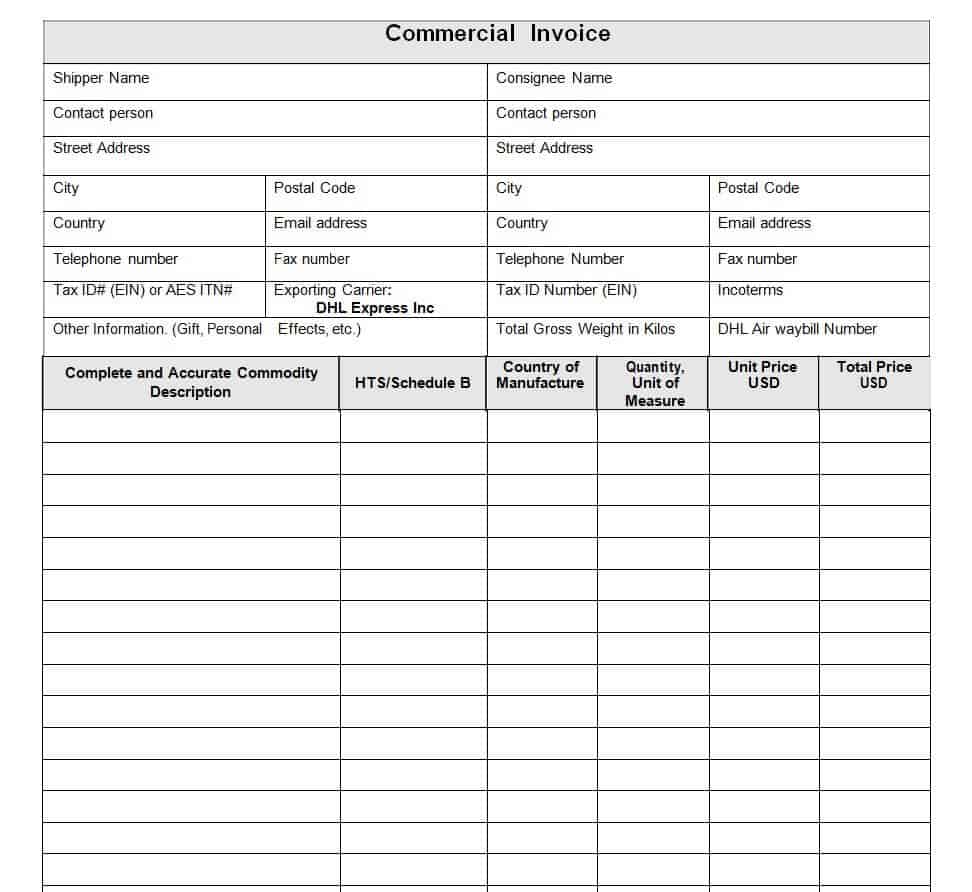
- Commercial Invoice Outline Template
- Online Commercial Invoice Template
- Commercial Invoice Excel Sample
- Detailed Commercial Invoice Template
- Fillable Commercial Invoice Template in DOC Format
- Professional Commercial Invoice Template
- Commercial Invoice Maker Template
- University’s Commercial Invoice Template
- Formal Commercial Invoice Template in XLSX Format
- Practical Commercial Invoice Template in MS Word Format
Why Use a Commercial Invoice Template?
Creating an international invoice from a blank document can make it easy to forget important information. A template provides predefined sections that help you organize the transaction details in a logical format.
Using a template can help you:
- Save time preparing export documentation
- Organize buyer and seller information
- Record product descriptions and quantities
- Calculate shipment values
- Provide information needed for customs processing
- Maintain consistent invoice formatting
- Prepare invoices in Word or Excel
- Reuse the same format for future shipments
- Reduce common formatting mistakes
- Create professional-looking export documentation
For businesses that regularly ship products internationally, keeping a reusable export invoice template can make the documentation process much more efficient.
What Information Should a Commercial Invoice Include?
There is no single universal commercial invoice layout that applies identically to every international shipment. However, most commercial invoices contain several important categories of information.
1. Exporter Information
The seller or exporter should generally be clearly identified. Include the company or individual’s legal name, address, and relevant contact information.
Depending on the transaction, additional identification or registration information may also be required.
2. Buyer and Consignee Information
The invoice should identify the buyer or importer and, where applicable, the consignee receiving the shipment.
Make sure names and addresses match the other shipping documents to avoid unnecessary delays.
3. Invoice Number and Date
Assign a unique invoice number to each commercial invoice. The invoice date should also be clearly displayed.
Using a consistent numbering system makes it easier for your business to track export transactions and match invoices with purchase orders and shipping records.
4. Product Description
Provide a clear and accurate description of each product.
Avoid descriptions that are too vague. Customs authorities need sufficient information to understand what the goods are and determine their appropriate classification.
5. Quantity and Unit Price
Specify how many units are being shipped and the price per unit.
The invoice should also show the total value of each line item and the overall shipment value.
6. Currency
Clearly identify the currency used for the transaction, such as USD, EUR, GBP, or another applicable currency.
This is particularly important for international transactions because the buyer, seller, carrier, and customs authority may be located in different countries.
7. Country of Origin
The country where the goods were manufactured or produced may need to be stated on the commercial invoice.
Country-of-origin requirements can vary depending on the goods and destination, so exporters should verify the applicable rules.
8. HS Code
An HS code, or Harmonized System code, is used to classify traded products internationally.
Including the correct HS code can help customs authorities classify the goods and determine applicable duties and taxes. The appropriate code depends on the actual product and applicable customs classification rules.
9. Weight and Packaging Information
Many shipments require information such as net weight, gross weight, number of packages, and package type.
This information can be particularly useful when the commercial invoice is reviewed alongside the packing list and transport documentation.
10. Shipping and Trade Terms
Depending on the transaction, the commercial invoice may include shipping terms or Incoterms agreed between the buyer and seller.
These terms help define responsibilities relating to transportation, costs, delivery, and risk.
Commercial Invoice vs. Regular Invoice
A regular sales invoice is generally used to request or document payment for goods or services. A commercial invoice for customs serves an additional purpose because it provides information relevant to international shipments.
A domestic invoice may primarily focus on the seller, buyer, products, prices, taxes, and payment terms.
An international commercial invoice may need additional information such as:
- Country of origin
- HS classification
- Shipment details
- Customs value
- Export information
- Packaging and weight
- Shipping terms
Therefore, you should not automatically assume that a standard domestic sales invoice contains everything required for international customs documentation.
Commercial Invoice for Customs Clearance
One of the most important purposes of a commercial invoice is supporting the customs clearance process.
Customs authorities may use information on the invoice to evaluate the shipment, determine its classification, assess its value, and calculate duties or taxes where applicable.
For this reason, information on the commercial invoice should be accurate and consistent with the actual shipment and other supporting documents.
An incorrect product description, value, quantity, country of origin, or classification can potentially result in questions, delays, additional documentation requests, or other customs issues.
Commercial Invoice Template for Export
An export commercial invoice template can be particularly useful for manufacturers, wholesalers, exporters, online sellers, distributors, and businesses that regularly ship products overseas.
Instead of preparing a new document every time an order is exported, you can keep a master template and update the transaction-specific information.
For recurring shipments, you may want to maintain standardized information for your business, such as:
- Company name
- Business address
- Contact information
- Exporter details
- Standard product descriptions
- Product codes
- Common shipping terms
- Banking or payment information, where appropriate
Then update the buyer, shipment, quantity, value, date, and other transaction-specific information for each order.
Commercial Invoice Template in Excel
An Excel commercial invoice template is useful when your invoice contains multiple products or requires calculations.
Excel allows you to create formulas for quantities, unit prices, line totals, and overall shipment values. It can also make it easier to maintain consistent columns for product descriptions, HS codes, quantities, weights, and prices.
Excel is particularly useful for businesses that prepare many invoices and want a format that can be quickly updated.
However, always review calculated values before sending the final invoice to ensure that the information matches the actual commercial transaction.
Commercial Invoice Template in Word
A commercial invoice template in Word is a good option when you want a clean document that is easy to edit and print.
Word can be useful for relatively simple shipments where you don’t need extensive spreadsheet calculations. You can add your company logo, adjust headings, modify fields, and customize the document to match your business branding.
A Word template is also convenient when the completed invoice needs to be converted to PDF before being submitted to a shipping company, customer, or customs-related process.
How to Fill Out a Commercial Invoice Template
Using a commercial invoice template is simple when you have the necessary shipment information available.
Step 1: Enter Seller Information
Add your company name, address, contact information, and any required exporter identification details.
Step 2: Add Buyer Information
Enter the buyer/importer and consignee information exactly as it appears on the relevant order and shipping documents.
Step 3: Add Invoice Details
Enter the invoice number, date, purchase order number, and any other reference information required for the transaction.
Step 4: Describe the Products
List each product clearly. Include the quantity, unit price, total value, and other relevant product information.
Step 5: Add Customs Information
Enter the appropriate HS code, country of origin, weight, number of packages, and other customs-related information applicable to the shipment.
Step 6: Review the Shipment Value
Check the mathematical calculations and make sure the total value and currency are correct.
Step 7: Add Shipping Information
Enter applicable shipping terms and other relevant transportation information.
Step 8: Review and Sign
Before submitting the invoice, compare it with the order, packing list, and shipping information. Correct any discrepancies and add the required declaration or signature.
Who Uses Commercial Invoice Templates?
Commercial invoice templates are useful for many types of businesses and organizations, including:
- Exporters
- Importers
- Manufacturers
- Wholesalers
- Distributors
- E-commerce businesses
- International retailers
- Trading companies
- Courier customers
- Small businesses
- Freelancers and independent sellers shipping goods internationally
If your business regularly sends merchandise across international borders, maintaining a standardized commercial invoice template can make your export documentation process faster and more consistent.
Download Free Commercial Invoice Templates
The templates on this page provide different formats for preparing commercial invoices in Microsoft Word and Excel. Whether you need a simple invoice, a detailed customs invoice, an Excel format, a fillable Word document, or a professional commercial invoice layout, you can select a template and customize it for your transaction.
Choose the template that best fits your business, download it, replace the sample information with your own details, and review the completed document carefully before using it for an international shipment.
Remember that a template is a formatting and organizational tool—it does not guarantee that an invoice meets every customs, carrier, tax, or import/export requirement. Requirements vary by country, product, shipment type, and transaction, so verify the applicable rules before shipping.
FREE Commercial Invoice Templates are Here:
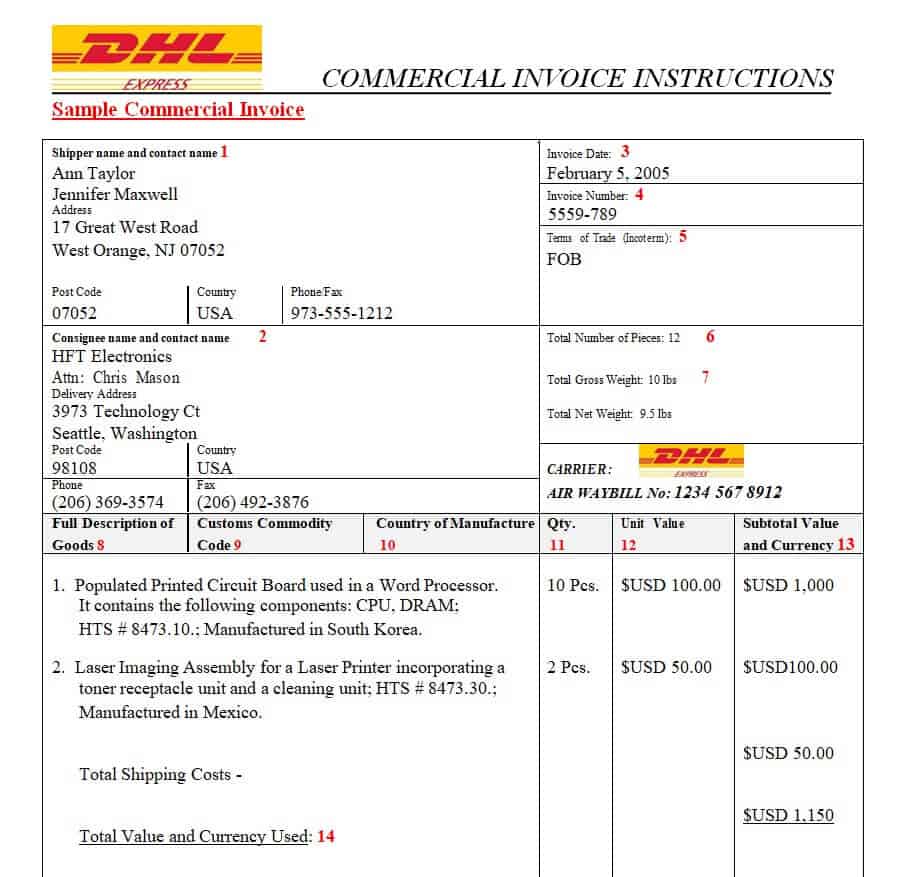
Sample Commercial Invoice Template with Instructions
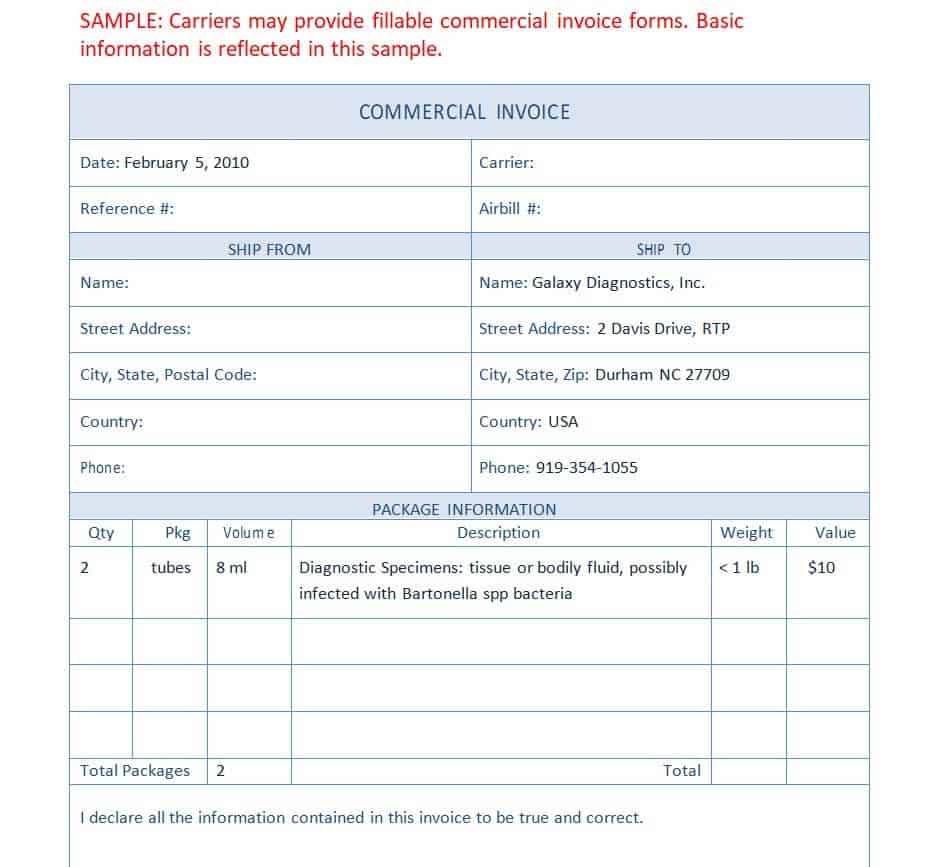
Courier Commercial Invoice Template
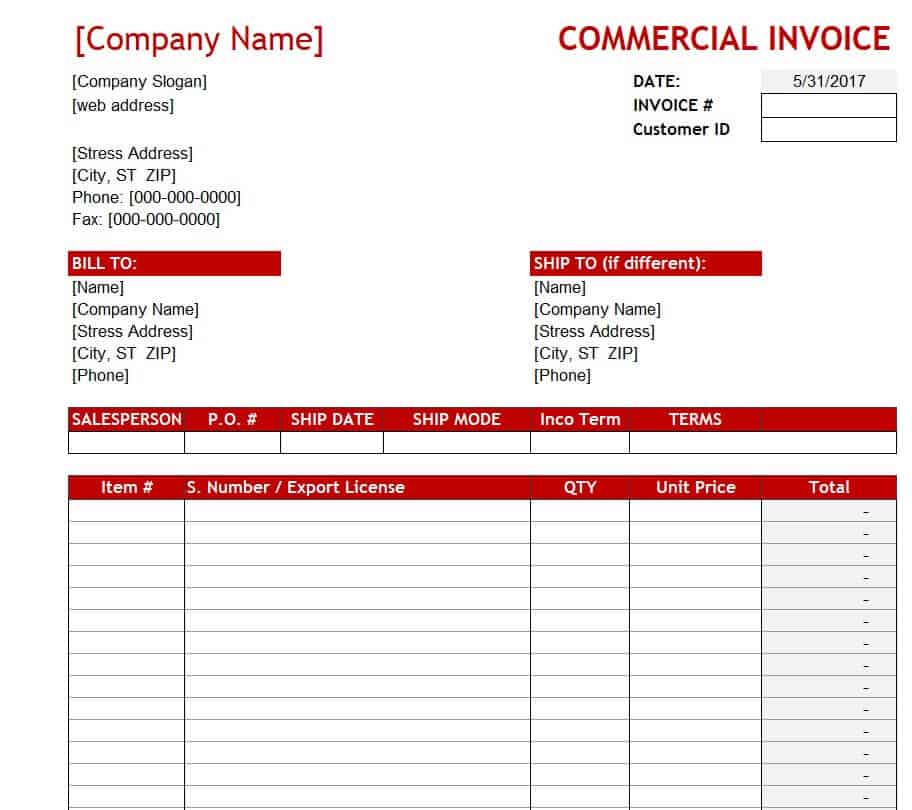
Company’s Commercial Invoice Template EXCEL
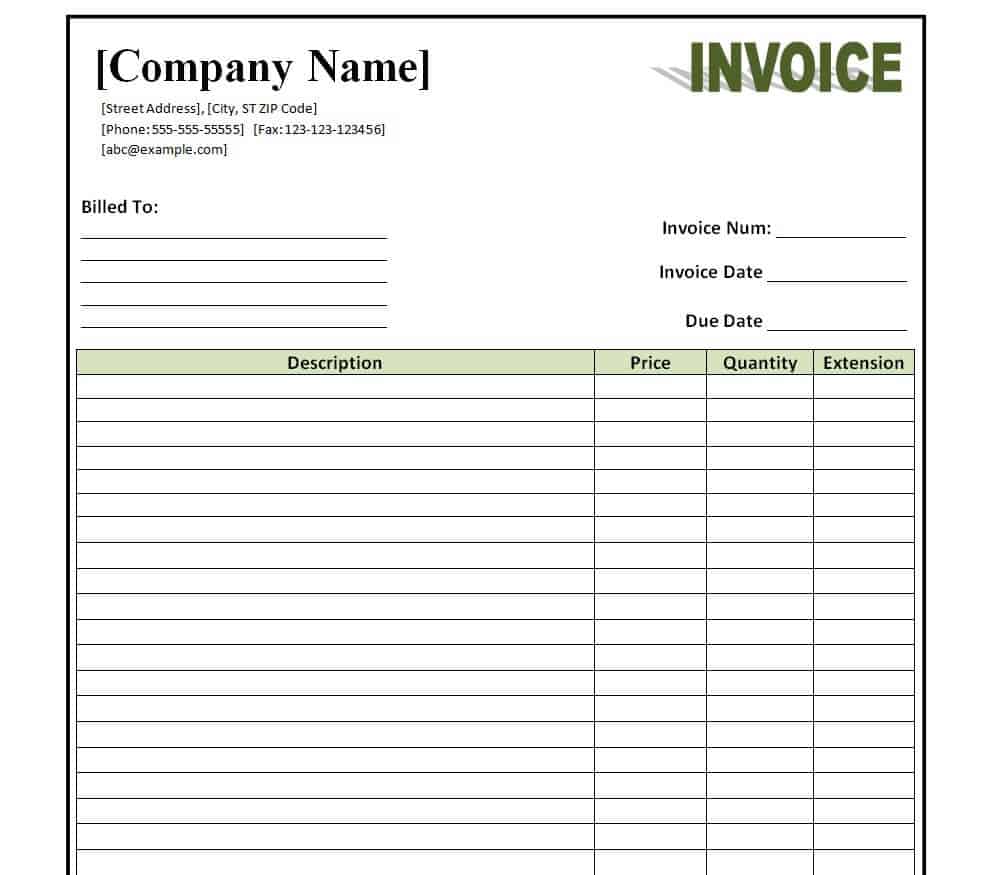
Business Blank Commercial Invoice Template
Commercial Customs Invoice Template
Simple Commercial Invoice Template
Commercial Invoice Template in Excel Format
Commercial Invoice Outline Template
Online Commercial Invoice Template
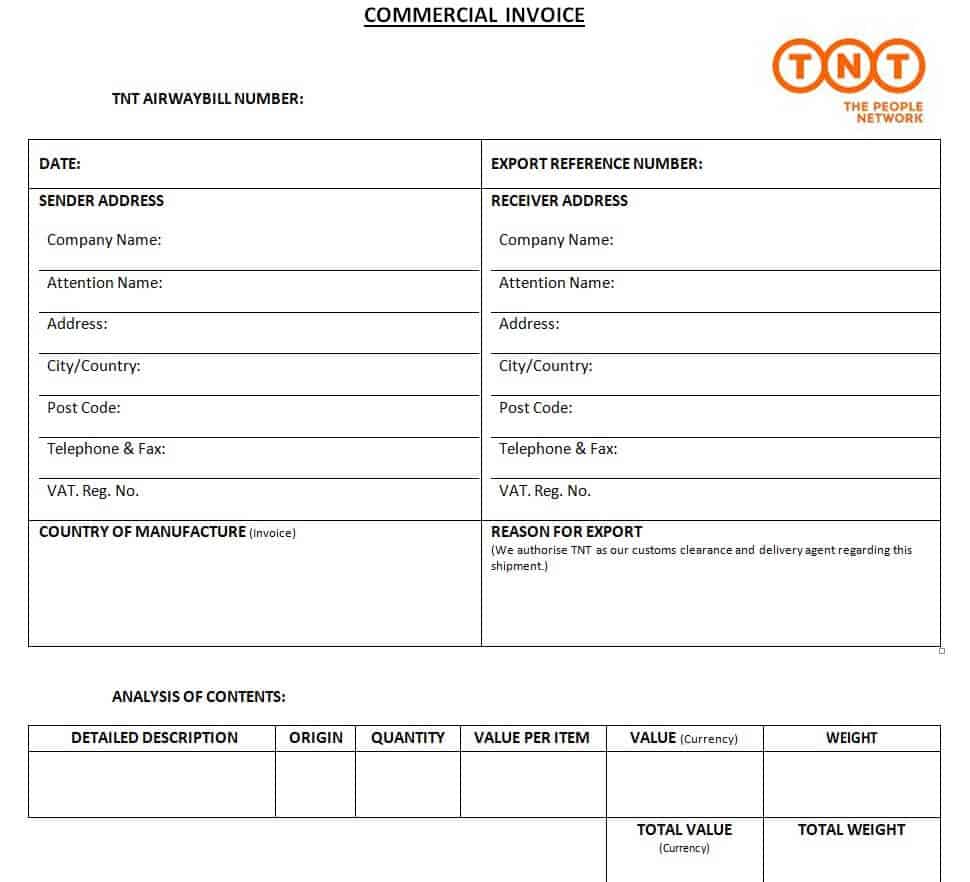
Commercial Invoice Excel Sample
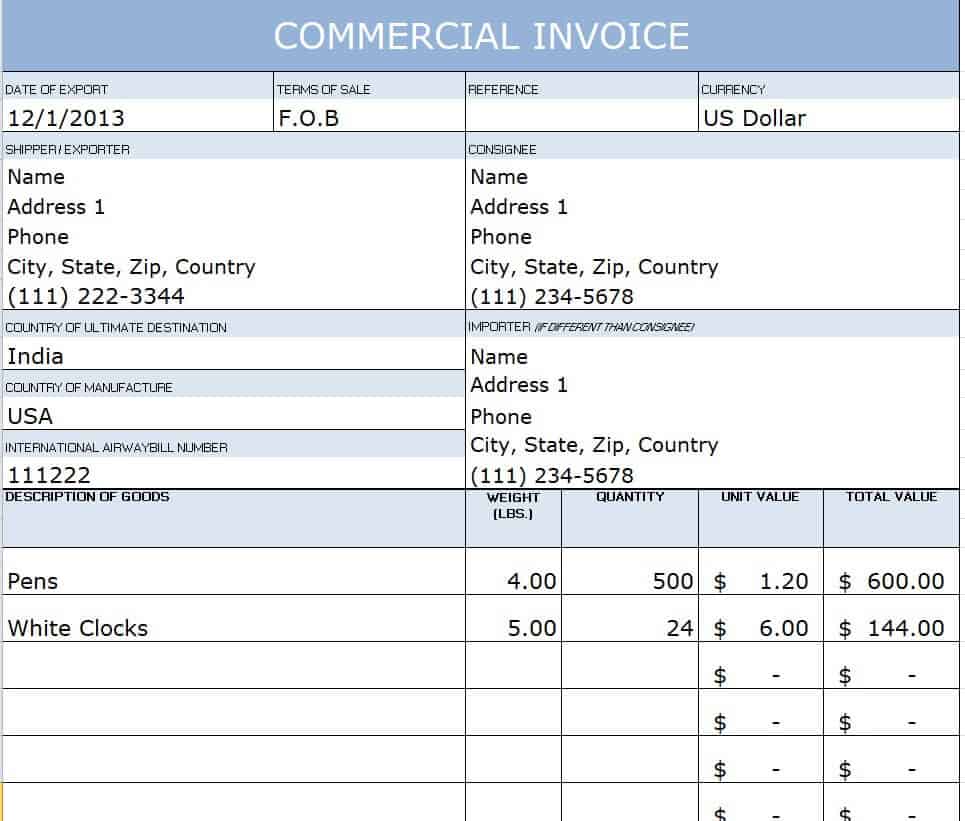
Detailed Commercial Invoice Template
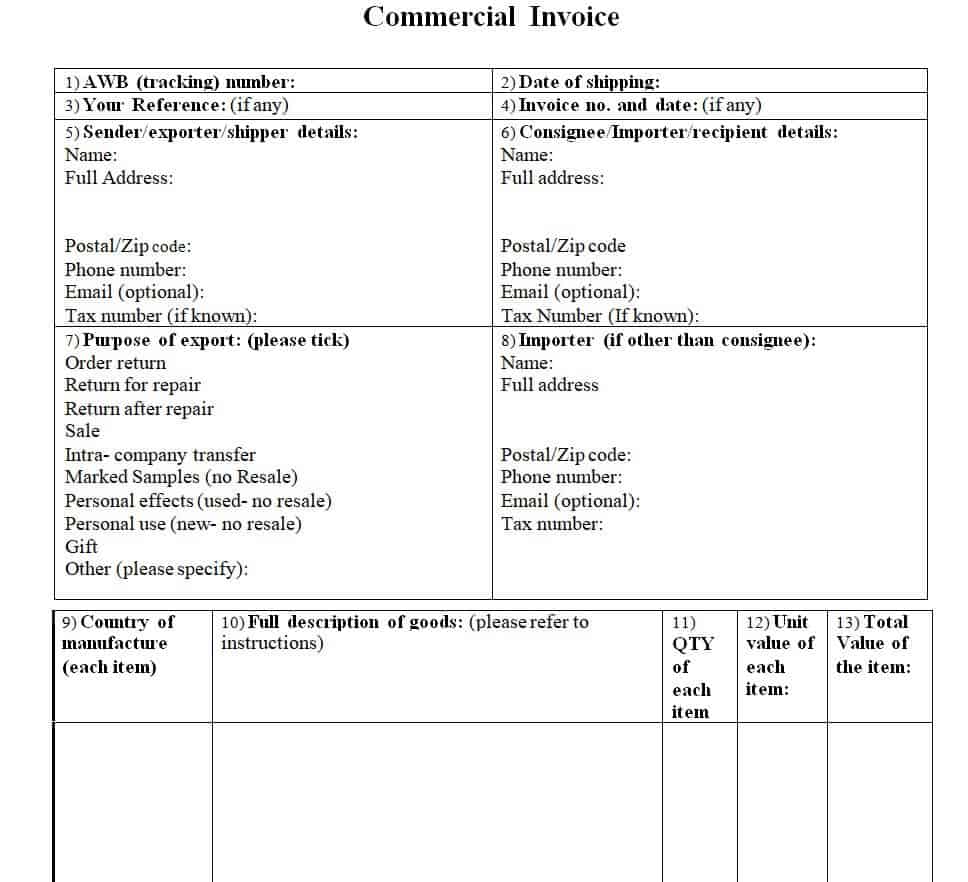
Fillable Commercial Invoice Template DOC Format
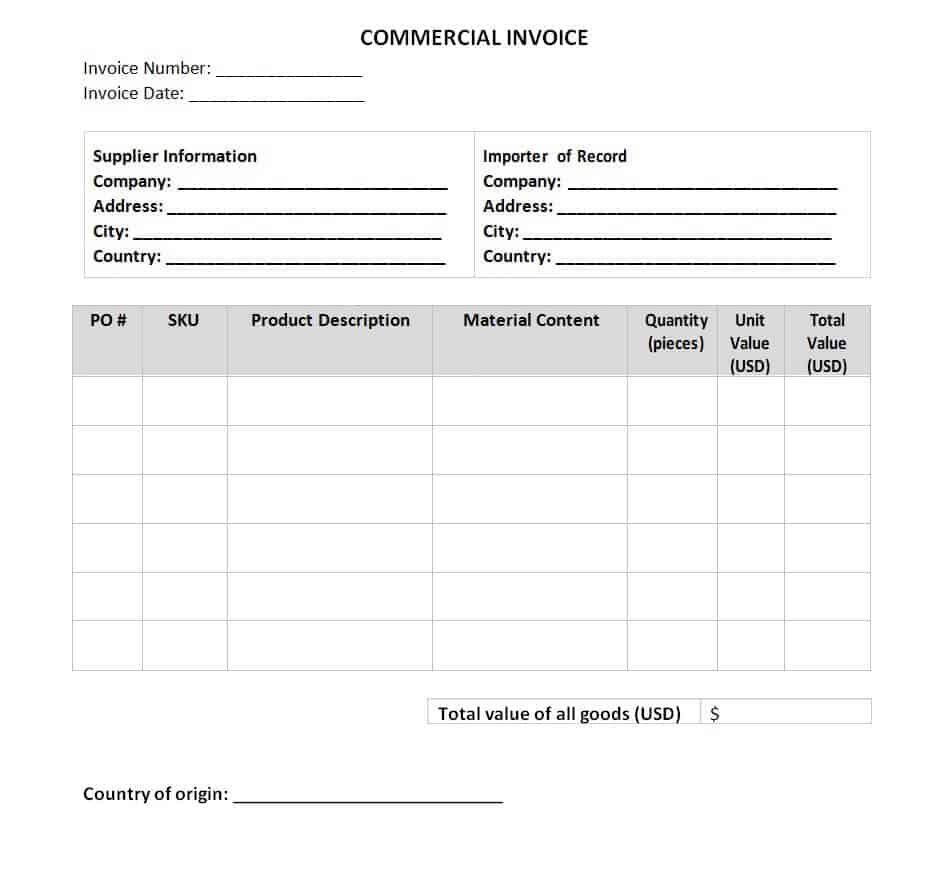
Professional Commercial Invoice Template
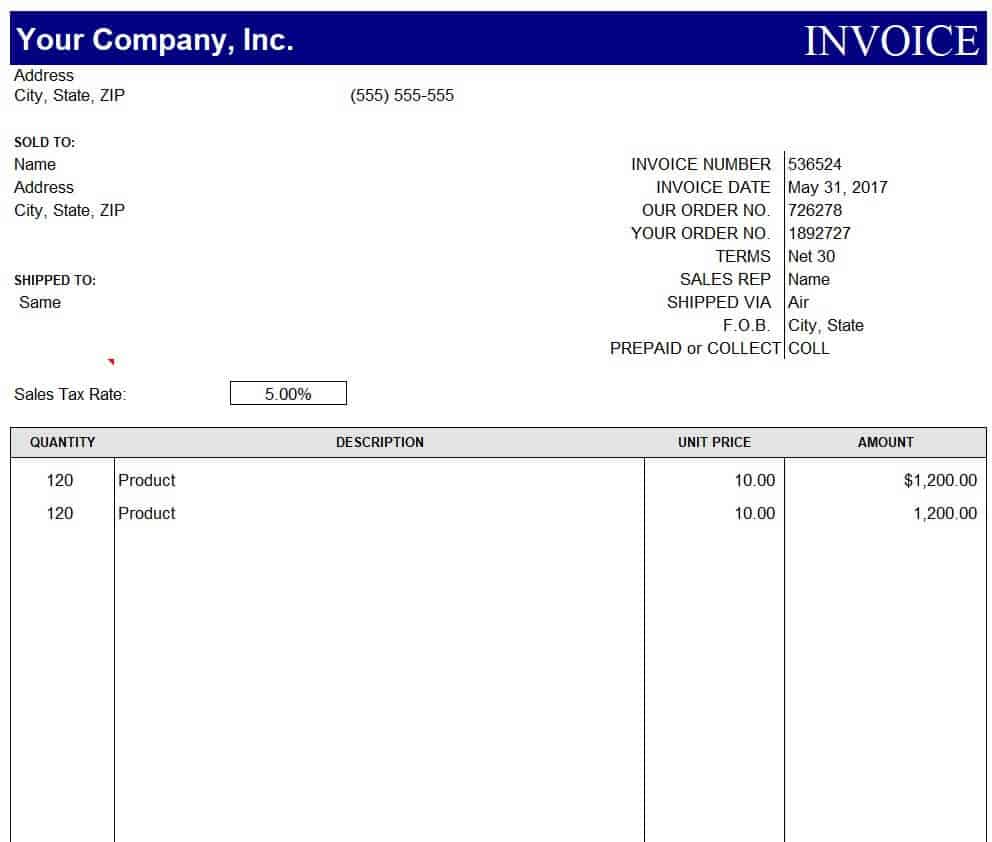
Commercial Invoice Maker Template
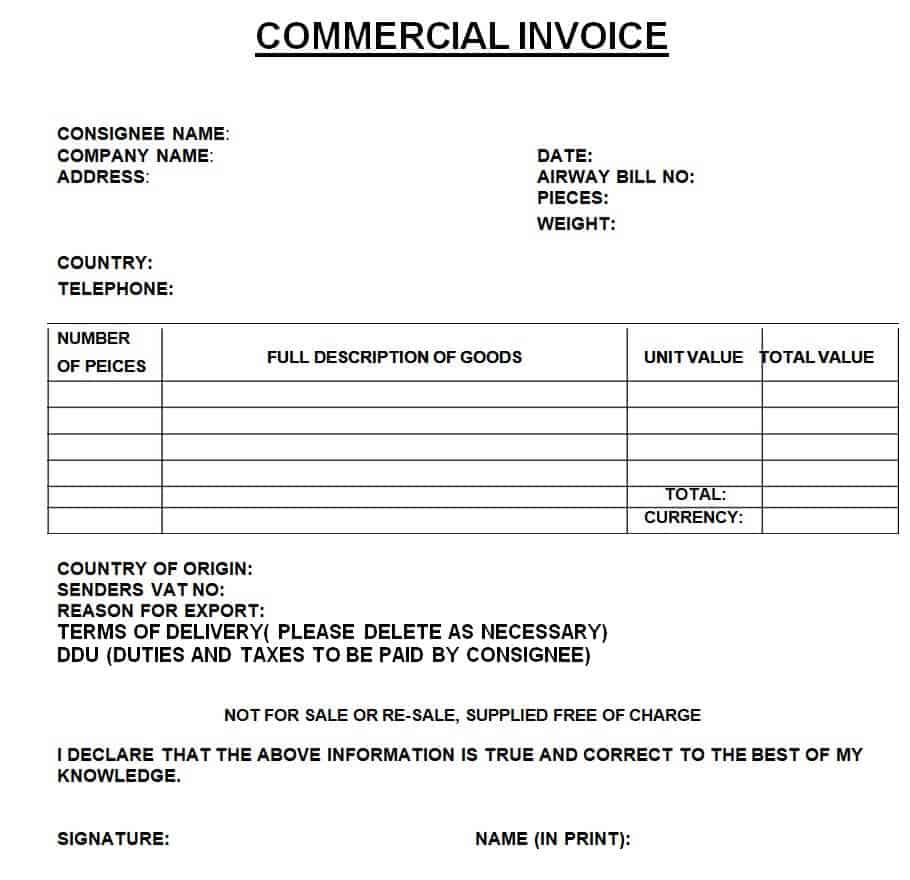
University’s Commercial Invoice Template
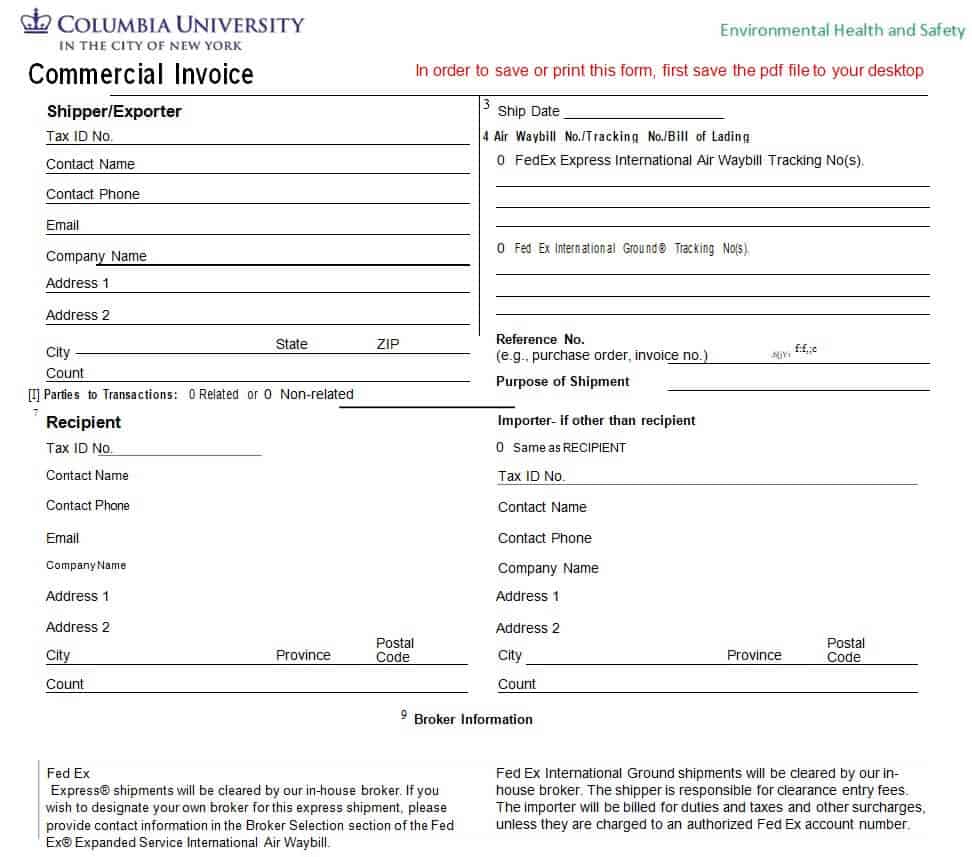
Formal Commercial Invoice Template XLSX Format
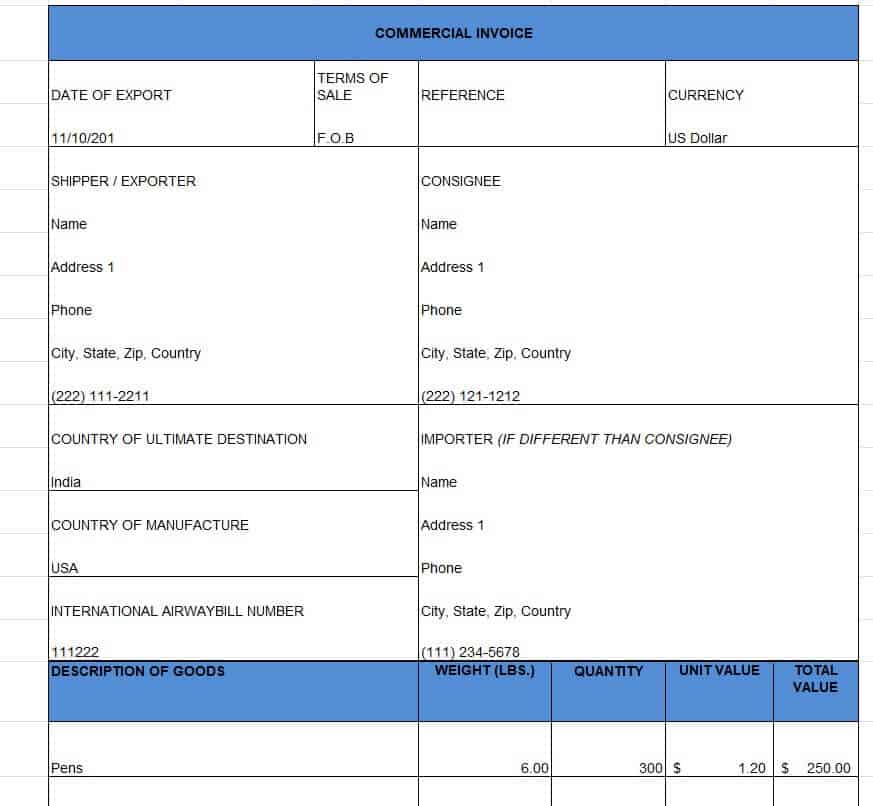
Practical Commercial Invoice Template in MS WORD Format
Frequently Asked Questions
What is a commercial invoice used for?
A commercial invoice documents an international sale of goods and provides information that may be used by customs authorities to assess the shipment, including its description, value, origin, and other relevant details.
Can I use a commercial invoice template for international shipping?
Yes. A commercial invoice template can provide a convenient starting point for international shipments. However, you should customize it with accurate shipment information and verify the requirements of the destination country, carrier, and relevant customs authorities.
What is the difference between a commercial invoice and a customs invoice?
The terms are sometimes used interchangeably in shipping contexts, although terminology can vary by carrier and jurisdiction. A commercial invoice is generally the document containing the transaction and shipment information used for customs purposes.
Is a commercial invoice required for every shipment?
Not necessarily. Requirements depend on factors such as the origin and destination countries, type of goods, shipment method, value, and applicable regulations. Check the current requirements for your particular shipment.
Can I create a commercial invoice in Excel?
Yes. Excel is a practical option for commercial invoices, especially when you need calculations for quantities, unit prices, line totals, weights, and overall shipment values. The page includes several Excel/XLSX commercial invoice formats.