
A commercial lease agreement is a written contract between a property owner or landlord and a business or tenant that establishes the terms for renting property for commercial purposes. Unlike a residential lease, a commercial lease is designed for business-related use, such as an office, retail store, warehouse, workshop, restaurant, or other commercial space.
A well-structured commercial lease agreement template can help organize the important terms of a business property rental arrangement. It can identify the parties, describe the leased premises, establish the lease term and rent, and outline responsibilities for utilities, repairs, insurance, taxes, maintenance, and other expenses.
On this page, you can find 15 commercial lease agreement templates in Word and DOC formats. The collection includes short-form, single-tenant, standard, short-term, blank, printable, industrial, and editable commercial lease templates.
Important: A template is a starting point, not legal advice. Commercial lease laws and requirements vary by jurisdiction, property type, and the terms negotiated between the landlord and tenant. Have an appropriately qualified legal professional review an agreement when necessary.
What Is a Commercial Lease Agreement?
A commercial lease agreement is a contract that gives a business or other tenant the right to occupy and use commercial property in exchange for rent and compliance with agreed terms.
The property might be used as:
- An office
- Retail shop
- Warehouse
- Factory
- Restaurant
- Workshop
- Professional practice
- Storage facility
- Business center
- Industrial premises
The lease should clearly identify what the tenant is renting and what the tenant and landlord are each responsible for during the lease term.
What Is a Business Lease Agreement?
A business lease agreement is another common term for a commercial lease when the property is being rented for business purposes.
For example, a company might rent an office for employees, a retailer might lease a storefront, or a manufacturer might rent an industrial building.
Although the terminology can vary, the important point is that a commercial lease should clearly establish the rights and responsibilities of both parties.
Free Commercial Lease Agreement Template
A free commercial lease agreement template provides a convenient starting point for preparing a business property lease.
Instead of creating the document from an empty page, you can use a template to organize common sections and then adapt the document to the particular property and transaction.
Depending on the type of lease, you may need to add information about:
- Landlord
- Tenant
- Property address
- Permitted business use
- Lease term
- Monthly or periodic rent
- Security deposit
- Renewal options
- Utilities
- Maintenance
- Repairs
- Insurance
- Taxes
- Subleasing
- Assignment
- Termination
- Default
- Notices
Not every lease needs identical terms, so the template should be customized carefully.
Commercial Lease Agreement Template in Word
A commercial lease agreement template in Word is useful because Microsoft Word allows the document to be edited and customized easily.
You can enter the names of the landlord and tenant, property details, rent amount, lease dates, permitted use, and other negotiated terms.
The page currently provides Word/DOC commercial lease templates including standard, short-form, sample, blank, editable, printable, and industrial formats.
A Word document can also be saved or exported as PDF once the agreement has been finalized.
What Should a Commercial Lease Agreement Include?
A commercial lease should contain enough information to clearly explain the arrangement between the parties.
1. Landlord and Tenant Information
Identify the parties entering into the agreement.
For a business tenant, it may be important to use the correct legal business name rather than only the name of an individual representative.
2. Description of the Property
Clearly describe the commercial premises being leased.
Include the property address and, where necessary, information about the specific unit, floor, building, parking spaces, storage areas, or other included areas.
3. Permitted Use
Specify how the tenant may use the property.
For example, the agreement might permit use as an office, retail store, warehouse, restaurant, or another specific business activity.
A clearly defined permitted-use clause can help prevent disagreements about activities that are allowed on the premises.
4. Lease Term
State when the lease begins and when it ends.
The agreement may also include renewal or extension provisions if the parties intend to continue the tenancy beyond the initial term.
5. Rent
Clearly state the rent and when it must be paid.
Depending on the lease structure, there may also be provisions covering rent increases, late payments, operating expenses, or additional rent.
6. Security Deposit
If a security deposit is required, specify the amount and relevant conditions for its payment and return.
The applicable rules can vary by jurisdiction.
7. Maintenance and Repairs
The agreement should establish which party is responsible for maintaining different parts of the property.
This can include structural repairs, plumbing, electrical systems, heating and cooling equipment, common areas, and routine maintenance.
8. Utilities and Operating Costs
Specify which utilities and property-related expenses are paid by the landlord and which are paid by the tenant.
This can be particularly important in commercial leases because operating expenses can represent a substantial portion of the tenant’s overall occupancy cost.
9. Insurance
The agreement may establish insurance requirements for the landlord and tenant.
The appropriate coverage depends on the property, business activity, risks, and applicable requirements.
10. Termination and Default
The lease should explain what happens if either party fails to meet its obligations.
It may also describe notice requirements, remedies, and circumstances under which the agreement can be terminated.
Commercial Property Lease Agreement
A commercial property lease agreement can be used for many types of business premises.
The terms should reflect the property being leased. An office lease, for example, may have different requirements from a warehouse or industrial property lease.
Consider the actual use of the premises when preparing the agreement. A business operating heavy machinery may have different maintenance, insurance, utility, and permitted-use considerations than a small office.
Office Lease Agreement Template
An office lease agreement template can be used when a business rents space for administrative or professional activities.
An office lease may address:
- Office space
- Common areas
- Parking
- Utilities
- Internet or telecommunications
- Building access
- Maintenance
- Security
- Signage
- Business hours
The exact terms depend on the property and the landlord’s arrangements.
Retail Lease Agreement Template
A retail lease agreement template is designed for businesses operating from customer-facing commercial premises.
A retail lease may need to address matters such as:
- Storefront
- Signage
- Customer access
- Operating hours
- Common areas
- Parking
- Maintenance
- Utilities
- Permitted business activities
Retail tenants should pay particular attention to any restrictions affecting how the premises can be used.
Industrial and Warehouse Lease Agreement
An industrial lease agreement can be used for warehouses, factories, workshops, distribution facilities, and similar properties.
Industrial leases can involve more complex requirements relating to equipment, loading areas, utilities, environmental responsibilities, repairs, insurance, and permitted activities.
The collection on this page includes a Commercial and Industrial Lease Agreement Template, which can serve as a starting point for this type of arrangement.
Short-Term Commercial Lease Agreement
A short-term commercial lease agreement is designed for a shorter rental period than a traditional long-term business lease.
A short-term arrangement might be appropriate when a business needs temporary space, a pop-up location, seasonal premises, or another temporary commercial facility.
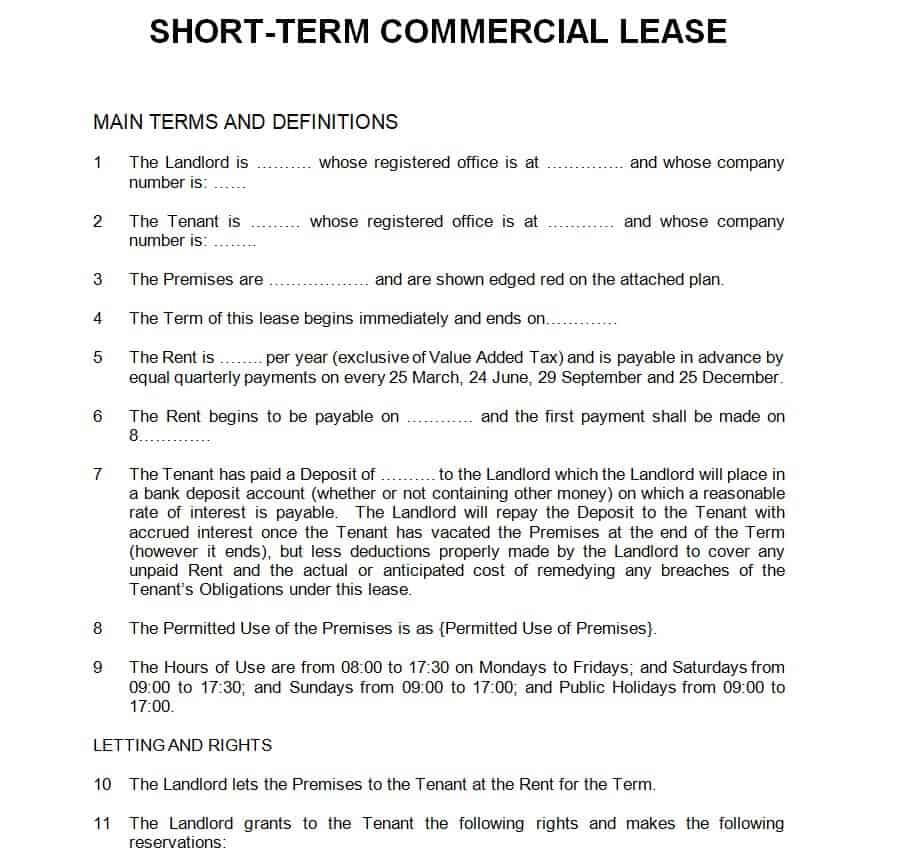
The page includes an Editable Short-Term Commercial Lease Agreement Template.
The parties should still clearly document the rental period, rent, permitted use, responsibilities, and termination conditions.
Single Tenant Commercial Lease Agreement
A single tenant commercial lease agreement is used when one tenant occupies the leased commercial premises.
The agreement can clearly establish the tenant’s rights and responsibilities and define which areas are included in the lease.
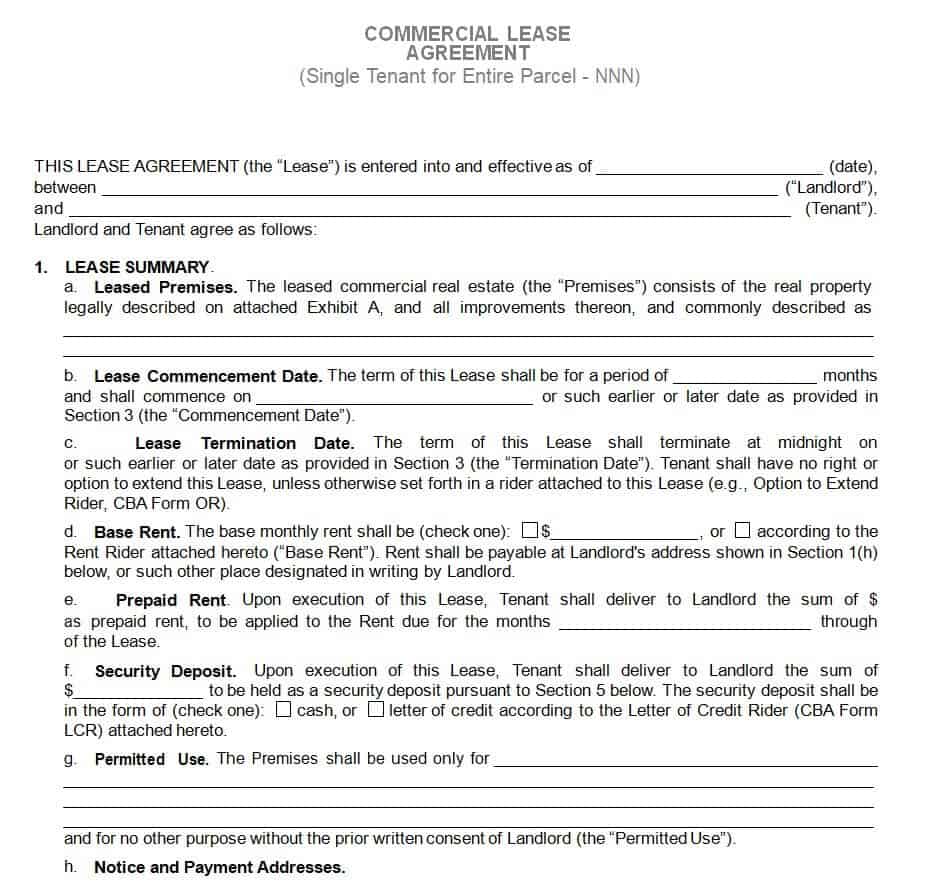
The current collection includes a Single Tenant Commercial Lease Agreement Template.
Blank Commercial Lease Agreement Template
A blank commercial lease agreement template gives landlords and tenants a basic structure that can be customized.
It is useful when the parties want to create their own document structure rather than starting with completed sample information.
Before using a blank template for an actual transaction, make sure all important commercial and legal terms have been addressed.
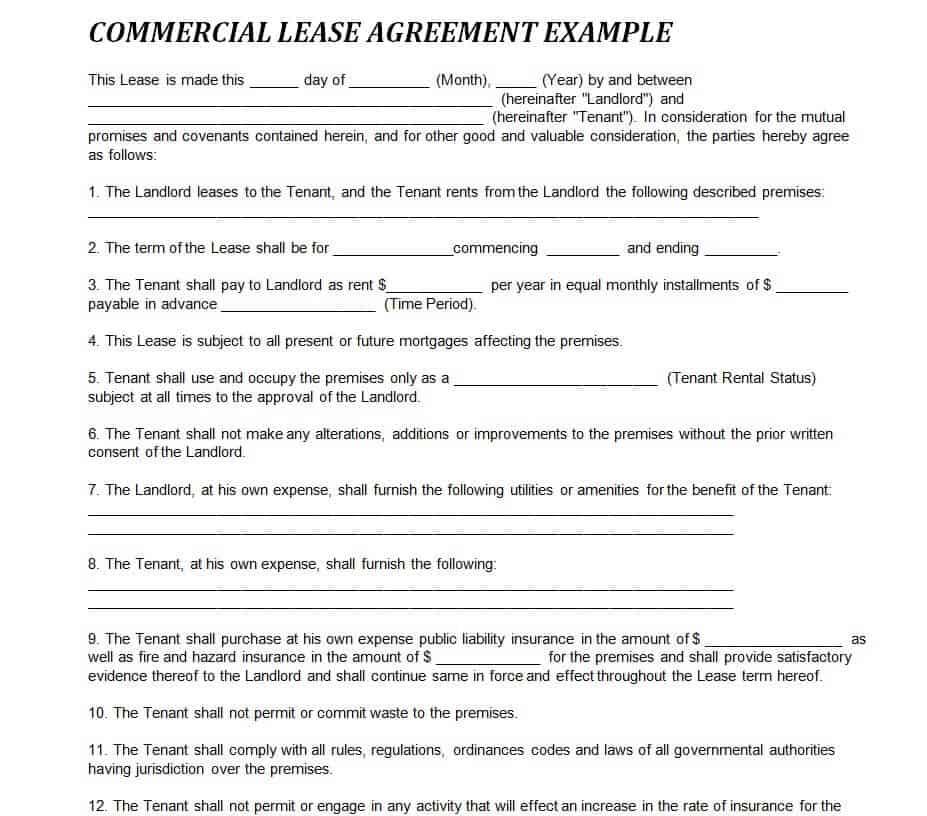
Commercial Lease Agreement Example
A commercial lease agreement example can help landlords and tenants understand the types of information that may appear in a business property lease.
An example may show how the parties, property, rent, term, responsibilities, and other provisions are organized.
However, an example from one transaction should not automatically be copied into another because commercial leases can vary significantly depending on the property and negotiated terms.
Commercial Lease Agreement vs. Residential Lease
A commercial lease is different from a residential lease because the property is generally being rented for business or commercial purposes.
A residential lease focuses on someone’s use of a home or dwelling, while a commercial lease may address business operations, operating expenses, insurance, maintenance, permitted use, signage, commercial improvements, and other business-specific matters.
Commercial leases can therefore be considerably more complex than basic residential rental agreements.
How to Create a Commercial Lease Agreement
Using a template can make the document preparation process easier.
Step 1: Identify the Parties
Enter the correct legal names and contact details of the landlord and tenant.
Step 2: Describe the Property
Provide the full address and identify the specific premises being leased.
Step 3: Define the Business Use
Explain what business activity the tenant is permitted to conduct.
Step 4: Set the Lease Term
Enter the start date and end date and include renewal provisions where applicable.
Step 5: Specify Rent and Deposits
Clearly state the rent, payment schedule, security deposit, and any other applicable charges.
Step 6: Define Responsibilities
Document who is responsible for repairs, maintenance, utilities, taxes, insurance, and other property-related costs.
Step 7: Add Special Terms
Include negotiated provisions covering alterations, signage, subleasing, assignment, parking, access, renewal, or other relevant matters.
Step 8: Review the Agreement
Both parties should carefully review the document before signing.
For a significant commercial transaction, professional legal review can help identify issues that a generic template may not address.
Tips for Reviewing a Commercial Lease
Before signing a commercial lease, don’t focus only on the monthly rent.
Pay attention to:
Lease term: Understand the initial period and renewal options.
Total occupancy cost: Check whether additional expenses apply beyond base rent.
Rent increases: Understand when and how rent may change.
Repairs: Determine exactly who is responsible for different types of repairs.
Permitted use: Make sure the intended business activity is allowed.
Insurance: Check required coverage.
Subleasing: Determine whether the tenant can sublease or assign the lease.
Termination: Understand the notice and termination provisions.
Improvements: Check who owns fixtures or improvements made to the property.
Default provisions: Understand the consequences of failing to meet contractual obligations.
Download Free Commercial Lease Agreement Templates
Whether you need a commercial lease agreement template, business lease agreement, office lease template, retail lease agreement, industrial lease agreement, short-term commercial lease, or blank commercial lease form, the collection on this page provides several formats to choose from.
You can download a template and customize the document with the relevant landlord, tenant, property, rent, lease-term, and business-use information.
Remember that a template is a starting point. Commercial property transactions can involve substantial financial and legal obligations, so the final agreement should be reviewed carefully and, where appropriate, by a qualified legal professional familiar with the applicable jurisdiction.
Check Out the Commercial Lease Agreement Templates:
Short Form Commercial Lease Agreement Template

Single Tenant Commercial Lease Agreement Template
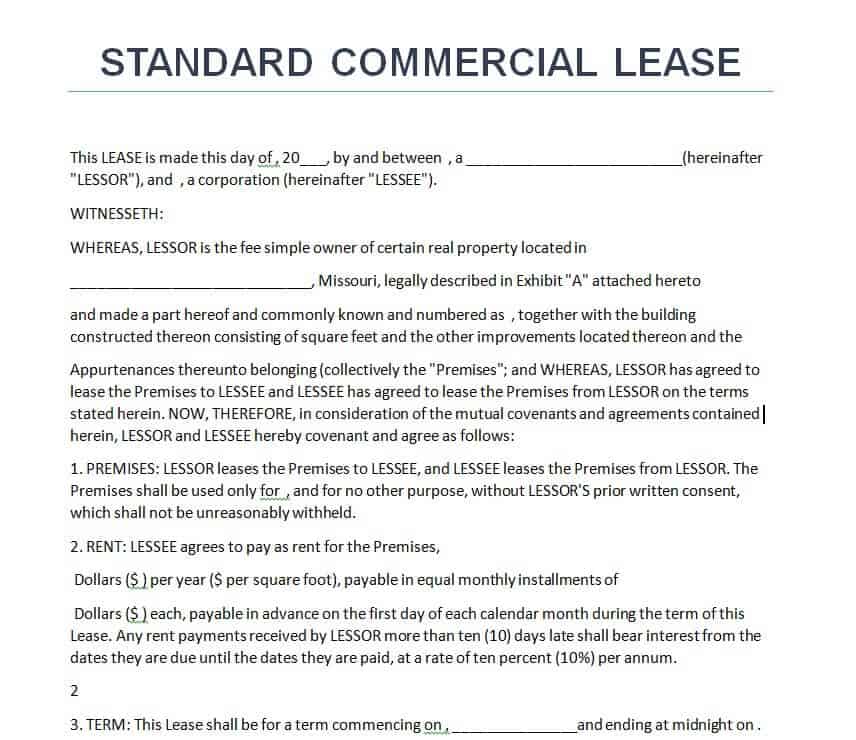
Standard Commercial Lease Agreement Template WORD
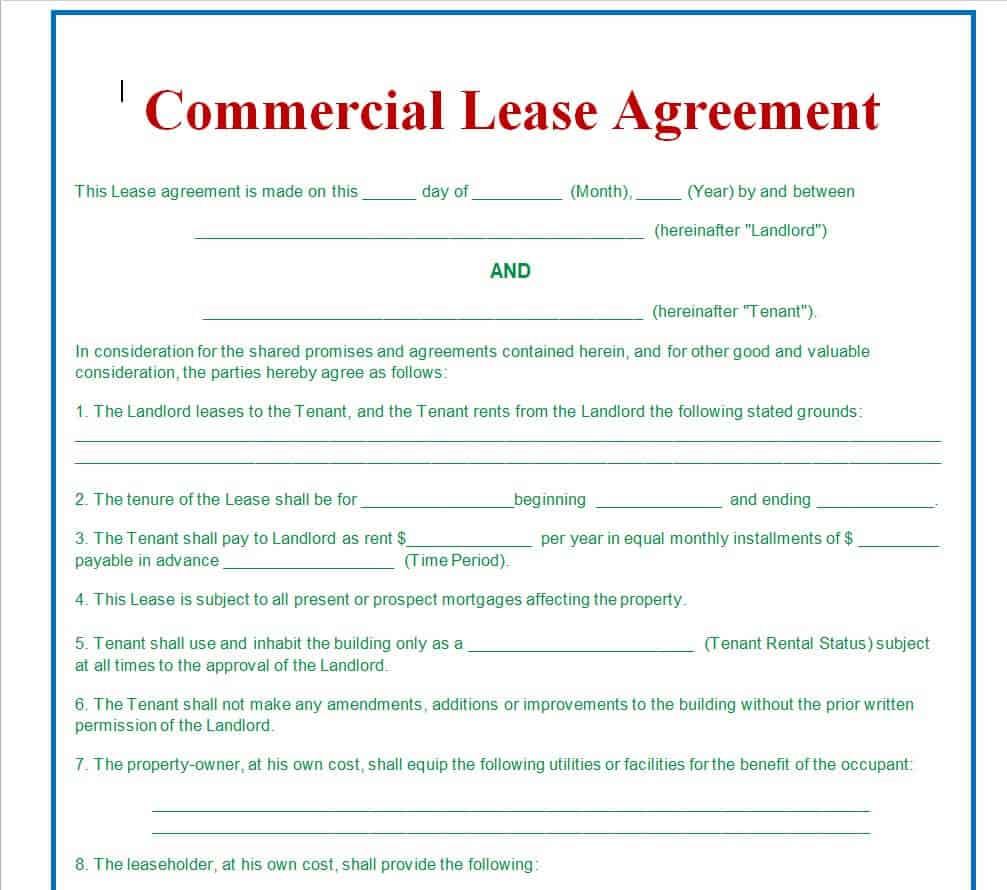
Practical Commercial Lease Agreement Template
Editable Short-Term Commercial Lease Agreement Template
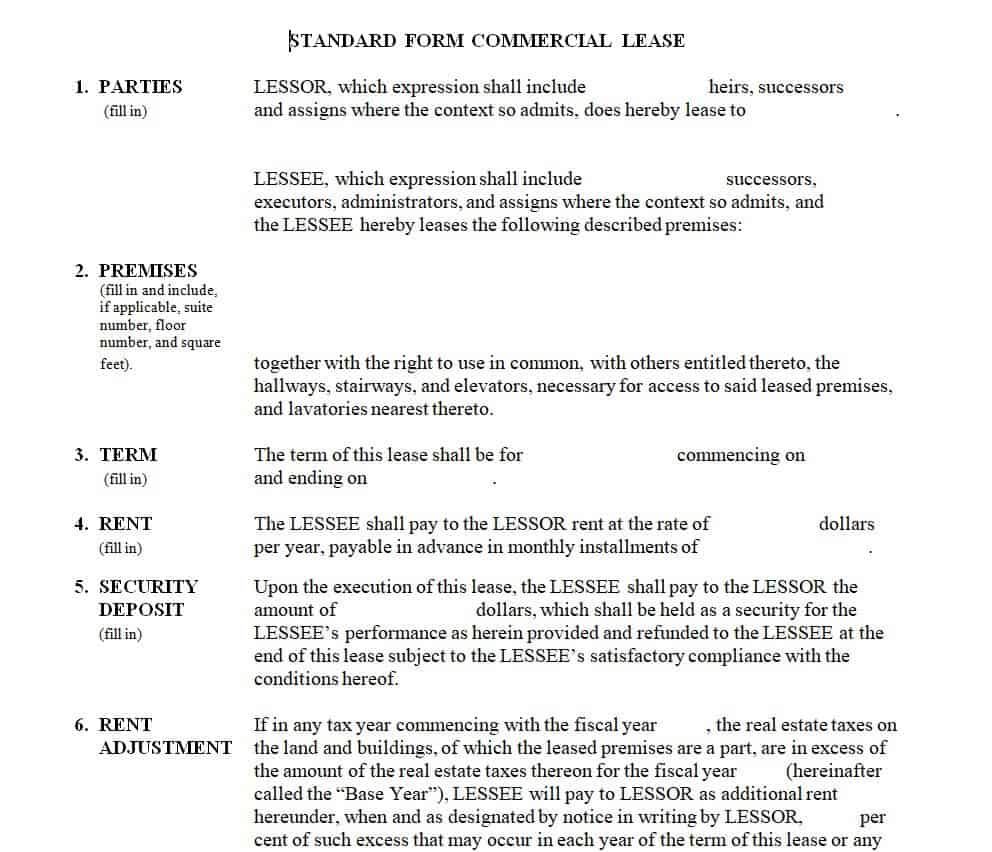
Standard Form Commercial Lease WORD Template
Sample Commercial Lease Agreement Template

Blank Commercial Lease Agreement Template
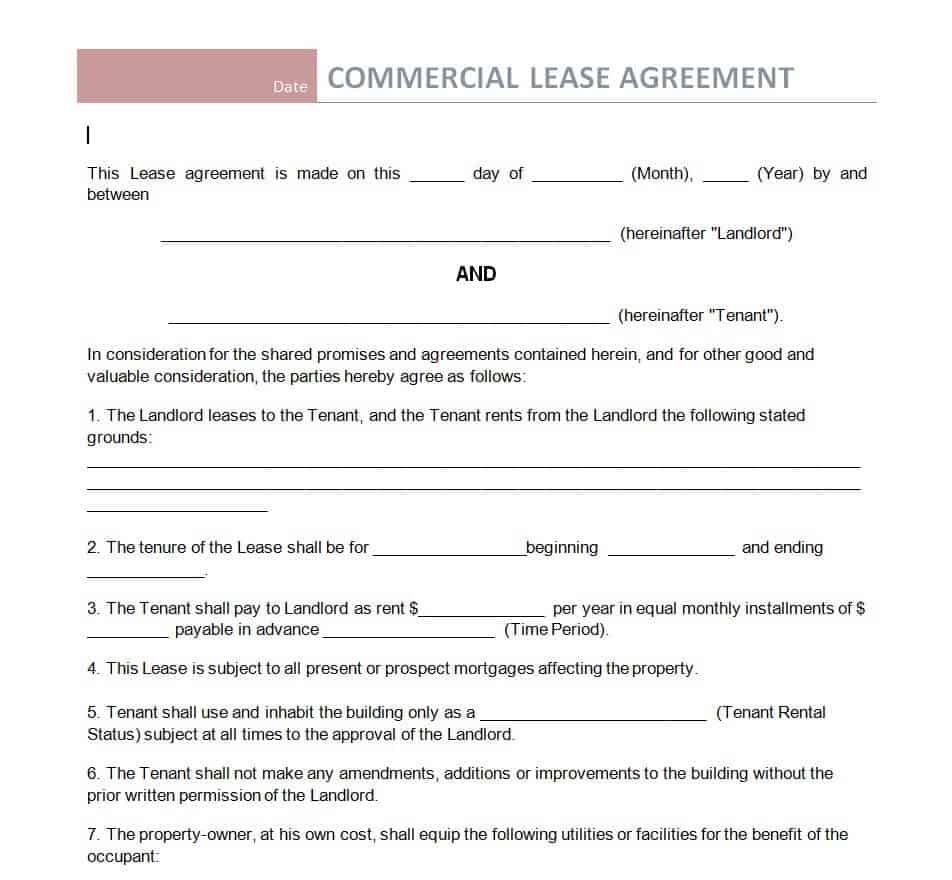
Movable Assets Lease Agreement Template

Example Commercial Lease Agreement Template DOC Format
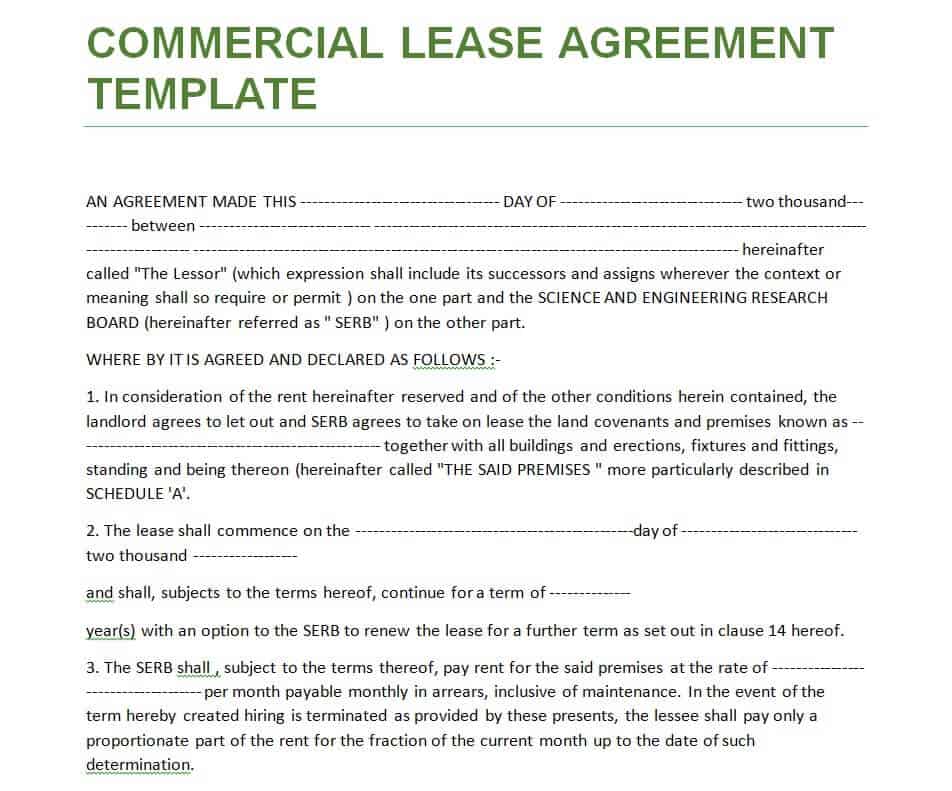
Official Commercial Lease Agreement Template

Printable Commercial Lease Agreement Template
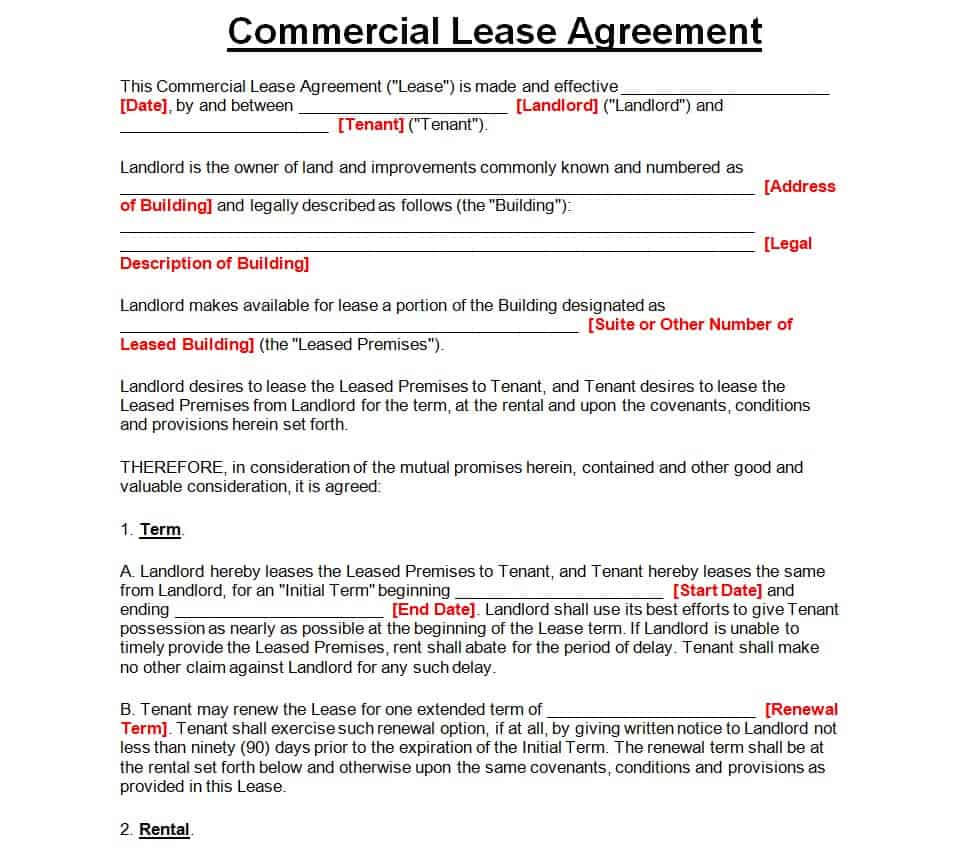
Free Commercial Lease Agreement Example
Commercial and Industrial Lease Agreement Template

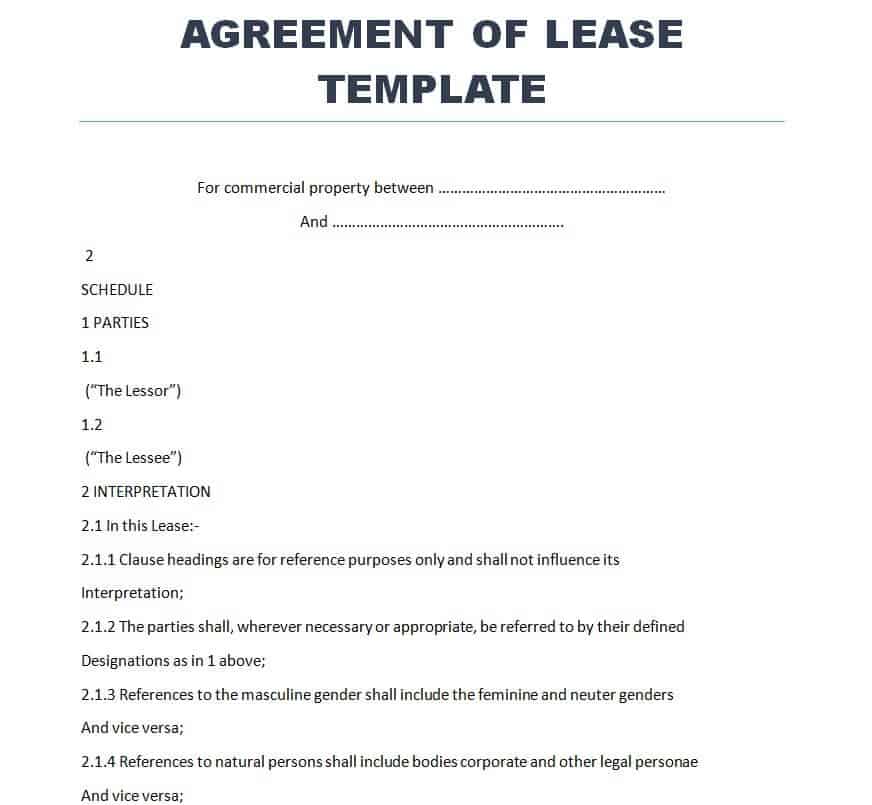
Editable Agreement of Lease Template
Frequently Asked Questions
What is a commercial lease agreement?
A commercial lease agreement is a contract between a landlord and tenant that establishes the terms for using property for business or commercial purposes.
What should a commercial lease agreement include?
It commonly includes the parties’ information, property description, permitted use, lease term, rent, security deposit, maintenance responsibilities, utilities, insurance, termination provisions, and other negotiated terms.
Can I use a commercial lease agreement template in Word?
Yes. A Word template can provide an editable structure for preparing a commercial lease. The document should be customized to the specific property and transaction.
What is the difference between a commercial and residential lease?
A commercial lease is generally used for business property, while a residential lease is used for housing. Commercial leases often contain additional provisions relating to business operations, expenses, insurance, maintenance, and permitted use.
What is a triple net commercial lease?
A triple net, or NNN, lease is a commercial lease structure in which the tenant may be responsible for certain property expenses in addition to base rent, commonly including taxes, insurance, and maintenance. The exact structure and obligations should be clearly defined in the lease.
Can a commercial lease be short-term?
Yes. Parties can agree to a short-term commercial lease when appropriate. The agreement should clearly state the rental period, payment terms, responsibilities, and termination conditions.
Can a commercial lease agreement be modified?
Commercial lease terms can generally be negotiated and amended according to the agreement and applicable law. Any amendment should be properly documented and agreed to by the relevant parties.
Should a lawyer review a commercial lease?
For significant commercial property transactions, professional legal review can be valuable because lease terms can create substantial financial and legal obligations. Requirements vary by jurisdiction.
