

A bill of lading is a legal document signed between shipper and carrier which identifies all important information related to the shipment of goods such as type of goods, quantity, and destination of goods. it is one of the most important documents in the shipment of goods.
A bill of lading legally describes that the carrier has received the freight as described and is obligated to deliver that freight in good condition to the other party or destination. The bill of lading is automatically generated when a customer books a shipment with a Freight quote based on the shipment details entered during the booking process.
We can prepare a bill of lading with the help of bill of lading templates. These templates are provided by different websites free of cost. We can download and customize such templates as per our needs easily. You can also check out the bill of lading templates provided here on this page. All of these bill of lading samples can be easily customized and used as per your requirements..
A bill of lading template is a useful document especially when it comes to export. The document used for transferring the goods by endorsement to the destination mentioned is known as a bill of lading. The bill of lading is the receipt given by the shipper after the goods have been loaded on the ship. The details in the bill of lading include the name of goods, destination, weight, and quantity.
Once the person receives the bill of lading then it is the responsibility of the shipper to take care of goods. The freight is received by the shipper when he gives the bill of lading to the person paying for the goods. The bill of lading secures both parties by every means. The amount mentioned on the bill of lading depends upon the weight of the goods and the distance covered by the shipper. Both the parties have to be on terms and conditions written in the bill of lading.
Who Uses a Bill of Lading?
A bill of lading isn’t just paperwork for the trucking company — it’s a document that several different parties rely on, each for a different reason. The shipper uses it as proof that goods were handed over to the carrier in the condition described. The carrier uses it as its contract of carriage and as a receipt for exactly what it agreed to transport. Freight brokers reference it to confirm pickup and delivery details when coordinating shipments on behalf of a shipper, especially when more than one carrier is involved along the route. The consignee, meaning the person or company receiving the freight, uses the bill of lading to verify that what arrived matches what was ordered, and to support a claim if anything is missing or damaged. Because every party in the supply chain touches this one document at some point, accuracy and legibility matter just as much as the information itself.
Key Elements Every Bill of Lading Should Include
A complete bill of lading protects everyone involved in a shipment, and missing details are one of the most common causes of delays and disputes. At minimum, a bill of lading should include:
- Shipper and consignee details, including full names, addresses, and contact information
- Carrier information, such as the trucking or shipping company name and, where relevant, driver or vessel details
- A clear description of the goods being shipped, including how they are packaged
- Quantity, weight, and dimensions of the freight
- Special handling instructions, such as fragile, hazardous, or temperature-controlled requirements
- Freight class or commodity code, where applicable, for accurate billing
- Signatures from the shipper and carrier at pickup, and from the consignee at delivery
Leaving out any one of these fields does more than create a paperwork headache. An incomplete description can hold up a shipment at a weigh station or inspection point, an unclear weight can lead to a billing dispute with the carrier, and a missing signature can leave a damage claim with no supporting evidence.
Download Bill of Lading Templates Here:
Commercial Government Bill of Lading Form Template
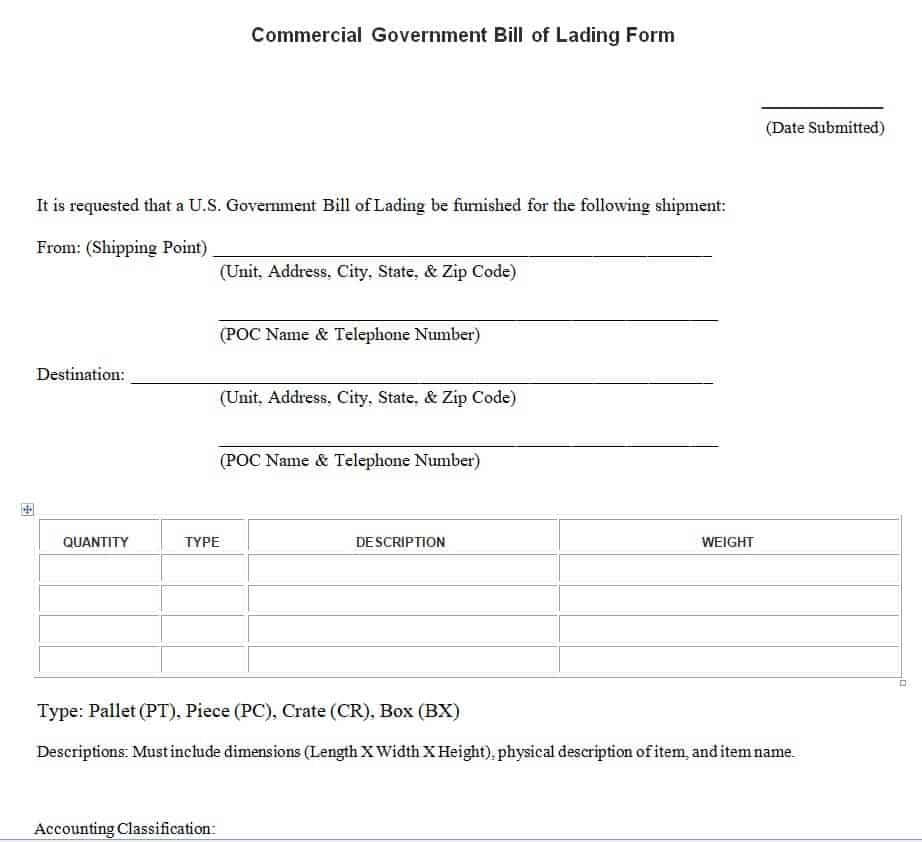
Sample Bill of Lading Template
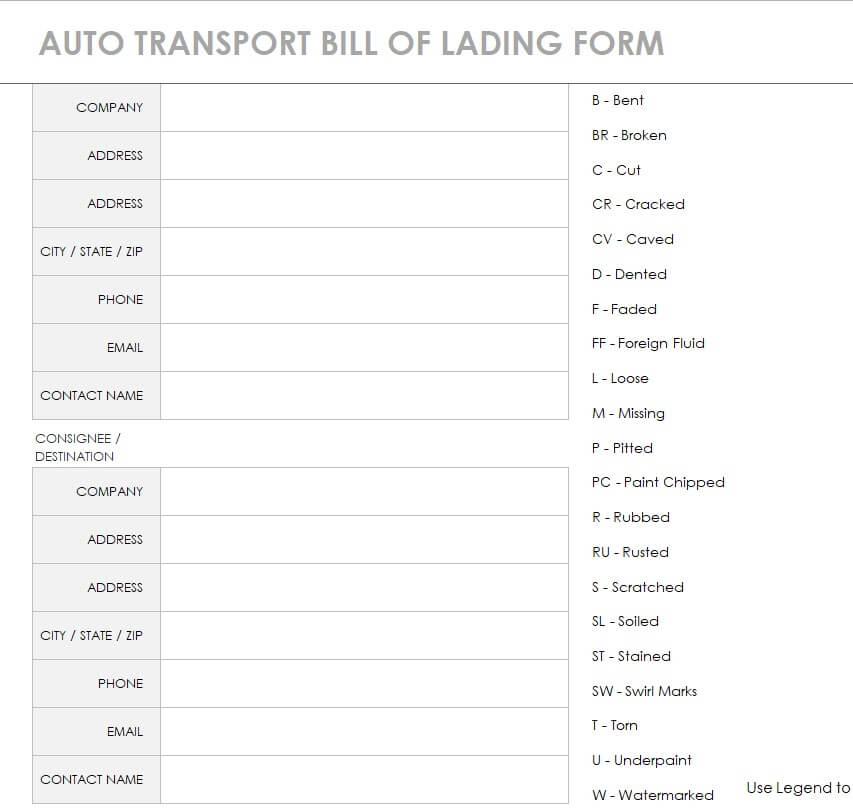
Auto Transport Bill of Lading Form Template EXCEL
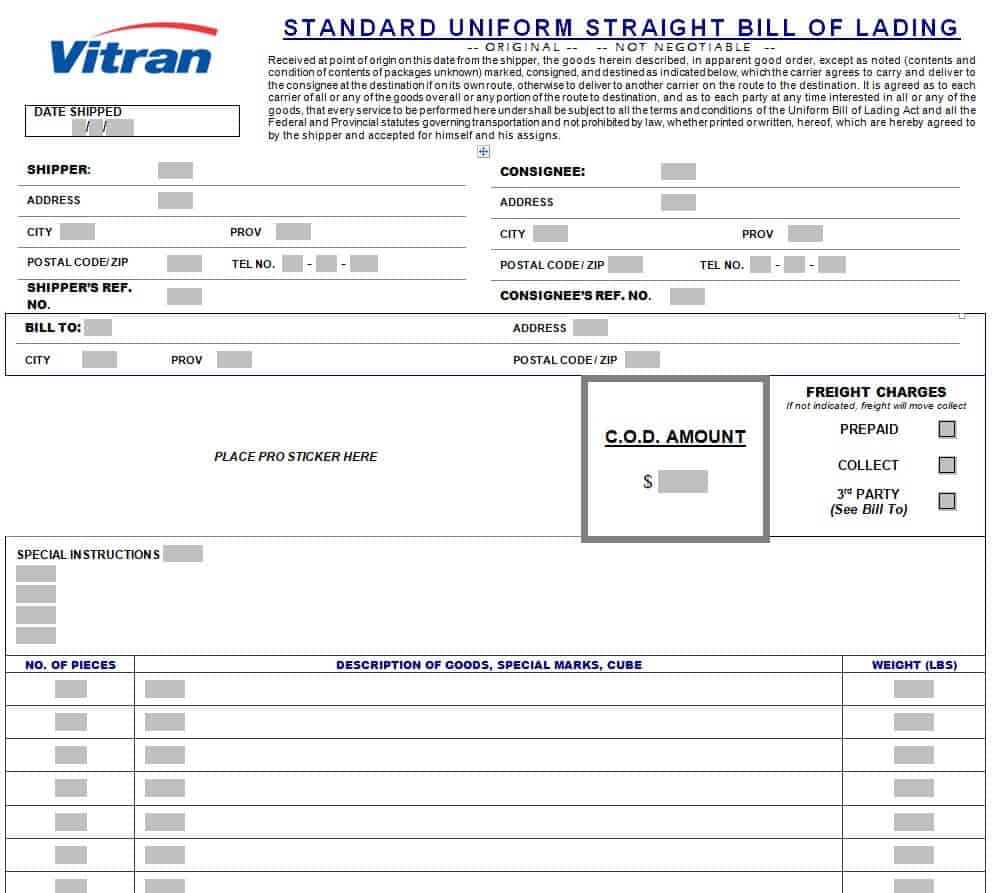
Standard Straight Bill of Lading Template
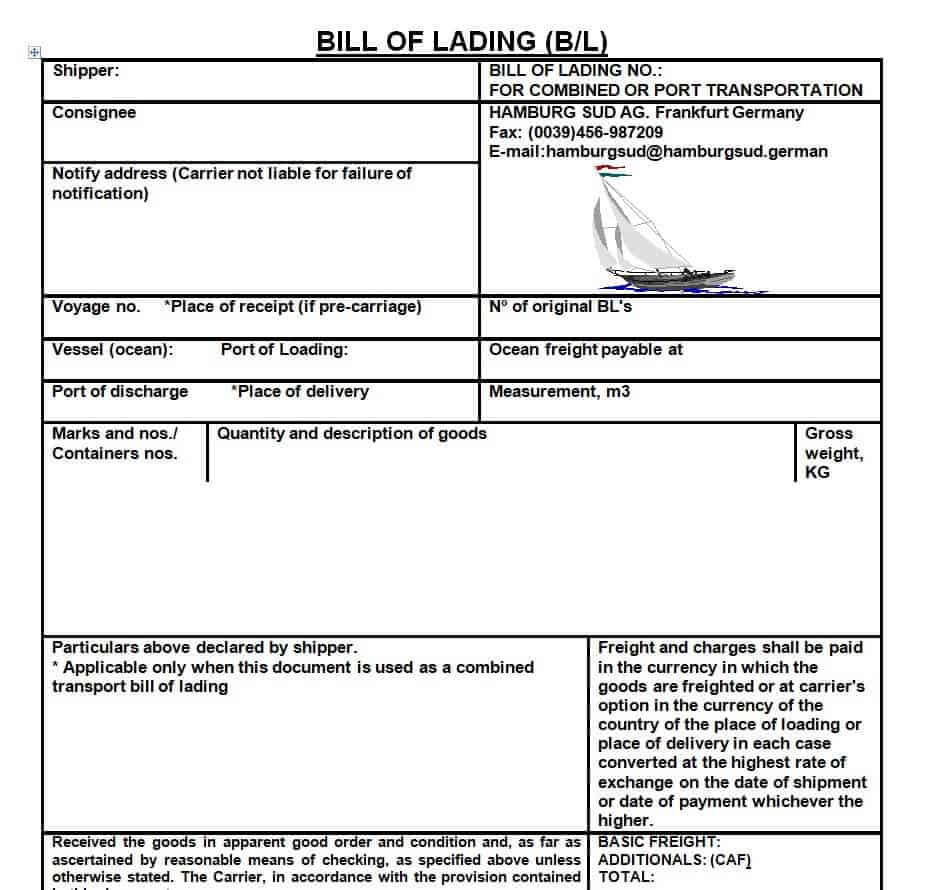
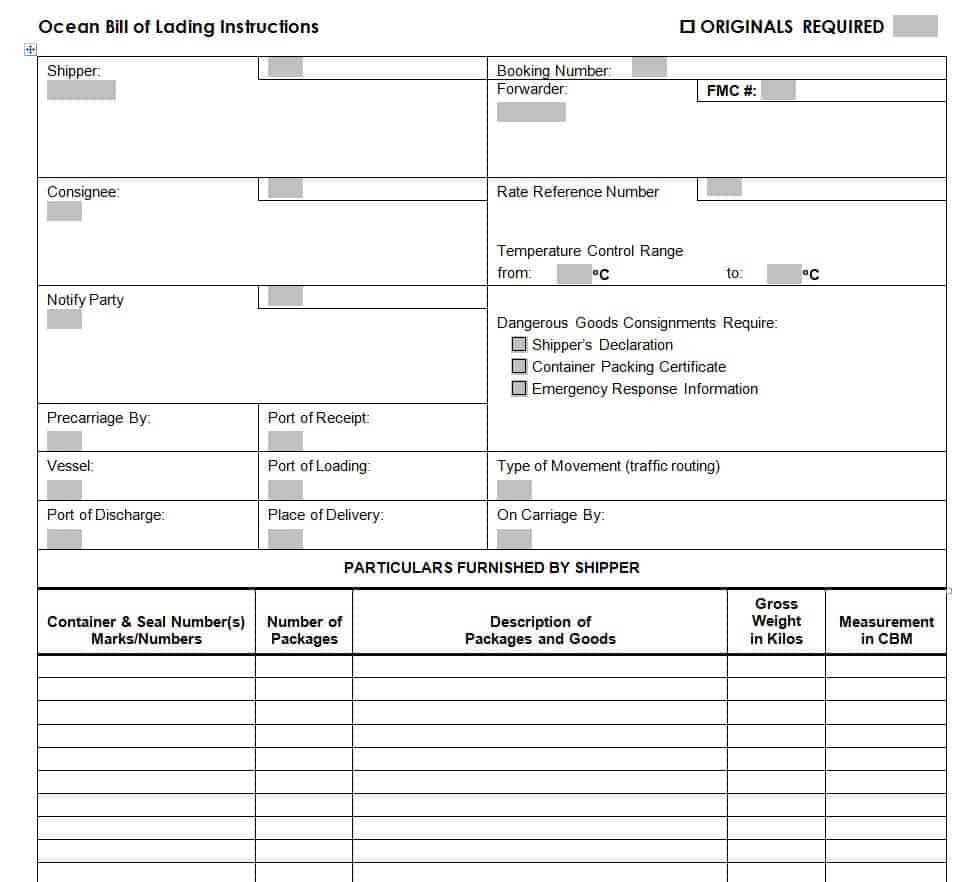
Ocean Bill of Lading Template with Instructions
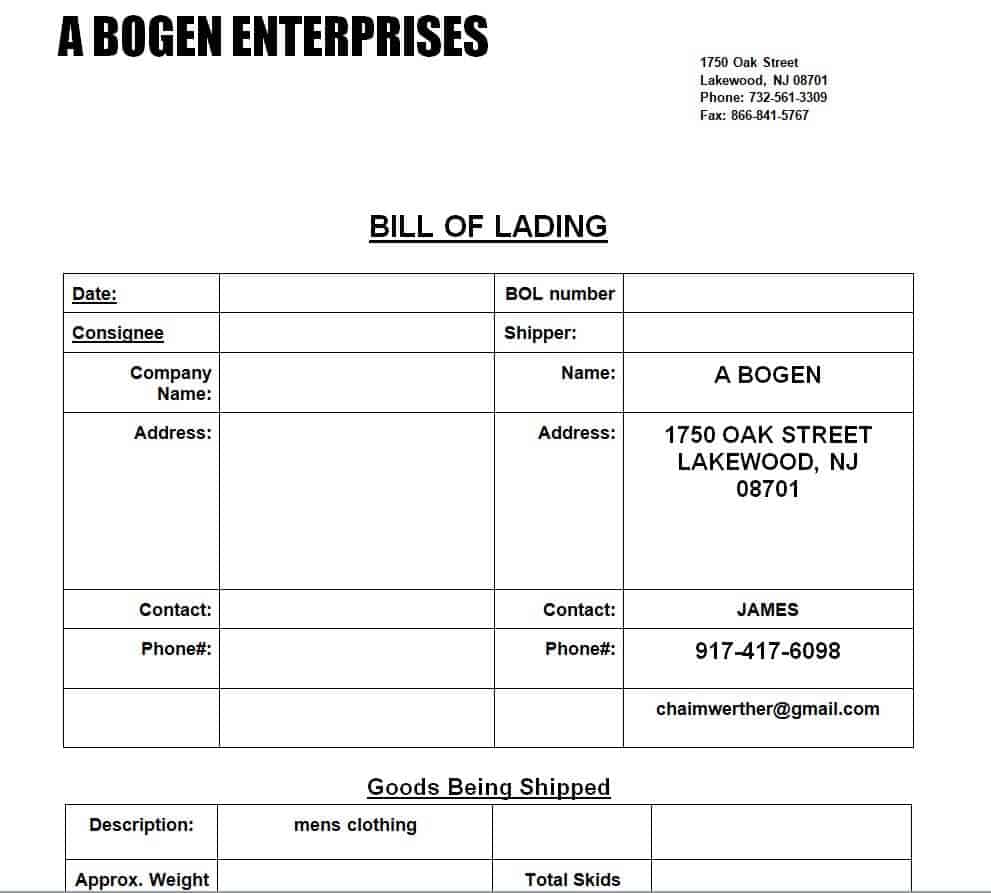
Enterprise’s Bill of Lading Template
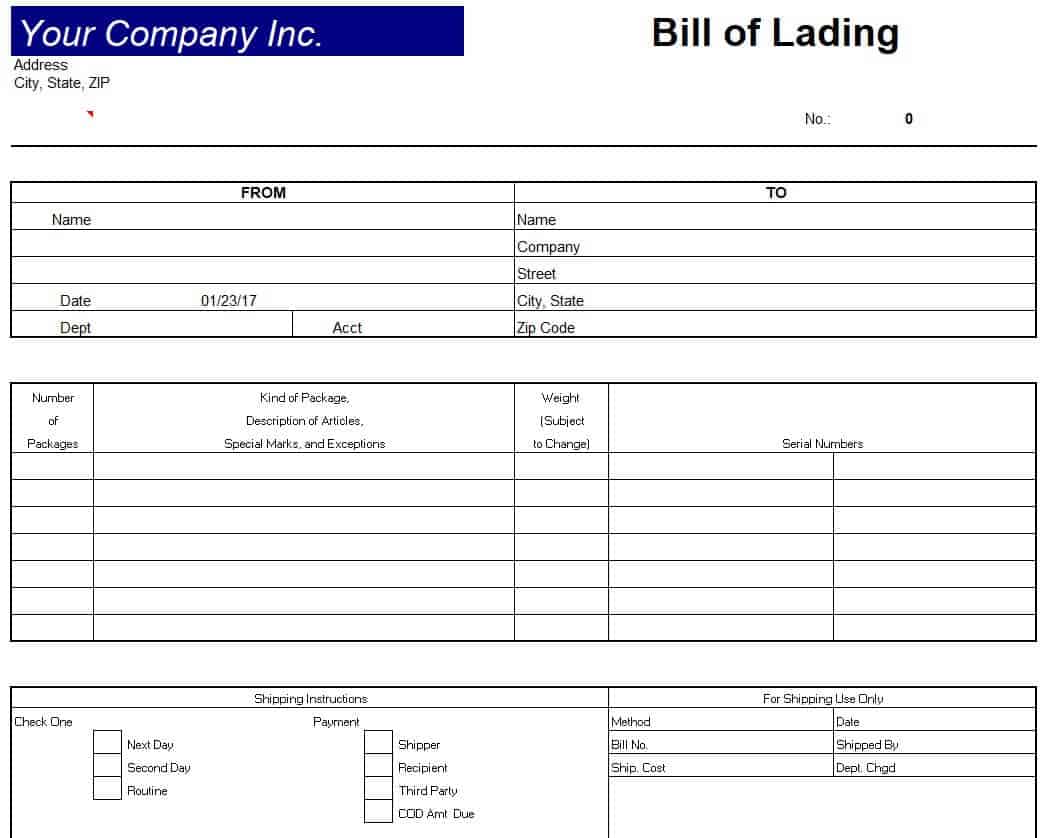
Company’s Bill of Lading EXCEL Template
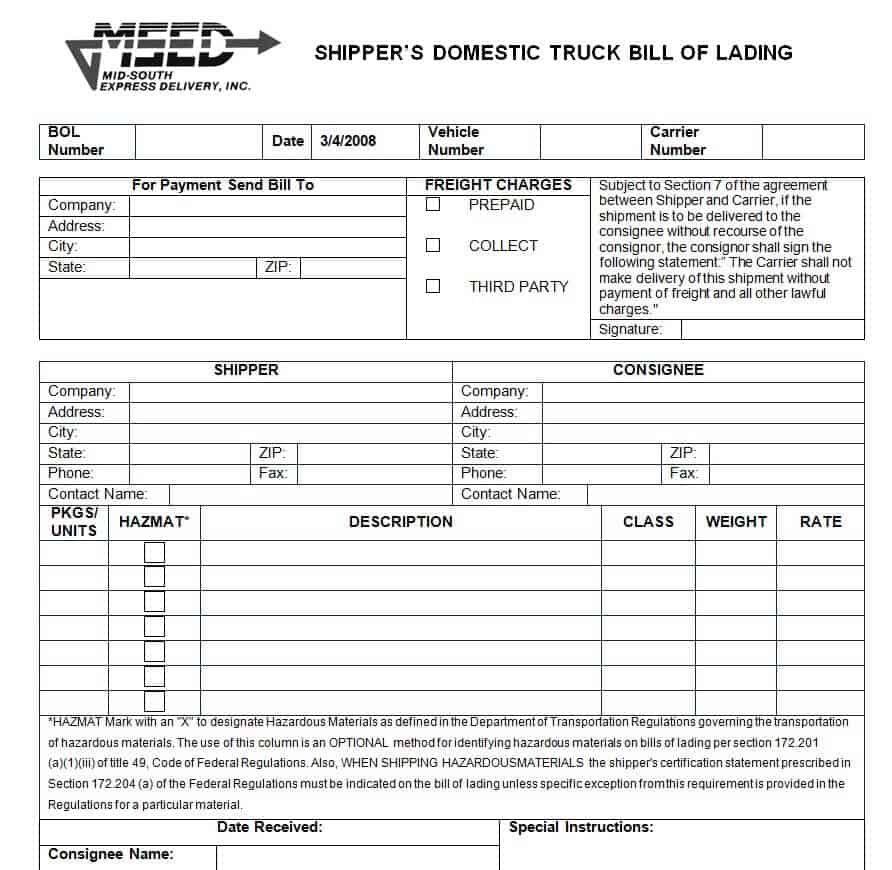
Domestic Bill of Lading Template for Truck
Non Negotiable Bill of Lading Template
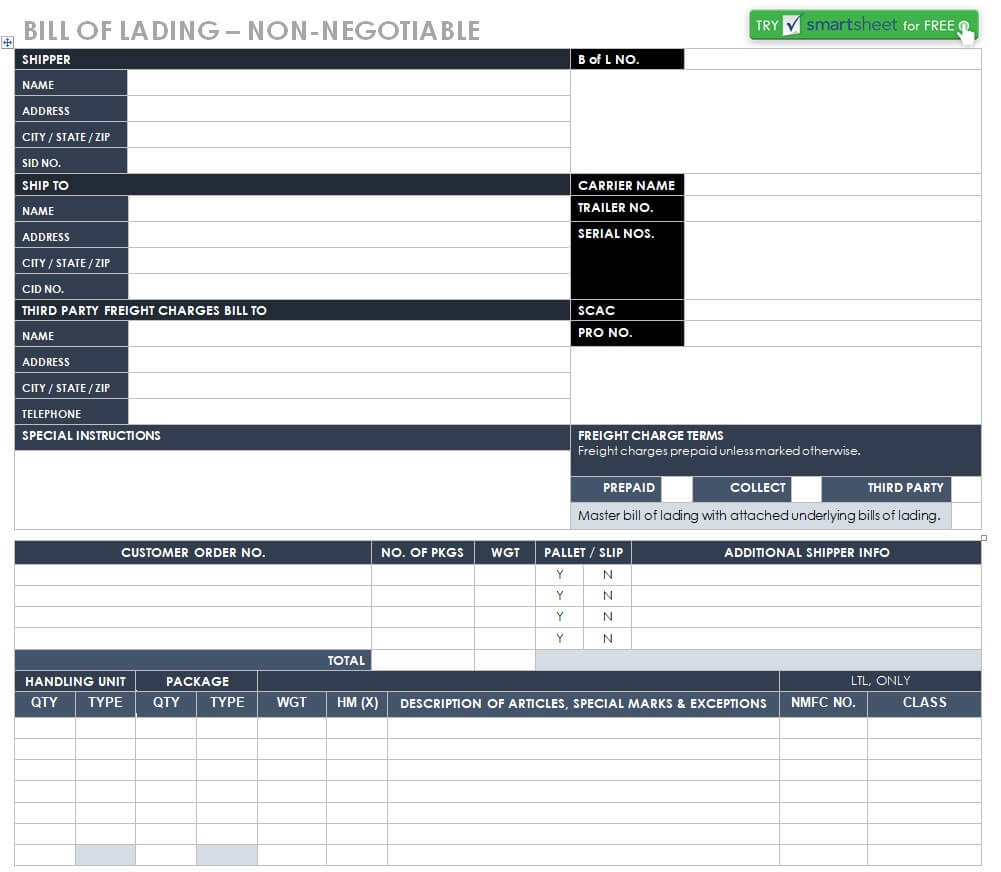
Useful Bill of Lading Template in Excel Format
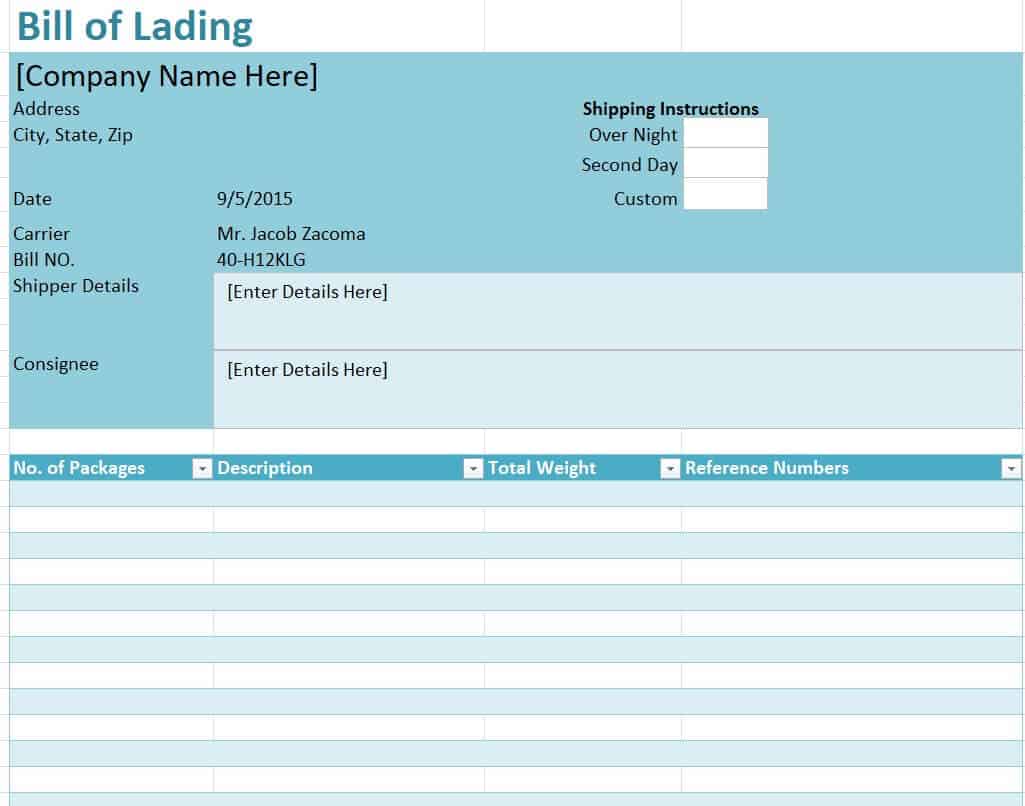
Detailed Straight Bill of Lading Template
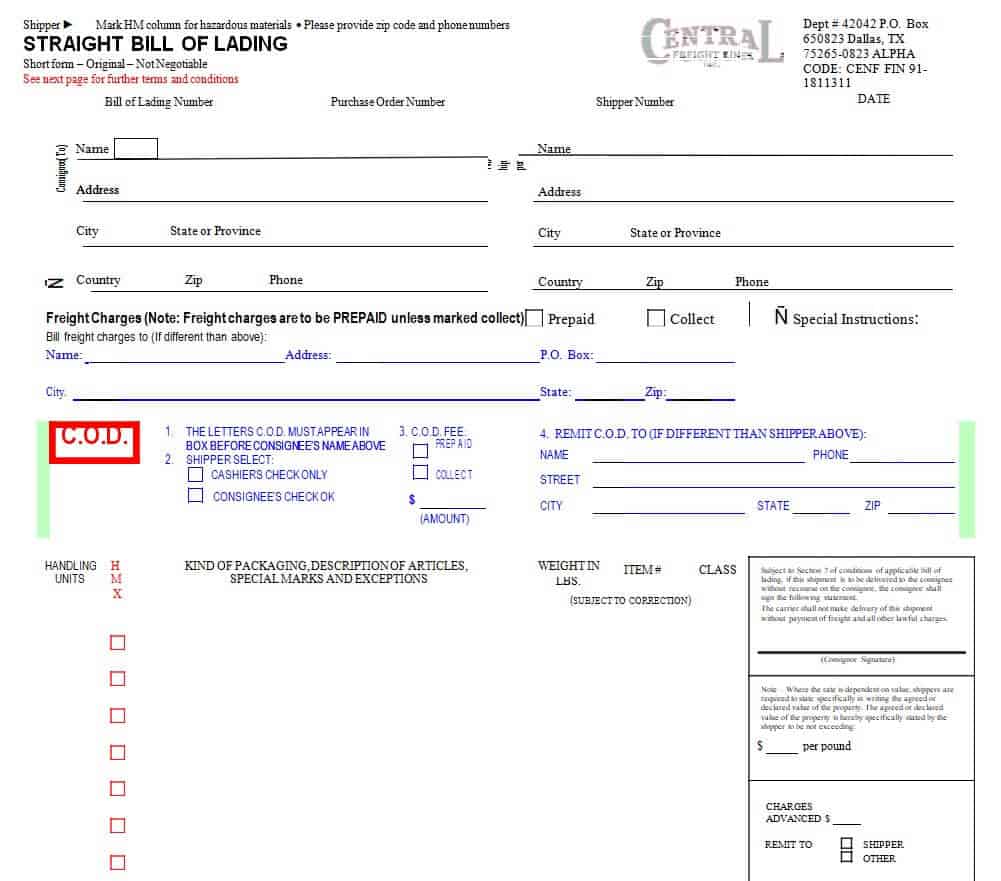
Transport Company’s Bill of Lading Template WORD
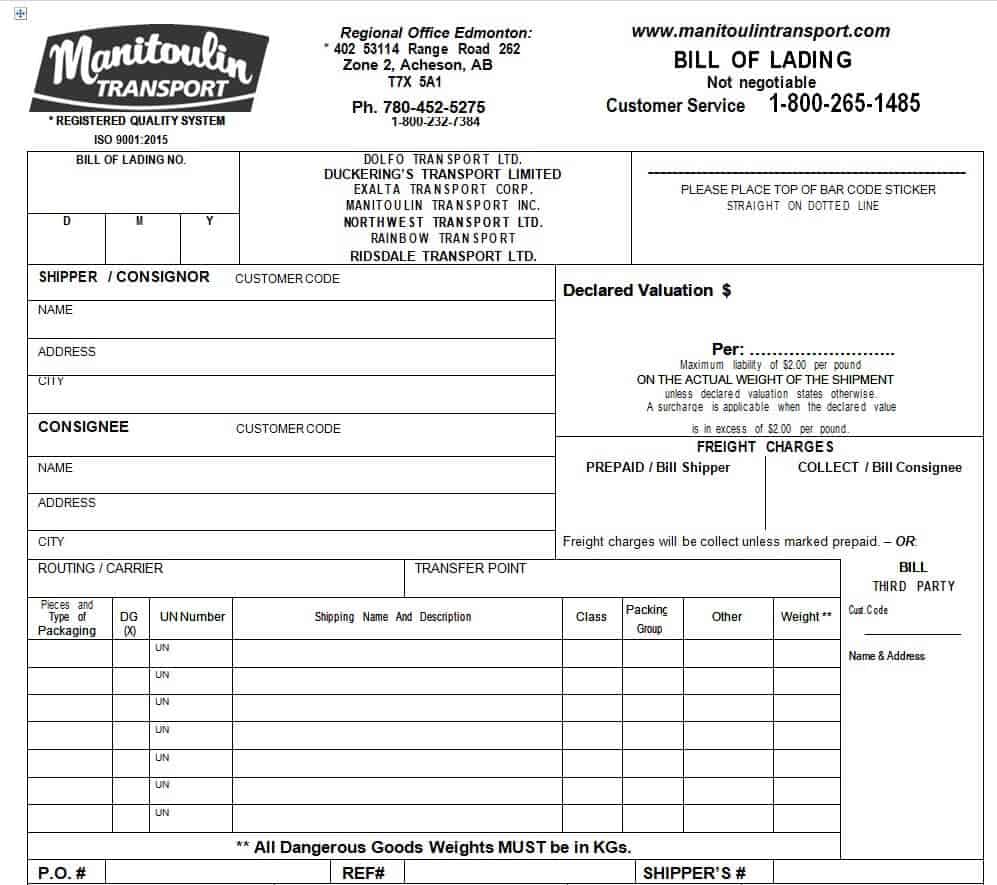
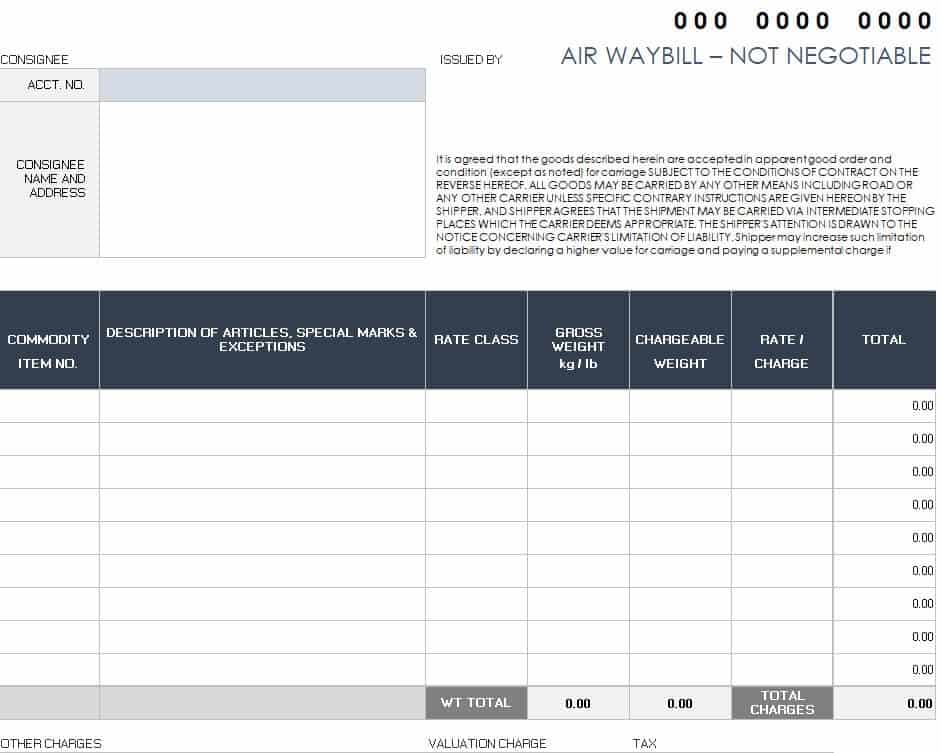
Non Negotiable Air Bill of Lading Template
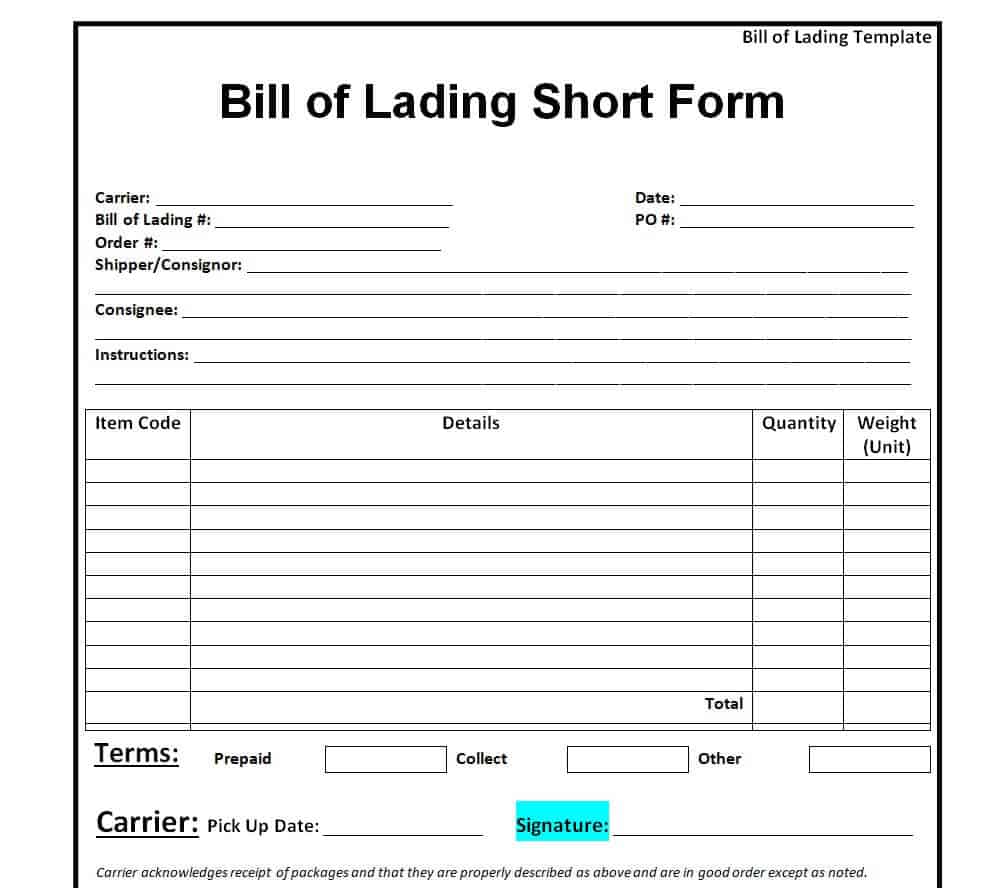
Short Form Bill of Lading WORD Template
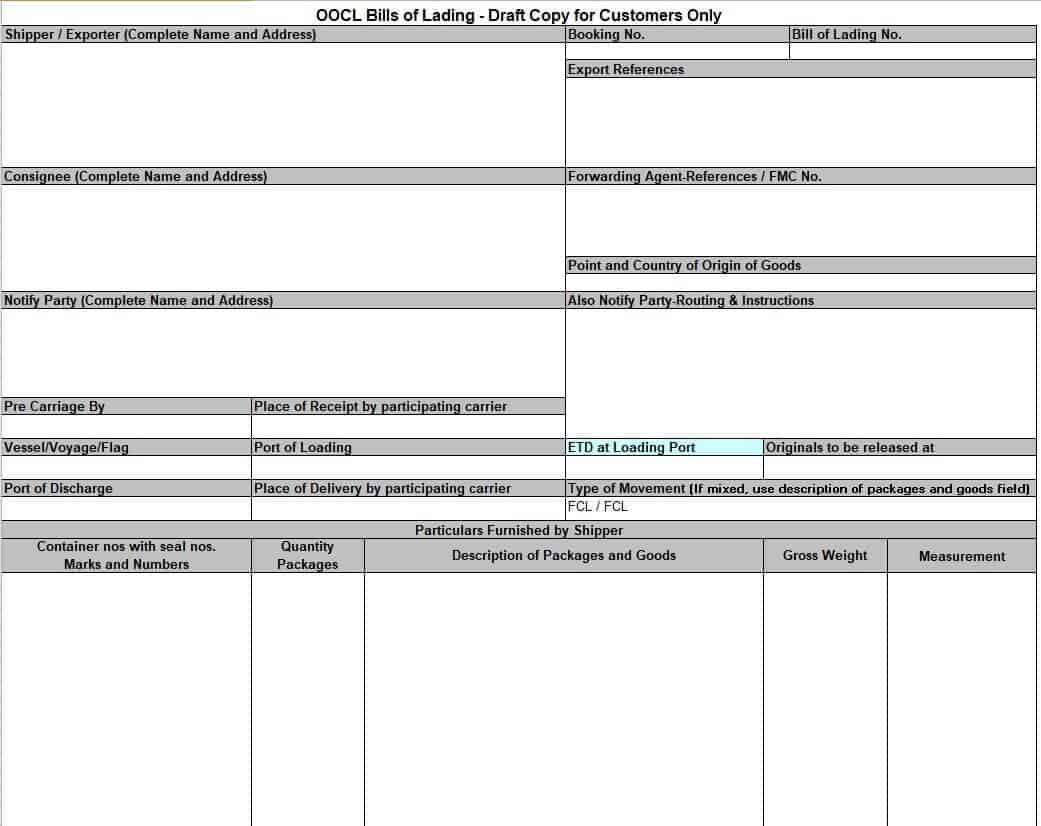
Customer’s Draft Copy of Bill of Lading
Blank Bill of Lading Template in DOC Format
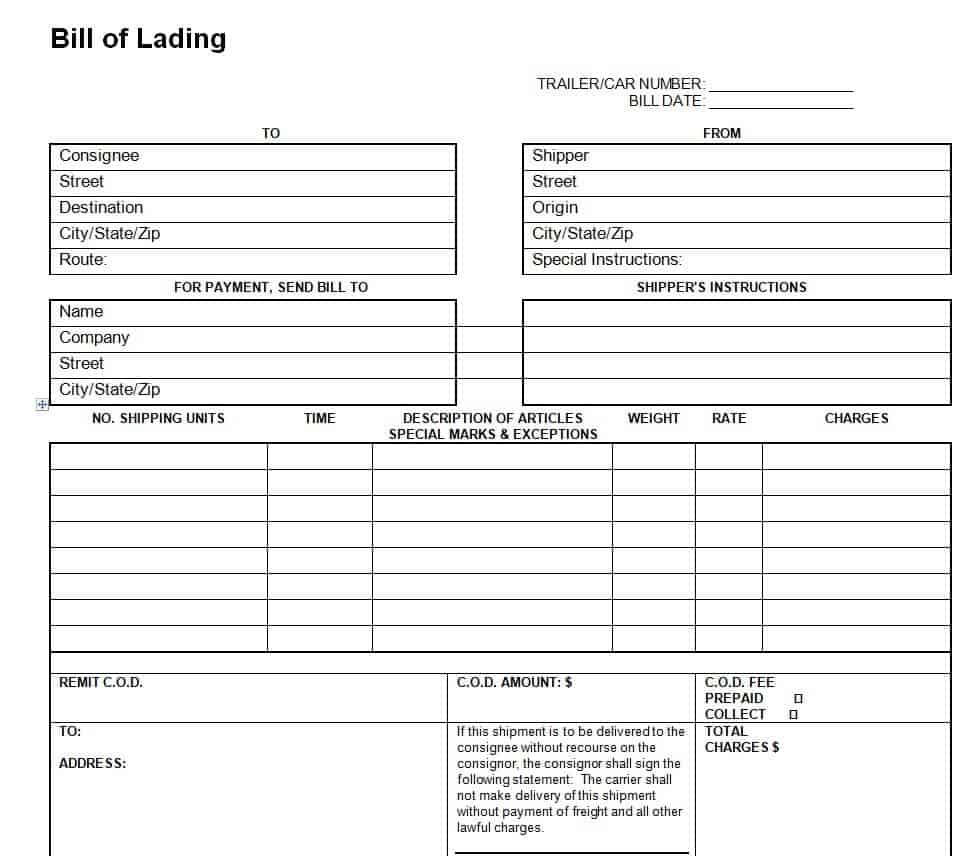
Editable Trucking Bill of Lading Template
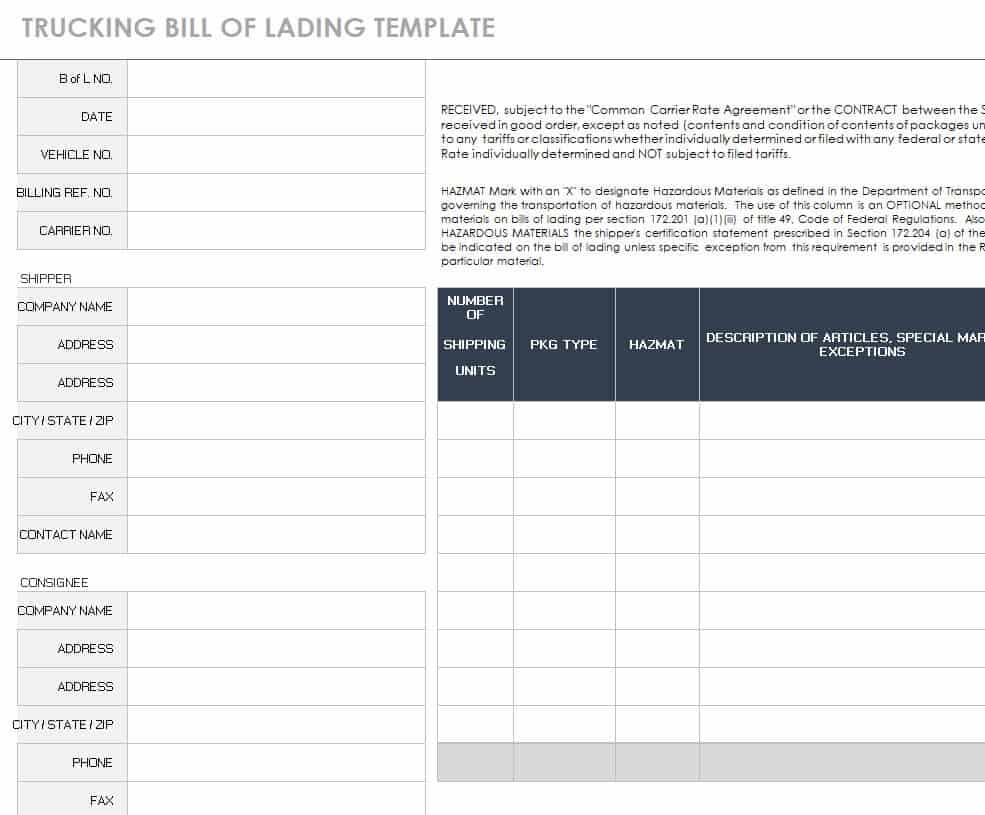
Types of Bills of Lading
Not every bill of lading works the same way. The type used depends on how payment is handled and who is authorized to take delivery of the goods.
Straight Bill of Lading
A straight bill of lading is non-negotiable. The goods are consigned to one named person or company, and only that party can take delivery. This type is common for shipments that have already been paid for, since ownership isn’t changing hands while the freight is in transit.
Order Bill of Lading
An order bill of lading is negotiable, meaning it can be transferred to another party by endorsement before the goods arrive. This is often used when the goods are sold while still in transit, or when payment is tied to presentation of the document, such as in a letter of credit arrangement.
Bearer Bill of Lading
A bearer bill of lading allows whoever physically holds the document to claim the goods, without needing to be named on it. It’s rarely used in practice because it carries real risk: if the document is lost or stolen, whoever has it can take delivery of the shipment.
It’s also worth distinguishing a bill of lading from a commercial invoice. A commercial invoice states what was sold and for how much, and it’s used for customs valuation and billing between buyer and seller. A bill of lading, by contrast, is a receipt and contract of carriage — it documents what was shipped and its condition at pickup, not what it cost. Many international shipments require both documents, but they serve different legal purposes and aren’t interchangeable.
How a Bill of Lading Is Used, From Pickup to Delivery
The bill of lading follows a shipment through several distinct stages:
- Booking: The shipper arranges transportation with a carrier or freight broker and provides the shipment details ahead of pickup.
- Preparation: The shipper, or sometimes the carrier, fills out the bill of lading with the cargo description, weight, quantity, and any handling instructions.
- Pickup and signing: The driver or carrier representative inspects the shipment and signs the bill of lading alongside the shipper, confirming the freight was received in good condition.
- In transit: The bill of lading travels with the shipment as the reference document for handling, transfers between carriers, and any inspections along the route.
- Delivery: The consignee checks the freight against the bill of lading, notes any damage or shortage directly on the document, and signs to confirm receipt.
- Recordkeeping: All parties keep signed copies, which are used for billing, audits, or resolving disputes if they come up later.
Common Mistakes to Avoid
Most bill of lading problems trace back to a handful of avoidable errors:
- Incomplete or vague goods descriptions that make it difficult to verify what was actually shipped
- Missing signatures at pickup or delivery, which weakens any later damage or shortage claim
- Weight or quantity mismatches between what’s written on the bill of lading and what’s actually loaded
- Not keeping copies — once a shipment is delivered and a dispute comes up, a missing or unsigned bill of lading leaves little to fall back on
- Using a generic template without adjusting it for hazardous materials, temperature control, or freight class when those apply
Frequently Asked Questions
Is a bill of lading a legal contract?
Yes. A bill of lading serves as a legally binding contract of carriage between the shipper and the carrier, in addition to acting as a receipt for the goods. Courts and carriers treat its terms as enforceable.
Who keeps the original bill of lading?
Typically, the shipper, the carrier, and the consignee each keep a signed copy. For negotiable bills of lading, the original may need to be presented to claim the goods, so it’s handled and tracked more carefully than a standard shipping receipt.
What happens if goods arrive damaged — does the BOL matter?
Yes, it matters a great deal. If damage or shortage is noted on the bill of lading at delivery and signed by both the carrier and consignee, that notation becomes key evidence when filing a freight claim. Damage discovered later without any notation on the document is much harder to dispute successfully.
Is a bill of lading the same as a packing list?
No. A packing list itemizes exactly what’s inside each box or pallet for the receiver’s reference, while a bill of lading is the carrier’s legal receipt and contract for the shipment as a whole. Shipments often travel with both documents, each serving a different purpose.