

You can easily get free balance sheet templates here in this article. The balance sheet is a very important and one of the major financial statements of the company, business, or organization. It summarizes the assets, liabilities, and shareholder’s equity of a company or organization at a specific time.
In other words, a balance sheet is a measurable summary of a company’s financial position at a specific point in time. It is a document generally prepared by a general accountant of the company. When you want to make a balance sheet for your company be sure to include all assets, that the company owns, all liabilities that the company has to pay, and equities that the company invested into other businesses.
You can also use balance sheet templates available on the internet for your ease. By using balance sheet templates, you will be able to prepare a perfect balance sheet for your company without errors and mistakes. Hopefully, the given Balance Sheet Templates will also be useful for you.
The document on which the assets and liabilities are evaluated is known as a balance sheet. The assets include the cash in hand, the debtors, receivables, the plant, and machinery. The liabilities of a business or an entity are creditors, loans taken from the bank, and payables.
The balance sheet is prepared by an accountant for showing the financial position of the business. The users of the balance sheet are investors, shareholders, and an employer. Before preparing the balance sheet an accountant has to write the following information on the top of the paper. The information includes the name of the company, the year, and the date. In the balance sheet, the left column is for liabilities and the right is for assets. The number of assets and liabilities must be equal in the balance sheet.
Who Uses a Balance Sheet, and Why It Matters
A balance sheet matters because it is the single document that shows exactly what a business owns, what it owes, and what is left over for its owners at a specific point in time. Unlike an income statement, which covers a period of activity, a balance sheet is a snapshot — it tells you the financial position of a company on one particular date, not how it performed over the preceding weeks or months.
Several groups rely on this snapshot to make decisions. Business owners use it to track how their company’s net worth is changing over time. Accountants and bookkeepers use it to close out a reporting period and confirm that the books are accurate. Investors and shareholders study it to judge whether a company is financially healthy before committing money. Lenders and banks review it before extending credit, since it shows how much debt a business is already carrying relative to what it owns. Auditors use it as the starting point for verifying that a company’s financial records are complete and correctly classified.
The Three Core Components of a Balance Sheet
Every balance sheet is built from three sections, and understanding each one makes it far easier to fill in a template correctly.
Assets are everything the business owns that has value. They are usually split into current assets — cash, accounts receivable, inventory, and anything else that is expected to be converted into cash or used up within a year — and fixed (or non-current) assets, such as property, equipment, vehicles, and long-term investments, which are held for longer-term use rather than quick sale.
Liabilities are everything the business owes to others. Current liabilities are debts due within a year, such as accounts payable, short-term loans, accrued wages, and taxes owed. Long-term liabilities include items like mortgages, long-term loans, and bonds payable that will not come due for more than a year.
Equity is what remains for the owners once all liabilities have been subtracted from assets. For a sole proprietor this might be called owner’s equity; for a corporation it typically includes common stock and retained earnings. Equity is not a separate pool of value — it is simply the residual claim owners have on the business after its debts are settled.
These three sections are tied together by the fundamental accounting equation: Assets = Liabilities + Equity. This equation must always balance, which is exactly where the balance sheet gets its name. If your totals on each side do not match, there is an error somewhere in the underlying entries that needs to be traced down before the statement can be considered final.
Check Sample Balance Sheet Templates Here:
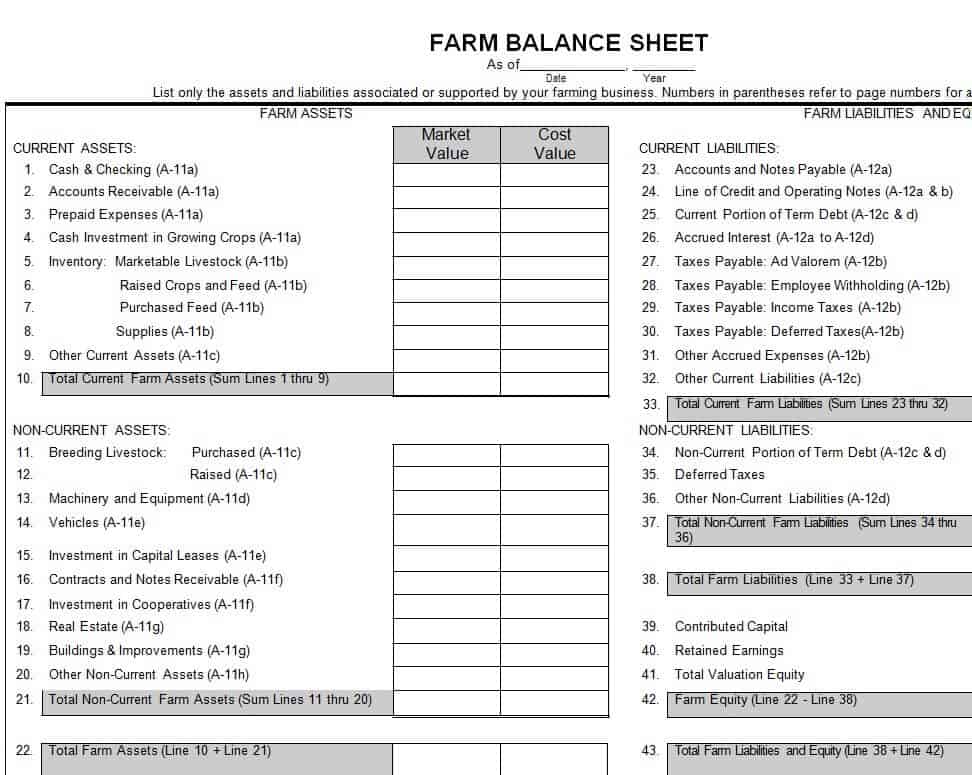
Balance Sheet Template for a Farm
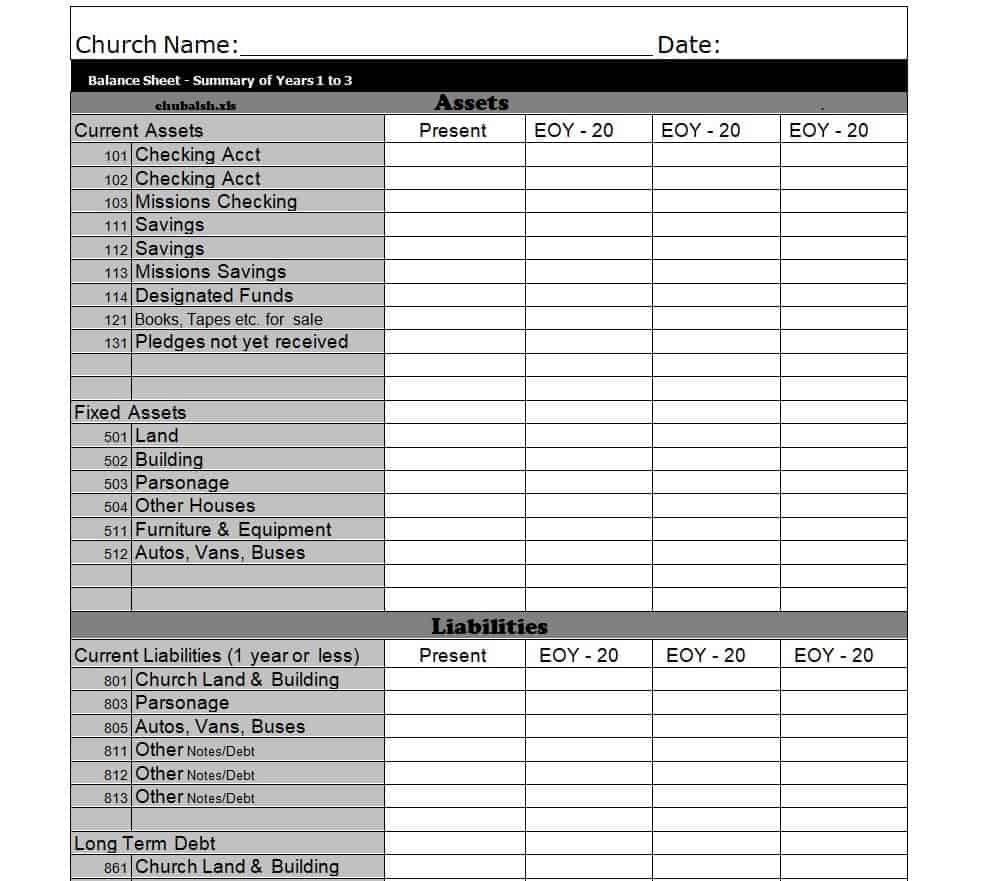
Sample Church Balance Sheet Template
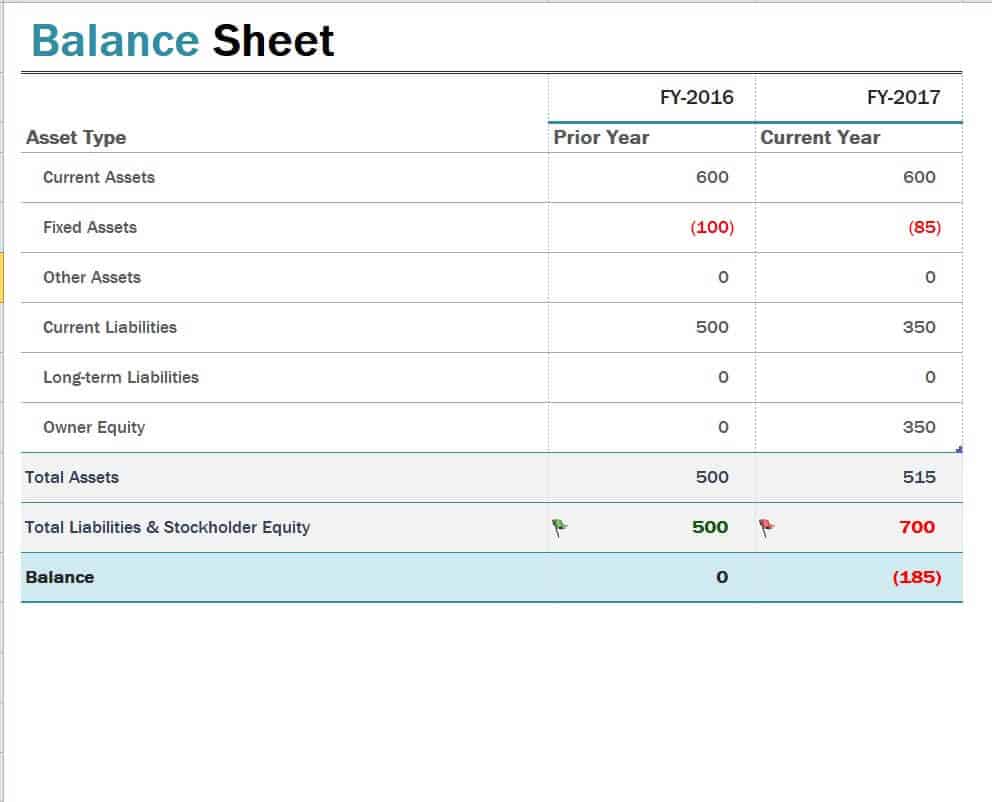
Company’s Balance Sheet Template EXCEL
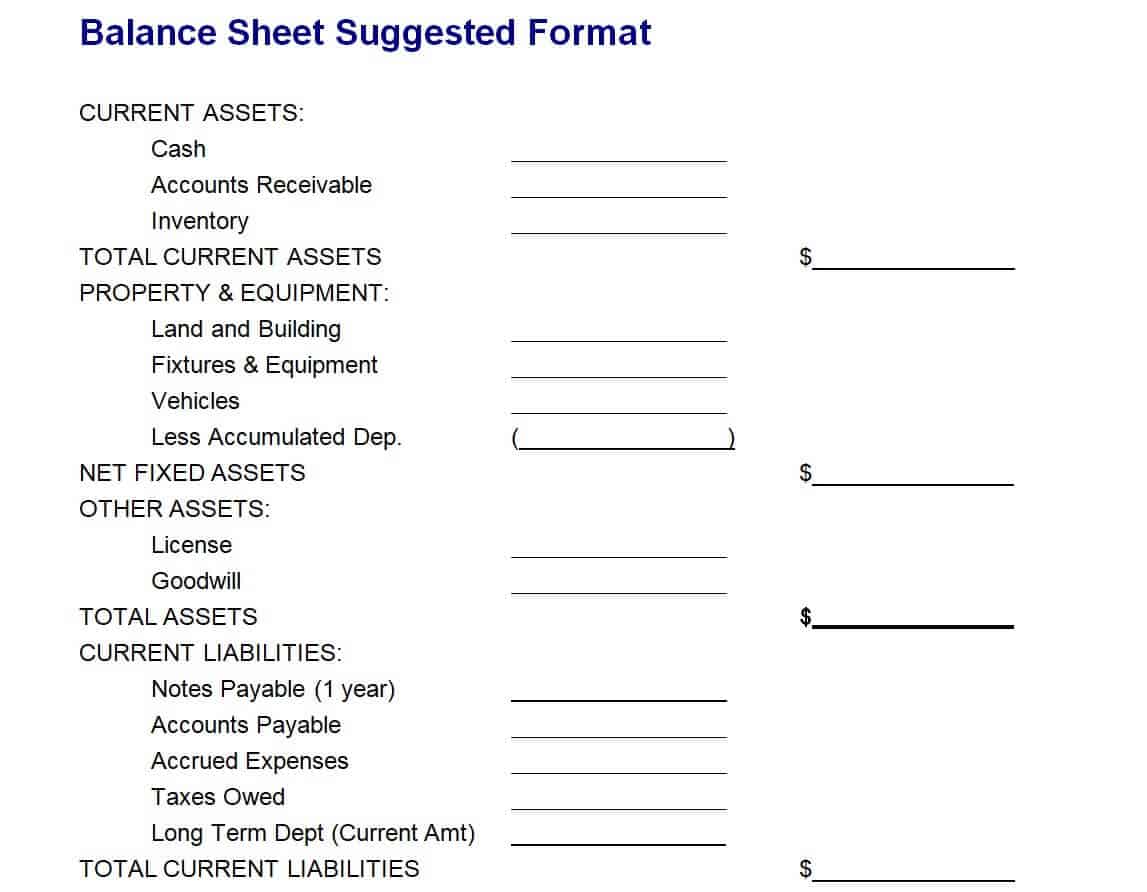
Practical Balance Sheet Format Template
Blank Balance Sheet Template Free
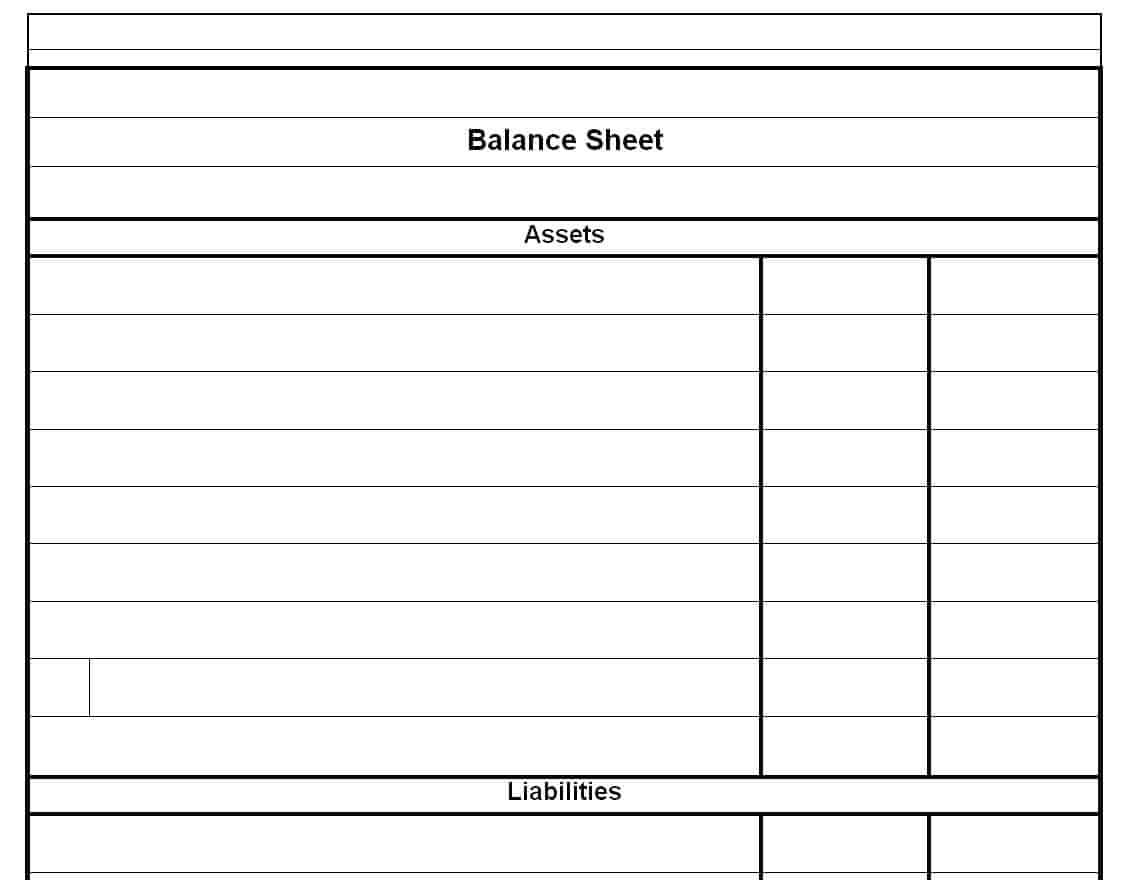
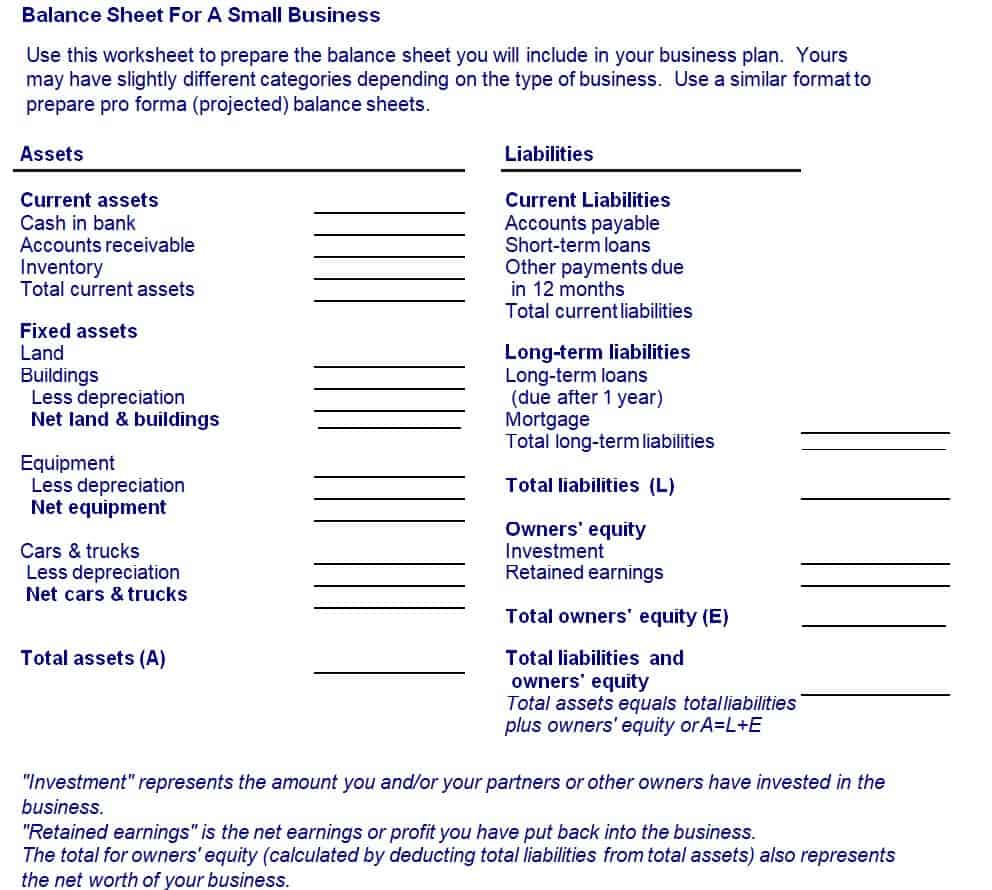
Small Business Balance Sheet WORD Template
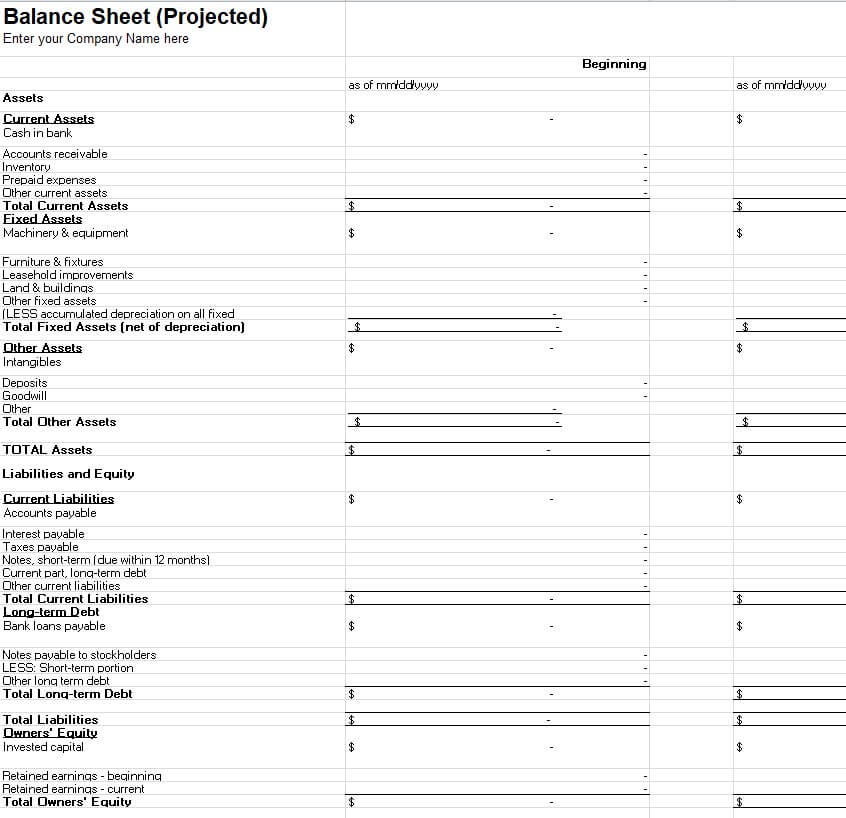
Projected Balance Sheet EXCEL Template
Editable Bank’s Balance Sheet Template
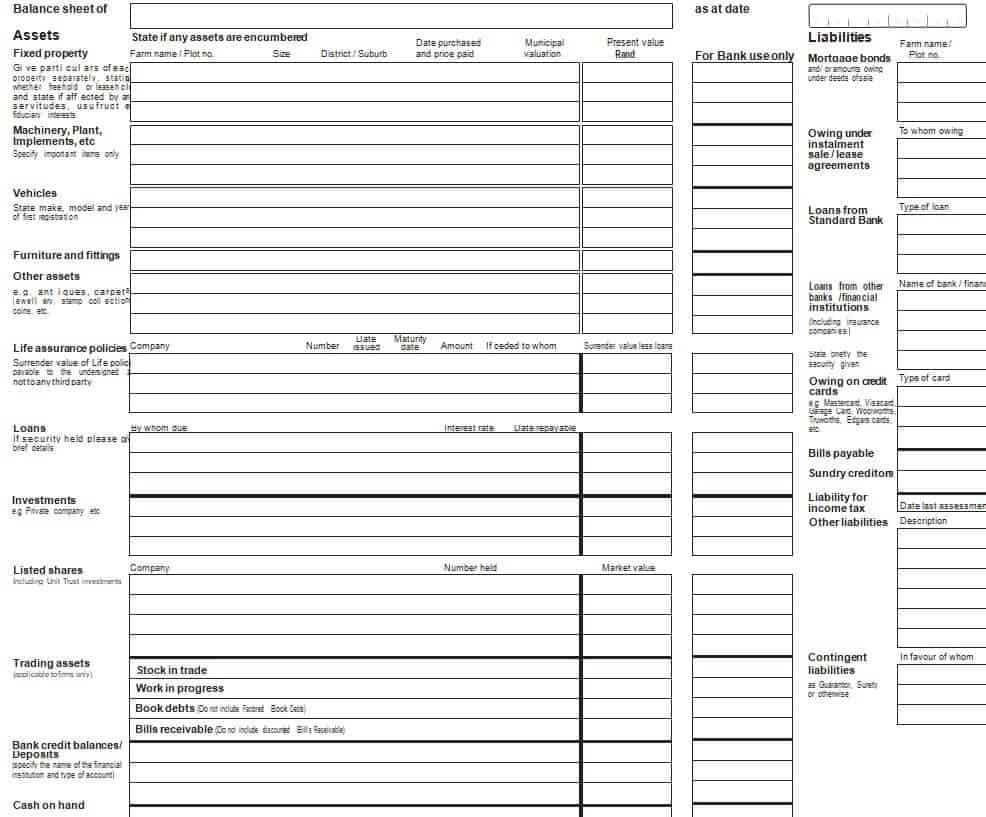
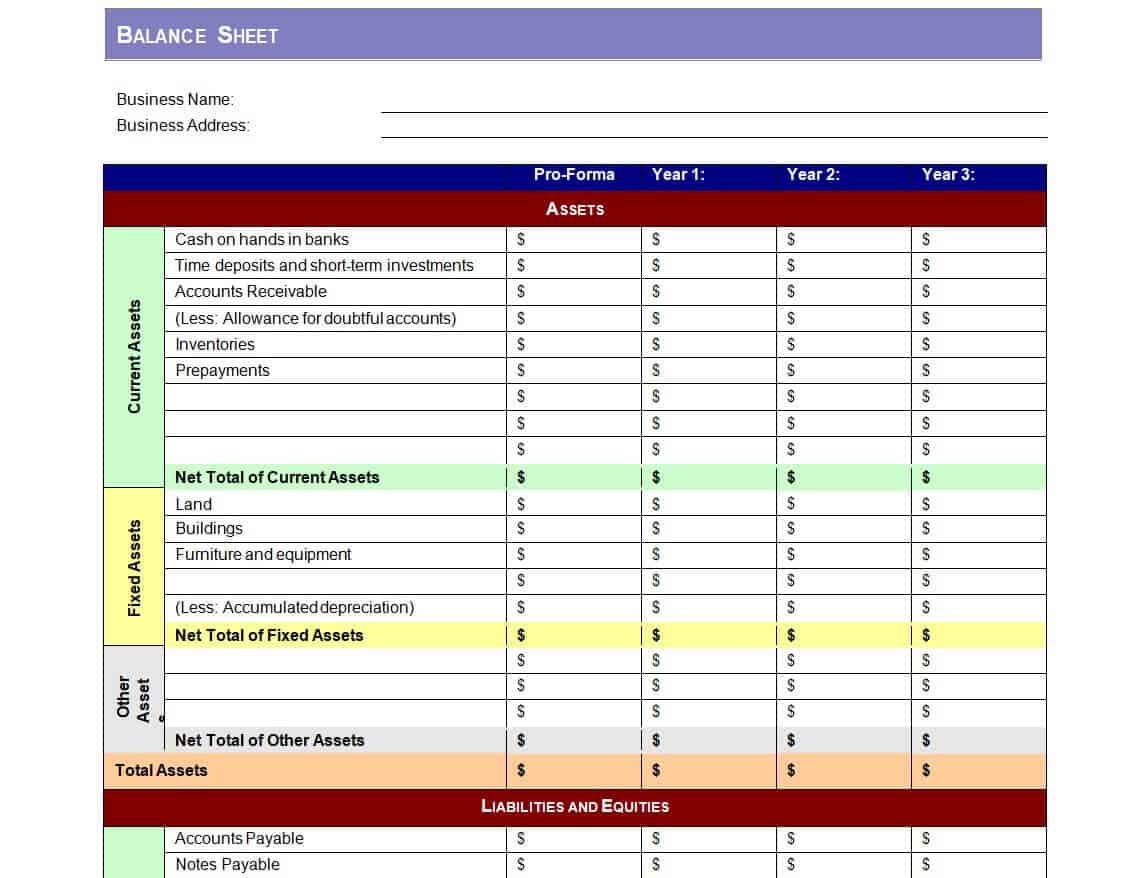
Proforma Balance Sheet Template in DOC Format
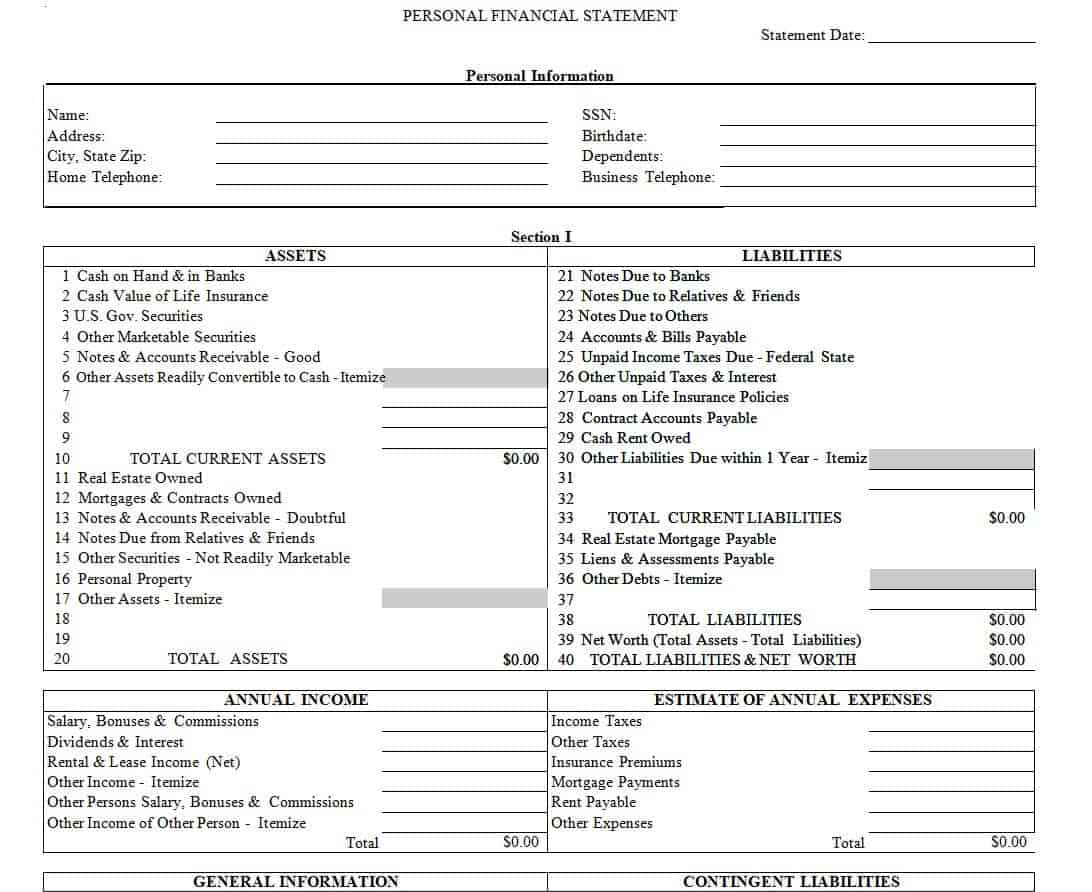
Personal Balance Sheet Template
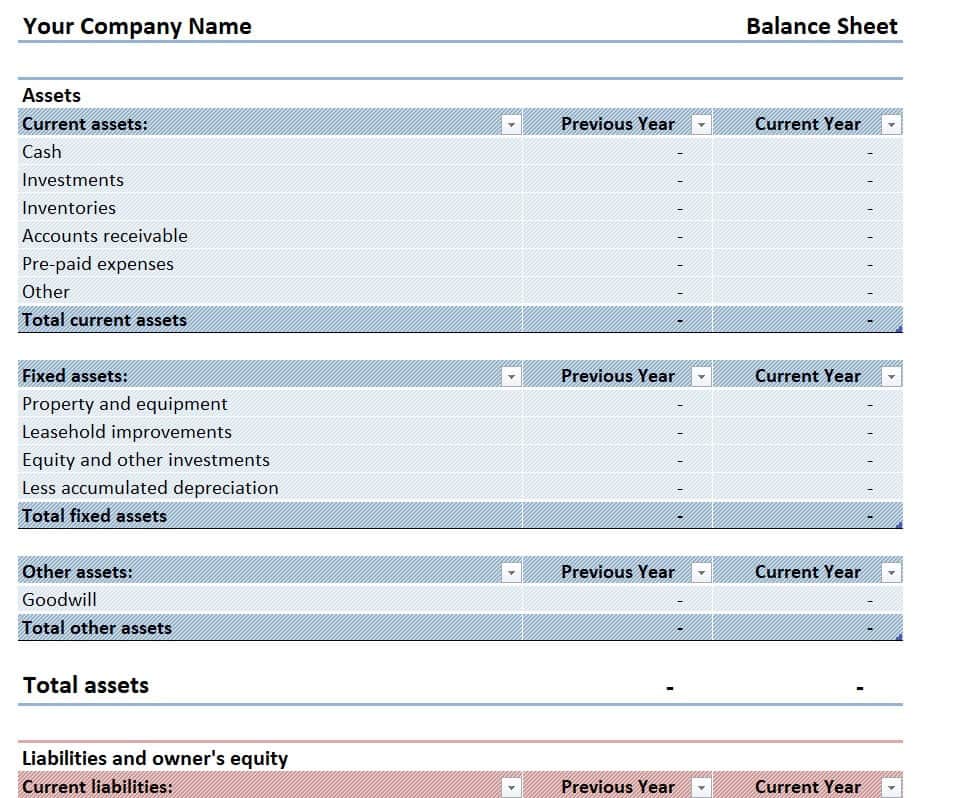
Business Balance Sheet Template in XlSX Format
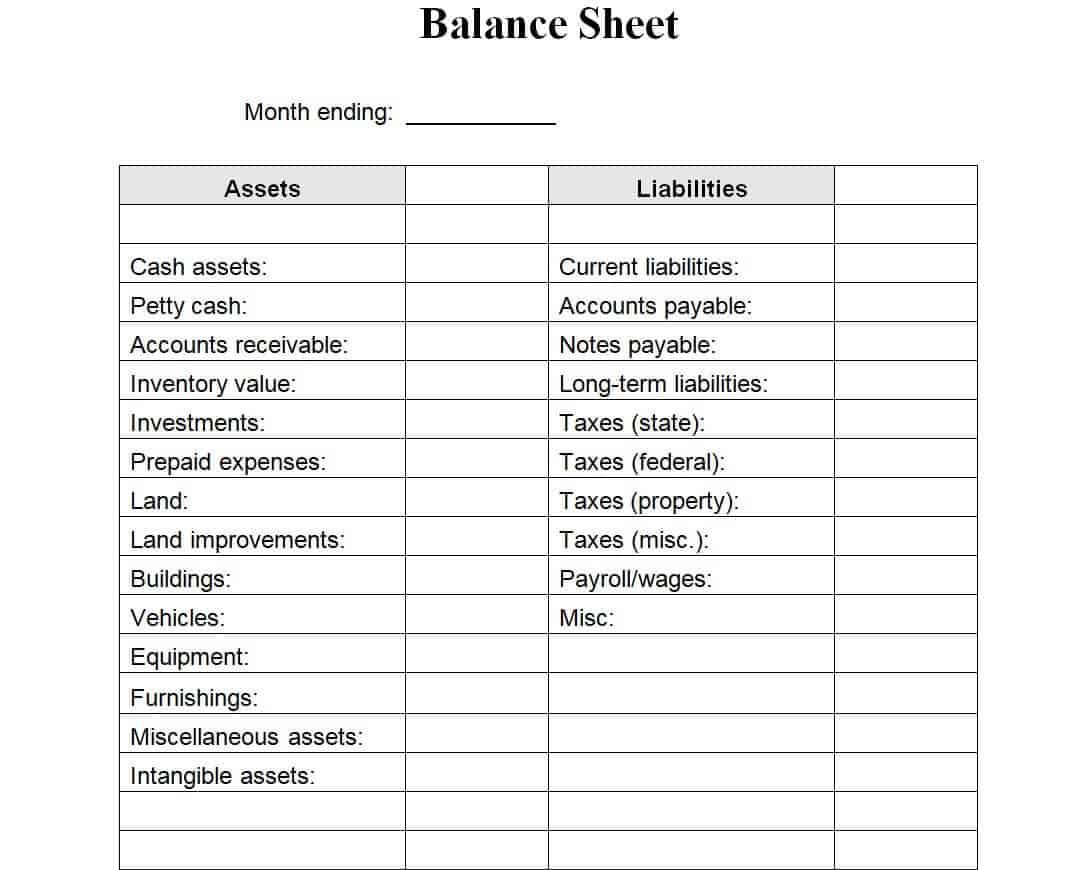
Simple Balance Sheet Template
Sample Corporate Balance Sheet Template
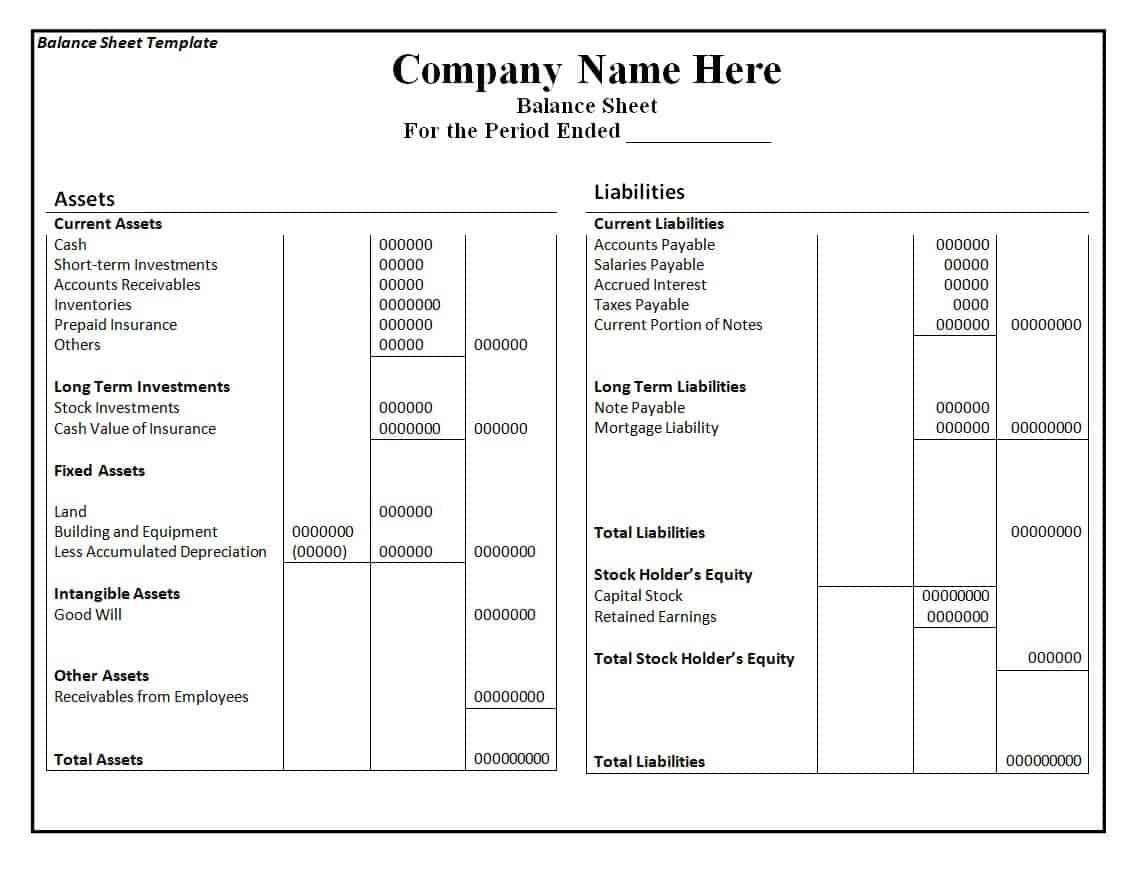
How to Prepare a Balance Sheet Using These Templates
Once you’ve downloaded a template that fits your needs, filling it in is a straightforward process if you follow it step by step.
- Start by entering the company name, the reporting date, and the accounting period at the top of the template, exactly as the format requires.
- List all current assets first — cash, bank balances, accounts receivable, and inventory — followed by fixed assets such as equipment, buildings, and vehicles. Total both groups to get total assets.
- List current liabilities such as accounts payable, short-term loans, and accrued expenses, followed by long-term liabilities such as mortgages or long-term loans. Total both groups to get total liabilities.
- Calculate equity by subtracting total liabilities from total assets, or by listing owner’s capital, retained earnings, and any additional contributions directly if your template separates them out.
- Add liabilities and equity together and confirm the result matches total assets. If it does not, review each entry for a missing or misclassified item before finalizing the statement.
Common Mistakes to Avoid
A few recurring errors show up again and again in balance sheets prepared without care, and each one is easy to avoid once you know to look for it.
- Misclassifying assets and liabilities: Placing a long-term loan under current liabilities, or listing equipment as a current asset, distorts the picture of how liquid the business really is.
- Failing to balance: If assets don’t equal liabilities plus equity, something has been entered incorrectly or left out entirely — the statement isn’t finished until both sides match.
- Omitting small liabilities: Minor accrued expenses, unpaid taxes, or small vendor invoices are easy to forget but still need to be included for the statement to be accurate.
- Using outdated figures: A balance sheet built from numbers that are weeks or months old no longer reflects the company’s real position and can mislead anyone relying on it.
Tips for Keeping Your Balance Sheet Accurate
Reconcile your bank and account balances before you start filling in the template, so every figure you enter is current. Keep supporting documents — invoices, loan statements, receipts — organized alongside the balance sheet so each number can be traced back to its source. Update the balance sheet on a consistent schedule rather than only when it’s requested, since regular preparation makes errors easier to spot early. Finally, compare each new balance sheet to the previous period’s to catch unusual swings in assets, liabilities, or equity that might signal a data entry mistake or a real change in the business worth investigating.
Frequently Asked Questions
How often should a balance sheet be prepared?
Most businesses prepare a balance sheet at the end of each month, quarter, and fiscal year, though some update it more frequently for internal tracking purposes.
What’s the difference between a balance sheet and an income statement?
A balance sheet shows what a company owns and owes at a single point in time, while an income statement shows revenue and expenses over a period, ending in the company’s profit or loss for that period.
Do small businesses need a formal balance sheet?
Yes. Even a small or single-owner business benefits from a balance sheet, since it makes it possible to track growth, apply for financing, and understand exactly what the business is worth at any given time.
Can I create a balance sheet in Excel?
Yes. Excel is one of the most common tools for building a balance sheet, since its formulas can automatically total each section and flag whether assets equal liabilities plus equity. Several of the templates above are provided in Excel format for exactly this reason.
Disclaimer: These templates are provided as a general starting point for organizing your financial information and are not a substitute for professional advice. Every business has its own accounting requirements and tax obligations, so it’s a good idea to have a qualified accountant or financial professional review your balance sheet before relying on it for major decisions or official filings.


